• Global CNC market projected to reach $128B by 2028 • New EU trade regulations for precision tooling components • Aerospace deman
NYSE: CNC +1.2%LME: STEEL -0.4%

What to Check Before Buying a Machine Tool: Accuracy, Spindle Power, and Control System
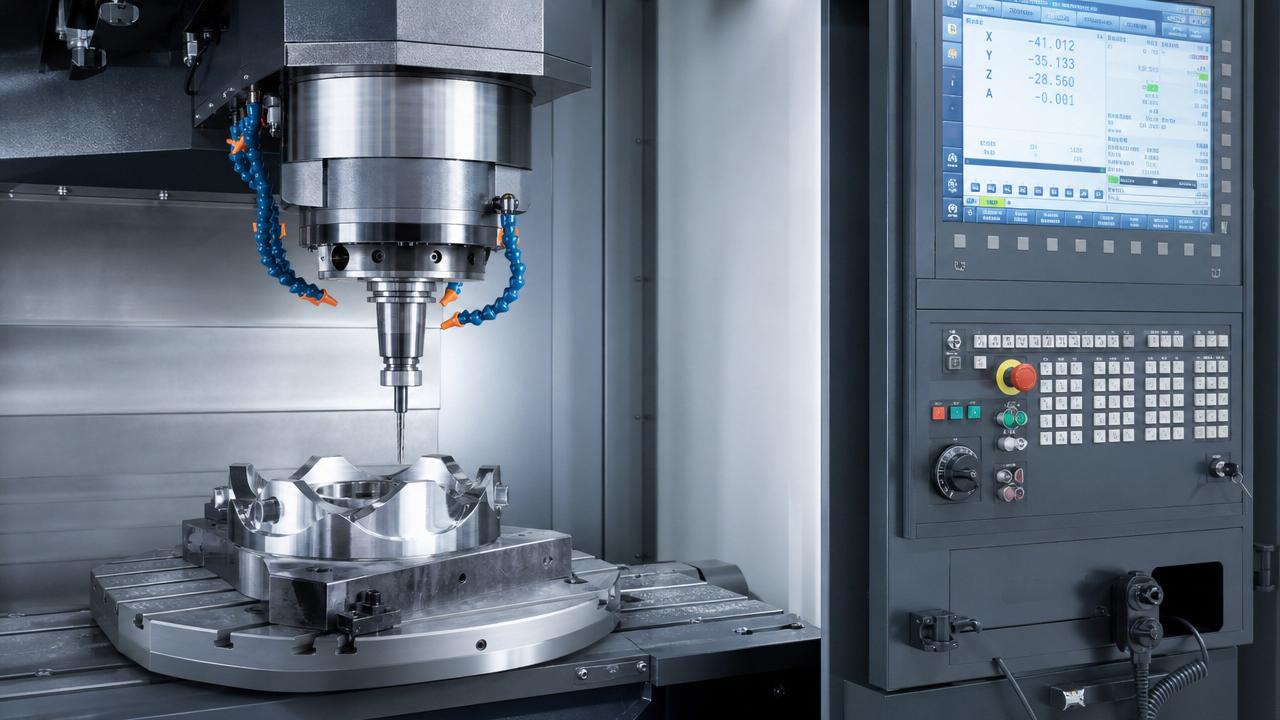
Buying a Machine Tool is rarely a simple price decision. In precision manufacturing, the wrong choice can limit output, raise scrap rates, and create bottlenecks across an entire production chain.
That is why accuracy, spindle power, and the control system matter so much. These three areas shape cutting stability, part consistency, automation readiness, and the long-term value of any Machine Tool.
This matters across automotive, aerospace, electronics, and energy equipment. As factories move toward smart production, a Machine Tool must fit both today’s workload and tomorrow’s digital manufacturing demands.
Why this decision carries more weight now
The global machine tool sector is changing quickly. Higher precision, tighter tolerances, connected systems, and flexible production lines are now standard expectations rather than niche advantages.
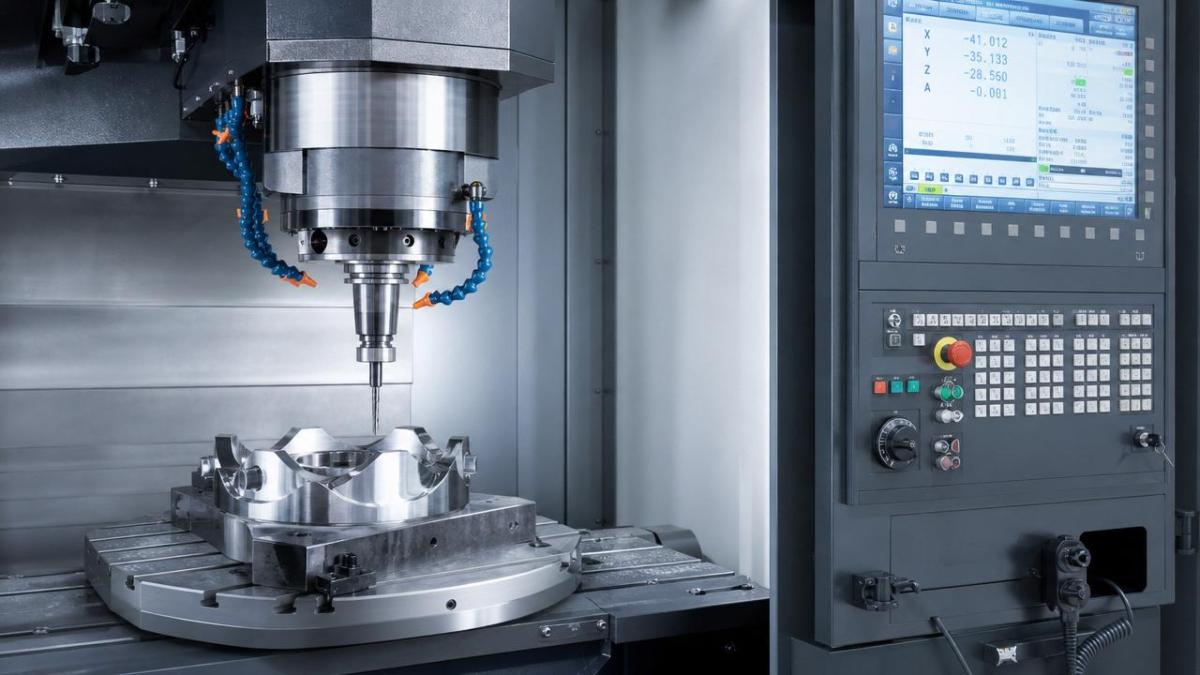
A Machine Tool is no longer judged only by whether it can cut metal. It is judged by whether it can support stable quality, faster changeovers, data visibility, and integration with automated workflows.
This is especially relevant in regions with strong manufacturing clusters, including China, Germany, Japan, and South Korea, where equipment comparison is increasingly technical and globally competitive.
Start with the real meaning of accuracy
Accuracy is often the first specification people check, but it should not be reduced to a single brochure number. A Machine Tool may show excellent positioning data and still perform differently during actual cutting.
In practical terms, buyers should separate three ideas: positioning accuracy, repeatability, and machining accuracy under load. Each one affects finished parts in a different way.
What accuracy really influences
For complex shaft parts, discs, housings, and structural components, accuracy influences fit, surface finish, and downstream assembly. A small deviation can become expensive when multiplied across volume production.
In multi-axis machining, the issue becomes even more sensitive. Thermal growth, axis interpolation, and machine rigidity can affect the final result more than the headline tolerance in marketing material.
What to verify beyond the catalog
- Ask whether test results come from no-load measurement or actual cutting conditions.
- Check repeatability over long cycles, not just one-time accuracy.
- Review thermal compensation methods and machine structure stability.
- Compare spindle runout, guideway design, and ball screw quality.
- Look for sample parts that match your material and tolerance range.
Simple comparison tables can help, but actual process capability matters more. A Machine Tool that holds tolerance steadily across shifts is usually more valuable than one with impressive isolated numbers.
Spindle power is about usable cutting performance
Spindle power is often misunderstood as a bigger-is-better metric. In reality, the right spindle depends on material type, cutting strategy, part geometry, and required cycle time.
A Machine Tool used for heavy roughing in alloy steel needs different spindle behavior from one designed for aluminum parts, precision finishing, or high-speed small-tool operations.
Power, torque, and speed must be read together
High spindle speed helps in fine finishing and smaller toolpaths. Torque at lower speed matters more for heavy cuts, larger diameters, and difficult materials.
If spindle power looks strong on paper but torque drops too early, the Machine Tool may struggle in real roughing applications. That can reduce feed rates and shorten tool life.
It is also worth checking duty cycle. Peak power can look attractive, but continuous output usually tells more about daily production capability.
The control system shapes daily efficiency
The control system is the working brain of a Machine Tool. It affects programming, operator interaction, axis coordination, automation interfaces, and the ability to maintain stable process control.
For many production environments, this is where long-term differences become visible. A capable control system reduces setup friction and supports more consistent machining results.
What matters in real use
Ease of programming matters when part families change often. Interface clarity matters when downtime must be diagnosed quickly. Expansion capability matters when automation is planned later.
In a smart factory context, the control system should also support data collection, remote monitoring, alarm history, and communication with robots, probes, and production software.
Questions worth asking
- Does the controller support the required axis count and interpolation functions?
- Is it compatible with existing CAD/CAM and shopfloor systems?
- How easy is backup, parameter recovery, and troubleshooting?
- Can it support probing, tool measurement, and unattended operation?
- Is local service and spare-part support reliable for this platform?
A Machine Tool with a strong mechanical base but a weak control platform may become difficult to scale, especially when digital integration becomes a business requirement rather than an option.
How these factors change by application
Not every Machine Tool should be judged the same way. The right balance between accuracy, spindle performance, and control features depends on what the machine is expected to produce.
Automotive production may prioritize speed, repeatability, and automated loading. Aerospace work often demands tighter dimensional control, multi-axis capability, and process traceability.
Electronics components can require small-tool precision and thermal stability. Energy equipment may demand rigid cutting performance for larger parts and tougher materials.
This is why direct machine comparison can be misleading. A Machine Tool that performs well in one sector may be a poor fit in another, even when headline specifications look similar.
A practical checklist before making comparisons
Before narrowing options, it helps to define the job before the machine. That means reviewing parts, materials, tolerances, production volume, tooling strategy, and future automation expectations.
- Match machine accuracy to actual tolerance demands, not only ideal targets.
- Check spindle curves against material removal needs and tool sizes.
- Review the controller for expandability, usability, and data connectivity.
- Ask for trial cuts, benchmark parts, or process case references.
- Consider maintenance access, service network, and training support.
- Look at total operating value, including scrap risk and setup time.
A useful comparison is not just technical. It connects machine parameters with production economics, process stability, and the direction of factory modernization.
Choosing with a longer view
The best Machine Tool decision usually comes from seeing the equipment as part of a wider manufacturing system. Accuracy affects quality. Spindle power affects throughput. The control system affects adaptability.
When these three elements are reviewed together, comparisons become clearer and less driven by headline pricing. That creates a better basis for evaluating machine options across global suppliers and changing production needs.
The next step is to build a shortlist around actual part requirements, confirm performance under realistic conditions, and compare each Machine Tool against future process goals as carefully as current ones.
Recommended for You
![]() JTEKT Introduces G5 Series Large CNC Cylindrical Grinder, Sales Begin October 26, 2026Machine Tool Industry Editorial Team
JTEKT Introduces G5 Series Large CNC Cylindrical Grinder, Sales Begin October 26, 2026Machine Tool Industry Editorial Team Shaft Parts for Heavy Machinery: Selecting Materials for High Shock LoadsCNC Machining Technology Center
![]() 33rd JIMTOF 2026 Set to Open in Tokyo as Taiwanese Exhibitors Seek OrdersGlobal Machine Tool Trade Research Center
33rd JIMTOF 2026 Set to Open in Tokyo as Taiwanese Exhibitors Seek OrdersGlobal Machine Tool Trade Research Center Which Fixture Type Cuts Changeover Time Most in High-Mix CNC Machining?CNC Machining Technology Center
![]() FANUC Invests $18 Million in Largest U.S. Corporate Automation Training CenterMachine Tool Industry Editorial Team
FANUC Invests $18 Million in Largest U.S. Corporate Automation Training CenterMachine Tool Industry Editorial Team Southeast Asia Machine Tool Market: Comparing Automotive Demand by CountryManufacturing Market Research Center


Aris Katos
Future of Carbide Coatings
15+ years in precision manufacturing systems. Specialized in high-speed milling and aerospace grade alloy processing.
▶
Shaft Parts for Heavy Machinery: Selecting Materials for High Shock LoadsCNC Machining Technology Center▶
What Is Metal Processing? From Raw Material to Finished Machine PartsCNC Machining Technology Center▶
How long does CNC machine delivery and installation usually take?CNC Machining Technology Center▶
CNC Machine Arrival Inspection: Check Shipping Damage, Accuracy, Safety, and DocumentsCNC Machining Technology Center▶
What Should You Check When a CNC Machine Arrives at Your Factory?CNC Machining Technology Center
▶
Mastering 5-Axis Workholding Strategies
Join our technical panel on Nov 15th to learn about reducing vibrations in thin-wall components.

Providing you with integrated sanding solutions
Before-sales and after-sales services
Comprehensive technical support