• Global CNC market projected to reach $128B by 2028 • New EU trade regulations for precision tooling components • Aerospace deman
NYSE: CNC +1.2%LME: STEEL -0.4%

What Is Industrial CNC? Key Machine Types, Capabilities, and Typical Factory Uses
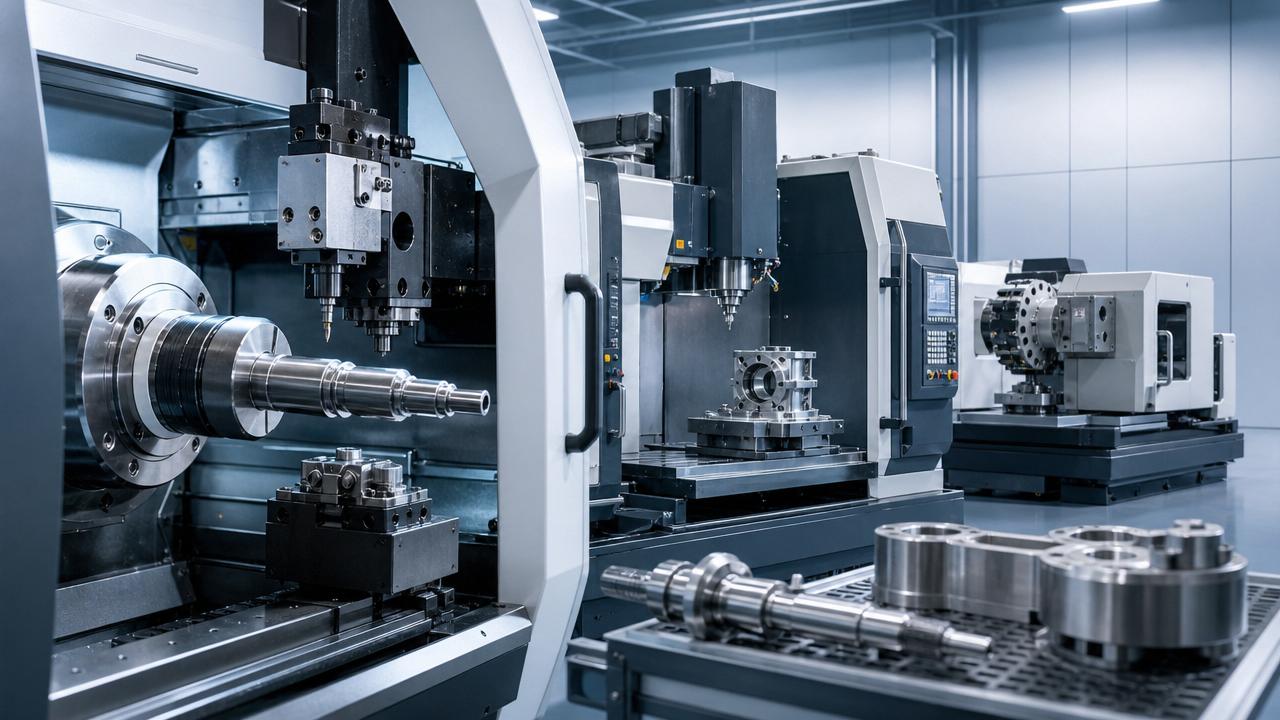
Industrial CNC sits at the center of modern production because it converts digital part data into repeatable, high-precision machining. In sectors where accuracy, throughput, and consistency matter, industrial CNC is not just equipment. It is part of the factory’s core operating logic.
That matters even more now. Automotive platforms change faster, aerospace tolerances remain strict, electronics parts grow smaller, and energy equipment often demands larger, tougher components. Across these conditions, industrial CNC supports both flexibility and control.
The wider machine tool industry is also moving toward higher automation and deeper digital integration. As robots, fixtures, tooling systems, and production software improve together, industrial CNC becomes a practical bridge between design intent and stable factory output.
Understanding what industrial CNC really means
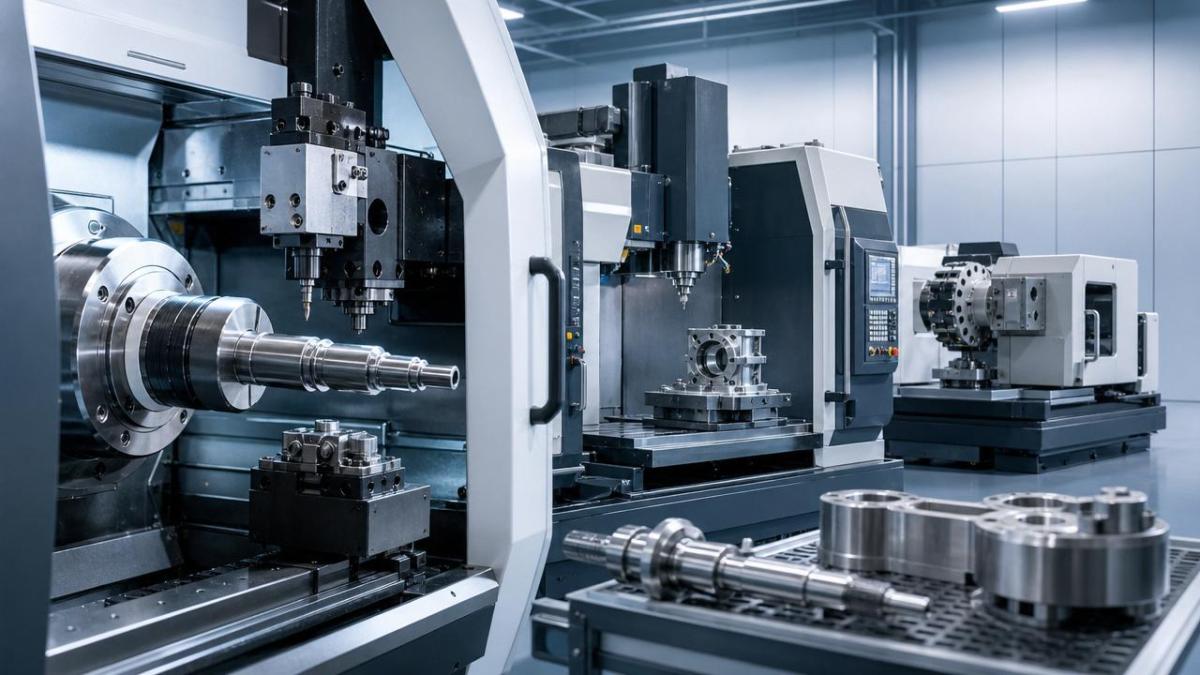
At its simplest, CNC means computer numerical control. A machine follows programmed instructions to remove material, shape surfaces, drill holes, cut threads, or finish contours with limited manual intervention.
Industrial CNC refers to this capability at factory scale. It usually involves heavier-duty machines, tighter process control, longer operating cycles, and integration with tooling, inspection, automation, and production planning systems.
The difference from basic workshop machining is not only size or speed. It is the ability to produce the same part geometry repeatedly across shifts, batches, and even different plants while maintaining traceable quality.
In practice, industrial CNC is less about one machine working alone and more about a production cell. Programs, fixtures, cutting tools, material handling, and quality checks all affect the final result.
Why industrial CNC remains a major industry focus
Manufacturing is under pressure from several directions at once. Tolerance demands are rising, product variants are increasing, and downtime is more costly than before. These pressures make industrial CNC especially relevant.
One reason is precision. Complex shaft parts, precision discs, housings, and structural components often need micron-level repeatability. Manual methods cannot reliably hold that standard at volume.
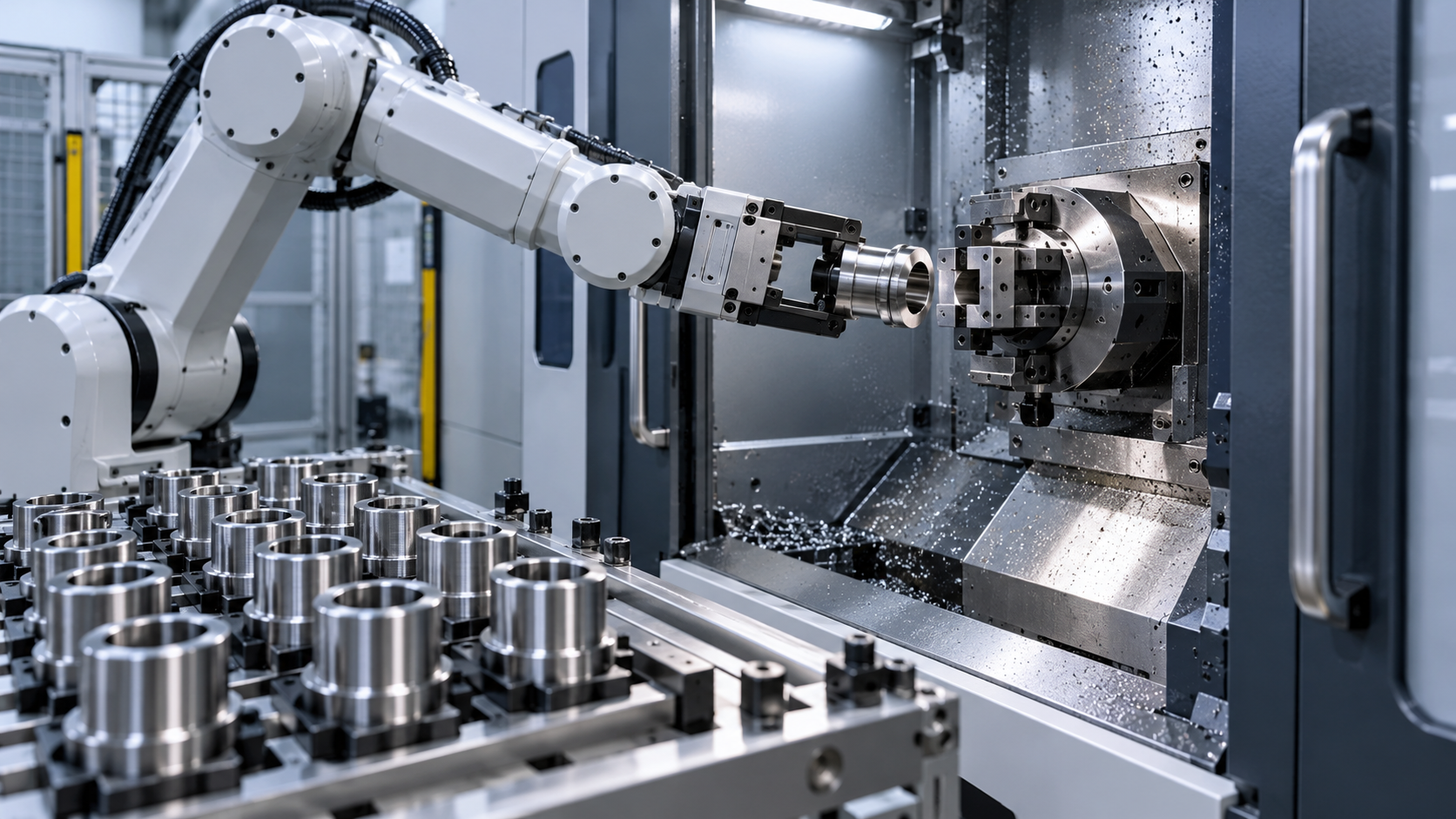
Another reason is automation. CNC lathes, machining centers, and multi-axis systems now connect more easily with robots, pallet changers, tool monitoring, and smart factory platforms. This reduces idle time and supports unattended or lightly staffed production.
A third factor is global competition. Industrial clusters in China, Germany, Japan, and South Korea continue to shape machine tool development. Suppliers compete not only on hardware, but also on control systems, service, digital connectivity, and process knowledge.
This is why industrial CNC is often evaluated as a capability platform rather than a single capital purchase. The machine matters, but so do the surrounding systems that keep production stable.
Key machine types and where they fit
Different industrial CNC machines solve different manufacturing problems. The right choice depends on part geometry, material, batch size, and the level of automation required.
CNC lathes and turning centers
These machines rotate the workpiece while tools cut the outer or inner surface. They are common for shafts, bushings, rings, threaded parts, and many rotational components.
Turning centers often add live tooling, sub-spindles, and automatic bar feeding. That expands industrial CNC productivity by combining turning, drilling, milling, and part transfer in one setup.
Vertical and horizontal machining centers
Machining centers handle milling, drilling, tapping, and contouring on prismatic parts. Vertical machines are widely used for general-purpose work. Horizontal machines are often preferred for heavier material removal and multi-face machining.
In industrial CNC environments, machining centers are valued for setup efficiency, tool capacity, and compatibility with pallets or automated loading systems.
Multi-axis machining systems
Three-axis equipment covers a large share of production needs, but complex parts often require more motion. Four-axis and five-axis systems allow the tool or workpiece to approach multiple surfaces in fewer setups.
That is especially important in aerospace, mold making, medical components, and high-precision housings. Multi-axis industrial CNC reduces repositioning error and can improve cycle efficiency on difficult shapes.
Grinding, EDM, and specialized CNC platforms
Not all industrial CNC work is conventional cutting. CNC grinding supports surface finish and final tolerance control. EDM handles hard materials and intricate cavities. Gear cutting and other specialty machines address highly specific production needs.
Core capabilities that define industrial CNC performance
A machine’s brochure rarely tells the whole story. In production, industrial CNC performance is defined by a mix of accuracy, process stability, and operational efficiency.
Tooling and fixturing are part of this picture. A capable industrial CNC machine still depends on proper cutting tools, fixture design, coolant strategy, and inspection planning. Weak process design can waste the value of strong hardware.
How factories use industrial CNC in real production
Industrial CNC appears in nearly every major manufacturing segment, but the production logic differs by application.
Automotive and transportation
Engine parts, transmission components, brake elements, and electric vehicle housings all depend on high-volume precision machining. Here, industrial CNC is often optimized for short cycle times, high uptime, and automated handling.
Aerospace and high-spec structures
This work involves difficult materials, complex geometries, and strict documentation. Industrial CNC supports multi-axis machining, stable tolerances, and process traceability that manual systems cannot match.
Electronics and precision assemblies
Small enclosures, heat sinks, connector bodies, and fixture parts require accurate dimensions and reliable finishes. In these settings, industrial CNC balances precision with fast changeovers for varied product lines.
Energy, pumps, valves, and heavy equipment
Larger components demand rigidity, power, and dependable long-cycle machining. Industrial CNC is used for flanges, valve bodies, turbine-related parts, and structural pieces where accuracy must hold under demanding loads.
What to evaluate before comparing machines or production solutions
Looking at spindle speed alone is rarely enough. A better starting point is the production requirement behind the machine.
- Clarify part family, material range, tolerance band, and expected annual volume.
- Check whether one setup can handle multiple surfaces or operations.
- Review tooling cost, fixture complexity, and changeover time, not just machine price.
- Consider data connectivity, maintenance access, and compatibility with automation plans.
- Ask how process capability will be verified during stable production, not only during trial cuts.
This is where industrial CNC decisions become strategic. A machine that performs well in sample demonstrations may still fall short if its tooling workflow, service support, or digital interface does not fit the factory environment.
It also helps to follow broader industry signals. Precision manufacturing is becoming more connected, and many global suppliers now compete through integrated solutions rather than standalone machine tools. News, technical updates, and market analysis can reveal where capabilities are improving fastest.
A practical way to move from definition to decision
Industrial CNC is best understood as a production system for precise, scalable part manufacturing. The machine type matters, but the bigger issue is how well the full process supports repeatable output, efficient changeovers, and future automation.
For any next step, start by mapping part requirements to machine architecture, then compare tooling strategy, automation readiness, and process control. That approach makes industrial CNC easier to judge in real business terms, not just technical specifications.
A useful follow-up is to track application cases, supplier developments, and regional manufacturing trends. That often provides the clearest view of which industrial CNC solutions fit current production needs and which ones will remain competitive as factories become smarter and more connected.
Recommended for You
![]() 33rd JIMTOF 2026 Set to Open in Tokyo as Taiwanese Exhibitors Seek OrdersGlobal Machine Tool Trade Research Center
33rd JIMTOF 2026 Set to Open in Tokyo as Taiwanese Exhibitors Seek OrdersGlobal Machine Tool Trade Research Center Which Fixture Type Cuts Changeover Time Most in High-Mix CNC Machining?CNC Machining Technology Center
![]() FANUC Invests $18 Million in Largest U.S. Corporate Automation Training CenterMachine Tool Industry Editorial Team
FANUC Invests $18 Million in Largest U.S. Corporate Automation Training CenterMachine Tool Industry Editorial Team Southeast Asia Machine Tool Market: Comparing Automotive Demand by CountryManufacturing Market Research Center
![]() Zhongshan Xiaolan Machinery Exhibition Opens With Global Product DebutsMachine Tool Industry Editorial Team
Zhongshan Xiaolan Machinery Exhibition Opens With Global Product DebutsMachine Tool Industry Editorial Team Automated Production Machining: Which Parts and Batch Sizes Are a Good Fit?Machine Tool Industry Editorial Team


Aris Katos
Future of Carbide Coatings
15+ years in precision manufacturing systems. Specialized in high-speed milling and aerospace grade alloy processing.
▶
What Is Metal Processing? From Raw Material to Finished Machine PartsCNC Machining Technology Center▶
How long does CNC machine delivery and installation usually take?CNC Machining Technology Center▶
CNC Machine Arrival Inspection: Check Shipping Damage, Accuracy, Safety, and DocumentsCNC Machining Technology Center▶
What Should You Check When a CNC Machine Arrives at Your Factory?CNC Machining Technology Center▶
What Safety Checks Are Required for CNC Cutting Operations?CNC Machining Technology Center
▶
Mastering 5-Axis Workholding Strategies
Join our technical panel on Nov 15th to learn about reducing vibrations in thin-wall components.

Providing you with integrated sanding solutions
Before-sales and after-sales services
Comprehensive technical support