• Global CNC market projected to reach $128B by 2028 • New EU trade regulations for precision tooling components • Aerospace deman
NYSE: CNC +1.2%LME: STEEL -0.4%

Precision Machining Defects: Common Causes of Burrs, Chatter, and Dimensional Errors
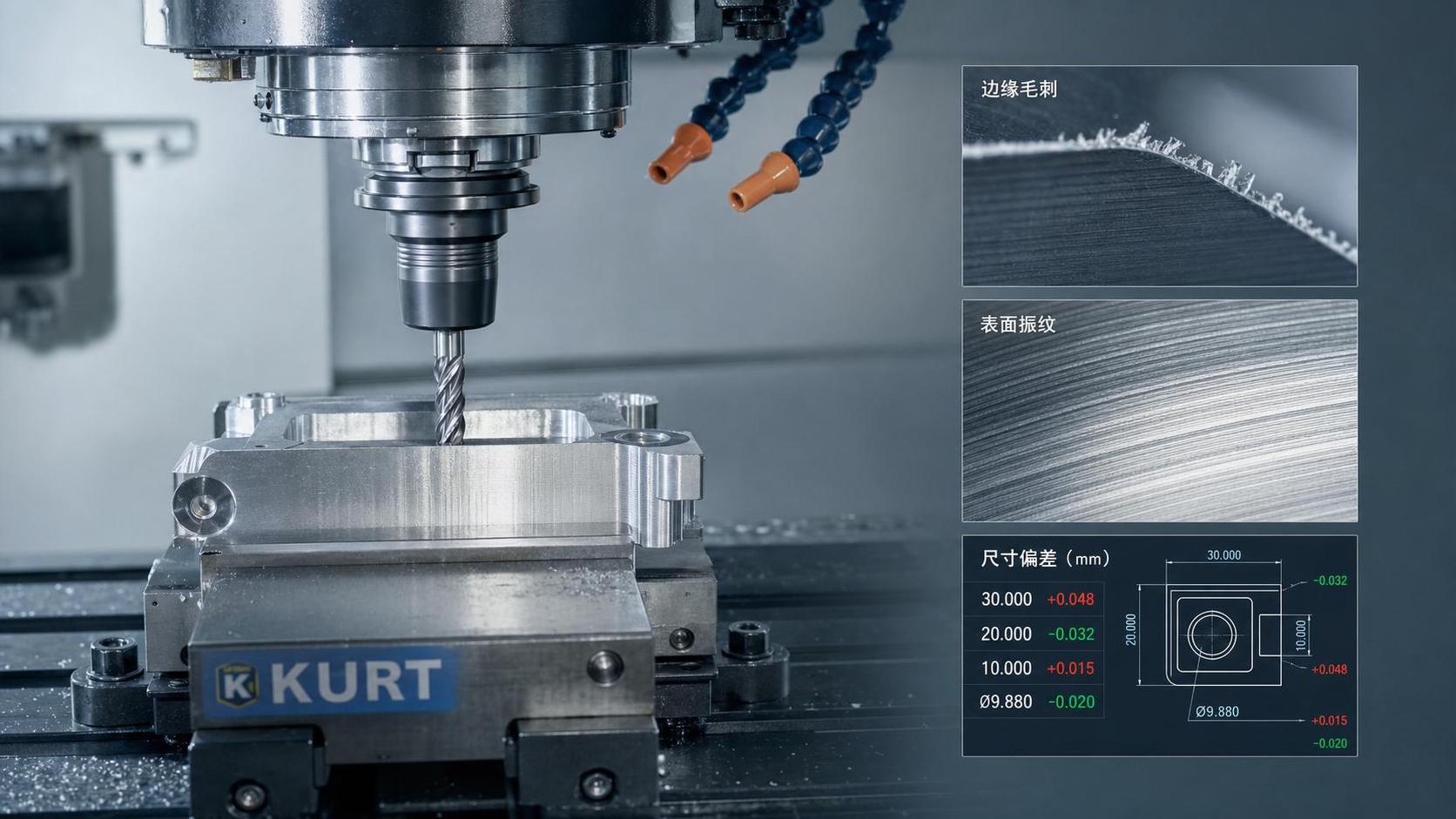
Why do burrs, chatter, and dimensional errors matter so much in Precision Machining?
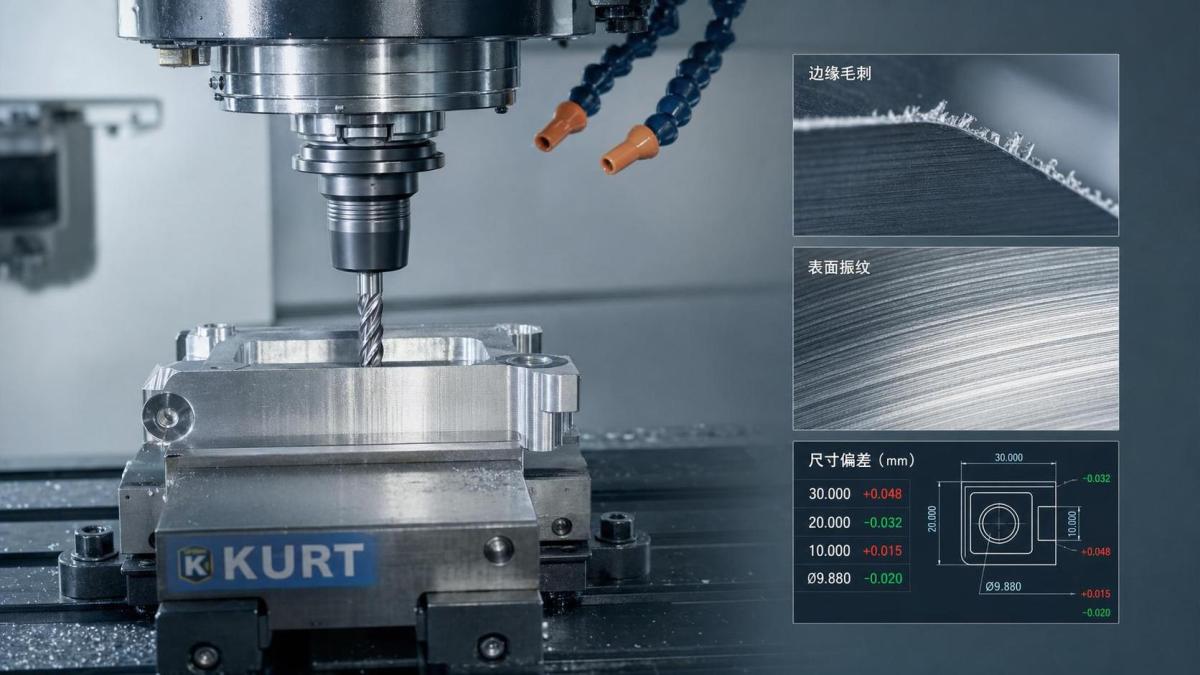
Precision Machining supports modern production where parts must fit, seal, rotate, and assemble without variation.
That is especially true in automotive, aerospace, energy equipment, and electronics manufacturing.
When burrs remain on an edge, the issue is not only cosmetic.
A burr can cut an operator, damage a mating surface, trap contamination, or interfere with automated assembly.
Chatter creates another kind of risk.
It harms surface finish, shortens tool life, raises spindle load, and may signal unstable machine conditions.
Dimensional errors are often the most expensive defect because they can spread quietly across a batch.
In smart factories and automated lines, even a small deviation can stop downstream processes.
For that reason, Precision Machining quality is closely tied to process stability, traceability, and safe operation.
A useful way to view these defects is simple: burrs often point to edge control problems, chatter to dynamic instability, and dimensional errors to process drift.
Are burrs mainly a tooling issue, or is the process usually at fault?
In real production, burrs rarely come from one cause alone.
Tool wear is common, but material behavior, cutting path, clamping, and machine condition also matter.
A dull tool pushes material instead of shearing it cleanly.
That usually leaves rollover burrs on exits, corners, and cross-holes.
Soft alloys, thin walls, and interrupted cuts make the problem more visible.
Another frequent cause is poor support near the cutting zone.
If a part flexes during machining, the edge deforms before separation, which increases burr height.
Feed and speed also need balance.
Too little feed can rub the edge, while aggressive parameters can tear material at the exit point.
More shops now review burrs by location, not only by size.
A burr on a sealing face is very different from a burr on a non-critical external edge.
- Check tool edge condition before adjusting multiple variables at once.
- Review part exits, corners, and slot ends where burrs most often form.
- Confirm fixture rigidity, especially for thin or long components.
- Match deburring effort to part function, not only visual appearance.
When does chatter become a quality problem and a safety warning?
Chatter is more than a loud sound or a rough finish.
It is a vibration pattern that can quickly amplify tool wear, heat, and force variation.
In Precision Machining, chatter often appears when spindle speed, tool overhang, workholding, and material removal rates fall into an unstable combination.
Long tools are a familiar source, but weak fixturing is just as important.
A part that moves slightly can create repeating marks that look like a tooling issue.
The safer approach is to treat chatter as a system response.
That means checking spindle bearings, holder balance, runout, clamp force, and machine foundation when necessary.
Needle-like chips, heat discoloration, and waviness are useful early clues.
If those signs are ignored, tool fracture or part ejection risks can rise.
In automated production lines, chatter can also distort sensor readings and create unstable cycle times.
A quick comparison helps narrow the cause
This kind of table works best when paired with machine data, inspection trends, and operator feedback.
Why do dimensional errors keep returning even after offsets are corrected?
Offset correction solves symptoms, but not always the root cause.
If dimensions move again after a short run, process variation is still active.
Thermal change is one of the most overlooked reasons.
Spindles, ballscrews, coolant temperature, and even part temperature can shift measured size.
That is why first-piece approval alone is not enough in Precision Machining.
Wear progression is another pattern to watch.
A tool may still cut, yet geometry changes slowly and pushes dimensions toward a limit.
Measurement method can also create false alarms.
If the gauge, probing routine, or datum setup is inconsistent, the team may chase a machining problem that is really an inspection problem.
More advanced lines often manage this by linking machine monitoring with in-process measurement and trend review.
That approach fits the wider move toward digital integration across global CNC manufacturing.
- Track dimension by time, cavity, machine, and tool life stage.
- Separate true process drift from inconsistent measurement practice.
- Review warm-up, coolant control, and environmental temperature stability.
- Use correction limits to avoid constant manual over-adjustment.
Which process checks usually deliver the fastest improvement?
The quickest gains usually come from controlling a few variables with discipline.
Many defects in Precision Machining grow because several small issues are left unchecked.
A practical review should begin before the tool touches the part.
Confirm tool condition, holder cleanliness, fixture seating, program revision, and material lot consistency.
Then look at process signals during cutting.
Spindle load spikes, sound changes, chip shape, coolant flow, and cycle time variation often reveal instability early.
Needless rework is also reduced when defect criteria are clear.
For example, define acceptable burr size by feature function, not by subjective appearance alone.
The same principle applies to chatter marks and size deviation.
When inspection rules match the application, decisions become faster and safer.
A focused control routine often includes these points
- Standardize tool replacement by wear trend, not only by failure.
- Reduce unnecessary tool overhang wherever possible.
- Verify clamp surfaces for chips, dents, and uneven contact.
- Review exit strategies on holes, slots, and thin-wall features.
- Use reaction plans when dimensions drift beyond warning limits.
How should shops prioritize action when defects affect cost, uptime, and safety together?
A useful priority rule is to address risk before convenience.
If chatter suggests possible tool breakage, or burrs create handling hazards, that comes before cosmetic improvement.
Next, contain defects that spread across batches.
Dimensional drift can consume scrap cost quietly, especially on multi-axis systems and automated lines.
After containment, compare recurring losses.
How much time is spent on deburring, insert changes, extra inspections, or machine stoppages?
Those numbers often reveal that the cheapest correction is not the lowest-cost option over time.
In global machine tool operations, where production is increasingly automated and data-driven, stable Precision Machining depends on repeatable standards.
That includes machine capability checks, tool management rules, defect classification, and documented response steps.
If burrs, chatter, or dimensional errors are appearing together, avoid treating them as isolated events.
Map where they occur, when they start, and what changed just before the trend began.
That usually gives a better next step than repeated adjustment alone.
A solid next move is to review one unstable part family, define defect limits by function, and compare tooling, fixturing, data trends, and measurement discipline in the same workflow.
Recommended for You
 Zero-Point Clamping or Modular Fixtures? Choosing a Faster CNC Changeover SystemCNC Machining Technology Center
 How to Cut CNC Fixture Changeover Time Without Sacrificing Part AccuracyCNC Machining Technology Center
 When Does CNC Turning Pay Off? A Break-Even Guide by Annual Part VolumeMachine Tool Industry Editorial Team
 Machine Tool Standards by Country: What Importers Must Verify Before PurchaseManufacturing Policy Research Center
 CNC Lathe Quick Installation Guide: Alignment Checks Before First Production RunCNC Machining Technology Center
 How to Select a CNC Lathe for Small Parts Without Sacrificing Accuracy or Cycle TimeCNC Machining Technology Center

Aris Katos
Future of Carbide Coatings
15+ years in precision manufacturing systems. Specialized in high-speed milling and aerospace grade alloy processing.
▶
How Does Precision Machining Differ From Standard Machining?CNC Machining Technology Center▶
CNC Precision: Which Tolerances, Materials, and Processes Fit Your Part?CNC Machining Technology Center▶
How to Choose Metal Machining Processes for Tight Tolerances and Production VolumeCNC Machining Technology Center▶
Production Process Explained: Key Stages, Controls, and Quality CheckpointsCNC Machining Technology Center▶
How to Select a Machine Tool for Electronics Manufacturing with Tight Tolerance NeedsCNC Machining Technology Center
Mastering 5-Axis Workholding Strategies
Join our technical panel on Nov 15th to learn about reducing vibrations in thin-wall components.

Providing you with integrated sanding solutions
Before-sales and after-sales services
Comprehensive technical support