• Global CNC market projected to reach $128B by 2028 • New EU trade regulations for precision tooling components • Aerospace deman
NYSE: CNC +1.2%LME: STEEL -0.4%

When Is Precision CNC Manufacturing Worth the Higher Cost
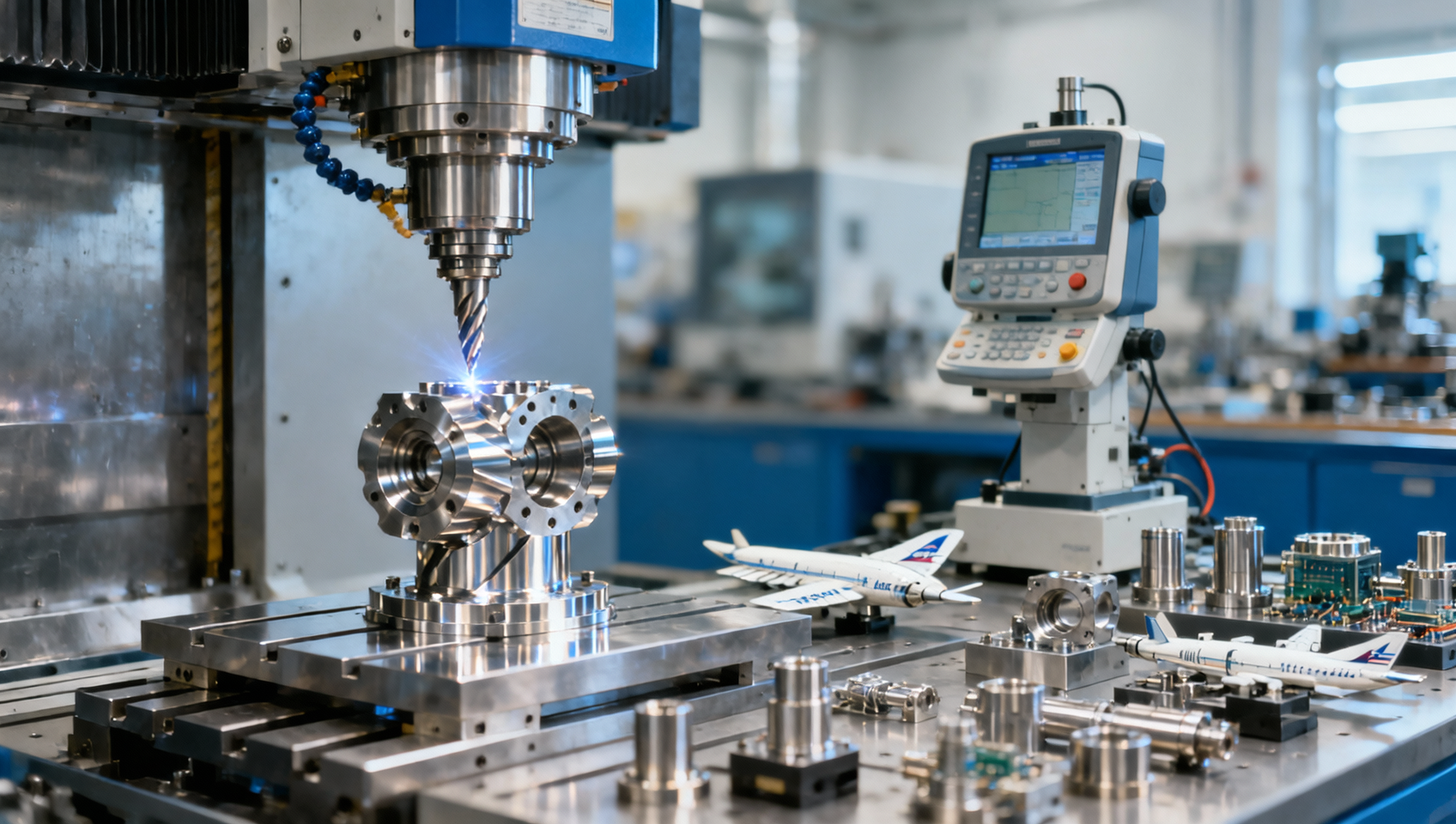
Precision CNC manufacturing often costs more upfront, but in aerospace, medical devices, electronics, and energy equipment, the payoff can be substantial. When high precision CNC manufacturing, multi-axis CNC manufacturing, and automated CNC manufacturing reduce defects, speed up delivery, and support complex parts, the higher investment becomes a strategic advantage. This article explores when that extra cost truly delivers measurable value.
For researchers, machine operators, buyers, and business decision-makers, the central question is not whether precision CNC services are expensive. The real question is whether tighter tolerances, process stability, and digitalized production create enough value to justify a higher unit price, tooling budget, or setup investment.
In modern manufacturing, that answer depends on part complexity, acceptable defect rates, downstream assembly risk, certification pressure, and delivery expectations. A component with a tolerance of ±0.01 mm has a very different cost logic from a general industrial bracket with ±0.1 mm tolerance and low assembly sensitivity.
As global CNC machining and precision manufacturing move toward higher automation, digital integration, and multi-axis capability, companies are also comparing cost in a broader way. They now evaluate scrap reduction, cycle-time savings, inventory impact, and field reliability, not only the initial machining quote.
What Drives the Higher Cost of Precision CNC Manufacturing
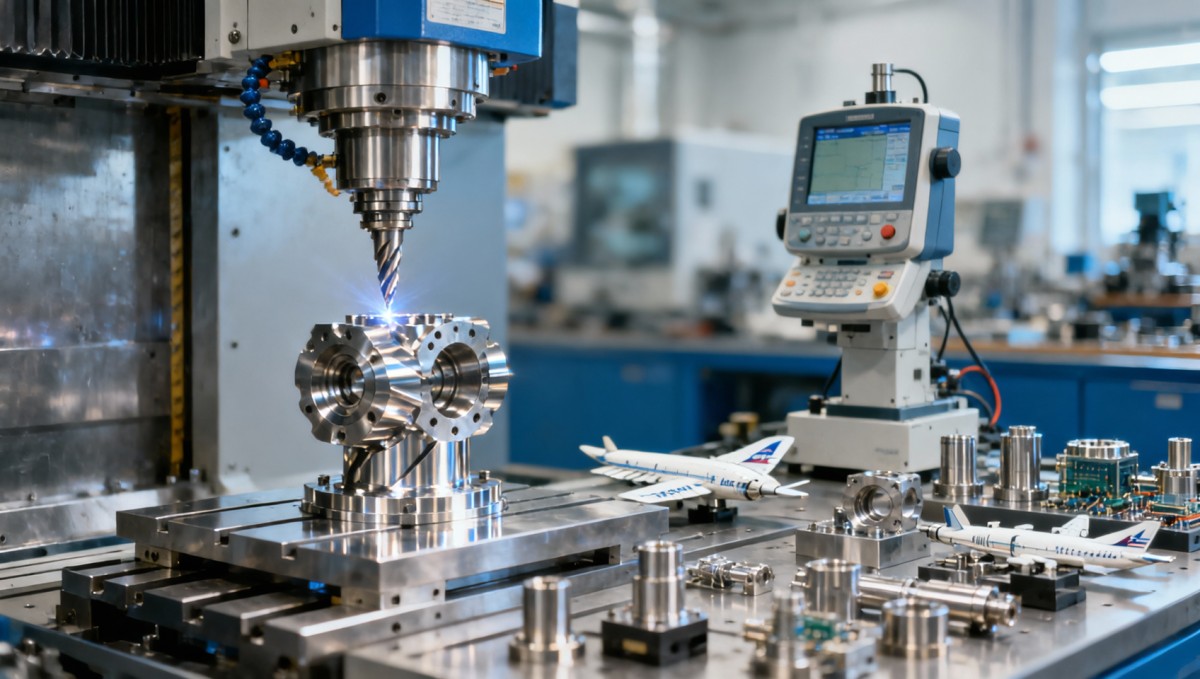
Precision CNC manufacturing costs more because it controls more variables at a tighter level. Achieving repeatability within ±0.005 mm to ±0.02 mm usually requires better machine rigidity, higher spindle accuracy, thermal compensation, more stable fixtures, and stricter in-process inspection than standard CNC production.
The cost difference also increases when multi-axis CNC manufacturing is involved. A 5-axis machining center can reduce multiple setups to 1 or 2 operations, but its machine hourly rate is normally higher than a 3-axis system. Programming time, toolpath simulation, collision avoidance, and fixturing strategy all add engineering hours before the first part is shipped.
Automated CNC manufacturing brings another layer of investment. Pallet changers, robotic loading, in-machine probing, and process monitoring improve output consistency, especially in medium to high volumes, but they raise capital cost and sometimes require 2 to 6 weeks of process validation before stable production is reached.
Material choice matters as well. Titanium alloys, hardened steel above 45 HRC, high-temperature nickel alloys, and thin-wall aluminum components all demand different cutting parameters, tools, and quality controls. Tool wear may rise by 20% to 50% in difficult-to-machine materials compared with general carbon steel, directly affecting per-part cost.
Key Cost Elements Buyers Should Review
- Machine capability: 3-axis, 4-axis, or 5-axis systems affect setup count, cycle time, and programming complexity.
- Tolerance and surface finish: ±0.1 mm and Ra 3.2 μm are very different from ±0.01 mm and Ra 0.8 μm.
- Inspection level: first article inspection, in-process probing, and 100% dimensional checks increase quality assurance cost.
- Production volume: batches of 20 parts often carry much higher setup cost per piece than runs of 2,000 parts.
The table below shows why the price gap between standard CNC machining and precision CNC manufacturing is not just a markup. It reflects different technical requirements, process controls, and business risks.
For procurement teams, this means the higher quote often reflects measurable production discipline. For operators and engineers, it also explains why precision CNC jobs demand stronger process control rather than simply a more expensive machine rate.
When the Higher Cost Produces Clear Business Value
Precision CNC manufacturing is usually worth the added cost when part failure is expensive, rework is difficult, or assembly variation causes system-level problems. In aerospace, energy equipment, medical devices, and electronics, a small dimensional error may affect sealing, vibration behavior, thermal performance, or electrical alignment.
A typical example is a component used in a multi-part assembly with 6 to 12 mating surfaces. If one machined face is out by 0.03 mm, the final assembly may require hand fitting, additional inspection, or full rejection. In those cases, spending 10% to 25% more on precision machining can prevent far greater losses in assembly labor and delivery delays.
High precision CNC manufacturing also pays off when product miniaturization or weight reduction matters. Thin-wall structures, intricate internal cavities, or compound angles often benefit from multi-axis CNC manufacturing because fewer setups reduce cumulative positioning error. For complex parts, one accurate 5-axis process can outperform 3 or 4 separate setups in both consistency and lead time.
Automated CNC manufacturing becomes financially attractive when volume is high enough to absorb setup investment. A plant producing 500 to 5,000 identical parts per month may gain from robotic loading, in-machine measurement, and standardized tool life management, especially when labor shortages or night-shift utilization affect output planning.
High-Value Use Cases
Complex geometry with strict repeatability
Impellers, valve bodies, precision housings, and electronics fixtures often require angular accuracy, concentricity, and stable surface finish across multiple features. In such cases, precision CNC reduces variation between the first 10 parts and the next 1,000 parts.
Applications with costly downstream failure
If an inaccurate machined part causes a leak test failure, bearing misalignment, or connector installation issue, the total cost of poor quality can exceed the machining premium by 3 to 8 times.
Programs where delivery speed supports revenue
A supplier that combines process stability with automated CNC manufacturing may reduce rework loops and compress lead times from 4 weeks to 2 weeks for repeat jobs, helping OEMs launch or replenish production faster.
The following comparison helps decision-makers judge when the premium is likely to be justified.
If your part affects safety, sealing, speed, or automated assembly yield, the higher machining cost often turns into lower total manufacturing cost. That is the point where precision becomes an investment instead of an expense.
How to Evaluate Cost Versus Return Before You Buy
The best purchasing decisions come from comparing total value, not only quoted price. A part that costs $18 under standard machining and $23 under precision CNC manufacturing may look 28% more expensive on paper, but if it cuts defect rates from 4% to below 1%, the economics can shift quickly in favor of the higher-grade process.
Decision-makers should also factor in hidden costs. These include incoming inspection time, assembly adjustment, line stoppages, supplier communication loops, emergency remakes, and delayed shipments. In low-mix, high-value production, one late or rejected batch can cost more than several months of machining savings.
For technical teams, a structured review of part drawings is essential. Critical-to-quality features, geometric dimensioning and tolerancing, surface finish, material stability, and post-processing requirements should all be assessed before RFQ comparison. A cheaper quote may be based on looser assumptions or reduced inspection scope.
For operators and manufacturing planners, process capability matters as much as part price. A supplier with stable multi-axis CNC manufacturing, controlled tooling, and automated CNC manufacturing support is generally better positioned to maintain consistency across 100, 1,000, or 10,000 parts.
A Practical Evaluation Framework
- Define critical tolerances and identify which dimensions affect function, sealing, alignment, or wear.
- Estimate the cost of failure, including scrap, rework, assembly downtime, and customer complaint handling.
- Compare process routes, such as 3-axis plus multiple setups versus a single 5-axis operation.
- Review quality controls, including sampling plan, first article process, and traceability expectations.
- Measure lead time sensitivity by asking how much a 1-week delay would cost your production or project timeline.
The table below can be used as a procurement checklist before approving a higher-cost machining program.
A disciplined evaluation often reveals that the most cost-effective option is not always the lowest initial quote. It is the process route that protects yield, schedule, and product function over the full production cycle.
Common Mistakes That Make Precision CNC Seem More Expensive Than It Is
One common mistake is over-specifying every feature. Not every face needs a fine surface finish, and not every bore needs extreme tolerance. If only 3 of 15 dimensions are function-critical, applying a premium machining standard to all features can inflate cost without improving product performance.
Another mistake is comparing quotes without aligning scope. One supplier may include deburring, inspection reports, and fixture validation, while another may quote machining only. A 12% lower price can disappear quickly if post-processing, inspection, or remake charges are added later.
A third issue is ignoring volume strategy. Precision CNC manufacturing for 10 prototype parts may require a different process plan than a 2,000-piece annual order. Without discussing future demand, buyers may miss opportunities to reduce unit cost through fixture optimization, automation, or combined operations after the pilot stage.
There is also a planning error on the technical side: treating multi-axis CNC manufacturing as a premium option in every case. For simple rectangular parts, 5-axis machining may not add value. But for angled holes, undercuts, and multi-face geometry, it can reduce handling, improve consistency, and shorten total cycle time.
Risk Control Tips
- Mark critical-to-function dimensions separately from general tolerances on the drawing.
- Ask suppliers to identify which cost drivers come from tolerance, material, inspection, or setup count.
- Request a pilot lot of 10 to 30 pieces before scaling to larger production if part complexity is high.
- Review whether automated CNC manufacturing is justified only after confirming repeat volume and stable design revision.
Why this matters for decision-makers
Many cost debates around precision machining are actually specification and process-planning problems. When drawings, quality expectations, and batch forecasts are clearly defined, companies can often lower total cost by 8% to 20% without sacrificing the benefits of precision CNC manufacturing.
For procurement teams, this means the right conversation is not “Can the supplier reduce the price?” but “Which technical requirements are essential, and which can be optimized?” That shift improves both supplier communication and project profitability.
How to Implement Precision CNC Strategically Across the Production Cycle
The most successful manufacturers do not apply precision CNC manufacturing uniformly to every part. Instead, they segment components by value, function, and production risk. Critical shafts, sealing faces, and structural interfaces may justify premium machining, while secondary covers or support brackets may remain on standard CNC routes.
A strategic rollout often begins with prototypes or first-article batches. During this stage, engineers verify dimensional capability, process repeatability, and assembly behavior. If the part transitions to repeat production, the supplier can then introduce multi-axis CNC manufacturing optimization, dedicated fixtures, or automated CNC manufacturing features to reduce unit cost over time.
Lead time planning is equally important. Prototype precision parts may take 7 to 15 working days depending on material and inspection scope. Repeat orders with stable tooling and approved programs can often be shortened to 2 to 4 weeks, especially when raw material, tooling offsets, and inspection routines are already standardized.
Cross-functional coordination improves results. Operators need realistic workholding and tool access. Buyers need transparent scope and quality expectations. Decision-makers need visibility into total cost and delivery risk. When these groups align early, precision CNC becomes a controllable asset instead of a late-stage emergency solution.
Implementation Priorities
- Classify parts into critical, important, and general categories based on function and failure cost.
- Use tighter tolerances only where they influence fit, motion, sealing, thermal performance, or safety.
- Validate prototypes with inspection and assembly feedback before committing to larger runs.
- Introduce automation only when annual demand, staffing pressure, or overnight utilization supports the investment.
- Track 3 indicators over time: defect rate, lead time, and total cost per accepted part.
Frequently Asked Questions
How precise does a part need to be before premium CNC machining makes sense?
There is no single threshold, but premium machining often becomes relevant when tolerances approach ±0.02 mm or tighter, when concentricity and positional accuracy affect assembly, or when rework would be expensive or impossible after downstream processing.
Is multi-axis CNC manufacturing always more economical for complex parts?
Not always, but often. If one 5-axis setup replaces 3 separate fixtures and 4 handling steps, the higher machine rate may still reduce overall cost. For simple prismatic parts, however, standard 3-axis or turning operations may remain more efficient.
When does automated CNC manufacturing become worthwhile?
It is usually most attractive when demand is stable, repeat orders are frequent, and production volumes are high enough to benefit from unattended operation. Many suppliers begin evaluating automation seriously once orders move beyond several hundred parts per month or require extended production windows.
What should buyers ask for in a precision machining quote?
Ask for tolerance assumptions, inspection scope, material grade, post-processing details, setup count, and estimated lead time. These 5 to 6 items often explain most price differences between suppliers and help prevent scope mismatch after purchase approval.
Precision CNC manufacturing is worth the higher cost when it protects functional performance, reduces total defect exposure, supports complex geometry, or shortens time to stable production. In industries where a small dimensional error can trigger assembly issues, downtime, or field failure, the higher upfront investment often produces measurable savings across the entire manufacturing chain.
For buyers, engineers, and business leaders evaluating CNC machining partners, the most effective approach is to compare total value rather than unit price alone. If you are reviewing high-precision parts, multi-axis projects, or automated production opportunities, now is the right time to get a tailored assessment. Contact us to discuss your drawings, evaluate process options, and explore a solution that fits your quality, lead time, and cost targets.
PREVIOUS ARTICLE
Recommended for You
![]() White House Section 232 Ruling: No New Machine Tool or Robot Tariffs, Calls for TalksManufacturing Policy Research Center
 How to Integrate Warehouse Palletizing Robots with Minimal DowntimeMachine Tool Industry Editorial Team
![]() AI Investment Lifts US September Equipment Demand; Core Capital Goods Orders Rise 0.5%Manufacturing Market Research Center
 Why Heavy Machinery Shafts Fail Under Cyclic Loads and How to Prevent ItCNC Machining Technology Center
![]() JTEKT Introduces G5 Series Large CNC Cylindrical Grinder, Sales Begin October 26, 2026Machine Tool Industry Editorial Team
 Shaft Parts for Heavy Machinery: Selecting Materials for High Shock LoadsCNC Machining Technology Center



Aris Katos
Future of Carbide Coatings
15+ years in precision manufacturing systems. Specialized in high-speed milling and aerospace grade alloy processing.
▶
How thermal drift affects accuracy in high-precision manufacturingCNC Machining Technology Center▶
What Tolerances Are Typical in Precision Machining?CNC Machining Technology Center▶
Industrial Machining: Selecting Processes for Tight-Tolerance Metal PartsCNC Machining Technology Center▶
How Does Precision Machining Differ From Standard Machining?CNC Machining Technology Center▶
CNC Precision: Which Tolerances, Materials, and Processes Fit Your Part?CNC Machining Technology Center
▶
Mastering 5-Axis Workholding Strategies
Join our technical panel on Nov 15th to learn about reducing vibrations in thin-wall components.

Providing you with integrated sanding solutions
Before-sales and after-sales services
Comprehensive technical support