• Global CNC market projected to reach $128B by 2028 • New EU trade regulations for precision tooling components • Aerospace deman
NYSE: CNC +1.2%LME: STEEL -0.4%

An Automated Production Line can fail at the handoff points
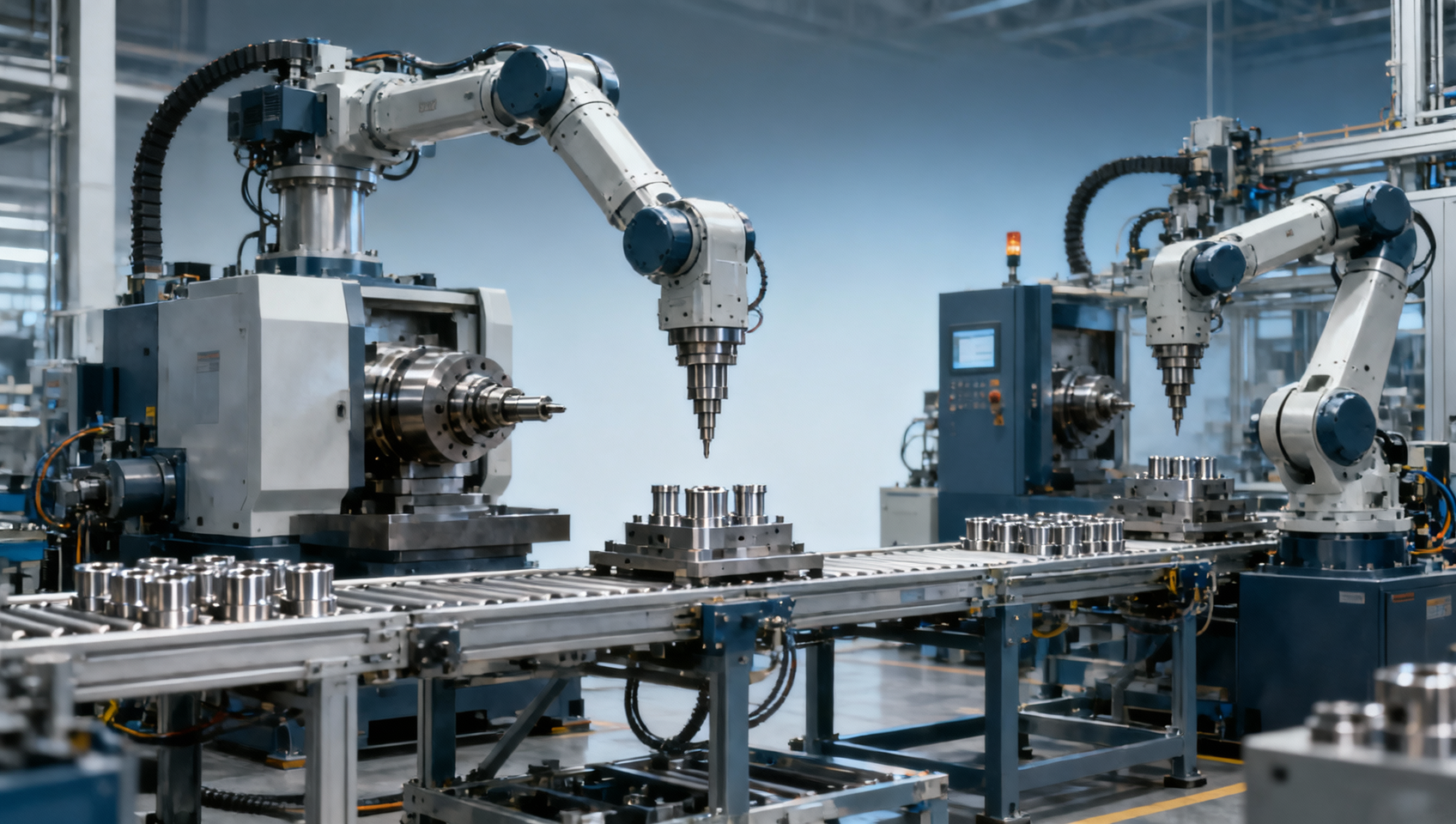
An Automated Production Line can deliver speed and precision, yet many failures happen at the handoff points where metal machining, CNC milling, and industrial CNC systems must work as one. For manufacturers, operators, buyers, and decision-makers, understanding these weak links is essential to improving the production process, reducing downtime, and strengthening automated production across today’s Global Manufacturing environment.
In CNC machining and precision manufacturing, handoff points are rarely dramatic. They are usually small transitions: a part moving from a CNC lathe to a machining center, a robot loading a fixture that is slightly out of tolerance, a pallet system waiting 45 seconds too long for a signal, or inspection data failing to reach the next station in time. These small breaks often create the largest losses in throughput, quality, and equipment utilization.
For information researchers, this topic reveals where automated production lines deliver real value and where hidden inefficiencies remain. For operators, it highlights the practical causes of alarms, misloads, and inconsistent cycle times. For procurement teams and business leaders, it offers a better framework for evaluating machine tools, integration partners, fixtures, software compatibility, and service support before capital is committed.
The issue is especially relevant in sectors such as automotive, aerospace, electronics, and energy equipment, where tolerances may range from ±0.01 mm to ±0.05 mm, daily output can exceed 500 parts, and downtime of even 20–30 minutes may disrupt an entire shift. In these environments, an automated production line does not fail only because of one machine. It fails when the connection between machines, people, tooling, and control logic is weak.
Why Handoff Points Are the Most Fragile Part of an Automated Production Line
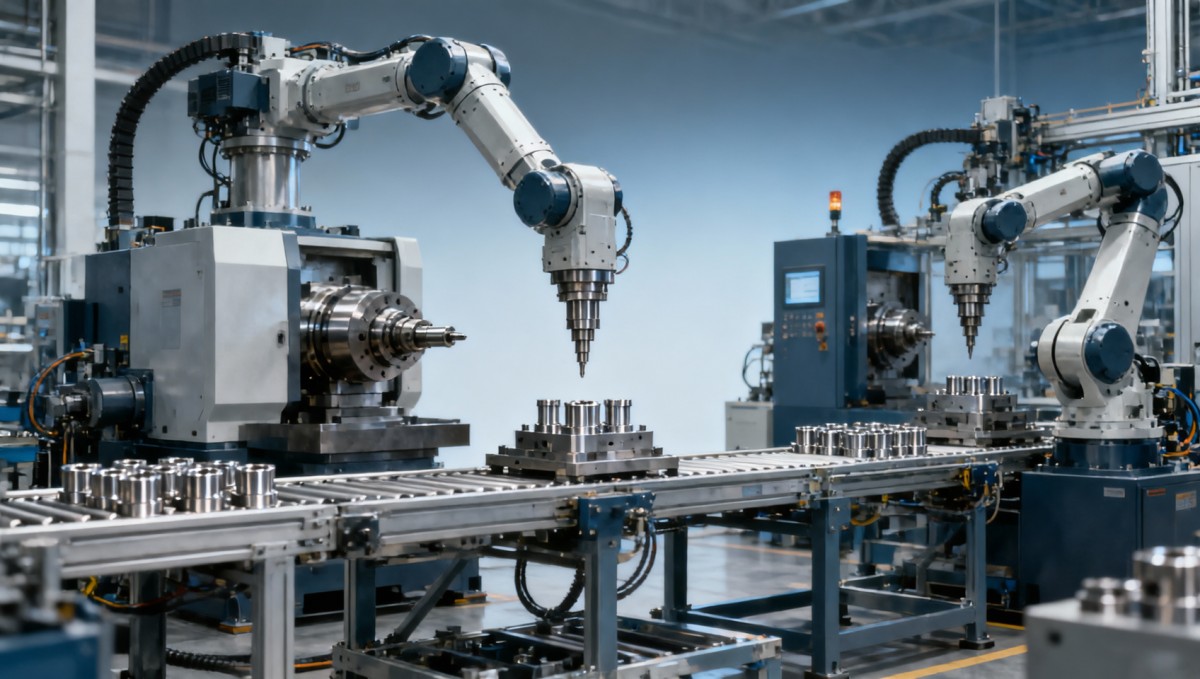
A handoff point is any moment when material, data, tooling, or process responsibility moves from one stage to another. In a CNC-driven production process, this can happen 10 to 50 times in a single line, depending on whether the system includes raw material loading, turning, milling, deburring, washing, gauging, marking, assembly, and final inspection. Each transition adds risk because it depends on timing, orientation, repeatability, and communication.
In metal machining, the first weak link is often physical transfer. A machined part may expand thermally by a few microns after cutting, but if the next station clamps it immediately without compensation, the dimensional reference can shift. In high-volume industrial CNC systems, this becomes a cumulative issue. A 0.02 mm mismatch may not stop production instantly, but over 200 or 300 parts, it can increase scrap and rework significantly.
The second weak link is control logic. A robot, conveyor, pallet changer, and machining center may all be operating correctly on their own, yet the line still underperforms if PLC timing, sensor placement, or machine-ready signals are inconsistent. A delay of 3–8 seconds per cycle seems minor, but across a line running 1,000 cycles per day, that can translate into several lost production hours each month.
The third weak link is process ownership. When one supplier provides CNC machine tools, another delivers robots, and a third handles line integration, responsibility for failure can become unclear. Buyers often discover this only during commissioning or after the warranty handover. For this reason, line-level thinking matters more than machine-level thinking when evaluating automated production.
Common failure types at transition stages
Most line disruptions can be grouped into a few recurring categories. Understanding them helps manufacturers prioritize both troubleshooting and future investment decisions.
- Part positioning errors caused by unstable fixtures, chip contamination, or inconsistent datum transfer.
- Timing mismatches between robot motion, CNC door opening, spindle stop confirmation, and transfer mechanism readiness.
- Signal and software incompatibility between different control brands, communication protocols, or MES interfaces.
- Tool wear variation that changes part dimensions before downstream gauging or assembly stations can compensate.
- Buffer shortages where no intermediate storage exists to absorb a 5–15 minute interruption at one station.
Why these failures are often underestimated
Many factories track spindle uptime, but fewer measure transfer efficiency, buffer performance, or interlock delays. As a result, a production line may show 85% machine availability while still missing output targets by 10%–18%. The missing performance is often trapped in the spaces between stations rather than inside the machine tools themselves.
Key Causes: Mechanical, Digital, and Human Gaps Across the Production Process
A reliable automated production line depends on three layers working together: mechanical stability, digital coordination, and operational discipline. If one layer is weaker than the others, the line becomes unbalanced. This is common in factories that upgrade individual CNC machines over time but do not redesign the entire flow of fixtures, pallets, sensors, and data exchange.
Mechanical gaps are the most visible. Examples include grippers that do not match part geometry, fixtures that lose clamping force after 50,000 to 100,000 cycles, chip evacuation systems that allow contamination to reach datum surfaces, and conveyor layouts that force awkward part orientation changes. In precision manufacturing, repeatability at the handoff stage should be verified in both empty and loaded conditions, not assumed from static design drawings.
Digital gaps are harder to diagnose but equally damaging. A machining center may send status data every 1 second while a robot controller expects a faster or different signal architecture. If the line includes SCADA, MES, or tool life management software, integration complexity increases further. Without standardized tag mapping, alarm hierarchy, and fallback logic, one sensor fault can trigger multiple stoppages across the line.
Human gaps remain critical even in highly automated cells. Operators may bypass alarms to recover output, maintenance teams may adjust sensors without updating control logic, and planners may introduce new part variants without validating fixture compatibility. In mixed-model manufacturing, these decisions are often the difference between a line that runs 20 hours a day and one that constantly needs manual intervention.
A practical diagnostic framework
The following table can help teams locate the source of automated production line failures more quickly and decide whether the problem is primarily mechanical, digital, or procedural.
The main takeaway is that line failure analysis should not start with blame. It should start with observation. Measuring 4 to 6 transition points in sequence often reveals a hidden bottleneck much faster than focusing only on the machine where the line stopped.
Typical warning signs before a major disruption
- Cycle time variation increases by more than 5% across the same part family.
- Minor alarms rise during shift changes or after tool replacement.
- Manual intervention occurs more than 3 times per 100 cycles.
- Parts pass the machining station but fail at gauging or assembly.
- Buffer occupancy stays near zero or remains full for extended periods.
When these warning signs appear together, the issue is rarely isolated. It usually indicates that the production process is operating with too little tolerance at the handoff stage.
How Buyers and Decision-Makers Should Evaluate Line Integration Before Purchase
Procurement mistakes in automated production usually happen when the buying process focuses too heavily on machine specifications and too lightly on transfer reliability. Spindle speed, axis travel, and tool magazine size are important, but they do not guarantee that a CNC lathe, robot, pallet system, and measuring station will operate as one stable unit over 12 to 24 months.
A strong purchasing review should examine at least 4 dimensions: process compatibility, interface transparency, maintenance accessibility, and service responsibility. For example, if a supplier proposes a 45-second machining cycle but does not clearly define load/unload timing, buffer capacity, and recovery logic after a stop, the true takt time may be 55–60 seconds. That difference has a major impact on annual output planning.
Decision-makers should also ask how the line handles part variation. Many factories now process 3 to 8 SKUs on the same platform. If changeover requires manual sensor adjustment, fixture shimming, or software edits by a specialist, the line may be automated in theory but labor-intensive in practice. This matters for both labor cost and production resilience.
From a B2B standpoint, the best suppliers are not simply machine vendors. They are integration partners who can explain transfer logic, datum strategy, downtime recovery, and support response times in operational terms. This reduces risk for buyers and increases confidence during capital approval.
Procurement checklist for handoff reliability
The table below summarizes what purchasing teams should review before selecting CNC machine tools or automated production line partners.
A procurement team that uses this framework will usually identify integration risks earlier. That leads to better supplier comparison, clearer acceptance criteria, and a lower chance that the line underperforms after installation.
Questions to raise during technical review
- What is the validated takt time including loading, unloading, and transfer, not only cutting time?
- How many uninterrupted cycles were tested during FAT or sample production: 20, 50, or 100?
- What happens after a power interruption, sensor fault, or blocked transfer point?
- Can the line maintain accuracy and output with different batch sizes, such as 50, 500, and 5,000 parts?
- Who owns troubleshooting responsibility when the issue sits between the CNC machine and the automation system?
Implementation Methods That Reduce Downtime and Stabilize Automated Production
Improving a production line does not always require a full rebuild. In many facilities, 3 focused actions can remove a large share of handoff-related losses: standardizing part presentation, tightening control sequence logic, and creating small buffers where process variation is unavoidable. These changes are often faster and more economical than replacing an otherwise capable CNC machine tool.
The first action is to define a clear datum and orientation strategy from operation 1 to final inspection. When shaft parts, discs, or structural components move between lathes, machining centers, washers, and gauges, every station must reference the same production logic. This includes clamp direction, part seating condition, and acceptable chip level before transfer. If these are not standardized, one accurate machine can still feed poor conditions into the next.
The second action is to engineer fault-tolerant controls. Rather than stopping the entire automated production line after every minor event, the system should distinguish between recoverable and critical faults. For example, a single failed pick attempt may trigger a retry sequence within 2 seconds, while a repeated failure should send the part to a reject branch or call operator confirmation. This approach protects output without hiding serious process issues.
The third action is to improve visibility. Many factories still rely on manual notes to understand stoppages. A better method is to log transfer delays, alarm frequency, and cycle losses by station over each 8-hour or 12-hour shift. Even simple dashboards can reveal whether downtime comes from machining, loading, gauging, or communication. Once measured, the handoff problem becomes manageable.
A 5-step improvement path
- Map the full production process and mark every point where a part, tool, or signal changes ownership.
- Measure actual cycle time at each transfer point for at least 1 complete shift, preferably across 2 product variants.
- Classify failures into repeatability, logic, contamination, capacity, or training issues.
- Implement corrections one node at a time and validate performance over 30–100 continuous cycles.
- Update SOPs, maintenance checks, and spare parts planning so improvements remain stable after commissioning.
Maintenance and support priorities
Preventive maintenance at handoff points should be more frequent than many plants expect. Sensor cleaning may need a daily check in chip-heavy environments, gripper wear inspection may be required weekly, and fixture repeatability verification may be necessary every 2–4 weeks depending on volume. These intervals are often shorter than spindle maintenance schedules because transfer hardware experiences constant contact and contamination.
Service support should also reflect line complexity. If the line includes CNC lathes, milling centers, robots, and smart factory software, remote diagnostics alone may not be enough. Buyers should confirm escalation routes, spare parts availability within 24–72 hours where possible, and whether the supplier can support both mechanical and software issues at the same time.
FAQ: Practical Questions About Handoff Risks in CNC and Precision Manufacturing
Many companies exploring automated production ask similar questions before they invest, upgrade, or troubleshoot an existing line. The answers below address common concerns from operators, technical managers, sourcing teams, and executives.
How do I know whether the problem is in the CNC machine or in the transfer system?
Start by separating cutting time from non-cutting time. If spindle performance is stable but output still varies, the issue is often in transfer, waiting, or restart logic. Review 20–30 consecutive cycles and compare machine-ready time, robot motion time, and fixture confirmation time. If delays cluster between operations rather than during machining, the handoff point is the more likely source.
What type of companies are most exposed to handoff failures?
The risk is highest in plants with multi-operation parts, high mix production, or tight tolerance requirements. Automotive suppliers running hundreds of parts per shift, aerospace shops handling complex structural parts, and electronics manufacturers using compact, high-accuracy fixtures all face elevated risk. The more stations involved and the lower the process tolerance, the greater the importance of transition stability.
What is a reasonable acceptance standard for a new automated production line?
A practical benchmark is to validate not only part quality but also sustained flow. That usually means checking dimensional consistency, cycle time variation, alarm frequency, and recovery behavior across a defined run length such as 30, 50, or 100 consecutive cycles. Acceptance should also include changeover performance if the line is expected to handle multiple part numbers.
Can older CNC equipment still work in a modern automated line?
Yes, but only if interface compatibility and repeatability are validated carefully. Older machine tools may still provide accurate machining, yet they often require additional I/O adaptation, signal conversion, door automation, or custom safety logic. In some cases, retrofitting is more cost-effective than replacement. In others, the integration risk outweighs the savings. A technical audit should be completed before any decision is made.
An automated production line succeeds when every station supports the next one with consistent geometry, clear signals, and predictable recovery logic. In global CNC machining and precision manufacturing, the biggest production losses often occur not at the cutting edge, but at the transfer edge where machines, fixtures, robots, and software must align in real time.
By evaluating handoff points early, buyers can make smarter procurement decisions. By measuring transfer performance, operators can reduce recurring downtime. And by designing around line-level stability rather than isolated machine performance, decision-makers can build more resilient automated production systems for automotive, aerospace, energy, electronics, and other advanced manufacturing sectors.
If you are reviewing CNC equipment, planning a new automated production line, or trying to improve transfer reliability in an existing plant, now is the right time to assess the weak links between stations. Contact us to discuss your application, get a tailored solution, or learn more about practical strategies for stable, scalable automated production.
PREVIOUS ARTICLE
Recommended for You
 Heavy-duty Machining Center for mold making: Why coolant filtration standards evolve faster than OEM manualsMachine Tool Industry Editorial Team
 Quick-change Fixture Design for CNC turning: Why clamping force consistency drops after 200 cyclesCNC Machining Technology Center
 5 Axis Machining for impeller manufacturing: Why toolpath smoothing affects surface fatigue lifeCNC Machining Technology Center
 Lean Production Process implementation: Where value stream mapping fails to expose hidden machine downtimeManufacturing Market Research Center
 Modular Tooling System for flexible manufacturing: Why interface repeatability degrades faster than expectedMachine Tool Industry Editorial Team
 Industrial Automation control system for CNC machines: When cybersecurity updates disrupt scheduled maintenanceMachine Tool Industry Editorial Team

Aris Katos
Future of Carbide Coatings
15+ years in precision manufacturing systems. Specialized in high-speed milling and aerospace grade alloy processing.
▶
Industrial Automation control system for CNC machines: When cybersecurity updates disrupt scheduled maintenanceMachine Tool Industry Editorial Team▶
Automated Production Line troubleshooting: Why intermittent faults resist standard diagnostic treesMachine Tool Industry Editorial Team▶
Automated machine tool: When integrated vision systems introduce new validation headachesMachine Tool Industry Editorial Team▶
Industrial Robotics Payback Gets Delayed by These GapsMachine Tool Industry Editorial Team▶
Is an automated lathe worth it for mid-volume production?Machine Tool Industry Editorial Team
Mastering 5-Axis Workholding Strategies
Join our technical panel on Nov 15th to learn about reducing vibrations in thin-wall components.

Providing you with integrated sanding solutions
Before-sales and after-sales services
Comprehensive technical support