• Global CNC market projected to reach $128B by 2028 • New EU trade regulations for precision tooling components • Aerospace deman
NYSE: CNC +1.2%LME: STEEL -0.4%

Why Industrial Automation projects stall after early wins
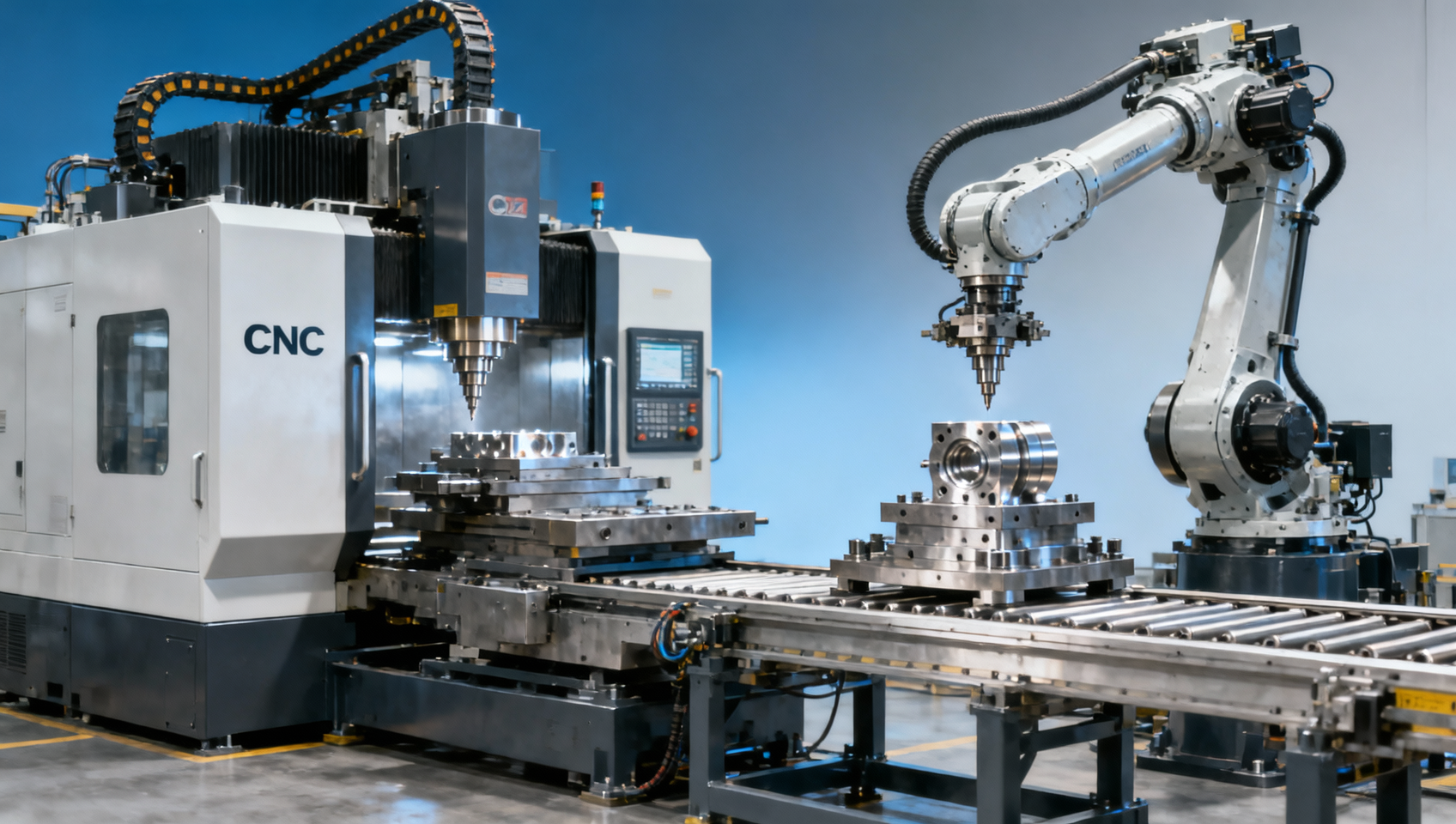
Industrial Automation initiatives often start strong but lose momentum when strategy, systems, and shop-floor realities fall out of sync. In today’s Global Manufacturing landscape, companies investing in industrial CNC, automated production, CNC milling, and Industrial Robotics must align technology with the full Production Process. This article explores why early wins in the Manufacturing Industry fail to scale—and what leaders, buyers, and operators can do next.
For manufacturers using CNC lathes, machining centers, multi-axis systems, automated assembly cells, and flexible production lines, the first phase of automation often delivers visible gains within 3 to 6 months. Cycle time drops, labor bottlenecks ease, and OEE may improve by 5% to 15% in a pilot area. Yet many projects stall before plant-wide expansion because the original success was narrower than it appeared.
This matters to four groups at once: researchers comparing technology paths, operators working with real machine constraints, procurement teams managing supplier risk, and decision-makers trying to justify capital investment. In CNC and precision manufacturing, automation is never only about buying equipment. It is about process design, integration discipline, maintenance readiness, data visibility, and workforce adoption across every shift.
Why early automation wins do not automatically scale
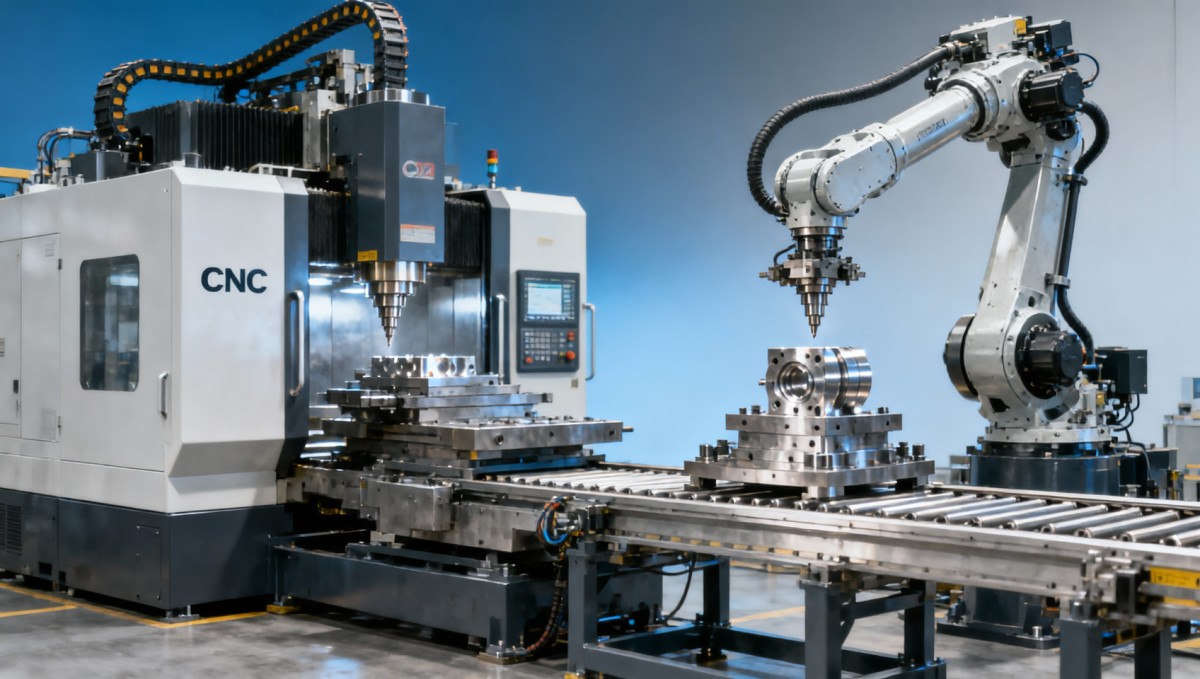
Many industrial automation projects succeed in one line, one machine family, or one product mix, then fail in expansion because the pilot was protected from normal factory variability. A CNC milling cell running 2 standardized part numbers is far easier to automate than a mixed workshop handling 20 to 50 part variants, frequent tooling changes, and urgent schedule adjustments.
The first reason is mismatch between pilot conditions and real operating conditions. In early stages, teams often assign their best engineers, simplify material flow, and postpone difficult interfaces such as ERP, MES, or quality traceability. Once the project enters full production, the system must handle shift changes, fixture wear, spindle load variation, robot recovery logic, and upstream delivery delays.
The second reason is that initial KPIs are often too narrow. A project may report a 12% cycle-time improvement or a 20% reduction in manual loading, but ignore scrap rate, changeover time, tool life stability, and alarm recovery time. In precision manufacturing, a 30-second gain per cycle can disappear if setup time increases by 25 minutes per batch or if rework rises by 2%.
A third cause is weak ownership after launch. During installation, suppliers, automation integrators, and internal project teams are highly engaged. After handover, support becomes fragmented. Operators focus on output, maintenance focuses on uptime, quality focuses on tolerances, and management focuses on ROI. Without a single governance rhythm, small issues accumulate for 8 to 12 weeks and the project loses confidence.
Typical pilot-to-scale gaps in CNC environments
The gap is usually not one dramatic failure but a stack of smaller misalignments. In machine tool and automated production settings, these misalignments show up in both hardware and process management.
- Robot or gantry loading works at 85% efficiency in stable runs but drops below 65% when part variation increases.
- Tool management is not linked to production scheduling, causing unplanned stoppages every 1 to 2 shifts.
- Fixture design supports one geometry family well but lacks flexibility for medium-mix production.
- Alarm handling depends on one engineer instead of documented recovery steps for all operators.
When these issues are not visible in pilot reporting, leaders wrongly assume the model is ready for replication. That is why scaling automation in the manufacturing industry requires a wider evaluation framework than the one used to approve the initial budget.
The hidden friction points: systems, people, and process variation
In CNC and precision machine tool operations, projects often stall because digital systems, equipment logic, and human workflows evolve at different speeds. A machining center may be connected to data collection in 2 weeks, but reliable use of that data for scheduling, maintenance, and quality control may take 3 to 6 months. That gap creates frustration because the plant appears connected but does not operate in a coordinated way.
Process variation is especially important. Automotive and electronics production may support high repetition, while aerospace, energy equipment, and custom components often involve low-volume, high-mix complexity. In those environments, industrial robotics and automated production lines must tolerate wider variation in part loading, probing, tool wear compensation, and inspection frequency. If the automation design only fits one production pattern, expansion slows quickly.
People-related issues are just as decisive as technical integration. Operators may receive 4 hours of startup training, while maintenance technicians need 20 to 40 hours to diagnose PLC faults, servo issues, pneumatic failures, and sensor drift. If that deeper training is missing, every unexpected stoppage returns control to the supplier, increasing response time and reducing internal confidence in the system.
Another friction point is fragmented accountability. Procurement may buy based on machine specifications, production may focus on throughput, and management may expect labor savings within 6 to 12 months. But without agreed thresholds for utilization, scrap, MTBF, spare parts coverage, and software support, the project lacks shared definitions of success. That confusion causes projects to “pause” instead of formally failing.
Operational symptoms that signal a stalled project
The following table summarizes common warning signs seen in industrial CNC and automation deployments. These signs usually appear before a full project slowdown becomes visible in financial reporting.
A stalled project rarely means the technology is wrong. More often, it means system dependencies were underestimated. For buyers and plant leaders, these symptoms are a signal to review integration depth, training coverage, and process discipline before adding more capital equipment.
Where machine tool environments are most vulnerable
Risk is highest where machining precision, frequent product switching, and labor variability overlap. Multi-axis machining, high-tolerance disc parts, and automated loading of irregular shafts are typical examples. In such cases, even a ±0.02 mm process drift or a 5-minute changeover delay can cascade through downstream inspection and assembly.
Plants with international supply chains also face timing pressure. If imported components, cutters, or control parts have lead times of 4 to 10 weeks, any missing spare-parts plan can freeze automation expansion. Global manufacturing demands not only advanced equipment, but resilient operational planning around it.
How buyers and decision-makers should evaluate automation beyond the pilot
Procurement and executive teams should evaluate automation in at least 4 layers: process fit, integration complexity, lifecycle support, and scale economics. Buying only on machine accuracy, robot payload, or quoted takt time is not enough. In CNC machine tool applications, the true question is whether the solution remains stable across actual product mix, operator skill levels, and maintenance conditions.
A strong assessment starts with process segmentation. Separate highly repeatable production from medium-mix and high-mix work. For example, a 24-hour unmanned cell may be viable for 3 consistent part families, while a semi-automated cell with assisted changeover may be better for 15 variable SKUs. This distinction prevents over-automation in areas where flexibility matters more than headline utilization.
Decision-makers also need a realistic cost horizon. Initial CAPEX is only part of the picture. Spare parts, software revisions, fixturing updates, offline programming, safety validation, and operator retraining can add 10% to 25% over the first 12 to 24 months. When these costs are excluded from planning, expansion phases are often delayed or downsized.
For the CNC and precision manufacturing sector, vendor evaluation should include not just equipment supply but service capability across regions. A technically strong supplier with weak field support can become a major bottleneck, especially when response windows exceed 48 hours and the plant runs 2 or 3 shifts.
A practical procurement checklist
The table below helps procurement teams compare automation proposals with more discipline. It is especially useful when evaluating machine tools, robot cells, automated loading systems, and flexible production modules.
This kind of checklist shifts procurement from price comparison to operating-value comparison. It also gives enterprise decision-makers a clearer basis for approving phased investment instead of a one-time purchase that is difficult to absorb operationally.
Questions that should be asked before expansion
- Can the same automation logic handle at least 70% to 80% of the expected part family without manual intervention?
- Have alarm recovery, tool replacement, and fixture maintenance been documented in step-by-step work instructions?
- Is internal maintenance able to solve the top 10 failure modes without waiting for the original integrator?
- Does the ROI model include service, training, and downtime exposure over the next 12 months?
If the answer to two or more of these questions is unclear, the project is not truly scale-ready, even if the pilot metrics look positive on paper.
What operators and plant teams can do to keep momentum after launch
Sustaining industrial automation depends on disciplined daily management. On the shop floor, the first 90 days after go-live are often more important than the commissioning week itself. During this period, teams should log downtime causes by category, track top recurring alarms, verify tool life assumptions, and compare programmed cycle time against actual takt under real staffing conditions.
Operators need more than operating instructions. They need exception-handling logic: what to do if a gripper misloads, if a probe reading drifts, if a chip evacuation fault appears after 6 hours, or if fixture clamping force changes. A 1-page startup SOP is not enough for complex CNC automation. Plants usually need layered documentation covering routine use, abnormal recovery, and escalation paths.
Maintenance planning should also be redesigned for automation. Traditional reactive maintenance often fails when robotics, sensors, servo systems, and CNC equipment are linked. Plants should define inspection frequencies for pneumatic components, spindle condition, lubrication, end-of-arm tooling wear, and backup batteries. Even a 15-minute weekly check can prevent several hours of downtime later.
Cross-functional review is equally important. A weekly 30-minute meeting between production, quality, maintenance, and process engineering is often enough to surface issues before they become structural barriers. Without this routine, each team sees only part of the problem, and the automation cell gradually becomes isolated from the broader production system.
A 5-step stabilization routine for CNC automation cells
- Track the top 5 downtime reasons every shift and review them every 7 days.
- Compare planned versus actual cycle time at least once per part family, not just per machine.
- Validate tool life and fixture repeatability after the first 200 to 500 cycles.
- Run operator and maintenance refresher training every 30 to 60 days during ramp-up.
- Create a spare-parts list ranked by criticality, with stock coverage for components that can stop production immediately.
These actions are practical, low-cost, and highly relevant for machine tool plants expanding automated production. They transform automation from a showcase asset into an operational system that can survive variability, turnover, and changing order patterns.
FAQ: common questions after early success
How long should a stabilization period last before scaling?
A practical benchmark is 8 to 12 weeks of stable operation across normal shifts, product changes, and routine maintenance. If the cell only performs well during supervised daytime runs, it is too early to replicate the model across the plant.
Which KPI is most often misunderstood?
Cycle time is often overvalued on its own. For CNC and automated production, a combined view of cycle time, first-pass yield, changeover duration, and downtime recovery gives a far more realistic picture of scale potential.
Should every process be fully automated?
No. In many precision manufacturing environments, partial automation delivers a better balance of flexibility and return. Processes with high variation, low volume, or frequent engineering changes may be better served by modular or semi-automated solutions.
A more scalable path: phased integration for global manufacturing operations
The most scalable automation programs are usually phased, not rushed. Instead of trying to automate an entire production process in one step, leading manufacturers break the work into defined stages: process standardization, pilot automation, data integration, workforce enablement, and controlled replication. This sequence reduces failure risk because each stage is validated before the next one begins.
In the CNC machine tool industry, this phased approach is especially valuable because machining precision, tooling strategy, and material behavior are tightly linked. A production line that cuts alloy steel, aluminum, and heat-treated components may need different automation logic, chip management, and inspection triggers. Trying to force one universal template too early can slow the whole investment program.
Global suppliers and multinational factories should also plan around local capability differences. A line that works well in one country with experienced automation technicians may require more remote support, simpler HMI design, or stronger preventive maintenance routines in another location. Standardization matters, but local execution capability matters just as much.
For enterprise leaders, the goal is not only to buy advanced machine tools, industrial robots, or automated assembly units. The goal is to create a repeatable production model that can absorb new parts, new shifts, and new plants without losing control of quality, uptime, or service cost. That is what turns early wins into sustainable manufacturing performance.
Recommended phased rollout model
The following structure offers a realistic roadmap for companies moving from isolated pilot results to broader smart factory deployment.
This model helps companies avoid the common mistake of moving from one successful cell directly to multi-line investment. By respecting process maturity and support readiness, manufacturers improve their chance of achieving durable gains in throughput, consistency, and labor efficiency.
Industrial automation projects stall after early wins when the factory scales faster than the underlying process discipline. In CNC machining, precision manufacturing, and automated production, long-term success depends on broader KPI design, realistic procurement criteria, cross-functional ownership, and phased deployment rather than pilot enthusiasm alone.
For researchers, operators, buyers, and decision-makers, the practical takeaway is clear: evaluate automation as a production system, not only as equipment. If you are reviewing machine tool upgrades, robotic loading cells, or smart factory expansion plans, now is the right time to assess your process fit, support model, and scale-readiness. Contact us to discuss your application, get a tailored solution path, or learn more about automation strategies for CNC and precision manufacturing.
PREVIOUS ARTICLE
Recommended for You
 Heavy-duty Machining Center for mold making: Why coolant filtration standards evolve faster than OEM manualsMachine Tool Industry Editorial Team
 Quick-change Fixture Design for CNC turning: Why clamping force consistency drops after 200 cyclesCNC Machining Technology Center
 5 Axis Machining for impeller manufacturing: Why toolpath smoothing affects surface fatigue lifeCNC Machining Technology Center
 Lean Production Process implementation: Where value stream mapping fails to expose hidden machine downtimeManufacturing Market Research Center
 Modular Tooling System for flexible manufacturing: Why interface repeatability degrades faster than expectedMachine Tool Industry Editorial Team
 Industrial Automation control system for CNC machines: When cybersecurity updates disrupt scheduled maintenanceMachine Tool Industry Editorial Team

Aris Katos
Future of Carbide Coatings
15+ years in precision manufacturing systems. Specialized in high-speed milling and aerospace grade alloy processing.
▶
Industrial Automation control system for CNC machines: When cybersecurity updates disrupt scheduled maintenanceMachine Tool Industry Editorial Team▶
Automated Production Line troubleshooting: Why intermittent faults resist standard diagnostic treesMachine Tool Industry Editorial Team▶
Automated machine tool: When integrated vision systems introduce new validation headachesMachine Tool Industry Editorial Team▶
Industrial Robotics Payback Gets Delayed by These GapsMachine Tool Industry Editorial Team▶
Is an automated lathe worth it for mid-volume production?Machine Tool Industry Editorial Team
Mastering 5-Axis Workholding Strategies
Join our technical panel on Nov 15th to learn about reducing vibrations in thin-wall components.

Providing you with integrated sanding solutions
Before-sales and after-sales services
Comprehensive technical support