• Global CNC market projected to reach $128B by 2028 • New EU trade regulations for precision tooling components • Aerospace deman
NYSE: CNC +1.2%LME: STEEL -0.4%

Automated Production Line faults that disrupt output for hours
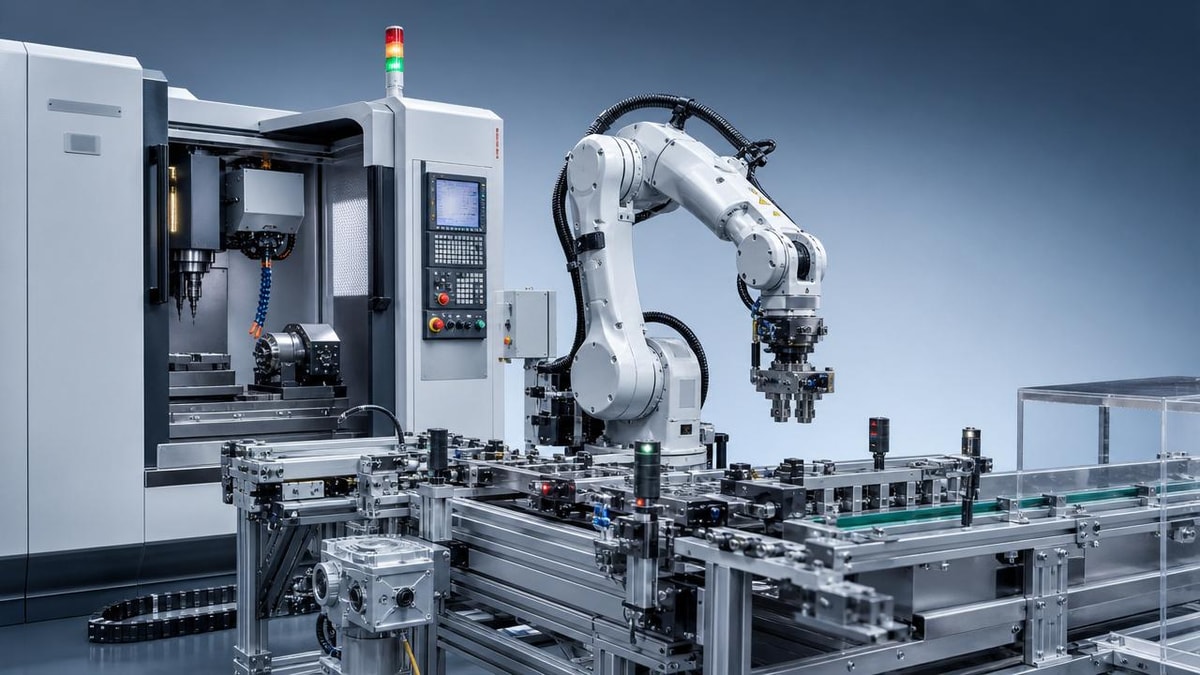
When an Automated Production Line suddenly stops, even a minor fault can disrupt output for hours and trigger costly delays across the shop floor. For after-sales maintenance teams, identifying the real cause quickly is critical to restoring stability, protecting equipment performance, and reducing production losses. This article explores the most common faults, practical troubleshooting priorities, and effective response strategies in modern automated manufacturing environments.
What an Automated Production Line Fault Really Means
In industrial practice, an Automated Production Line fault is not limited to a complete machine shutdown. It can also include repeated alarms, unstable cycle times, communication loss between stations, positioning deviations, failed part transfers, sensor misreads, spindle or servo overloads, robotic handling errors, and software logic conflicts. For after-sales maintenance personnel, this broader definition matters because output losses often begin long before the line fully stops.
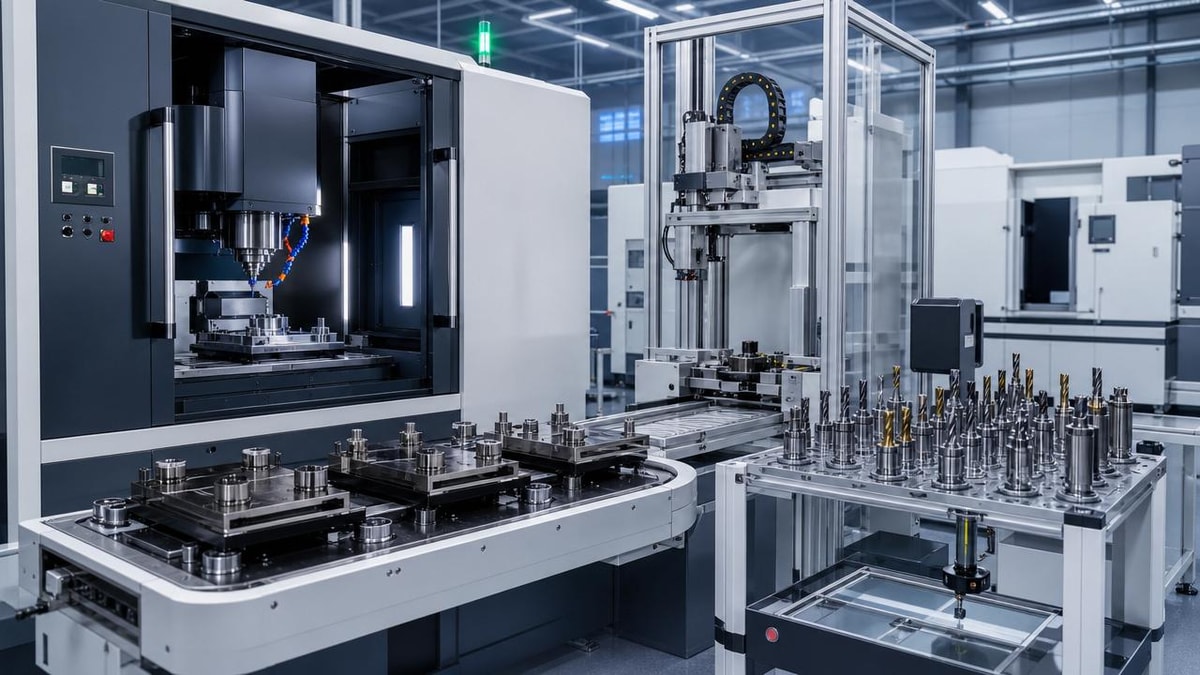
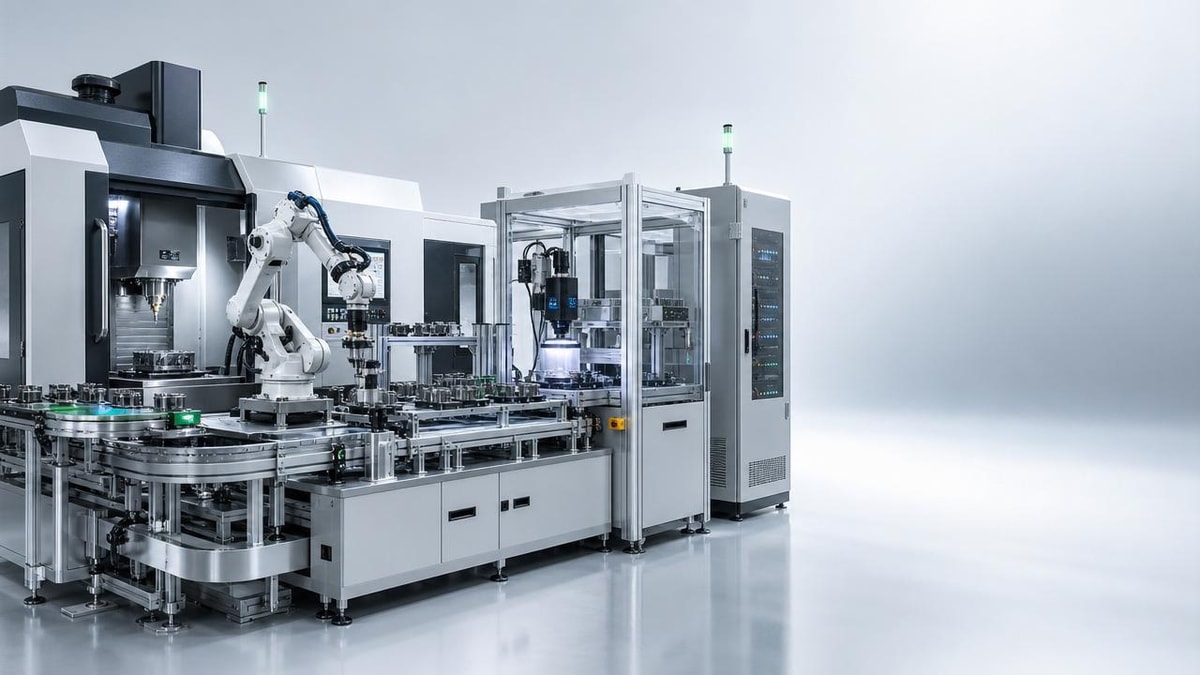
Across CNC machining, precision assembly, and flexible manufacturing systems, faults usually spread through dependencies. A single issue in a conveyor, tool changer, PLC signal, safety interlock, or industrial robot can block upstream feeding and downstream processing within minutes. That is why the health of an Automated Production Line must be judged as a system condition, not as the status of one machine alone.
This is especially relevant in sectors such as automotive, aerospace, electronics, and energy equipment, where automated cells combine CNC lathes, machining centers, fixtures, gauging devices, transfer units, and digital controls. High precision and high throughput create efficiency, but they also reduce tolerance for hidden failures. A minor deviation in clamping force or axis feedback may look small at first, yet it can lead to scrap, tool breakage, or hours of stopped production.
Why the Industry Watches These Failures So Closely
Modern manufacturing is moving toward tighter takt times, multi-axis machining, robotic loading, and digital coordination between equipment. As a result, every Automated Production Line is expected to deliver repeatable quality with limited unplanned downtime. When a fault appears, the impact is no longer local. It affects delivery schedules, labor allocation, maintenance costs, spare parts planning, and customer confidence.
In the CNC machine tool industry, the challenge is even greater because precision equipment operates under demanding mechanical, electrical, and thermal conditions. Ball screws, linear guides, spindle systems, hydraulic units, lubrication circuits, drives, encoders, and tool magazines must work in close coordination. At the line level, these assets are integrated with robots, automated storage, vision systems, and production management software. The more integrated the line becomes, the more valuable fast fault isolation becomes.
For after-sales teams, this creates a clear mission: restore production quickly, prevent repeat failures, and convert fault events into long-term reliability improvements. Good support is no longer just emergency repair. It includes remote diagnostics, alarm interpretation, root-cause analysis, preventive recommendations, and communication with operators, production managers, and OEM service networks.
A Practical Overview of Fault Sources in Automated Production Line Systems
Most disruptions on an Automated Production Line come from a limited number of source categories. Understanding them helps maintenance teams narrow the search and avoid losing time on symptoms only.
In real service situations, more than one category may be involved. A worn fixture can trigger a sensor fault, which then causes the PLC sequence to stop the cell. That is why experienced personnel avoid treating alarm messages as the final diagnosis. The alarm tells you where control logic detected risk, not always where the original problem started.
Common Fault Patterns That Disrupt Output for Hours
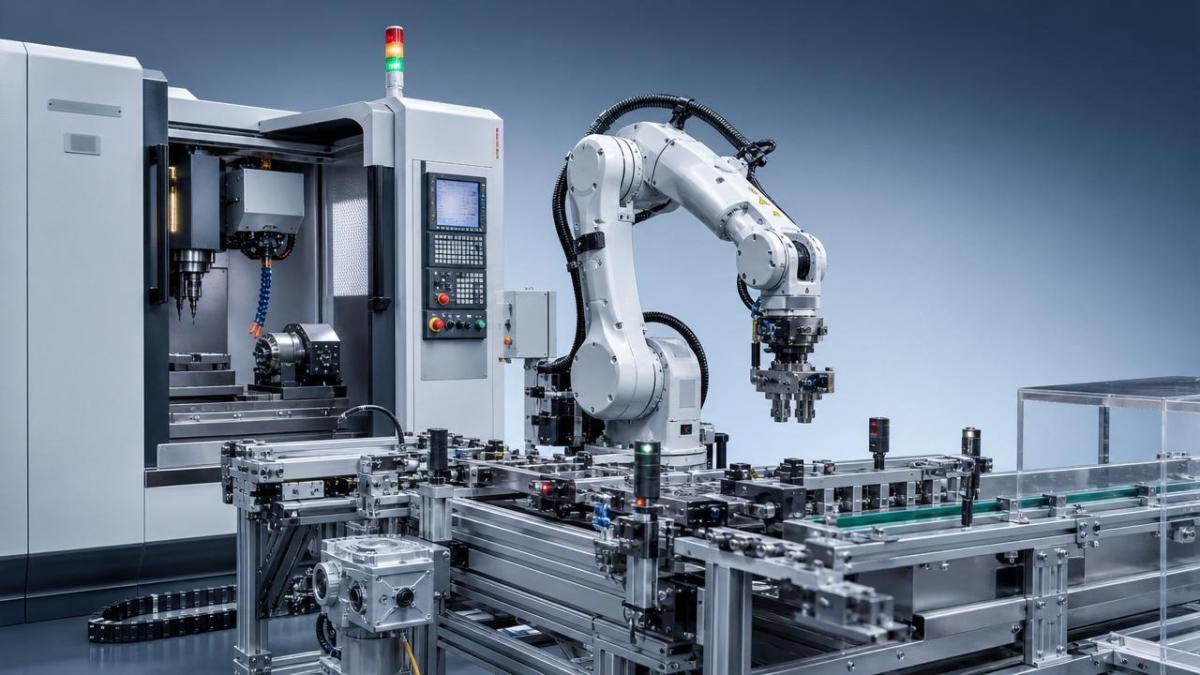
Several fault patterns appear repeatedly across Automated Production Line environments. The first is the intermittent fault. These are among the hardest to solve because the line may restart after reset, only to fail again under load. Common causes include loose connectors, unstable power quality, thermal expansion, damaged cables in moving chains, and borderline sensors affected by contamination.
The second pattern is sequence dependency failure. In automated lines, one station often waits for confirmation from another. If a robot does not complete part placement, if a pallet does not reach the expected switch, or if a machine door signal is delayed, the next operation is blocked. The visible stoppage may occur at station five, while the true cause started at station three.
The third pattern is precision drift. CNC-based production lines can continue running while dimensions gradually move out of tolerance due to tool wear, spindle heat, weak clamping, or axis backlash. This may not stop the line immediately, but it disrupts output through rework, inspection holds, and unplanned adjustment time. For maintenance teams, quality instability should be treated as a production fault, not just a process issue.
A fourth pattern is recovery failure after a stop. Sometimes the initial event is simple, but restarting the Automated Production Line becomes difficult because products are stuck between stations, axis positions are lost, interlocks remain active, or the line sequence cannot safely resume. This is where clear restart procedures and machine state visibility become essential.
Where After-Sales Maintenance Teams Should Focus First
For after-sales support, speed matters, but speed without structure often extends downtime. A strong first response on an Automated Production Line begins with scope definition. Is the issue limited to one machine, one transfer point, one robot, or the full line? Has the fault appeared before? Did it start after maintenance, parameter changes, tooling replacement, software update, collision, or power fluctuation?
Next comes evidence collection. Alarm history, PLC logs, operator comments, HMI status, cycle count, sensor indicators, axis load data, and recent maintenance records provide a much faster path to root cause than repeated resets. In many plants, valuable time is lost because line personnel clear alarms before recording them. After-sales teams should promote a simple rule: document first, reset second.
Then the troubleshooting path should move from safety and basic conditions toward detailed causes. Verify emergency stops, safety doors, air pressure, hydraulic pressure, lubrication status, power supply condition, and network communication before opening deeper diagnostic steps. In practice, many seemingly complex Automated Production Line faults come from basic state losses such as low air pressure, contaminated photoelectric sensors, or interrupted I/O signals.
Typical Troubleshooting Priorities by Equipment Type
Different parts of an Automated Production Line fail in different ways, so maintenance priorities should match equipment function.
Business Value of Faster Fault Recovery
Reducing fault duration on an Automated Production Line creates value far beyond maintenance metrics. Shorter recovery time protects customer delivery commitments and reduces overtime pressure. Better diagnosis lowers unnecessary part replacement and avoids repeated service visits. More accurate root-cause reporting supports engineering improvements and helps plant managers decide whether the issue is maintenance-related, process-related, or design-related.
In precision manufacturing, faster and more reliable fault handling also protects machine life. Repeated hard resets, forced manual movements, and rushed restarts can damage ballscrews, couplings, tooling systems, grippers, and workholding units. A disciplined response saves both output and assets. For companies investing in smart factory transformation, maintenance quality becomes part of overall production competitiveness.
Practical Recommendations for More Stable Automated Production Line Operation
First, standardize fault records. Every Automated Production Line should have a simple but consistent method for logging alarm code, fault time, station, probable cause, action taken, and restart result. Patterns become visible only when records are usable.
Second, separate symptom from root cause during service reviews. If the line stops on a sensor alarm every week, replacing the sensor repeatedly may not solve the issue. The true cause may be vibration, wiring fatigue, fixture shift, coolant contamination, or sequence timing that leaves no tolerance.
Third, build cooperation between OEM support, plant maintenance, and operators. Operators know the event sequence, maintenance teams understand equipment behavior, and OEM technicians provide parameter, control, and design insight. The best results come when these views are combined rather than isolated.
Fourth, give preventive maintenance a system focus. On an Automated Production Line, checks should include cables, connectors, pneumatic quality, lubrication, fixture repeatability, network stability, and calibration status, not only motor bearings or visible wear items. System reliability is built from small details maintained consistently.
Finally, prepare restart logic and recovery procedures before faults happen. Safe recovery after jams, interrupted cycles, robot stops, or in-process part retention can save hours. Clear instructions, backup files, and verified home sequences are as important as spare components.
Moving from Reactive Repair to Reliable Support
For after-sales maintenance personnel, the real challenge is not only fixing one Automated Production Line fault at a time. It is building a support approach that reduces recurrence, improves uptime, and aligns with the precision demands of modern manufacturing. In CNC machining and automated production environments, faults are rarely random. They usually leave traces in alarms, performance drift, sequence delays, and quality changes.
By combining structured diagnosis, equipment-specific priorities, accurate records, and preventive follow-up, maintenance teams can shorten downtime and turn service events into long-term reliability gains. For companies running advanced machine tools, robots, and integrated production cells, that shift is essential. A stable Automated Production Line is not only a technical goal; it is a direct driver of output, quality, and industrial competitiveness.
PREVIOUS ARTICLE
NEXT ARTICLE
Recommended for You
 Industrial Robotics payback depends on more than labor savingsManufacturing Market Research Center
 Shaft Parts machining problems that show up after final inspectionCNC Machining Technology Center
 Which Production Process changes bring the fastest output gains?CNC Machining Technology Center
 Industrial Automation projects fail when integration is underestimatedCNC Machining Technology Center
 CNC metal cutting costs rise fast when material data is wrongCNC Machining Technology Center
 High precision lathe claims to verify before accepting deliveryMachine Tool Industry Editorial Team

Aris Katos
Future of Carbide Coatings
15+ years in precision manufacturing systems. Specialized in high-speed milling and aerospace grade alloy processing.
▶
Automated Production Line faults that disrupt output for hoursMachine Tool Industry Editorial Team▶
Automated production works best when these process gaps are fixedMachine Tool Industry Editorial Team▶
World Intelligent Industry Expo 2026 in Tianjin, May 28Machine Tool Industry Editorial Team▶
Where Industrial Robotics Adds Value Beyond Simple Labor SavingsMachine Tool Industry Editorial Team▶
Automated Production Line Issues That Appear Only After Scale-UpMachine Tool Industry Editorial Team
Mastering 5-Axis Workholding Strategies
Join our technical panel on Nov 15th to learn about reducing vibrations in thin-wall components.

Providing you with integrated sanding solutions
Before-sales and after-sales services
Comprehensive technical support