• Global CNC market projected to reach $128B by 2028 • New EU trade regulations for precision tooling components • Aerospace deman
NYSE: CNC +1.2%LME: STEEL -0.4%

Automated production works best when these process gaps are fixed
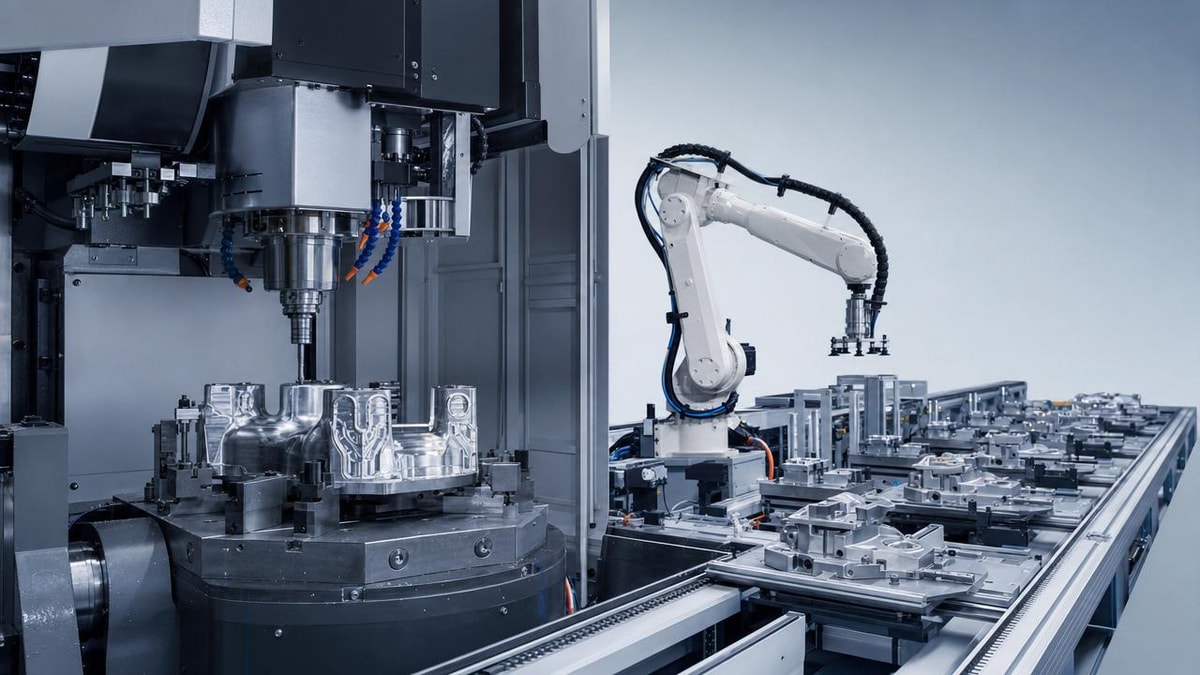
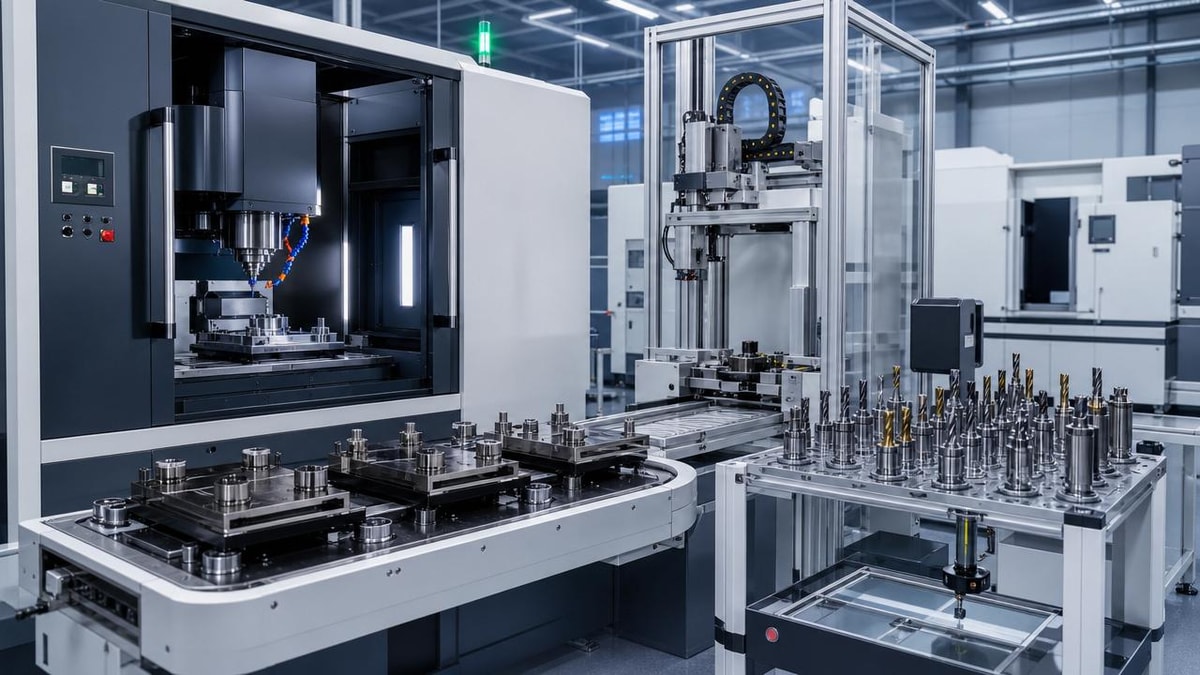
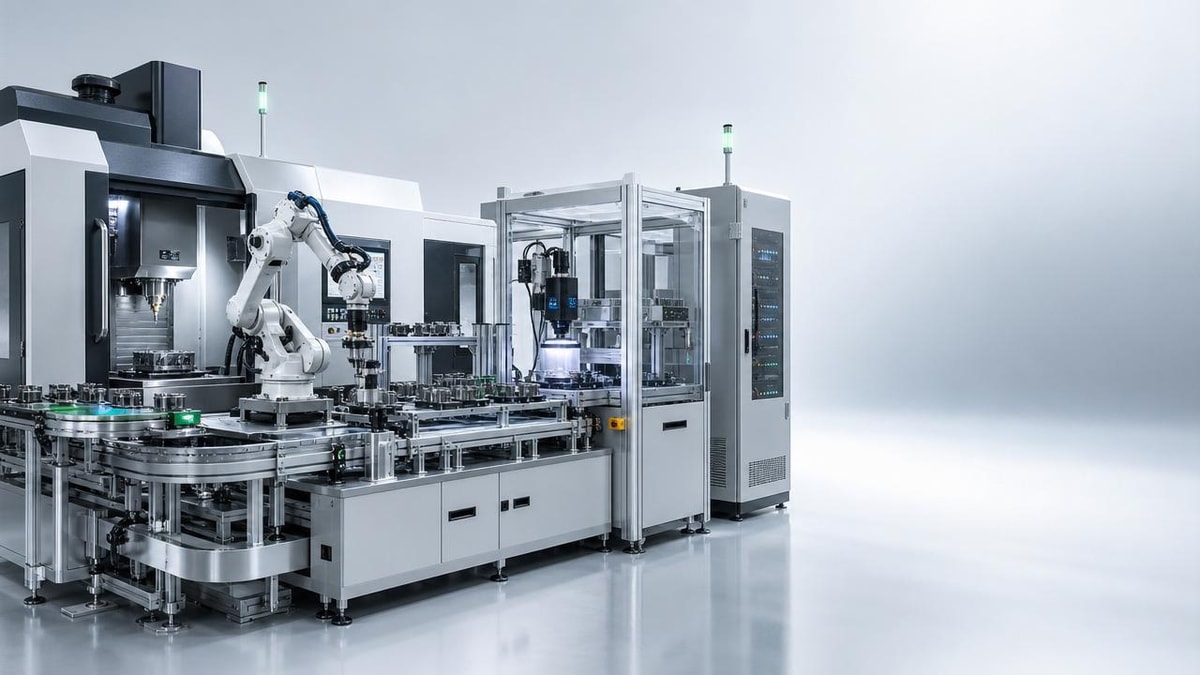
Automated production delivers its greatest value only when hidden process gaps are identified and resolved. For business decision-makers in manufacturing, issues such as disconnected workflows, inconsistent machining accuracy, tool change delays, and weak data integration can silently limit output and profitability. Understanding where these bottlenecks occur is the first step toward building a more efficient, reliable, and scalable production system.
Why automated production underperforms even after equipment investment
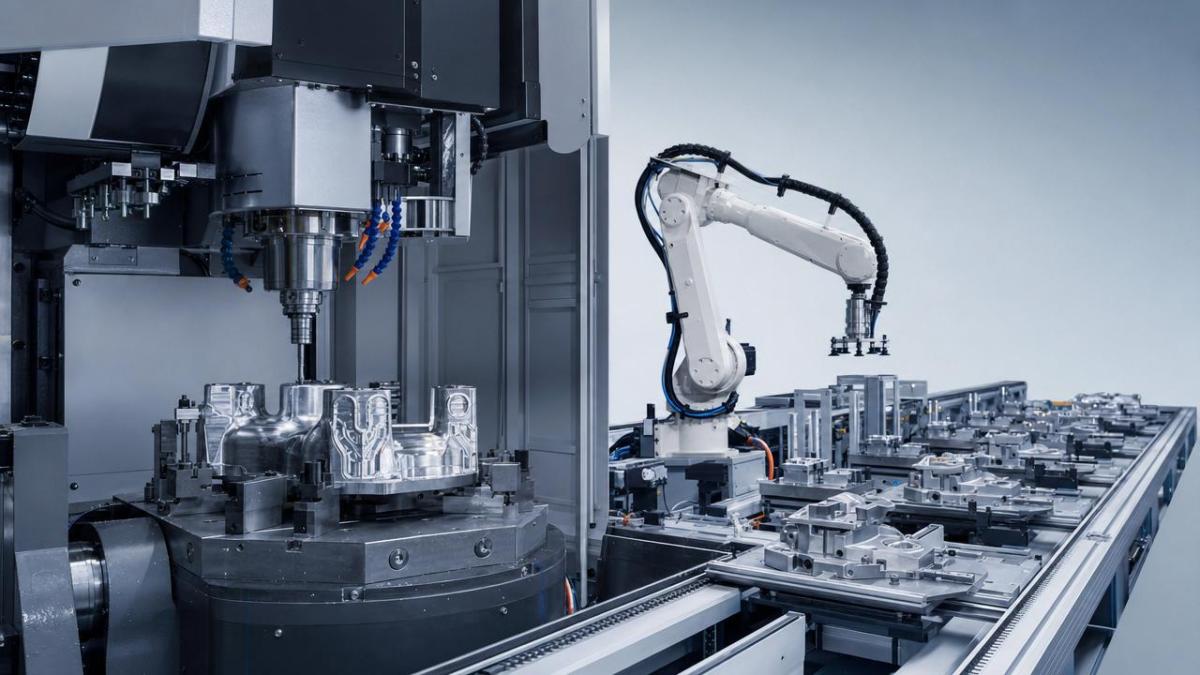
Many manufacturers assume that buying advanced CNC machines, robotic cells, or flexible lines will automatically improve throughput. In practice, automated production often falls short because the core problem is not machine capability alone. The real issue is the gap between equipment potential and process discipline across planning, setup, tooling, inspection, maintenance, and data flow.
This is especially true in CNC machining and precision manufacturing. Modern machine tools can deliver high repeatability, multi-axis complexity, and efficient cycle times. Yet if programs are not standardized, fixtures are unstable, tool life is poorly monitored, or production scheduling changes too often, the line may run automatically while still losing money.
For decision-makers, the most important question is not whether to automate. It is where automated production is leaking value today. In most factories, losses come from a limited number of recurring process gaps:
- Production planning is disconnected from actual machine capacity, leading to idle time, queue buildup, or urgent job switching.
- Machining stability varies across shifts because tool offsets, clamping conditions, or operator practices are inconsistent.
- Inspection data does not return quickly to the machining process, so quality drift is found too late.
- Machine, robot, tooling, and ERP or MES systems are not integrated, reducing the visibility needed for fast decisions.
When these weaknesses are fixed, automated production becomes more than a capital project. It becomes a controllable operating system for scalable manufacturing across automotive parts, aerospace structures, energy components, and electronics production.
Which process gaps most often limit automated production in CNC manufacturing?
In the global CNC machine tool industry, process gaps are rarely dramatic. More often, they are small but persistent interruptions that accumulate over thousands of cycles. A few seconds of tool change delay, slight fixture variation, incomplete material traceability, or fragmented maintenance records can create a measurable loss in OEE, scrap rate, and delivery performance.
The table below highlights common process gaps, their operational symptoms, and their likely business impact in automated production environments.
These gaps matter because automated production depends on consistency. Automation amplifies strengths, but it also amplifies weaknesses. A manual process can sometimes absorb variation through operator judgment. A highly automated line cannot do that efficiently unless the upstream process is stable and the data loop is closed.
Why these issues are growing more important
Global manufacturers are under pressure to produce tighter tolerances, shorter batches, and faster delivery. At the same time, many factories are integrating industrial robots, multi-axis machining centers, automated pallet systems, and smart factory software. This raises the complexity of execution. The more digital and connected the factory becomes, the more expensive unmanaged process gaps become.
How to diagnose bottlenecks before expanding automated production
Before approving another equipment purchase, business leaders should verify whether current assets are already constrained by process design. A structured diagnostic review often reveals that the best return comes from fixing workflows, not just adding machines. In CNC and precision manufacturing, the diagnosis should combine production data, engineering review, and shop-floor observation.
A practical assessment sequence
- Map the process from order release to final inspection, including programming, setup, machining, deburring, measurement, and packing.
- Measure real machine utilization rather than planned capacity. Separate cutting time from waiting time, setup time, and fault recovery time.
- Review quality loss points by part family. Compare scrap, rework, and dimensional drift by machine, shift, fixture type, and tool supplier.
- Check whether inspection and machine compensation are connected. If measurement results do not trigger timely adjustment, automated production remains reactive.
- Evaluate scheduling logic. If urgent jobs frequently override sequence discipline, automation will suffer from avoidable changeovers and unstable flow.
This kind of review is valuable across sectors. Automotive suppliers may focus on takt stability and traceability. Aerospace manufacturers may focus on precision, process validation, and documentation. Energy equipment producers may prioritize heavy-part handling, long cycle reliability, and dimensional consistency over larger work envelopes.
What decision-makers should compare when selecting an automated production improvement path
Not every factory needs the same response. Some operations need process standardization first. Others need a better machine-tooling-fixture combination. Others are ready for software integration or robotic loading. The right decision depends on production mix, tolerance requirements, labor structure, and delivery pressure.
The comparison below helps decision-makers choose where to invest first when automated production is underperforming.
This comparison shows why investment timing matters. If the root problem is fixture instability or poor scheduling, buying a more advanced machine may not fix automated production. But if the current process is stable and demand is growing, equipment upgrades can unlock major value.
Which technical checkpoints matter most in precision automated production?
In industries such as automotive, aerospace, energy equipment, and electronics, technical detail drives business performance. Decision-makers do not need to manage every machine parameter directly, but they do need to understand which checkpoints influence uptime, quality, and scalability.
Key checkpoints to review with engineering and suppliers
- Machine repeatability and thermal stability for the target part tolerance and cycle duration.
- Tool magazine capacity, tool life management, and spare tool logic for unattended production windows.
- Fixture change speed, locating repeatability, and compatibility with multiple part variants.
- Integration with probes, measuring systems, bar feeders, robots, pallet pools, or conveyors where relevant.
- Connectivity with MES, ERP, or machine monitoring platforms for status visibility and traceability.
- Preventive maintenance access, spare parts support, and fault diagnosis responsiveness.
These checkpoints are not theoretical. They directly affect whether automated production can support long runs of complex shaft components, precision discs, structural parts, and mixed-batch orders without frequent manual intervention.
How procurement teams can reduce risk when buying automation-related equipment
Procurement decisions in machine tool projects are often complicated by long lead times, limited technical comparability, and pressure to justify ROI quickly. A practical buying framework helps align finance, operations, and engineering before a purchase order is issued.
Procurement checklist for automated production projects
- Define the target outcome clearly: more output, lower scrap, shorter setup, reduced labor dependency, or improved traceability.
- Request process-based proposals rather than catalog-based offers. Ask how the supplier addresses your actual part mix and bottlenecks.
- Confirm interface needs early, including robot handoff, automation loading method, software protocol, inspection connection, and data export requirements.
- Review service scope in detail: installation support, training, spare parts planning, maintenance guidance, and commissioning milestones.
- Compare total operating impact, not just equipment price. Include downtime risk, tooling consumption, floor integration, and operator skill requirements.
For international sourcing, it is also wise to review common compliance and documentation expectations such as electrical safety conformity, export packaging, installation documentation, and process records required by the destination market or industry segment.
Cost, alternatives, and the real ROI logic behind automated production
A common mistake is to evaluate automated production only through labor savings. In CNC and precision manufacturing, ROI is usually broader. It includes machine utilization, quality consistency, changeover reduction, lower dependence on scarce operators, better delivery stability, and capacity expansion without proportional headcount growth.
At the same time, not every factory needs a fully integrated smart line. Some companies gain strong returns from partial automation combined with tighter process control. Others benefit more from better tooling strategy or fixture redesign than from immediate robot investment.
Typical alternatives to consider
- Semi-automated loading instead of full robotic cells when part variety is high and batch sizes are small.
- Offline presetting and modular fixtures before purchasing new machines for setup-heavy operations.
- Machine monitoring and maintenance digitization before larger capital expansion when uptime is the main issue.
- Multi-axis process consolidation when parts currently require multiple setups and inter-machine transfers.
For decision-makers, the key is sequencing. The best automated production strategy is often a staged one: stabilize the process, digitalize visibility, then scale automation where repeatability and demand justify it.
FAQ: what business leaders often ask before upgrading automated production
How do we know whether automated production problems come from machines or process design?
Start by separating technical downtime from process-related losses. If the machine is available but waits for setup, material, approval, or tool replacement, the issue is usually process design rather than machine capability. Reviewing OEE detail, first-pass yield, changeover records, and part-family performance will usually reveal the main source.
Which factories benefit most from fixing process gaps before buying more equipment?
Factories with high-mix machining, repeat quality issues, unstable scheduling, or weak inspection feedback benefit the most. In these environments, automated production can improve quickly through standardization, better tooling logic, and stronger data visibility, often at lower cost than immediate capital expansion.
What should we ask suppliers during solution evaluation?
Ask how the proposed solution handles your part geometry, material type, tolerance band, expected batch size, automation interface, and target changeover time. Also ask what data can be captured, how maintenance is supported, and which process assumptions must be true for the projected result to be realistic.
How long does implementation usually take?
The timeline depends on scope. A process standardization and monitoring project may move faster than a new CNC line with robotics and software integration. Decision-makers should plan for engineering review, interface confirmation, installation, trial production, staff training, and production ramp-up rather than focusing only on shipment lead time.
Why informed partners matter when improving automated production
The CNC machine tool industry is evolving toward higher precision, stronger automation, and deeper digital integration. That creates opportunity, but it also increases the cost of poor decisions. Business leaders need partners who understand machine capability, tooling logic, process flow, and international manufacturing trends across sectors such as automotive, aerospace, energy, and electronics.
Our platform focuses on the global CNC machining and precision manufacturing industry, helping decision-makers evaluate technology, compare solution paths, and understand market developments that influence procurement and production strategy. If you are reviewing automated production performance or planning your next investment step, you can contact us to discuss part requirements, solution selection, delivery expectations, integration concerns, certification questions, sample support, and quotation planning.
A productive conversation usually starts with a few concrete points: your target parts, current bottlenecks, expected output, accuracy requirements, batch characteristics, and preferred timeline. With that information, it becomes much easier to identify whether the best next move is process optimization, equipment matching, automation integration, or a phased upgrade strategy.
PREVIOUS ARTICLE
Recommended for You
 Industrial Robotics payback depends on more than labor savingsManufacturing Market Research Center
 Shaft Parts machining problems that show up after final inspectionCNC Machining Technology Center
 Which Production Process changes bring the fastest output gains?CNC Machining Technology Center
 Industrial Automation projects fail when integration is underestimatedCNC Machining Technology Center
 CNC metal cutting costs rise fast when material data is wrongCNC Machining Technology Center
 High precision lathe claims to verify before accepting deliveryMachine Tool Industry Editorial Team

Aris Katos
Future of Carbide Coatings
15+ years in precision manufacturing systems. Specialized in high-speed milling and aerospace grade alloy processing.
▶
Automated Production Line faults that disrupt output for hoursMachine Tool Industry Editorial Team▶
Automated production works best when these process gaps are fixedMachine Tool Industry Editorial Team▶
World Intelligent Industry Expo 2026 in Tianjin, May 28Machine Tool Industry Editorial Team▶
Where Industrial Robotics Adds Value Beyond Simple Labor SavingsMachine Tool Industry Editorial Team▶
Automated Production Line Issues That Appear Only After Scale-UpMachine Tool Industry Editorial Team
Mastering 5-Axis Workholding Strategies
Join our technical panel on Nov 15th to learn about reducing vibrations in thin-wall components.

Providing you with integrated sanding solutions
Before-sales and after-sales services
Comprehensive technical support