• Global CNC market projected to reach $128B by 2028 • New EU trade regulations for precision tooling components • Aerospace deman
NYSE: CNC +1.2%LME: STEEL -0.4%

Choosing a Metal Lathe for Mixed Materials Without Overspending
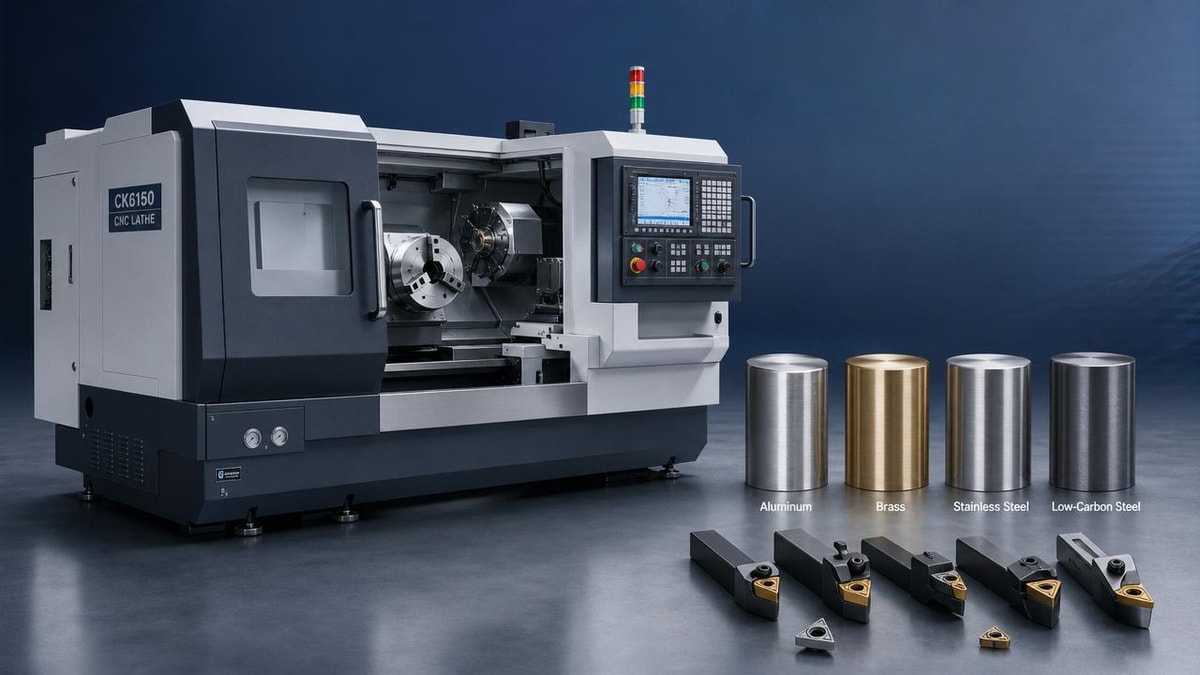
Choosing the right metal lathe for mixed materials can be challenging, especially when buyers need to balance machining performance, durability, and budget. From aluminum and brass to stainless steel and mild steel, the ideal solution depends on production needs, accuracy requirements, and long-term operating costs. This guide helps procurement professionals evaluate practical options without overspending.
Why is choosing a metal lathe for mixed materials more complicated than buying for a single material?
A metal lathe used for only one material can be optimized around a narrow set of cutting conditions. A machine dedicated to aluminum, for example, may prioritize speed, lighter cutting forces, and production efficiency. A lathe used mainly for stainless steel may need higher rigidity, more torque, stronger spindle performance, and better thermal stability. When procurement teams need one metal lathe to handle several materials, the decision becomes less about maximum speed in one job and more about balanced capability across many jobs.
Mixed-material machining creates conflicting demands. Aluminum and brass are generally easier to cut and reward higher spindle speeds. Mild steel needs stable power and reliable chip control. Stainless steel is tougher, generates more heat, and exposes weakness in rigidity, coolant delivery, and tool holding. If the machine is underbuilt, vibration, poor surface finish, and faster tool wear appear quickly. If it is over-specified, the buyer may pay for horsepower, controls, or automation features that never deliver a real return.
For buyers, the real objective is not simply to find the “best” metal lathe. It is to find the right capability band: enough strength, precision, and flexibility to machine the expected mix of materials without funding unnecessary complexity. That is especially important in a global CNC environment where machine cost is only one part of the total investment. Tooling, setup time, service support, energy use, training, and downtime all influence the final value of the purchase.
What should procurement teams define before comparing any metal lathe models?
Before reviewing quotations, procurement should build a short application profile. This reduces the risk of selecting by brochure claims alone. The first question is material mix. If 70% of the workload is aluminum and brass with only occasional stainless steel, the required machine specification is very different from a shop where stainless and alloy steel dominate daily production.
The second question is part geometry. Shaft parts, discs, flanges, bushings, and threaded components each place different demands on spindle bore, bed length, turret configuration, and tailstock support. The third question is tolerance and finish. A general-purpose workshop does not need the same thermal control and repeatability as a supplier producing precision components for automotive, energy, or electronics applications.
Procurement should also confirm batch size, shift pattern, expected annual output, and operator skill level. A manual or basic CNC metal lathe may be enough for small batches and maintenance work, while a higher-throughput CNC platform becomes more economical when repeat production, shorter cycle times, and lower labor dependence matter. Finally, buyers should clarify after-sales expectations: installation, spare parts, remote diagnostics, training, and lead time for service response. In many cases, these factors influence productivity more than a modest difference in purchase price.
Which machine features matter most when one metal lathe must cut aluminum, brass, mild steel, and stainless steel?
The most important feature is rigidity. A rigid bed, stable headstock, and solid turret or tool post help the metal lathe maintain accuracy across both easy-cutting and difficult materials. Stainless steel and larger steel workpieces amplify vibration, so a lightweight machine that performs well on aluminum may struggle in mixed-material use.
Spindle power and torque are the next priorities. Buyers should avoid focusing only on peak horsepower. A useful metal lathe for mixed materials needs a practical torque curve that supports lower-speed cutting in tougher materials while still allowing higher-speed machining for nonferrous metals. Variable speed range is essential because one machine must switch between very different cutting requirements.
Another key area is the guideway and feed system. Box ways can offer excellent damping and strength for heavier cuts, while linear guideways often support faster movement and productivity in lighter or medium-duty work. There is no universal winner; the right choice depends on whether the shop values heavier steel cutting or faster cycle time across mixed part programs.
Coolant and chip management should not be underestimated. Stainless steel and mild steel generate chips and heat that can quickly reduce tool life if evacuation is poor. Effective coolant delivery, a practical chip conveyor option, and easy maintenance access make a noticeable difference in long-term operation. Tooling interface compatibility is also important. A metal lathe that accepts common tool holders, boring bars, and collet systems helps buyers control ongoing tooling cost and supplier flexibility.
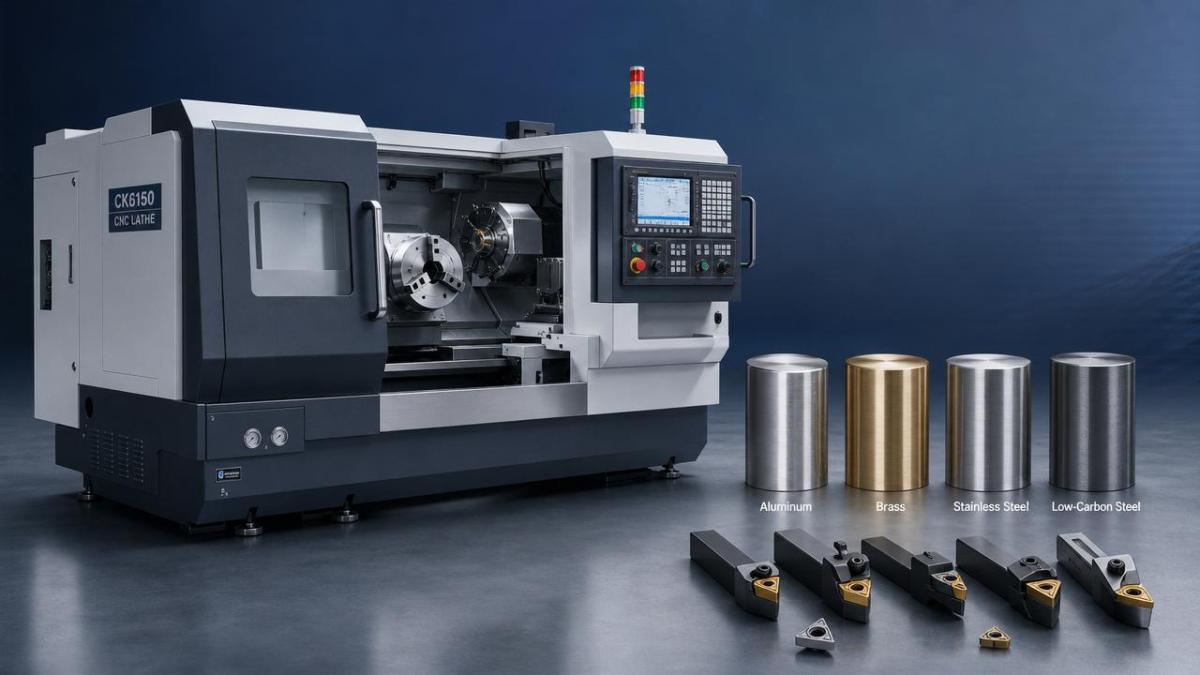
How can buyers avoid overspending while still getting reliable mixed-material performance?
Overspending usually happens when procurement teams buy for extreme scenarios instead of normal operating conditions. If the shop only occasionally machines stainless steel, it may not need a heavy, high-cost machine designed for continuous hard-material production. In that case, a mid-range CNC metal lathe with solid rigidity, suitable tooling, and good coolant performance may achieve the required result at a much better cost-to-output ratio.
Buyers should also separate essential features from optional features. Essential items often include stable construction, adequate spindle capacity, reliable controller, accessible service support, and common tooling compatibility. Optional features such as advanced automation, live tooling, sub-spindle capability, high-end probing, or premium digital integration should be justified by actual production plans rather than future possibilities that may never materialize.
A practical sourcing strategy is to compare three levels of machine: entry-level, balanced mid-range, and premium. For many procurement cases, the balanced mid-range metal lathe is the best answer. It usually provides enough capacity for steel and stainless jobs without carrying the high acquisition and maintenance cost of a premium production cell. The value decision should include not just machine price, but installation, tooling package, training, software, spare parts, and estimated downtime risk during the first two years.
Quick comparison table for mixed-material buying decisions
What are the most common mistakes when selecting a metal lathe for procurement?
One common mistake is treating spindle speed as the main indicator of machine quality. High speed sounds attractive, especially for aluminum, but mixed-material applications require balanced performance. Without torque and rigidity, speed alone does not deliver efficient cutting across steel and stainless workloads.
Another mistake is buying a metal lathe based only on current part size while ignoring future material changes. Procurement professionals often specify swing, distance between centers, and spindle bore correctly, but fail to account for tougher materials entering the product mix six to twelve months later. That can create a second capital purchase much sooner than expected.
A third mistake is underestimating support infrastructure. Even a well-priced machine can become expensive if spare parts are slow to arrive, service engineers are unavailable, or operators need extensive retraining. In international machine tool procurement, supplier responsiveness, documentation quality, and commissioning support are central buying criteria.
There is also a tooling-related mistake: assuming the metal lathe alone determines performance. In reality, insert grade, holder rigidity, coolant strategy, and workholding have major influence on cycle time and finish quality. A mid-priced machine with the right tooling package can outperform a more expensive setup that uses poor cutting conditions.
How should buyers compare total cost of ownership instead of purchase price alone?
Purchase price is visible, but operating cost decides whether the investment is efficient. When evaluating a metal lathe, buyers should estimate total cost of ownership across at least three to five years. This includes tooling consumption, energy use, preventive maintenance, replacement parts, service visits, setup time, operator training, and scrap risk caused by instability or inconsistency.
For mixed materials, tool life can vary significantly. A machine that handles stainless steel more smoothly may reduce insert change frequency and improve surface finish consistency, which lowers indirect cost. Similarly, a more reliable control system or easier setup interface can shorten changeovers between aluminum, brass, and steel parts. In low- to medium-volume production, changeover efficiency is often a major hidden cost driver.
Procurement teams should ask suppliers for a realistic operating scenario rather than ideal laboratory figures. Useful questions include expected maintenance intervals, recommended consumables, available local inventory, controller training time, and average service response. A slightly higher-priced metal lathe may still be the lower-cost option if it reduces interruptions and supports a wider range of jobs without quality loss.
What questions should be asked before requesting a final quotation?
Before finalizing supplier comparison, procurement should send a structured question list. This helps convert general sales claims into verifiable decision points. Start with application fit: what materials will be machined most often, what diameter and length ranges are typical, and what tolerances are required? Then ask whether the proposed metal lathe has reference cases in similar industries such as automotive components, energy equipment, or precision electronics parts.
Next, confirm what is included in the quote. Buyers should identify whether the price covers chuck, tailstock, tool holders, coolant unit, chip conveyor, controller options, installation, training, and warranty terms. It is also wise to ask how the machine performs when switching from soft nonferrous materials to tougher steels, because mixed-material operation is where marketing descriptions often become less precise.
Finally, ask about implementation risk. What is the delivery lead time? Are there local technicians? Which spare parts are stocked regionally? How long does commissioning take? Can the supplier provide test cutting on representative materials? A metal lathe is not just a catalog item; it is part of a production system. The more clearly these questions are answered, the lower the chance of overspending on the wrong configuration.
Which practical buying approach works best for most procurement professionals?
For most buyers, the best approach is to select a metal lathe that is strong in the middle rather than extreme at either end. That means enough rigidity for regular steel and occasional stainless steel, enough speed for aluminum and brass, common tooling compatibility, and dependable after-sales support. Unless output volume clearly demands advanced automation, a well-configured mid-range CNC solution often produces the best balance of productivity, flexibility, and cost control.
It also helps to evaluate the purchase as part of a broader manufacturing plan. In modern precision manufacturing, machine tools are increasingly connected to digital workflows, quality management, and flexible production requirements. Even so, procurement should not confuse future-readiness with feature overload. A suitable metal lathe should match current production reality while leaving reasonable room for material and order mix changes.
If you need to confirm a specific solution, parameter range, sourcing direction, lead time, budget level, or cooperation model, prioritize a discussion around material mix, part size, tolerance level, target output, tooling plan, service coverage, and what is truly included in the quotation. Those questions usually reveal faster than any brochure whether a metal lathe is the right investment for mixed materials without overspending.
PREVIOUS ARTICLE
Recommended for You
 Industrial Machining Equipment Lead Times Are Changing AgainManufacturing Market Research Center
 Where Industrial Robotics Adds Value Beyond Simple Labor SavingsMachine Tool Industry Editorial Team
 Shaft Parts Machining Problems That Show Up After Final InspectionCNC Machining Technology Center
 Production Process Variations That Quietly Raise Scrap RatesCNC Machining Technology Center
 Industrial Automation Projects Fail When Data Is Added Too LateCNC Machining Technology Center
 CNC Metal Cutting Quality Drops Often Start With ClampingMachine Tool Industry Editorial Team

Aris Katos
Future of Carbide Coatings
15+ years in precision manufacturing systems. Specialized in high-speed milling and aerospace grade alloy processing.
▶
CNC Metal Lathe Selection Mistakes That Increase Rework RatesMachine Tool Industry Editorial Team▶
Vertical Lathe Limits to Check Before Taking Larger WorkpiecesMachine Tool Industry Editorial Team▶
Choosing a Metal Lathe for Mixed Materials Without OverspendingMachine Tool Industry Editorial Team▶
Is an automated lathe worth it for short-run metal parts?Machine Tool Industry Editorial Team▶
CNC metal lathe problems that appear after heavy loadsMachine Tool Industry Editorial Team
Mastering 5-Axis Workholding Strategies
Join our technical panel on Nov 15th to learn about reducing vibrations in thin-wall components.

Providing you with integrated sanding solutions
Before-sales and after-sales services
Comprehensive technical support