• Global CNC market projected to reach $128B by 2028 • New EU trade regulations for precision tooling components • Aerospace deman
NYSE: CNC +1.2%LME: STEEL -0.4%

How to choose industrial machining equipment for mixed-part jobs
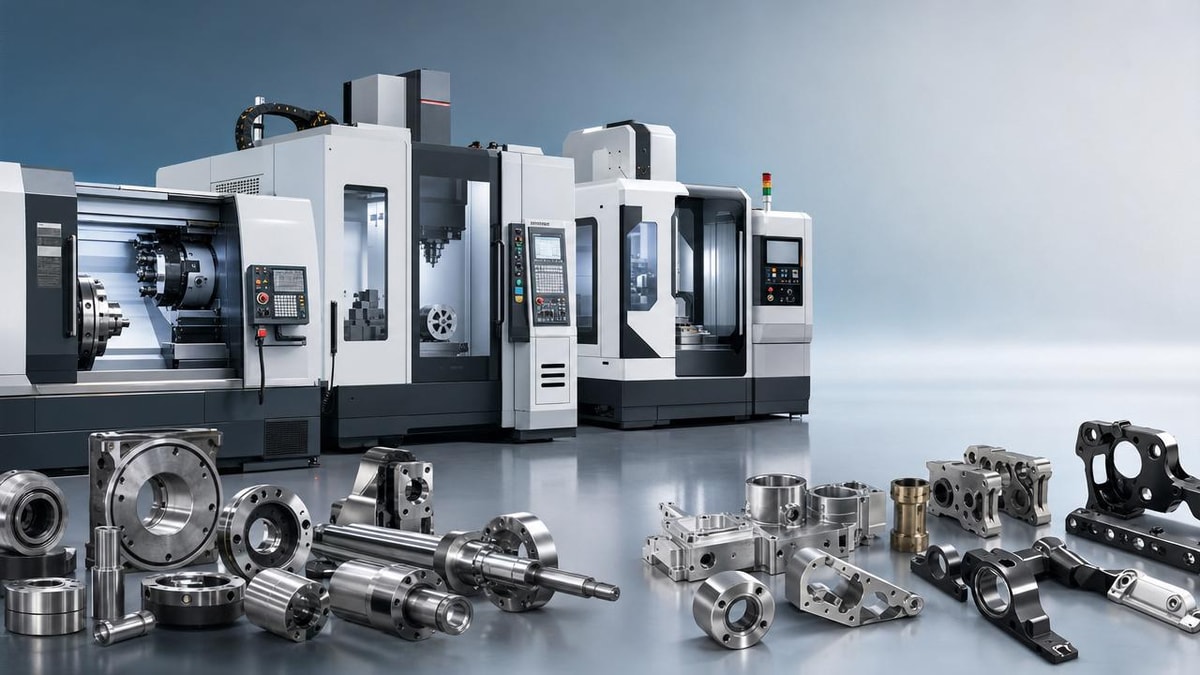
Choosing the right industrial machining equipment for mixed-part jobs is critical for buyers balancing precision, flexibility, and cost. When production involves different materials, sizes, and batch volumes, the wrong setup can reduce efficiency and increase downtime. This article outlines the key factors procurement teams should evaluate to select equipment that supports stable quality, faster changeovers, and long-term manufacturing value.
Understanding mixed-part machining requirements
In modern manufacturing, mixed-part jobs refer to production environments where one workshop, line, or supplier must process a wide range of components instead of repeating a single standard part. These jobs may include shafts, housings, flanges, brackets, discs, and precision structural parts made from steel, aluminum, stainless alloys, cast materials, plastics, or engineering composites. For procurement teams, this means that industrial machining equipment must do more than simply cut metal accurately. It must also support frequent part changes, different fixturing methods, varied tolerance levels, and changing production priorities.
This issue matters even more as global manufacturers move toward shorter product cycles, higher product customization, and more integrated digital production. In sectors such as automotive components, energy equipment, electronics, industrial machinery, and subcontract precision machining, buyers are increasingly asked to source machine tools that can adapt to fluctuating order structures. As a result, industrial machining equipment selection is no longer just a technical decision made by engineers. It is a strategic decision involving procurement, operations, quality, maintenance, and long-term capacity planning.
Why the industry is paying closer attention to flexibility
The CNC machine tool industry has become one of the core enablers of advanced manufacturing because it supports repeatable precision, automated production, and high process stability. However, market demand has changed. Instead of relying only on large single-product runs, many factories now handle a broader mix of small and medium batches. That shift places new pressure on industrial machining equipment.
A machine that performs well in a dedicated, high-volume application may struggle in a mixed-part environment if setup times are long, programming is complex, or the tooling system is too specialized. On the other hand, highly flexible equipment can reduce idle time, improve machine utilization, and help suppliers respond faster to customer changes. For buyers, this is especially important in a global supply chain where delivery reliability, part traceability, and total operating cost often matter as much as initial machine price.
In practical terms, choosing industrial machining equipment for mixed production means evaluating how well a machine can move between part families without sacrificing accuracy, spindle efficiency, automation compatibility, or maintenance access. Buyers who understand this broader industry direction are better positioned to make equipment decisions that remain useful as production needs evolve.
Core equipment types used in mixed-part jobs
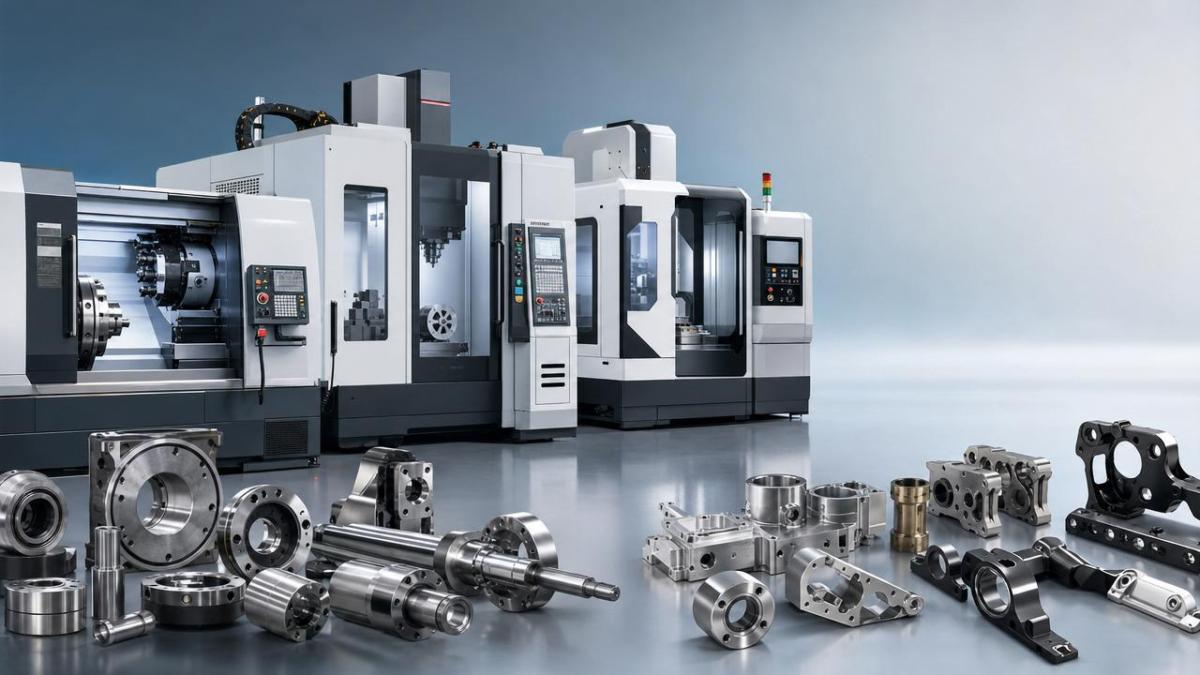
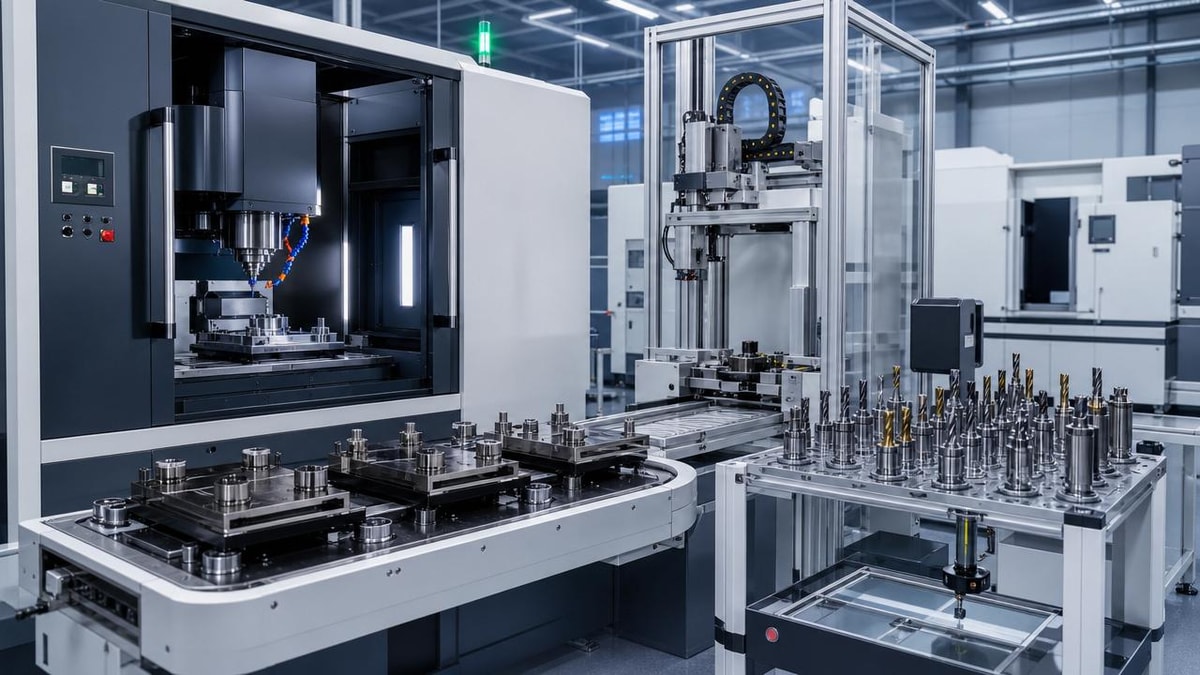
Different categories of industrial machining equipment serve mixed-part work in different ways. The right choice depends on geometry, volume, tolerance, and process sequence rather than on a single machine specification.
For many buyers, the most practical path is not choosing the most advanced machine available, but matching the equipment mix to the real part family profile. A supplier producing mainly rotational parts with occasional cross holes may gain more value from a turning center than from a full 5-axis solution. By contrast, a plant serving aerospace or precision industrial equipment customers may justify higher investment in multi-axis industrial machining equipment because of the complexity and tolerance demands involved.
Key evaluation factors before selecting industrial machining equipment
A reliable equipment decision starts with a clear review of part requirements. Buyers should first organize production data by part family, material, dimensions, tolerance class, surface finish, annual volume, and expected mix variation. Without this foundation, even high-quality industrial machining equipment can be mismatched to the actual workload.
1. Part diversity and process range
The wider the variety of parts, the more important machine versatility becomes. Procurement teams should assess whether the equipment can handle turning, drilling, tapping, milling, boring, and contouring within the same platform. Mixed-part operations often benefit from machines that reduce intermediate transfers and support multiple operations in one setup.
2. Changeover time and fixture strategy
Frequent job changes can quickly erode productivity if clamping, zero-point setting, and tool offset adjustments take too long. Industrial machining equipment for mixed work should support standardized tooling, quick-change fixtures, modular clamping, and easy access for operators. In many cases, setup efficiency has a greater impact on cost than small differences in spindle power.
3. Accuracy stability across different materials
Mixed-part machining often involves switching between materials that generate different cutting loads and thermal behavior. Buyers should look beyond nominal positioning accuracy and review thermal stability, spindle rigidity, guideway construction, vibration control, and repeatability under varying process conditions. Stable accuracy is essential if one machine is expected to produce both general industrial parts and more demanding precision components.
4. Automation and digital compatibility
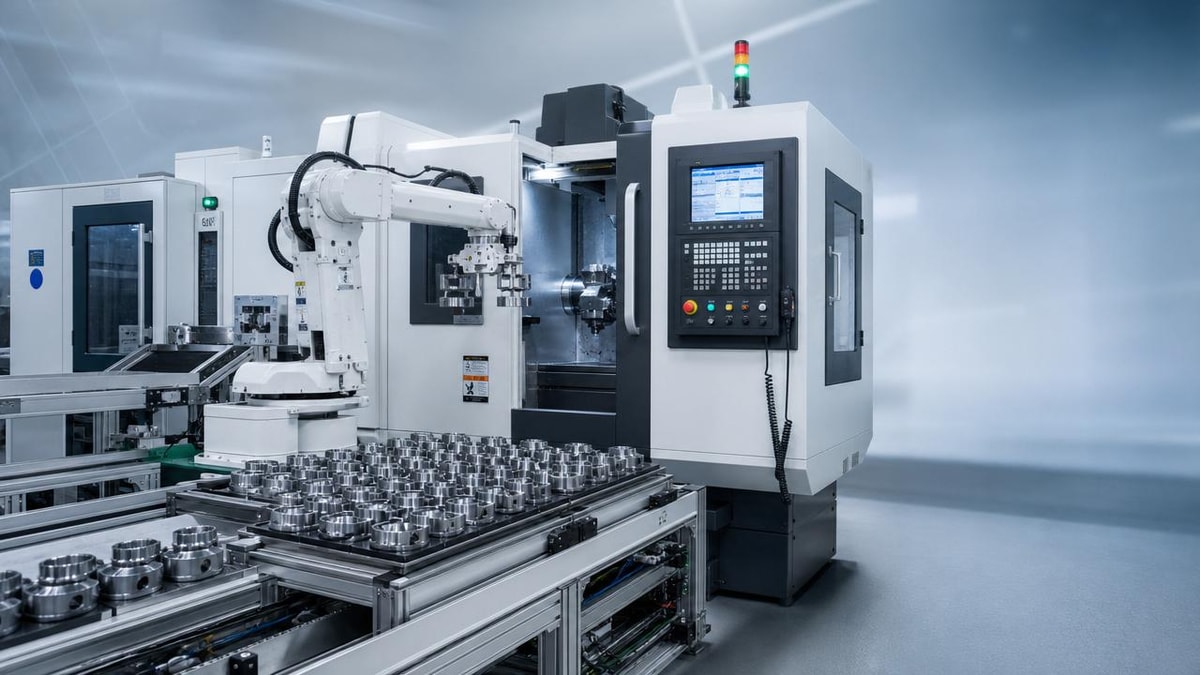
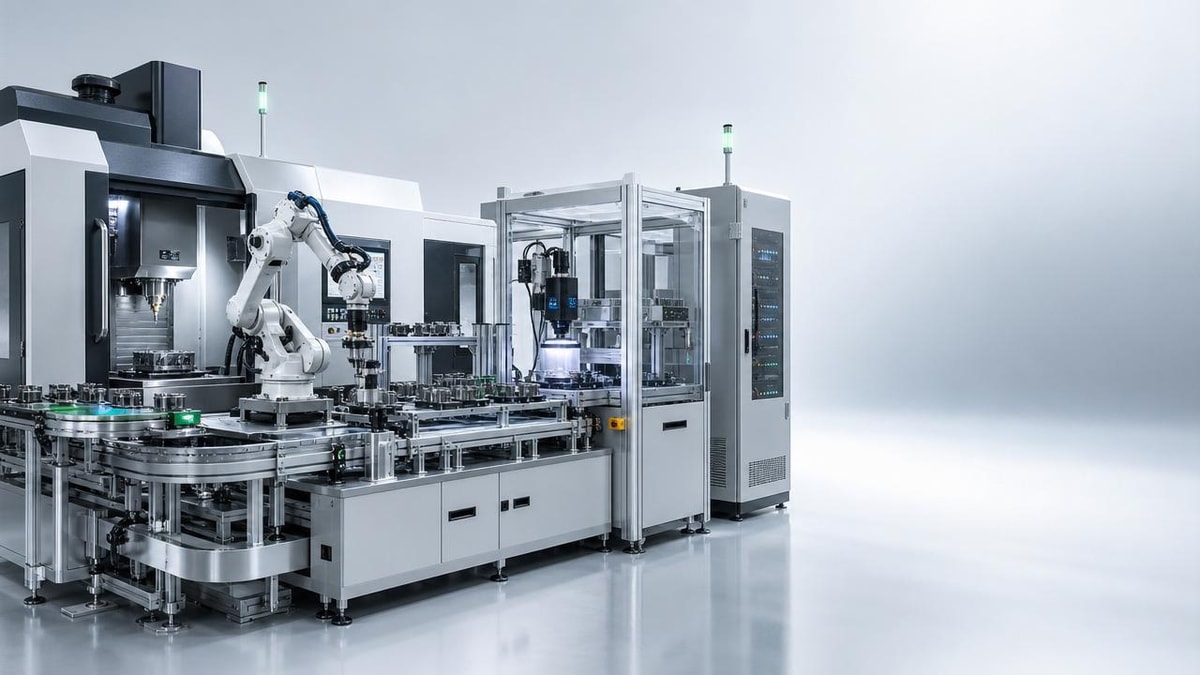
As smart manufacturing expands, industrial machining equipment should fit into broader production systems rather than operate as isolated assets. Compatibility with robotic loading, pallet systems, tool management software, MES connectivity, and remote monitoring can significantly improve efficiency in mixed-part workshops. Buyers should assess what is available now and what can be added later without major retrofitting.
5. Maintenance support and service availability
Even the best machine loses value if downtime is prolonged by poor after-sales support. Procurement decisions should include spare parts access, local technical service, operator training, preventive maintenance requirements, and software support. In global machine tool markets, suppliers with strong regional service networks often create lower long-term risk than lower-priced alternatives with weak support structures.
Business value for procurement teams and factory operations
Well-chosen industrial machining equipment creates value across more than one department. For procurement teams, it improves capital efficiency because one flexible platform can often cover a broader production scope. For production managers, it supports better scheduling and higher machine utilization. For quality teams, it helps maintain process consistency despite changing part types. For business leadership, it reduces dependence on overly specialized assets that may become underused when product demand shifts.
This matters in industries facing cyclical orders or product variation. Automotive suppliers may alternate between prototype, service, and volume programs. Energy equipment manufacturers may process large low-volume parts alongside repeatable standard components. Electronics and industrial device producers may need precision structures in varied sizes with strict delivery windows. In all of these cases, industrial machining equipment that supports mixed-part jobs can strengthen responsiveness while protecting quality and cost control.
Typical production scenarios and equipment priorities
Although every plant has unique requirements, mixed-part jobs generally fall into several recognizable patterns. Understanding these patterns helps buyers define the right evaluation criteria.
Practical steps to reduce purchasing risk
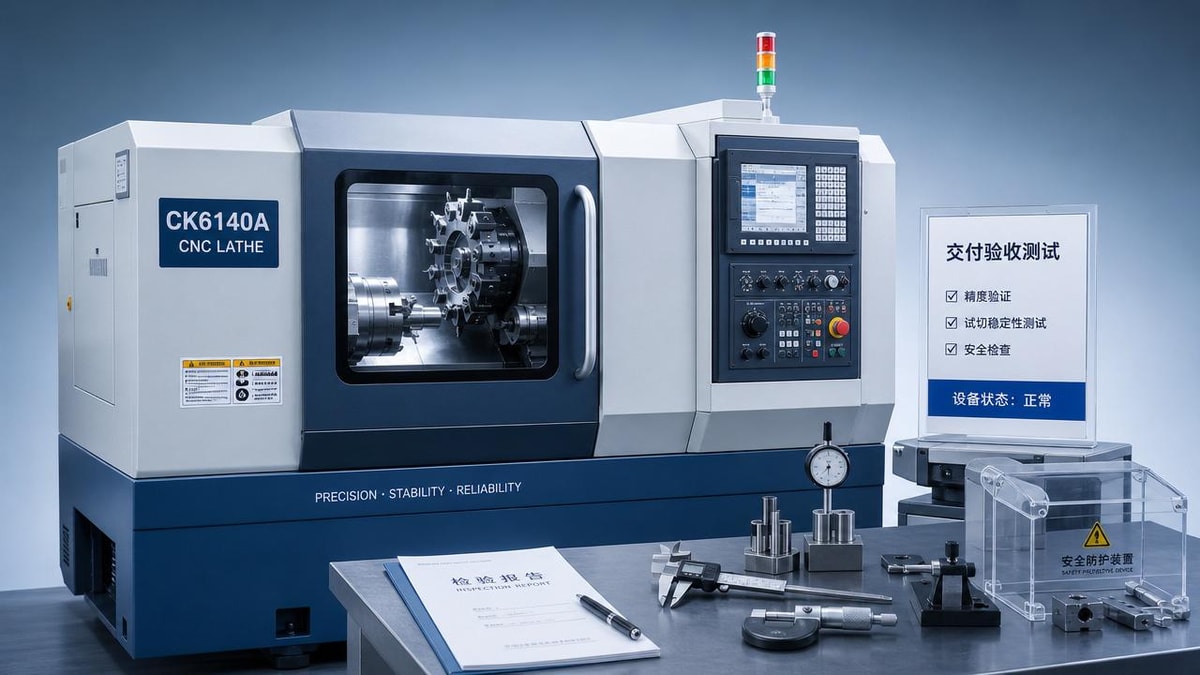
To improve decision quality, procurement teams should avoid evaluating industrial machining equipment based only on brochures or isolated sample parts. A more effective method is to request representative trial machining using actual workpieces or at least similar materials and tolerances. This gives clearer evidence on cycle time, surface finish, tool life, and setup practicality.
It is also useful to involve multiple stakeholders early. Engineers can confirm process coverage, operators can assess usability, maintenance teams can identify service concerns, and finance teams can compare lifecycle cost rather than purchase price alone. In mixed-part environments, a machine with higher upfront cost may still offer better value if it reduces secondary operations, lowers scrap, and shortens job transitions.
Another important step is to define expansion plans. If a factory expects more automation, more complex parts, or stricter traceability requirements, the selected industrial machining equipment should not limit future upgrades. Machine tool platforms that support software updates, tool monitoring, pallet automation, or digital production interfaces can provide stronger long-term returns.
Common mistakes to avoid
One common mistake is buying equipment optimized for a current flagship part while ignoring the broader production mix. Another is overestimating the value of maximum technical specifications without considering setup discipline and operator capability. Some buyers also underestimate the importance of service response time, especially when importing complex industrial machining equipment into regions where local technical support may be limited.
A further risk is failing to separate “must-have” capability from “nice-to-have” features. In mixed-part jobs, flexibility is essential, but unnecessary complexity can increase training time and maintenance burden. The goal is not to purchase the most sophisticated machine in the market. The goal is to secure a reliable manufacturing asset aligned with real product diversity, business growth, and quality expectations.
Final perspective for selecting the right solution
Choosing industrial machining equipment for mixed-part jobs requires a balanced view of technical capability, operating efficiency, and future adaptability. Buyers should begin with a clear understanding of part families and production patterns, then evaluate machine flexibility, changeover efficiency, accuracy stability, automation compatibility, and service strength. In today’s CNC and precision manufacturing market, the most valuable equipment is often the one that handles variation well while preserving consistent output.
For procurement teams in modern manufacturing, this approach supports smarter investment decisions and stronger long-term competitiveness. When industrial machining equipment is selected with both current needs and future production evolution in mind, factories gain more than a machine. They gain a more resilient and responsive production capability.
PREVIOUS ARTICLE
Recommended for You
 Industrial Robotics payback depends on more than labor savingsManufacturing Market Research Center
 Shaft Parts machining problems that show up after final inspectionCNC Machining Technology Center
 Which Production Process changes bring the fastest output gains?CNC Machining Technology Center
 Industrial Automation projects fail when integration is underestimatedCNC Machining Technology Center
 CNC metal cutting costs rise fast when material data is wrongCNC Machining Technology Center
 High precision lathe claims to verify before accepting deliveryMachine Tool Industry Editorial Team

Aris Katos
Future of Carbide Coatings
15+ years in precision manufacturing systems. Specialized in high-speed milling and aerospace grade alloy processing.
▶
CNC production delays often start with planning, not machinesMachine Tool Industry Editorial Team▶
How to choose industrial machining equipment for mixed-part jobsMachine Tool Industry Editorial Team▶
CNC Production Delays Often Start Before the First CutMachine Tool Industry Editorial Team▶
Why some CNC industrial machines fail to scale with new ordersMachine Tool Industry Editorial Team▶
CNC production delays often start with planning, not the machineMachine Tool Industry Editorial Team
Mastering 5-Axis Workholding Strategies
Join our technical panel on Nov 15th to learn about reducing vibrations in thin-wall components.

Providing you with integrated sanding solutions
Before-sales and after-sales services
Comprehensive technical support