• Global CNC market projected to reach $128B by 2028 • New EU trade regulations for precision tooling components • Aerospace deman
NYSE: CNC +1.2%LME: STEEL -0.4%

Industrial CNC uptime problems that often appear after install
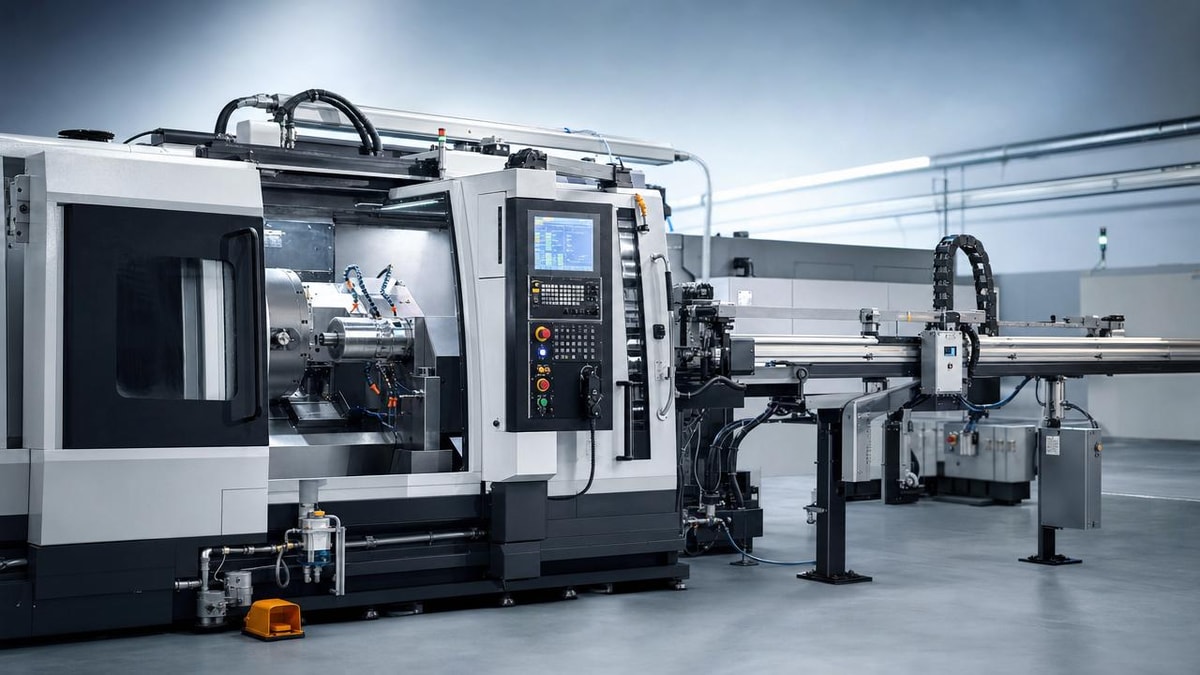
After an industrial CNC installation, uptime problems often appear where teams expect stability: alarms, alignment drift, lubrication issues, sensor faults, or unstable power conditions. For after-sales maintenance staff, identifying these early is critical to protecting output, accuracy, and customer trust. This article highlights the most common post-install issues and practical ways to reduce downtime before small faults become costly production stops.
Why post-install industrial CNC uptime issues are getting more attention
A clear shift is happening across the industrial CNC market. Customers no longer judge a machine only by spindle speed, axis count, or catalog accuracy. They increasingly judge value by how quickly a new machine reaches stable production after installation. For after-sales maintenance teams, this changes the job from reactive repair to early-stage risk control.
Several industry signals explain this change. Production schedules are tighter, labor is harder to replace, and many factories run mixed-batch or high-mix manufacturing where every hour of downtime has a visible impact. At the same time, newer industrial CNC systems integrate more sensors, automation modules, networking functions, and software dependencies than older machines. This brings better capability, but it also creates more post-install variables that can affect uptime.
The result is simple: the period immediately after install has become one of the highest-risk phases in the equipment lifecycle. Problems that once took weeks to appear may now show up within days because machines are pushed into full production faster, often on lines where process stability matters as much as machine availability.
The trend behind early downtime: faster deployment, higher integration, lower tolerance for instability
In the broader manufacturing environment, industrial CNC deployment is moving toward rapid commissioning and shorter acceptance windows. Automotive, aerospace, energy equipment, and electronics suppliers often cannot afford long ramp-up periods. This compresses the time available to verify foundations, machine leveling, thermal behavior, electrical quality, lubrication flow, and program-to-process matching.
Another change is the growing connection between the machine and surrounding systems. An industrial CNC unit may now depend on bar feeders, robots, probes, mist collectors, tool management software, coolant systems, and factory networks. When one interface is unstable, uptime suffers even if the core machine is mechanically sound. For after-sales maintenance personnel, this means the true source of downtime is often outside the control cabinet or spindle assembly.
There is also less tolerance for “normal settling.” In the past, some vibration, thermal drift, or parameter adjustment during early use might have been accepted. Today, customers expect near-immediate consistency. That raises the importance of installation discipline, baseline measurement, and structured monitoring during the first production cycle.
Common industrial CNC uptime problems that often appear after install
Although each site is different, the same fault patterns appear repeatedly after a new industrial CNC machine enters operation. These issues usually are not isolated defects. More often, they are signs that installation conditions, environment, utilities, or process matching were not fully stabilized.
The first group involves mechanical stability. Leveling changes, anchor movement, transport stress release, loose couplings, and guideway contamination can lead to axis noise, geometry drift, or intermittent alarm conditions. On machines producing precision parts, even a small alignment shift can trigger scrap, rework, or probing failures before it is recognized as an uptime issue.
The second group involves utilities and environmental conditions. Voltage fluctuation, poor grounding, air pressure instability, dirty compressed air, or coolant contamination often create alarms that appear random. In reality, these are trend-based failures. They become more frequent as the industrial CNC machine moves from dry testing into continuous production.
The third group involves lubrication and thermal behavior. Inadequate oil delivery, blocked lines, delayed warm-up practice, and surrounding heat sources can reduce repeatability and accelerate wear. These faults may not stop the machine immediately, but they reduce uptime by creating recurring adjustments, unexplained tolerance shifts, and preventive shutdowns.
The fourth group involves controls, sensors, and integration points. Home switches, encoders, door interlocks, tool setters, probing systems, safety relays, and PLC signals may all function during installation tests yet become unstable under full-cycle use. In many modern industrial CNC environments, software settings and interface quality are just as important as mechanical condition.
This pattern matters because it shows that industrial CNC uptime is no longer just a machine maintenance issue. It is a system readiness issue.
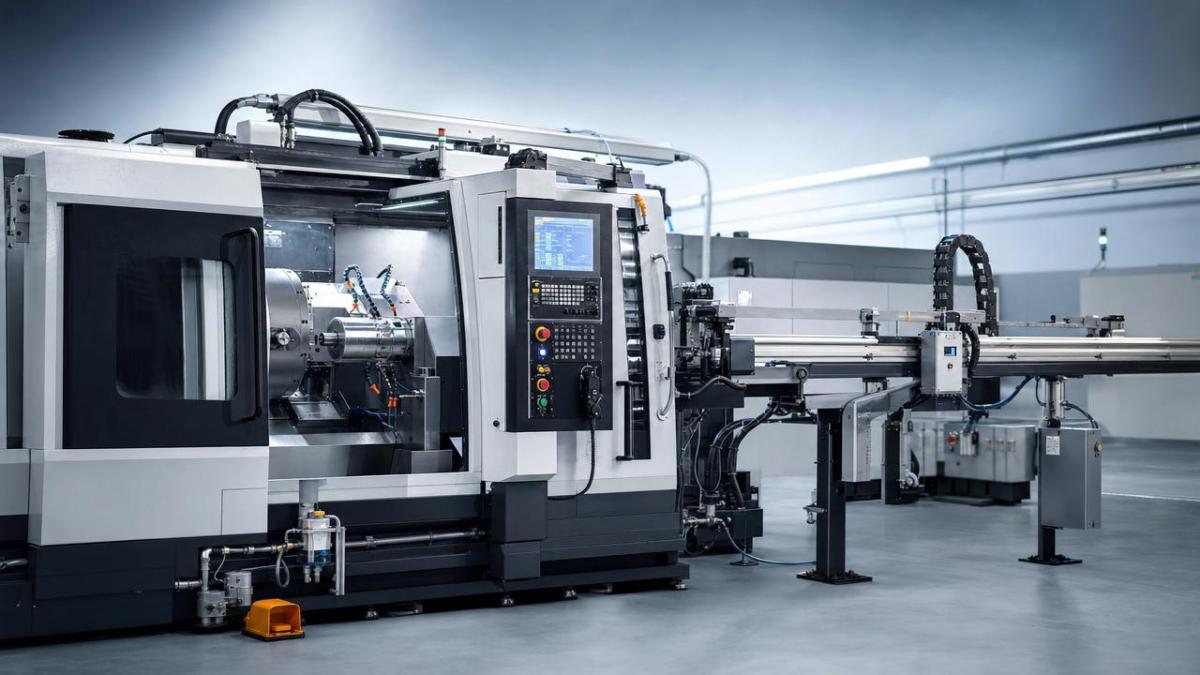
What is driving these problems to appear sooner than before
One driver is the acceleration of smart manufacturing adoption. As factories add monitoring, automatic loading, in-process measurement, and connected planning systems, the number of dependencies grows. A single industrial CNC machine is now part of a larger digital and physical workflow. That increases efficiency, but it reduces tolerance for weak interfaces.
A second driver is customer expectation. Buyers in precision manufacturing often expect immediate OEE improvement after installation. They do not want a long stabilization phase. This means after-sales teams face pressure to solve root causes quickly, document corrective actions, and prove that the machine is not just running, but running reliably under customer load conditions.
A third driver is operating environment complexity. Many factories install industrial CNC equipment into existing buildings with aged power systems, uneven floors, variable air supply, or nearby vibration sources. These site conditions may not block installation, but they create the hidden instability that later appears as repeated downtime.
A fourth driver is skills distribution. Some users have strong production teams but limited machine diagnostics experience. Others rely heavily on external service support. In both cases, the first signs of trouble can be missed: a slight increase in servo load, inconsistent auto-lube timing, a recurring low-pressure warning, or thermal variation after lunch shift. The industrial CNC machine gives signals early, but only if someone is tracking them.
Who feels the impact most in the post-install phase
The consequences of poor early uptime are not evenly distributed. After-sales maintenance personnel are the first line of response, but the effects spread across multiple functions. Understanding this helps service teams prioritize communication, not just repairs.
What after-sales teams should monitor first instead of waiting for major failure
A useful industry shift is moving from fault response to early-condition judgment. In practical terms, after-sales teams supporting industrial CNC users should track a short list of signals during the first days and weeks after install.
Start with machine foundation and geometry stability. Recheck leveling after transport settling and early production load. Confirm that backlash, axis parallelism, spindle runout, and probing consistency remain within acceptance limits after actual cutting begins, not only after no-load tests.
Next, verify utility quality under real operating demand. It is not enough to test power, air, and coolant once during setup. An industrial CNC machine may behave differently when spindle load, chip evacuation, coolant pumps, and automation all run together. Capturing these conditions under production load often reveals the real cause of intermittent downtime.
Then, monitor recurring alarms by pattern rather than by event count alone. If a servo, lubrication, thermal, or communication alarm appears once per shift, the trend matters more than the reset. Repeated “minor” faults are often the strongest warning that uptime will worsen.
Finally, compare process capability with machine health. If dimensional drift, tool life variation, or finish inconsistency increases after install, the issue may not be tooling alone. It may indicate that the industrial CNC system has not yet reached mechanical or thermal stability.
How the best service organizations are changing their approach
A notable trend in the CNC machine tool industry is that stronger service organizations are formalizing the post-install phase. Instead of treating installation completion as the endpoint, they treat the first 30 to 90 days as a controlled stabilization period. This is especially important for industrial CNC machines used in precision, multi-shift, or automated production environments.
These teams usually apply three practices. First, they create a baseline record for geometry, alarms, power conditions, lubrication cycles, and thermal behavior. Second, they schedule follow-up inspections tied to actual production hours rather than calendar date alone. Third, they train the customer to report symptoms in a structured way: exact alarm timing, operating mode, tool number, ambient conditions, and whether automation was active.
This approach improves industrial CNC uptime because it closes the gap between commissioning and full-scale use. It also reduces unproductive debate about whether the issue is machine-related, process-related, or site-related. Good records make the trend visible.
Practical judgment points for the next stage of industrial CNC service
Looking ahead, after-sales maintenance staff should expect post-install service to become more data-driven and more collaborative. Industrial CNC customers will increasingly ask not only “Why did the machine stop?” but also “What early signal did we miss?” and “How do we prevent the next event?”
That means service teams should strengthen five judgment habits: verify site readiness before blaming the machine, separate one-time faults from trend faults, compare no-load acceptance with loaded production behavior, document interface-related failures with automation equipment, and track whether recurring small issues are pointing toward a larger reliability problem.
For companies managing multiple industrial CNC installations, the best next step is to standardize a post-install uptime checklist. Include foundation status, utility verification, lubrication confirmation, thermal stabilization practice, alarm history review, and process validation under actual part production. This is where maintenance work creates strategic value: not just fixing stoppages, but shortening the path to reliable output.
Final takeaway for maintenance teams and equipment managers
The main industry change is clear: post-install industrial CNC uptime is now a business-critical performance indicator, not a temporary technical inconvenience. As machines become more connected, more precise, and more integrated into automated production, early instability carries greater cost and greater visibility.
If your team wants to judge the real impact on its own operation, focus on a few questions: Is the machine stable under full production load, not just during acceptance? Are repeated alarms being tracked as trends? Are power, air, coolant, and thermal conditions verified during actual operation? Are automation interfaces included in fault analysis? And does the customer have a clear first-30-day support plan?
When these questions are answered early, industrial CNC uptime improves, customer confidence grows, and costly production interruptions become far easier to prevent.
Recommended for You
 Industrial Robotics payback depends on more than labor savingsManufacturing Market Research Center
 Shaft Parts machining problems that show up after final inspectionCNC Machining Technology Center
 Which Production Process changes bring the fastest output gains?CNC Machining Technology Center
 Industrial Automation projects fail when integration is underestimatedCNC Machining Technology Center
 CNC metal cutting costs rise fast when material data is wrongCNC Machining Technology Center
 High precision lathe claims to verify before accepting deliveryMachine Tool Industry Editorial Team

Aris Katos
Future of Carbide Coatings
15+ years in precision manufacturing systems. Specialized in high-speed milling and aerospace grade alloy processing.
▶
High precision lathe claims to verify before accepting deliveryMachine Tool Industry Editorial Team▶
Precision equipment calibration issues that quietly raise scrap ratesMachine Tool Industry Editorial Team▶
Industrial CNC uptime problems that often appear after installMachine Tool Industry Editorial Team▶
How Much Precision Is Too Much in a High Precision Lathe?Machine Tool Industry Editorial Team▶
Industrial CNC Upgrade Signs You Should Not Ignore in 2026Machine Tool Industry Editorial Team
Mastering 5-Axis Workholding Strategies
Join our technical panel on Nov 15th to learn about reducing vibrations in thin-wall components.

Providing you with integrated sanding solutions
Before-sales and after-sales services
Comprehensive technical support