• Global CNC market projected to reach $128B by 2028 • New EU trade regulations for precision tooling components • Aerospace deman
NYSE: CNC +1.2%LME: STEEL -0.4%

Industrial Lathe Maintenance Gaps That Shorten Spindle Life
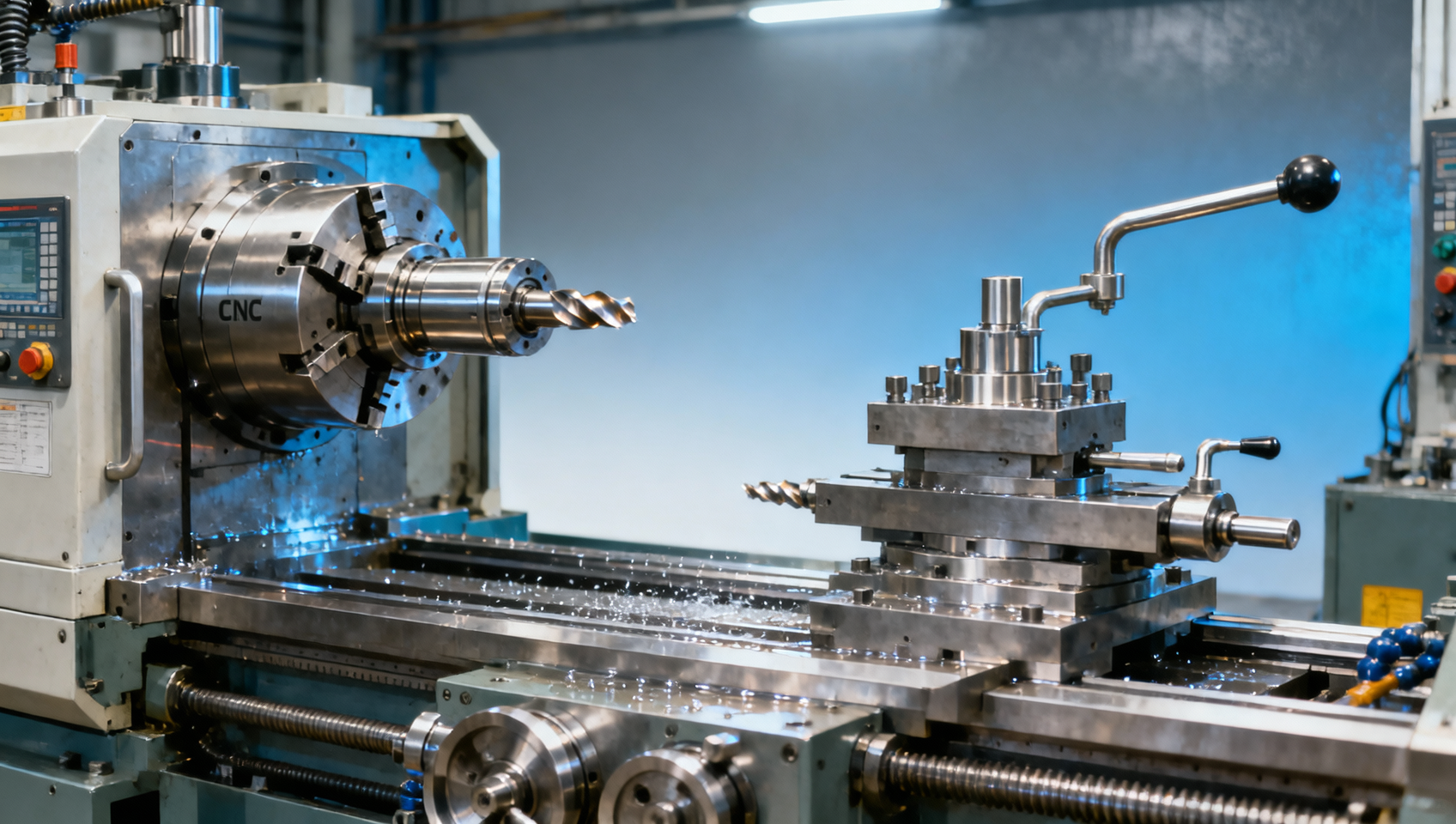
In the Manufacturing Industry, even advanced industrial CNC systems can lose accuracy fast when industrial lathe maintenance is inconsistent. From lubrication failures to spindle load imbalance, small service gaps in a metal lathe or automated lathe can quietly reduce spindle life, disrupt the production process, and raise costs across CNC production. This article explores the most overlooked maintenance issues and what they mean for reliability, output, and long-term equipment value.
Why do small industrial lathe maintenance gaps cause major spindle problems?
Spindle assemblies operate under continuous heat, vibration, radial load, and contamination risk. In a CNC lathe running 1 or 2 shifts, minor maintenance delays may remain hidden for weeks. In a 24/7 automated lathe line, the same delay can accelerate bearing wear, thermal drift, and taper damage much faster. The spindle rarely fails all at once; it usually degrades through small missed actions.
This matters across automotive, aerospace, energy equipment, and electronics production because spindle condition directly affects surface finish, concentricity, tool life, and cycle stability. When industrial lathe maintenance is reduced to reactive repair, operators notice symptoms such as unusual noise, unstable dimensions, and rising alarm frequency only after the spindle has already lost part of its service life.
For procurement teams and plant managers, the real issue is not only replacement cost. A spindle problem can trigger unplanned downtime for 2–7 days, scrap rates above normal process limits, and extra alignment work after repair. In high-mix CNC production, even a short stoppage can affect delivery commitments, subcontracting decisions, and customer confidence.
In practice, the most damaging gaps are often routine issues that seem minor: grease intervals drifting by a few weeks, coolant splash entering vulnerable areas, drawbar force checks skipped for one quarter, or warm-up cycles ignored at shift start. Each gap looks manageable alone, but combined, they shorten spindle life in a very predictable way.
- Lubrication timing drift: grease or oil delivery is late, excessive, or contaminated.
- Thermal control neglect: warm-up, ambient stability, and cooling performance are not verified.
- Load management failure: aggressive cuts, imbalance, and poor workholding raise bearing stress.
- Condition monitoring absence: noise, temperature, runout, and vibration trends are not recorded.
The hidden transition from precision loss to failure
A healthy spindle may hold stable performance over thousands of cycles, but deterioration often starts with measurable deviations long before shutdown. Typical warning stages include increased operating temperature over several shifts, gradual runout change, then reduced repeatability under load. If maintenance teams only react to alarms, they miss the 3-stage progression where corrective action is still cheaper and faster.
That is why industrial lathe maintenance should be treated as a spindle protection system, not a housekeeping task. For information researchers, this changes the search question from “How long does a spindle last?” to “Which maintenance gaps most directly shorten spindle life under my production pattern?” That framing leads to better technical and purchasing decisions.
Which maintenance failures are most often overlooked on a metal lathe or CNC lathe?
Many factories already perform daily cleaning and periodic inspection, yet spindle life still falls short of expectation. The problem is not always the absence of maintenance, but the absence of targeted maintenance. A metal lathe used for rough turning and a high-speed CNC lathe used for precision finishing do not stress the spindle in the same way, so their weak points are different.
The table below summarizes common industrial lathe maintenance gaps, their direct spindle impact, and the signs that operators or maintenance teams can catch before a serious failure. These are not rare defects. They are common operational misses found in both standalone machines and automated production cells.
The table shows a useful pattern: most spindle life loss begins with monitoring failures rather than catastrophic events. A plant may invest heavily in CNC equipment, but if it does not enforce daily checks, weekly contamination review, and quarterly force verification, spindle reliability becomes dependent on operator habit rather than process control.
Lubrication is not just a routine item
Too little lubrication increases metal-to-metal contact and heat. Too much can also be harmful because excess grease churns, raises operating temperature, and may push contaminants into sensitive areas. For many spindle systems, the maintenance question is not “Was lubricant added?” but “Was the correct lubricant delivered at the correct interval under the correct operating speed?”
Plants that run mixed materials such as alloy steel, cast iron, and aluminum should review lubrication together with coolant management. Fine abrasive particles, especially from cast materials, can compromise seals and shorten bearing life if cleaning frequency is lower than the actual contamination load. In this situation, weekly housekeeping may not be enough; high-debris lines may need daily inspection at exposed points.
Warm-up and thermal stability are often underestimated
A spindle that moves from idle to full-speed cutting without a warm-up cycle experiences thermal expansion before the machine reaches stable geometry. In precision turning, even small thermal shifts can affect dimension control and bearing stress. A 10–20 minute warm-up sequence is often a low-cost preventive action, especially after long shutdowns, weekend stops, or cold-start conditions.
This is especially important in facilities where ambient temperature changes by 5°C–10°C across day and night shifts. Operators may see the issue as a dimensional problem, but maintenance teams should recognize it as a spindle life issue as well. Stable thermal behavior protects both part quality and bearing condition.
How should operators, maintenance teams, and managers assess spindle risk?
A practical spindle risk assessment should combine operator observations, maintenance measurements, and production records. Looking at only one of these sources is not enough. Operators see the first changes in sound, finish, and tool behavior. Maintenance staff can confirm temperature, vibration, and runout. Managers can connect those signals to downtime cost, spare planning, and machine utilization.
For procurement personnel comparing service providers or machine platforms, a structured risk review is also useful before purchasing. The key question is not just spindle speed or power. It is whether the machine and supplier support a realistic maintenance framework, including accessible inspection points, clear service intervals, and available replacement parts within acceptable lead times such as 2–4 weeks instead of open-ended waiting.
A 4-step spindle risk review for industrial lathe maintenance
- Record operating pattern: note shift count, RPM range, material type, cutting intensity, and whether the lathe runs in batch or continuous production.
- Check condition signals: compare temperature trend, vibration behavior, sound changes, and dimensional consistency over the last 30–90 days.
- Review maintenance execution: verify lubrication, seal inspection, drawbar checks, and cleaning intervals against the actual machine workload.
- Quantify business risk: estimate downtime exposure, repair lead time, spare availability, and scrap cost if the spindle degrades further.
This type of review creates a shared language between the workshop and management. Instead of arguing over isolated symptoms, the team can prioritize action based on measurable risk. For example, a light-duty CNC lathe with occasional chatter may need setup correction. A heavily loaded automated lathe with persistent heat rise over 3 consecutive weeks likely needs deeper spindle inspection.
What indicators deserve the fastest response?
The most urgent indicators are repeated temperature increase, persistent noise change, visible taper contamination, and dimensional instability that cannot be explained by tooling alone. If two or more appear together, the machine should not simply continue under full load until the next monthly maintenance window. Shortening the inspection cycle from monthly to weekly can prevent a repair from becoming a rebuild.
In high-precision sectors such as aerospace components or electronics shafts, even minor spindle instability can trigger downstream problems in balancing, assembly fit, or final inspection. That is why spindle risk assessment belongs not only to maintenance but also to quality assurance and production planning.
What should buyers compare when choosing maintenance support, service plans, or new equipment?
When spindle life is shorter than expected, some companies immediately look for replacement hardware. Sometimes that is necessary. However, in many cases the better decision starts with comparing maintenance capability, service response, and machine support conditions. A lower purchase price can become expensive if spare parts, field service, or alignment expertise are difficult to secure.
The following comparison table helps procurement teams and enterprise decision-makers evaluate industrial lathe maintenance support from a total-cost perspective. It is relevant when selecting a CNC lathe supplier, external service partner, spindle repair source, or preventive maintenance contract.
The buying lesson is simple: compare service systems, not only machine specifications. In B2B manufacturing, the spindle is a production asset, not a standalone component. If a supplier can support maintenance planning, spare strategy, and process diagnosis, the total ownership risk is lower than with a cheaper option that leaves the plant to solve every issue alone.
Questions buyers should ask before signing
Ask for preventive maintenance scope by time interval, expected wear parts, recommended monitoring points, and service response timing. Also ask whether the spindle system is better suited for light finishing, medium mixed-duty use, or heavy continuous cutting. These distinctions matter more than headline RPM figures when the real goal is long-term equipment reliability.
For global sourcing, it is also reasonable to discuss documentation quality, installation guidance, electrical compatibility, and whether maintenance recommendations align with common industrial practices and accepted safety requirements. Clear communication at the purchasing stage prevents expensive assumptions later.
How can plants improve spindle life without overbuilding maintenance cost?
The best industrial lathe maintenance strategy is not the most complicated one. It is the one that matches machine duty, workforce skill, and quality requirements. Many plants can improve spindle life with a tiered approach: daily operator checks, weekly contamination review, monthly condition trending, and quarterly technical verification. This 4-level structure is easier to sustain than irregular deep inspections.
Cost control comes from prioritizing preventive actions that interrupt failure progression early. A simple warm-up rule, a cleaner lubrication record, or a more disciplined balancing process may cost very little compared with spindle rebuild downtime. For medium-volume production, these practical controls often deliver better value than adding complex monitoring systems that staff do not consistently use.
A balanced maintenance framework for CNC production
- Daily: check sound, heat feel, visible leakage, taper cleanliness, and abnormal chip or coolant behavior before and after production.
- Weekly: inspect seals, review lubrication execution, confirm stable cutting behavior across typical part programs, and clean vulnerable interfaces.
- Monthly: trend dimensional repeatability, spindle temperature behavior, alarm history, and tool life change against previous production records.
- Quarterly: verify clamping force, inspect alignment-related issues, and review whether current maintenance intervals still fit the actual machine workload.
This framework is useful for both standalone machines and automated production lines. In highly automated cells, maintenance discipline becomes more important because unmanned or lightly attended operation can allow abnormal conditions to continue longer before human intervention. In those settings, even a 1-shift delay in noticing spindle heat or vibration can increase repair scope.
Common misconceptions that raise cost
One common mistake is assuming that a newer CNC lathe needs less maintenance. Higher precision and automation improve capability, but they do not eliminate contamination, thermal variation, or mechanical load. Another mistake is blaming tooling for every quality issue. Tool wear matters, but repeated finish instability may be a spindle condition signal instead of a tooling problem.
A third misconception is delaying inspection because the machine is still producing acceptable parts. By the time quality visibly fails, internal wear may already be significant. Plants that monitor leading indicators during the first 30–60 days after process changes usually identify spindle stress earlier than those waiting for a hard fault.
FAQ: practical questions about industrial lathe maintenance and spindle life
How often should a CNC lathe spindle be checked?
There is no single interval for every machine, but a practical baseline is daily operator observation, weekly contamination review, monthly trend evaluation, and quarterly technical verification. Heavy-duty production, high RPM operation, or 24/7 running may require shorter review cycles. The right frequency depends on workload, material type, coolant exposure, and quality tolerance.
What are the first signs that spindle life is being shortened?
Watch for rising temperature, sound change, chatter that persists after tooling correction, unstable surface finish, and dimensional variation that appears under similar cutting conditions. One sign alone may not confirm spindle damage, but 2–3 recurring signs over several shifts should trigger inspection. Early checks are usually far less expensive than waiting for a major fault.
Is spindle replacement always better than repair?
Not always. The decision depends on repair scope, lead time, machine age, required accuracy, and production urgency. In some cases, targeted repair and alignment restore acceptable performance. In other cases, especially where downtime cost is high and geometry demands are strict, replacement may be more practical. Buyers should compare total downtime, not only invoice price.
What should procurement teams request from suppliers or service partners?
Request maintenance schedules by interval, recommended consumables, spare lead times, inspection scope, startup procedures, and support for parameter confirmation. It is also useful to ask how the maintenance plan changes between light-duty and continuous production. These details help decision-makers compare real support value rather than relying on general sales claims.
Why choose us when evaluating CNC lathe maintenance knowledge, sourcing options, and production decisions?
We focus on the global CNC machining and precision manufacturing industry, where spindle reliability affects output, quality, and capital efficiency across automotive, aerospace, energy equipment, and electronics production. That industry perspective helps buyers and users connect maintenance details with wider decisions such as equipment selection, production planning, and international sourcing risk.
If you are comparing CNC lathe platforms, reviewing spindle-related production issues, or planning a maintenance upgrade, we can help organize the discussion around clear business and technical checkpoints. These can include parameter confirmation, duty-cycle matching, preventive maintenance scope, spare lead time expectations, supplier comparison, and practical questions about delivery schedules or support readiness.
For procurement teams, we can support early-stage evaluation with structured comparison points. For operators and plant engineers, we can help map typical maintenance gaps to actual shop-floor symptoms. For managers, we can frame the decision in terms of downtime exposure, service feasibility, and long-term equipment value rather than one-time purchase cost.
Contact us to discuss spindle-related maintenance concerns, CNC lathe selection, replacement or repair pathways, expected service intervals, customization needs, quotation communication, and delivery planning. A focused conversation around your machine type, production load, and quality targets can make the next maintenance or sourcing decision more accurate and more cost-effective.
PREVIOUS ARTICLE
NEXT ARTICLE
Recommended for You
 Global Manufacturing Lead Times Improve but Not EverywhereGlobal Machine Tool Trade Research Center
 Machine Tool Market Inventory Pressure Is Building AgainGlobal Machine Tool Trade Research Center
 Metal Lathe vs CNC Milling for Low Volume Round PartsCNC Machining Technology Center
 CNC Cutting Gas Choice Affects More Than Edge FinishCNC Machining Technology Center
 CNC Metalworking Shops Face New Pressure on TraceabilityManufacturing Policy Research Center
 Automated Lathe Cycle Time Gains Can Hide Quality LossesCNC Machining Technology Center



Aris Katos
Future of Carbide Coatings
15+ years in precision manufacturing systems. Specialized in high-speed milling and aerospace grade alloy processing.
▶
Industrial Lathe Maintenance Gaps That Shorten Spindle LifeMachine Tool Industry Editorial Team▶
When does industrial CNC need an upgrade, not a repair?Machine Tool Industry Editorial Team▶
Industrial lathe selection gets harder as part complexity risesMachine Tool Industry Editorial Team▶
Industrial lathe capacity looks adequate until tool change delays showMachine Tool Industry Editorial Team▶
Industrial CNC maintenance gaps that lead to sudden downtimeMachine Tool Industry Editorial Team
Mastering 5-Axis Workholding Strategies
Join our technical panel on Nov 15th to learn about reducing vibrations in thin-wall components.

Providing you with integrated sanding solutions
Before-sales and after-sales services
Comprehensive technical support