• Global CNC market projected to reach $128B by 2028 • New EU trade regulations for precision tooling components • Aerospace deman
NYSE: CNC +1.2%LME: STEEL -0.4%

Machine tool for medical device manufacturing: Why cleanroom compatibility starts at base design
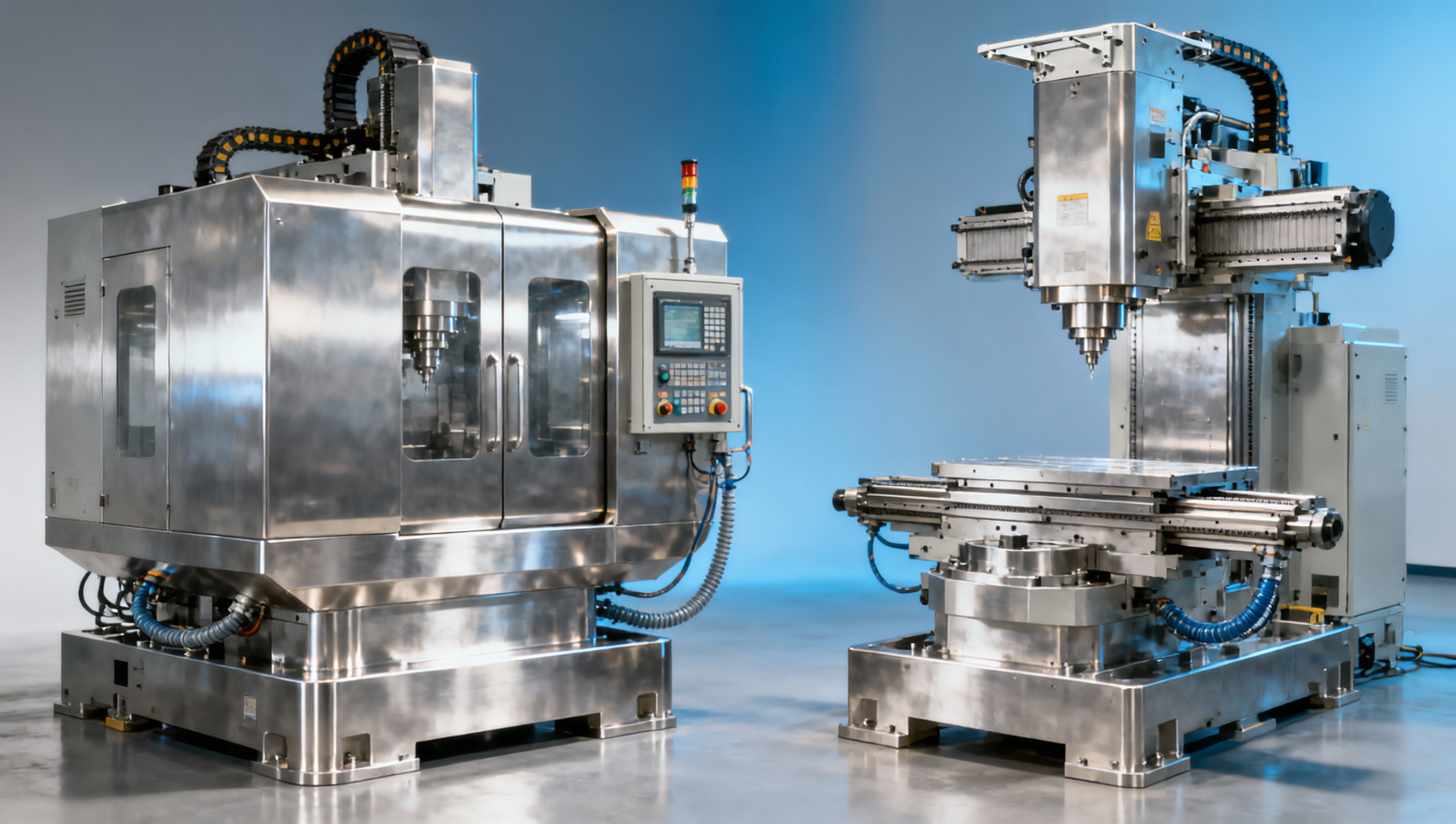
Machine tool for medical device manufacturing: Why cleanroom compatibility starts at base design
In medical device manufacturing, where sterility, precision, and regulatory compliance are non-negotiable, cleanroom-compatible machine tools aren’t just an add-on—they’re foundational. A true cleanroom-ready design begins at the base: sealed enclosures, low-particulate lubrication, corrosion-resistant materials, and compact footprints for space-saving CNC manufacturing. Whether you’re a CNC manufacturing supplier, medical device OEM, or procurement specialist evaluating a machine tool for medical device manufacturing, understanding how integrated engineering enables high-precision CNC manufacturing—while supporting quick setup, low maintenance, and automated CNC manufacturing—is critical. This article explores why cleanroom compatibility must be engineered in, not bolted on.
“Cleanroom-compatible” isn’t about filters—it’s about how the machine is built from the ground up
When procurement teams or plant engineers search for a “machine tool for medical device manufacturing,” they’re rarely looking for specs alone. They’re asking: Will this machine pass ISO 14644-1 Class 7 audit? Can it run unattended in a Grade B environment without triggering particle excursions? Will it survive repeated VHP (vaporized hydrogen peroxide) cycles without degradation?
The answer lies not in retrofit kits or after-market enclosures—but in the machine’s structural DNA. Conventional CNC lathes or machining centers—even high-precision ones—often introduce contamination risks at the source: oil mist from open gearboxes, particulate shedding from standard bearings, galvanic corrosion from mixed-metal coolant channels, or hard-to-clean crevices in base frames. A truly cleanroom-ready machine tool eliminates these vectors by design: monolithic cast iron or stainless-steel bases with fully sealed coolant and lubrication circuits; ceramic or polymer-coated linear guides; grease-free, dry-running spindle seals; and IP65-rated electrical cabinets integrated into the machine envelope—not bolted on as an afterthought.
This isn’t theoretical. Leading medical device OEMs report up to 40% faster cleanroom qualification timelines when sourcing machines with certified base-level cleanroom engineering—versus modifying standard models. That translates directly into reduced time-to-market for Class II and III implants, catheters, and surgical robotics components.
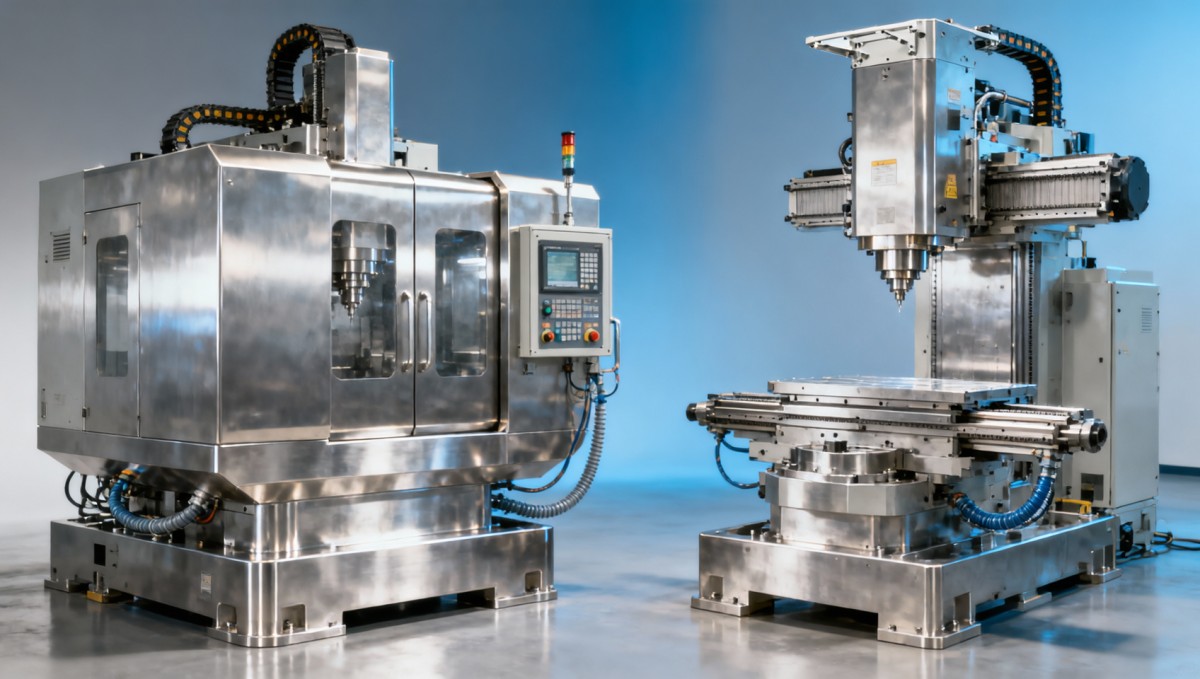
What decision-makers actually need to verify—before signing the PO
For procurement specialists and plant managers, due diligence isn’t about checking a “cleanroom option” box. It’s about validating four non-negotiable design commitments:
- Enclosure integrity: Not just a plastic curtain or acrylic hood—but welded, gasketed steel housing with validated leak rates ≤0.05 CFM at 100 Pa differential pressure.
- Lubrication architecture: Closed-loop, food-grade synthetic grease systems with zero oil mist generation—and documented particulate emission testing per ISO 14644-1 Annex B.
- Material compatibility: All wetted surfaces (coolant tanks, chip trays, spindles) made of electropolished 316L stainless steel or PTFE-lined aluminum—validated against common sterilants (VHP, EtO, sodium hypochlorite).
- Footprint & service access: Compact, modular layout enabling installation in tight cleanroom bays (<2.5 m ceiling height), with top-access maintenance points to avoid breaking floor integrity during servicing.
If the supplier can’t provide third-party test reports for each—signed and dated—not marketing brochures—treat it as a red flag. Cleanroom compliance is auditable, repeatable, and traceable. It’s not a feature; it’s a certification pathway.
Why “bolt-on” cleanroom solutions fail in real production
We’ve seen it repeatedly: a Tier-1 orthopedic manufacturer installs a premium 5-axis machining center—then adds a custom laminar flow canopy, HEPA-filtered air shower, and stainless-steel chip conveyor. Six months later, particle counters spike during night shift runs. Root cause? Coolant mist escaping through unsealed Z-axis ball screw boots, combined with standard carbon-steel guide rails shedding micro-oxidized particles under humidity cycling.
Bolt-on approaches compound risk because they treat symptoms—not sources. They increase complexity (more failure points), raise TCO (additional energy, validation labor, filter replacements), and often violate cleanroom airflow dynamics. Worse: they delay FDA or MDR audits. Regulators don’t review your canopy spec sheet—they inspect your machine’s internal architecture and its validation dossier.
True integration means the machine tool *is* the cleanroom interface—not something placed inside one.
Bottom line: Cleanroom readiness is a design KPI—not a sales option
If you’re specifying, purchasing, or operating machine tools for medical device manufacturing, remember this: cleanroom compatibility isn’t added in procurement. It’s defined in R&D, validated in prototyping, and locked into the bill of materials before the first casting is poured. Prioritize suppliers who embed ISO 14644-1, ISO 13485, and EU MDR Annex I requirements into their core mechanical architecture—not as addenda, but as non-negotiable constraints.
Ask for the evidence—not the promise. Demand test data, not testimonials. And choose machines where sterility isn’t managed *around* the tool… but engineered *into* it.
Recommended for You
 Heavy-duty Machining Center for mold making: Why coolant filtration standards evolve faster than OEM manualsMachine Tool Industry Editorial Team
 Quick-change Fixture Design for CNC turning: Why clamping force consistency drops after 200 cyclesCNC Machining Technology Center
 5 Axis Machining for impeller manufacturing: Why toolpath smoothing affects surface fatigue lifeCNC Machining Technology Center
 Lean Production Process implementation: Where value stream mapping fails to expose hidden machine downtimeManufacturing Market Research Center
 Modular Tooling System for flexible manufacturing: Why interface repeatability degrades faster than expectedMachine Tool Industry Editorial Team
 Industrial Automation control system for CNC machines: When cybersecurity updates disrupt scheduled maintenanceMachine Tool Industry Editorial Team

Aris Katos
Future of Carbide Coatings
15+ years in precision manufacturing systems. Specialized in high-speed milling and aerospace grade alloy processing.
▶
Heavy-duty Machining Center for mold making: Why coolant filtration standards evolve faster than OEM manualsMachine Tool Industry Editorial Team▶
High precision machine tool: Why air-bearing spindles demand more than just clean airMachine Tool Industry Editorial Team▶
Machine tool for automotive industry: Why dynamic rigidity matters more than static specsMachine Tool Industry Editorial Team▶
Machine tool for aerospace: Why thermal expansion compensation requires real-time sensor fusionMachine Tool Industry Editorial Team▶
Machine tool for electronics manufacturing: Why EMI shielding affects more than just signal integrityMachine Tool Industry Editorial Team
Mastering 5-Axis Workholding Strategies
Join our technical panel on Nov 15th to learn about reducing vibrations in thin-wall components.

Providing you with integrated sanding solutions
Before-sales and after-sales services
Comprehensive technical support