• Global CNC market projected to reach $128B by 2028 • New EU trade regulations for precision tooling components • Aerospace deman
NYSE: CNC +1.2%LME: STEEL -0.4%

Machine tool for mold making: When thermal symmetry trumps maximum spindle torque
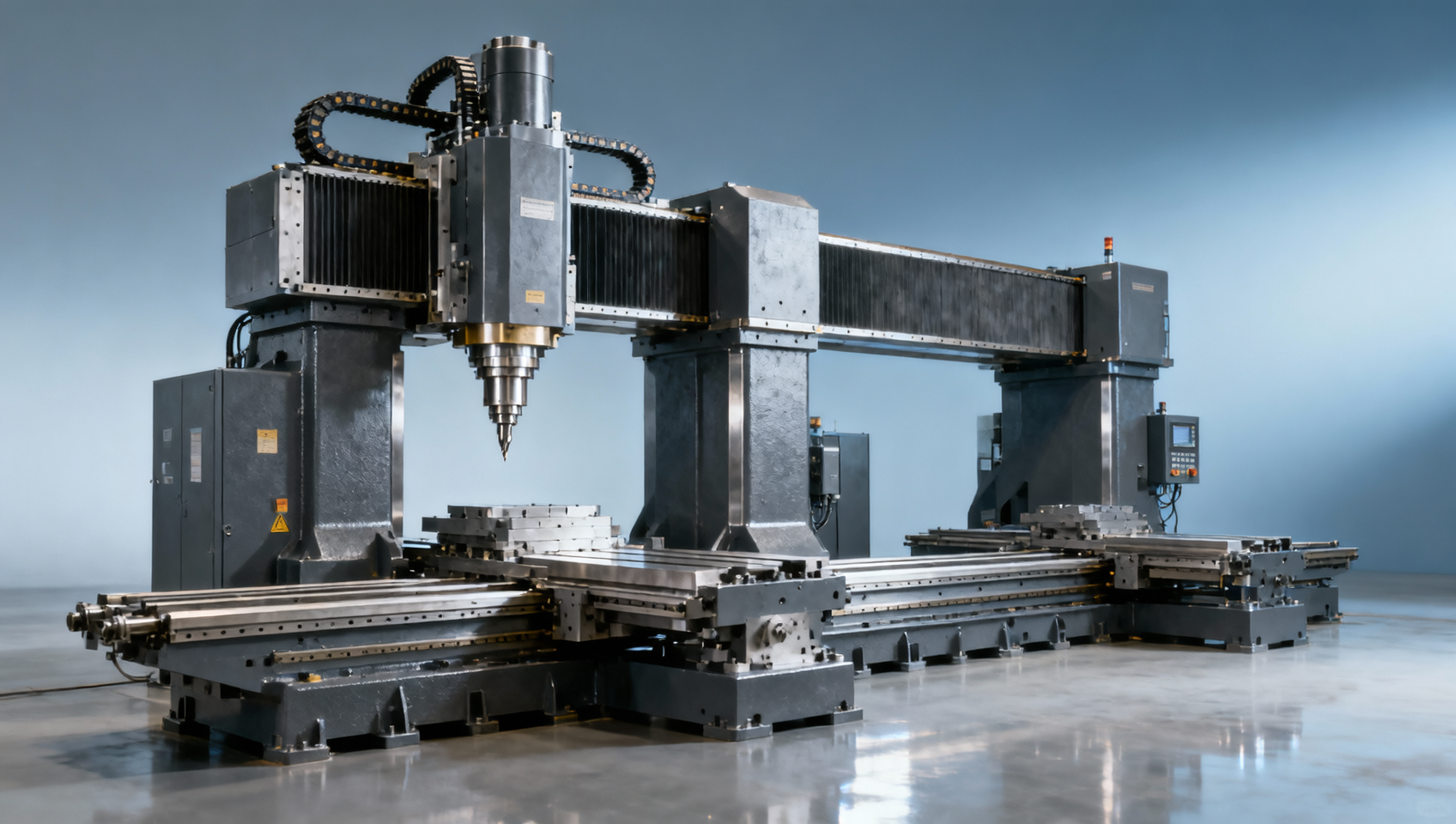
In mold making, where dimensional stability and surface integrity are non-negotiable, thermal symmetry often outweighs raw spindle torque—especially in high-precision CNC manufacturing for aerospace, medical devices, and energy equipment. This shift is driving demand for compact machine tool solutions that deliver space-saving CNC manufacturing, low maintenance CNC manufacturing, and energy-saving machine tool performance without sacrificing accuracy. Whether you’re a procurement professional sourcing from a CNC manufacturing wholesaler, an engineer evaluating multi-axis machine tool capabilities, or a decision-maker selecting a machine tool for mold making, understanding this thermal-performance trade-off is critical to optimizing cycle time, part quality, and long-term ROI.
Why Thermal Symmetry Matters More Than Peak Torque in Mold-Making CNC Machines
Mold-making demands sub-micron repeatability across multi-hour machining cycles. A spindle rated at 120 N·m may deliver impressive initial cut depth—but if thermal expansion shifts the Z-axis by ±3.2 µm over 90 minutes, cavity matching fails. In contrast, thermally symmetric designs (e.g., dual-column bridges, symmetrical coolant routing, and balanced motor placement) limit drift to under ±0.8 µm—even after 4 hours of continuous operation.
This isn’t theoretical: aerospace mold suppliers report 37% fewer rework events when switching from high-torque, asymmetric gantry machines to thermally optimized 5-axis machining centers. The root cause? Asymmetric heat generation induces differential expansion in cast iron frames—distorting reference geometry faster than real-time thermal compensation can correct.
Thermal symmetry is measured via ISO 230-3 compliance testing: machines must maintain positional deviation ≤ ±1.0 µm per 10°C ambient fluctuation across 8-hour stabilization cycles. Leading European and Japanese OEMs now specify <±0.6 µm/10°C as standard—not optional—for mold-grade machining centers.
Key Structural Features That Enable Thermal Symmetry
- Double-Column Bridge Design: Equalizes thermal load distribution across both sides of the Y-axis—reducing frame twist by up to 65% versus single-column alternatives.
- Enclosed Coolant Loop with Dual-Temperature Zones: Maintains spindle housing at 20.0°C ±0.2°C and column base at 19.8°C ±0.3°C—minimizing vertical gradient-induced bending.
- Invar-Reinforced Linear Scale Mounting: Uses low-expansion alloy brackets to fix glass scales directly to machine bed, eliminating mounting-point drift during warm-up phases.
How to Evaluate Thermal Performance—Not Just Spindle Specs
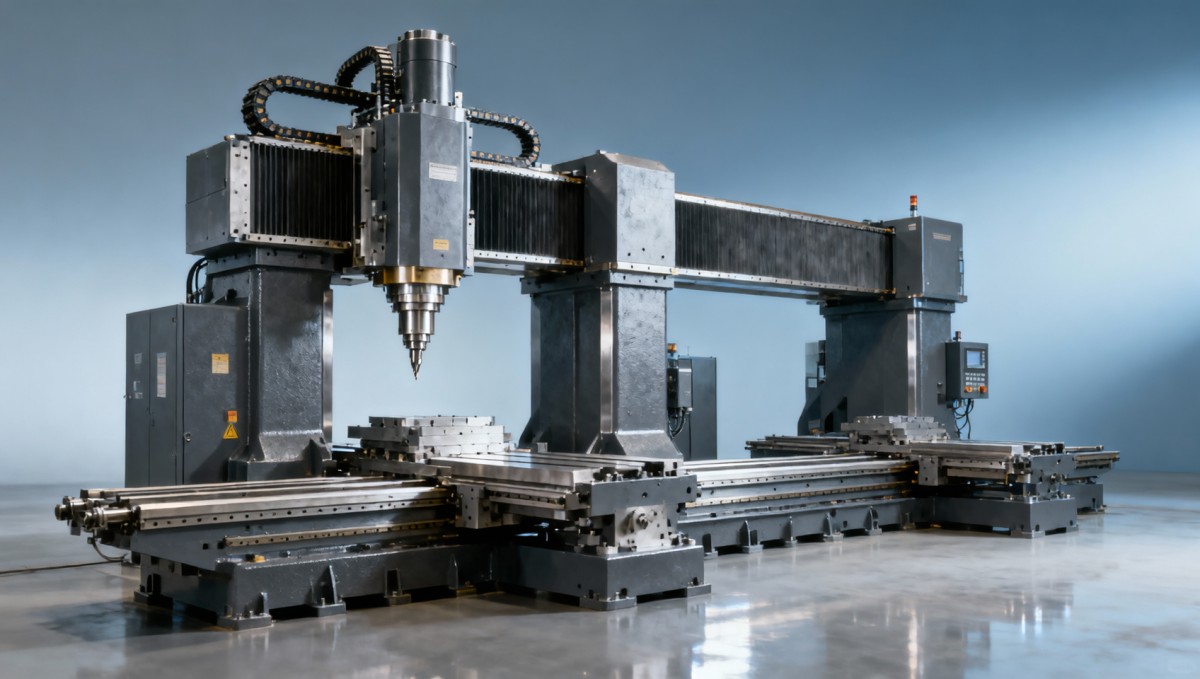
Procurement teams often default to spindle torque (N·m), RPM range, and axis acceleration—yet these metrics say little about sustained accuracy. A more actionable evaluation framework focuses on three measurable thermal behaviors: warm-up stabilization time, thermal drift rate, and ambient sensitivity.
Warm-up stabilization—the time required for all axes to reach steady-state thermal equilibrium—should be ≤ 25 minutes for mold-grade machines. Drift rate (measured per hour at constant load) must stay below ±0.9 µm/h in X/Y/Z. Ambient sensitivity reflects how much positional error accumulates per degree Celsius change: top-tier systems hold ≤ ±0.4 µm/°C across 15–30°C operating ranges.
These values are verifiable via factory acceptance test (FAT) reports—not brochures. Always request full ISO 230-3 thermal test logs covering 8+ hours, including ambient temperature tracking and laser interferometer traceability.
Note: Machines failing any one of these thresholds typically require 2–4 additional manual compensation cycles per mold cavity—adding 11–18 minutes to average setup time and increasing operator fatigue-related errors by ~22% (per 2023 Global Tooling Association benchmark).
Which Applications Prioritize Thermal Symmetry Over Raw Power?
High-torque spindles excel in roughing large steel forgings—but mold finishing operates in a different regime. Critical applications demanding thermal symmetry include:
- Aerospace turbine blade molds: Require cavity-to-cavity matching within ±1.5 µm across 12+ cavities—impossible without sub-µm thermal stability over 5+ hour cycles.
- Medical implant injection molds: Surface finish deviations >0.05 µm trigger FDA requalification; thermal asymmetry causes localized polishing inconsistencies.
- Energy sector die-casting tools: Aluminum die life drops 30% when cavity wall thickness varies >±4 µm—often traced to Z-axis thermal sag during deep-pocket milling.
Conversely, high-spindle-torque machines remain optimal for pre-hardened steel roughing, large-diameter flange face milling, or EDM electrode preform cutting—where thermal stability matters less than material removal rate.
Procurement Checklist: 5 Non-Negotiables for Mold-Making Machine Tools
When evaluating machines for precision mold work, prioritize these five verified criteria—not marketing claims:
- Factory-verified ISO 230-3 thermal drift log (not simulation data) covering ≥8 hours at 22°C ±2°C ambient.
- Spindle housing temperature control tolerance: ≤ ±0.3°C over full RPM range (measured with embedded PT100 sensors).
- Bed casting material: Nodular cast iron with ≥300 HB hardness and certified stress-relief annealing (≥4 hours @ 560°C).
- Linear scale resolution: ≤ 0.1 µm with real-time thermal error mapping enabled by default—not optional add-on.
- Warranty coverage: Minimum 3-year comprehensive thermal performance guarantee, including annual recalibration verification.
Skipping even one item increases risk of mid-production thermal recalibration events—causing 4–7 day delays in mold commissioning timelines.
Why Partner With Us for Your Next Mold-Making Machine Tool
We specialize in matching global CNC machine tool manufacturers—from German precision builders to Japanese thermal-engineering leaders—with your exact application, budget, and certification requirements. Unlike generalist distributors, we provide:
- Pre-vetted technical alignment: We cross-check your mold geometry, material specs, and batch size against 12 thermal performance benchmarks—not just catalog specs.
- FAT oversight & reporting: On-site witness of ISO 230-3 tests, with raw data delivered in Excel + PDF format—including ambient correlation charts.
- Delivery transparency: Real-time logistics tracking for sea/air freight, plus coordinated customs clearance support for China, EU, and US markets.
Ready to compare thermal performance data across three qualified models—or validate your current spec sheet against ISO 230-3 thresholds? Contact us for a free thermal suitability assessment, including sample FAT report templates and lead-time estimates for your region.
Recommended for You
 Heavy-duty Machining Center for mold making: Why coolant filtration standards evolve faster than OEM manualsMachine Tool Industry Editorial Team
 Quick-change Fixture Design for CNC turning: Why clamping force consistency drops after 200 cyclesCNC Machining Technology Center
 5 Axis Machining for impeller manufacturing: Why toolpath smoothing affects surface fatigue lifeCNC Machining Technology Center
 Lean Production Process implementation: Where value stream mapping fails to expose hidden machine downtimeManufacturing Market Research Center
 Modular Tooling System for flexible manufacturing: Why interface repeatability degrades faster than expectedMachine Tool Industry Editorial Team
 Industrial Automation control system for CNC machines: When cybersecurity updates disrupt scheduled maintenanceMachine Tool Industry Editorial Team

Aris Katos
Future of Carbide Coatings
15+ years in precision manufacturing systems. Specialized in high-speed milling and aerospace grade alloy processing.
▶
Heavy-duty Machining Center for mold making: Why coolant filtration standards evolve faster than OEM manualsMachine Tool Industry Editorial Team▶
High precision machine tool: Why air-bearing spindles demand more than just clean airMachine Tool Industry Editorial Team▶
Machine tool for automotive industry: Why dynamic rigidity matters more than static specsMachine Tool Industry Editorial Team▶
Machine tool for aerospace: Why thermal expansion compensation requires real-time sensor fusionMachine Tool Industry Editorial Team▶
Machine tool for electronics manufacturing: Why EMI shielding affects more than just signal integrityMachine Tool Industry Editorial Team
Mastering 5-Axis Workholding Strategies
Join our technical panel on Nov 15th to learn about reducing vibrations in thin-wall components.

Providing you with integrated sanding solutions
Before-sales and after-sales services
Comprehensive technical support