• Global CNC market projected to reach $128B by 2028 • New EU trade regulations for precision tooling components • Aerospace deman
NYSE: CNC +1.2%LME: STEEL -0.4%

What to Know Before Buying a Machine Tool for Mold Making
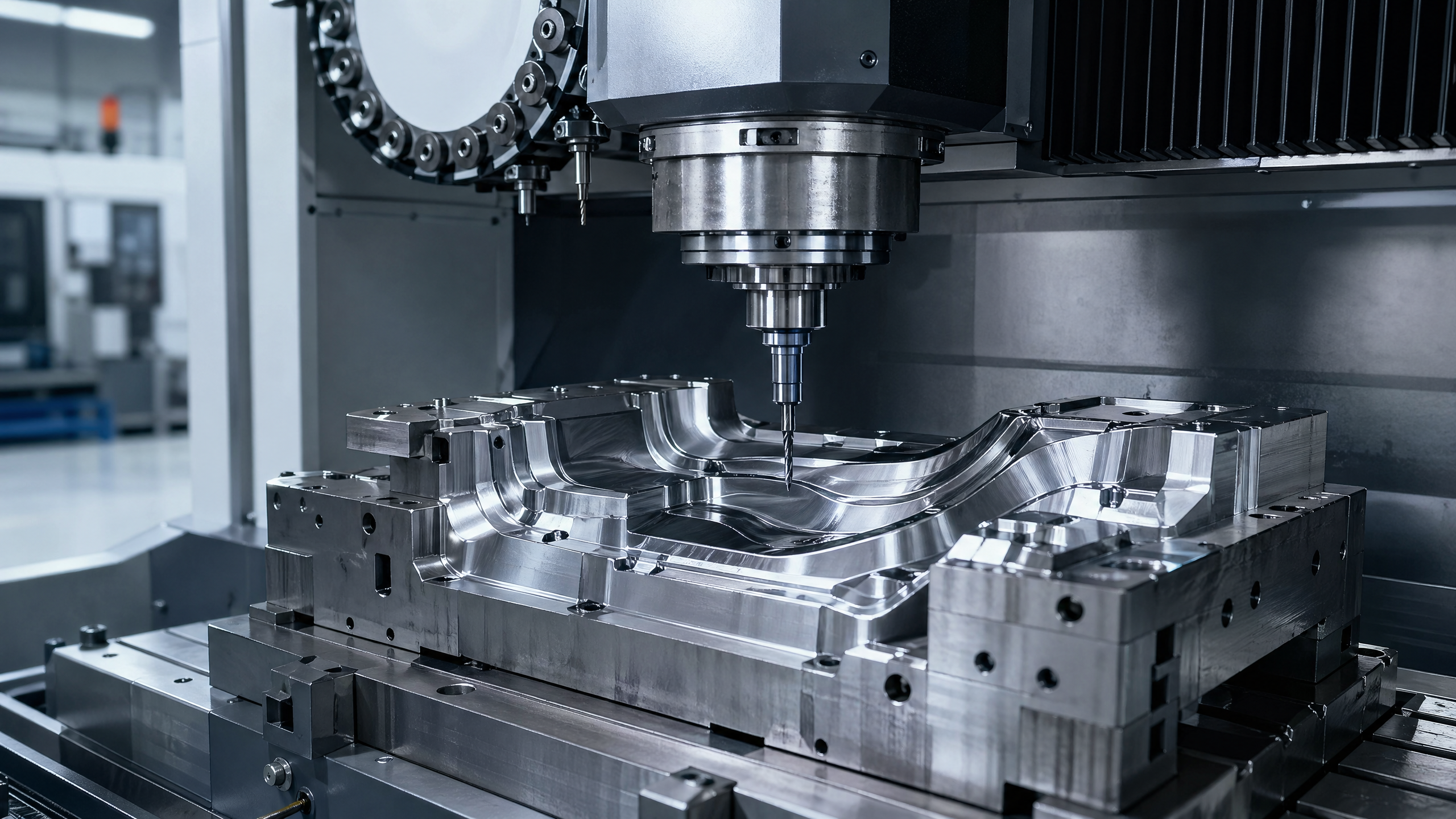
Before buying a machine tool for mold making, the most important question is not simply “Which machine is best?” but “Which machine matches my mold complexity, tolerance targets, production volume, and operating capability?” In mold manufacturing, a poor buying decision can lead to unstable accuracy, long cycle times, difficult maintenance, and higher total cost than expected. A good decision, by contrast, improves surface finish, reduces manual rework, shortens delivery lead times, and supports long-term CNC manufacturing efficiency.
For buyers comparing options from a CNC machine tool manufacturer, machine tool wholesaler, or machine tool supplier, the right evaluation should go beyond machine tool price. You need to assess precision stability, spindle performance, axis configuration, control system usability, automation readiness, maintenance support, and the actual fit between the machine and your mold production requirements. This article explains what matters most before making that investment.
Start With the Mold Work You Actually Need to Produce
The first step in selecting a machine tool for mold making is defining the real production task. Many buyers overpay for features they rarely use, while others buy lower-cost equipment that cannot consistently achieve required mold accuracy or surface quality.
Ask these practical questions first:
- What mold types will you make: plastic injection molds, die-casting molds, stamping dies, or precision inserts?
- What materials will you cut most often: P20, H13, S136, hardened steel, copper, graphite, or aluminum?
- What are your tolerance and surface finish requirements?
- How large are the typical workpieces?
- Do you mainly rough, semi-finish, or finish on the same machine?
- How often do you machine deep cavities, narrow ribs, complex contours, or multi-angle features?
If your mold work involves complex 3D surfaces, deep cavities, and tight tolerance finishing, a high precision machine tool with strong thermal stability and good dynamic response becomes more important than a low entry price. If your work is simpler and more standardized, a well-configured 3-axis or 4-axis platform may offer better return on investment than a more expensive multi-axis machine tool.
How Much Precision Do You Really Need — and Can the Machine Hold It Over Time?
In mold making, advertised accuracy is only part of the story. Buyers should focus on sustained machining accuracy in real factory conditions, not just the specification shown in a brochure.
Key precision-related factors include:
- Positioning and repeatability: essential for consistent cavity dimensions and insert fit.
- Thermal stability: critical during long machining cycles and fine finishing operations.
- Machine structure rigidity: affects vibration control, cutting stability, and surface quality.
- Spindle runout and stability: directly influences finishing performance and tool life.
- Control system compensation capability: useful for maintaining dimensional consistency.
For mold production, the real concern is whether the machine can maintain precision after hours of continuous operation, under changing temperatures, and with different materials. A machine that performs well during a short acceptance test may still struggle in actual shop-floor conditions if thermal growth, weak casting design, or insufficient spindle stability are present.
That is why buyers should ask suppliers for real machining samples, test-cut data, and if possible, references from mold manufacturers with similar applications. Precision that cannot be repeated in production has limited value.
When Does a Multi-Axis Machine Tool Make Sense?
A multi-axis machine tool can significantly improve mold machining efficiency, but it is not automatically the right choice for every buyer. The value depends on your part geometry, setup requirements, and programming capability.
A 5-axis or advanced multi-axis machine tool is especially useful when:
- You machine complex freeform surfaces and multiple angled features.
- You want to reduce repeated repositioning and manual intervention.
- You need better access to deep or difficult-to-reach areas.
- You aim to improve surface continuity by reducing multiple setups.
- You want to combine roughing and finishing more efficiently.
However, a multi-axis machine also brings higher machine tool price, more demanding CAM programming, stricter operator skill requirements, and potentially more complex maintenance. For some mold shops, especially those producing medium-complexity work in stable batches, a high-quality 3-axis machining center with strong spindle performance and good tooling strategy may be the more economical choice.
The right question is not whether multi-axis technology is advanced, but whether it will reduce total production cost and improve mold quality in your specific workflow.
Do Not Judge the Machine by Price Alone
Machine tool price is important, but focusing only on initial purchase cost often leads to expensive mistakes. A lower-priced machine may require more manual polishing, more setup time, more scrap risk, and more downtime. Over the life of the machine, these hidden costs can exceed the original savings.
When comparing quotations, evaluate total cost of ownership, including:
- Installation and commissioning cost
- Tooling and fixture compatibility
- Operator training requirements
- Expected cycle time performance
- Maintenance and spare parts availability
- Machine uptime and service response speed
- Energy consumption
- Software, probing, and automation options
For procurement teams and business evaluators, the better decision often comes from measuring cost per qualified mold component, not simply equipment purchase price. A machine that costs more but cuts lead time, lowers rework, and improves delivery reliability may create much stronger long-term value.
What Spindle, Feed, and Structural Features Matter Most for Mold Making?
Mold machining places special demands on machine performance. Fine finishing, hardened materials, and intricate geometries require more than general-purpose cutting capability.
Important technical areas to review include:
- Spindle speed and torque: high-speed finishing and stable cutting both matter, depending on mold material and process stage.
- Acceleration and feed response: helps maintain quality on complex contours and small-radius toolpaths.
- Guideway and ballscrew quality: supports accuracy, smooth motion, and long-term reliability.
- Machine base rigidity: reduces chatter and improves consistency in hard milling.
- Chip evacuation and coolant design: important for cavity machining and thermal control.
- Tool magazine capacity and tool change speed: affects unattended operation and process continuity.
If the machine will be used for both roughing and finishing, buyers should confirm that it can handle heavier cutting loads without compromising fine-surface machining performance. In mold making, balance matters: speed alone does not guarantee better results, and neither does maximum spindle power if vibration control is weak.
How Important Are Automation and Ease of Operation?
Automation is becoming more important across CNC manufacturing, but its value depends on production volume, labor conditions, and shop management capability. For mold makers facing skilled labor shortages or pressure to reduce lead times, automation-ready machine tools can provide a meaningful advantage.
Useful automation-related features may include:
- Automatic tool measurement
- Workpiece probing and setup verification
- Pallet changing systems
- Robot loading compatibility
- Remote monitoring and production data integration
- Tool life management and alarm systems
At the same time, operating simplicity should not be overlooked. A machine with advanced functions but poor usability can create programming mistakes, setup delays, and underutilization. Operators and process engineers should be involved in evaluation, especially when comparing different control systems and interface designs.
For many buyers, the best machine tool supplier is not only one that offers technology, but one that provides a machine people can actually run well every day.
What Service and Supplier Questions Should Buyers Ask Before Signing?
Whether you buy from a CNC machine tool manufacturer, machine tool wholesaler, or machine tool supplier, after-sales support is a major decision factor. In mold production, downtime can affect customer delivery schedules and damage profitability quickly.
Before purchasing, ask:
- What is the standard lead time for installation and training?
- Is local service available?
- How fast can critical spare parts be supplied?
- What preventive maintenance guidance is included?
- Can the supplier support process optimization, not just machine repair?
- Are there existing users in mold making who can share feedback?
- What acceptance testing conditions are offered before shipment?
A supplier with strong service capability can reduce operational risk substantially. This is especially important for buyers entering higher-precision or multi-axis machining for the first time.
A Practical Buying Checklist for Mold Shops and Procurement Teams
Before finalizing your purchase, use this short checklist to keep the decision aligned with production goals:
- Match machine size, axis type, and spindle capability to actual mold work.
- Verify sustained accuracy, not just catalog specifications.
- Compare machine tool price against total lifecycle cost.
- Check whether multi-axis capability will deliver real production gains.
- Evaluate machine rigidity, thermal stability, and finishing performance.
- Confirm software, control, and operator usability fit your team.
- Review automation potential based on labor and output needs.
- Assess service responsiveness, spare parts access, and technical support.
This approach helps information researchers, operators, buyers, and commercial evaluators move from general comparison to a decision based on process reality.
Conclusion
Buying a machine tool for mold making is a strategic production decision, not just an equipment purchase. The best choice is the one that delivers stable precision, suitable flexibility, manageable operation, and strong long-term economics for your actual mold applications. High precision machine tool capability, multi-axis machine tool value, and machine tool price should all be judged in relation to mold complexity, labor capability, service support, and expected production results.
If buyers focus on real machining needs, lifetime cost, and supplier reliability rather than headline specifications alone, they are far more likely to choose a machine that improves quality, efficiency, and business performance over time.
PREVIOUS ARTICLE
NEXT ARTICLE
Recommended for You
 How to Choose a Space-Saving CNC Manufacturing SetupCNC Machining Technology Center
![]() What to Check Before Using a CNC Manufacturing WholesalerGlobal Machine Tool Trade Research Center
What to Check Before Using a CNC Manufacturing WholesalerGlobal Machine Tool Trade Research Center Why Precision CNC Manufacturing Fails Tolerance GoalsCNC Machining Technology Center
 Is CNC Manufacturing for Energy Equipment Worth the CostManufacturing Market Research Center
![]() How Low Maintenance CNC Manufacturing Cuts DowntimeMachine Tool Industry Editorial Team
How Low Maintenance CNC Manufacturing Cuts DowntimeMachine Tool Industry Editorial Team How to Compare One CNC Manufacturing Factory to AnotherManufacturing Market Research Center


Aris Katos
Future of Carbide Coatings
15+ years in precision manufacturing systems. Specialized in high-speed milling and aerospace grade alloy processing.
▶
Is a Compact Machine Tool Right for Small WorkshopsMachine Tool Industry Editorial Team▶
What to Know Before Buying a Machine Tool for Mold MakingMachine Tool Industry Editorial Team▶
Which Machine Tool Fits Medical Device Manufacturing BestMachine Tool Industry Editorial Team▶
Why Multi-Axis Machine Tools Are Gaining AttentionMachine Tool Industry Editorial Team▶
What High Precision Machine Tools Change in Final QualityMachine Tool Industry Editorial Team
Mastering 5-Axis Workholding Strategies
Join our technical panel on Nov 15th to learn about reducing vibrations in thin-wall components.

Providing you with integrated sanding solutions
Before-sales and after-sales services
Comprehensive technical support