• Global CNC market projected to reach $128B by 2028 • New EU trade regulations for precision tooling components • Aerospace deman
NYSE: CNC +1.2%LME: STEEL -0.4%

Advanced Manufacturing Technology Reshaping Energy Equipment
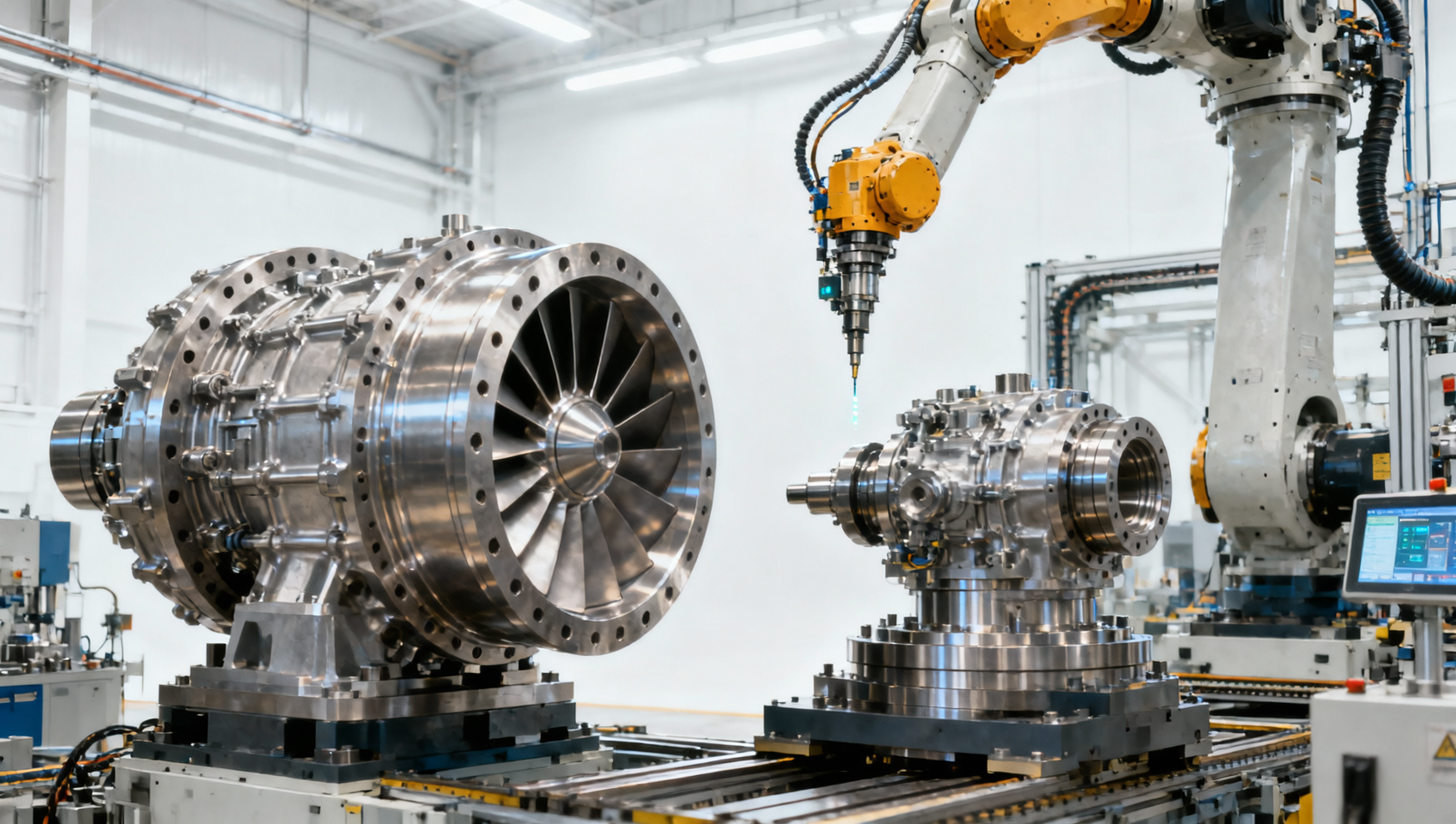
Advanced Manufacturing Technology for energy equipment is accelerating the shift toward smarter, faster, and more reliable production. For most readers searching this topic, the real question is not whether advanced manufacturing matters, but which technologies are delivering measurable gains in precision, lead time, cost control, and production stability. In practice, the biggest impact comes from combining Industrial Automation, Multi-axis Machining Process, digital production management, and precision CNC systems to solve the exact challenges energy equipment makers face: large complex parts, strict quality requirements, long production cycles, and rising pressure to improve output without increasing risk.
For operators, this means easier process control and more consistent machining results. For procurement teams, it means knowing which equipment investments create long-term value. For business decision-makers, it means understanding where advanced manufacturing improves competitiveness, lowers rework, and supports scalable production. The companies gaining the most are not simply buying more machines; they are redesigning how energy equipment is produced from machining and assembly to inspection and data-driven optimization.
Why Energy Equipment Manufacturing Is Changing So Fast
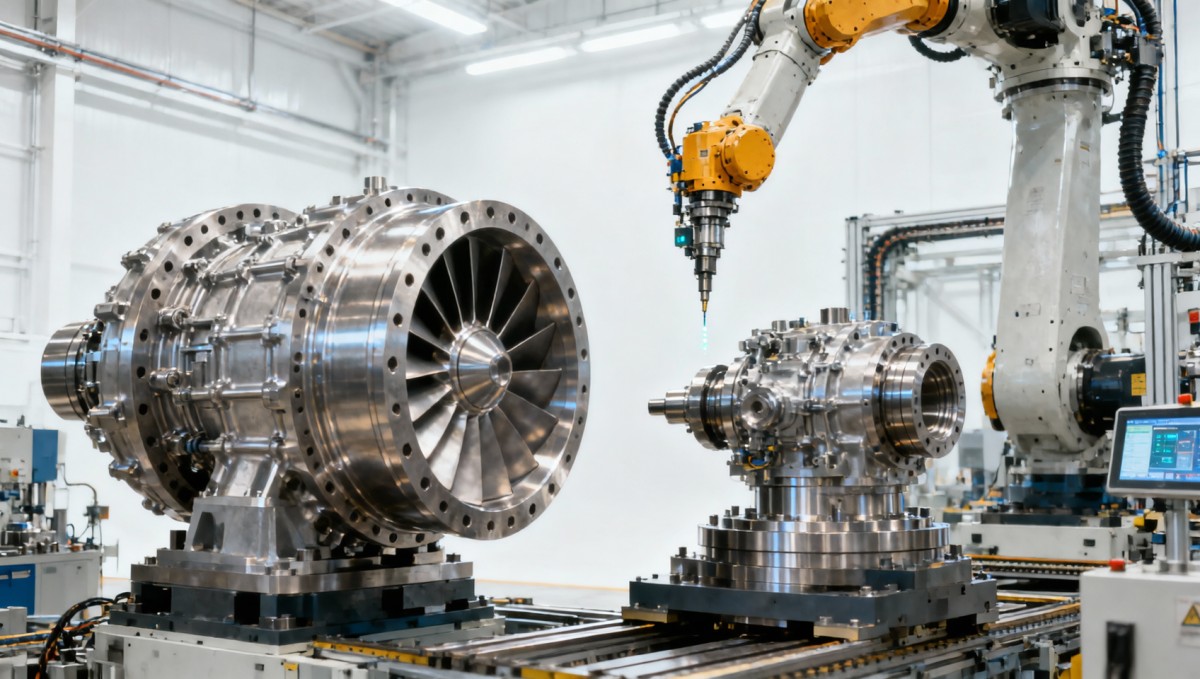
Energy equipment manufacturing has always required high reliability, but today the pressure is far greater. Producers are expected to deliver complex parts faster, maintain tighter tolerances, reduce waste, and adapt to a wider range of product specifications. This is especially true in sectors such as wind power, oil and gas, power generation, nuclear systems, and new energy infrastructure.
Traditional production models often struggle with these demands because energy equipment components are usually large, heavy, difficult to machine, and expensive to remake. A small deviation in a turbine shaft, valve body, housing, flange, or impeller can create major downstream risks. That is why advanced manufacturing technology is no longer a support function. It is becoming central to production quality, cost management, and delivery performance.
The core shift is clear: manufacturers are moving away from isolated machine operations and toward integrated, precision-driven, digitally connected production systems.
Which Advanced Manufacturing Technologies Are Creating the Biggest Impact?
The most valuable technologies are the ones that solve real production bottlenecks. In energy equipment manufacturing, several stand out.
1. High-precision CNC machine tools
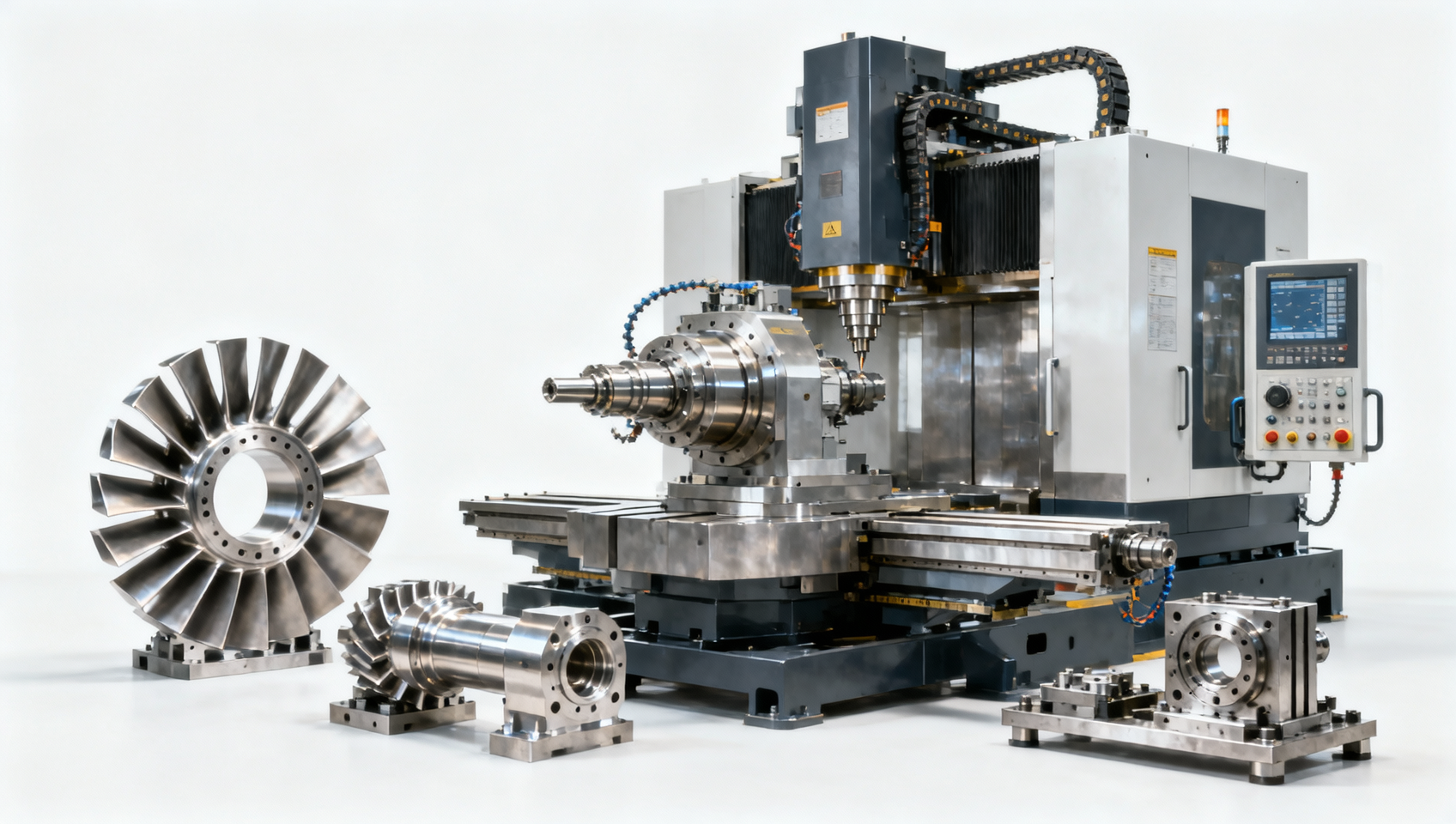
Modern CNC lathes, machining centers, and boring-milling machines provide the accuracy and repeatability needed for critical energy components. Compared with older setups, advanced CNC systems help reduce dimensional variation, improve surface finish, and support stable machining of difficult materials.
2. Multi-axis Machining Process for complex components
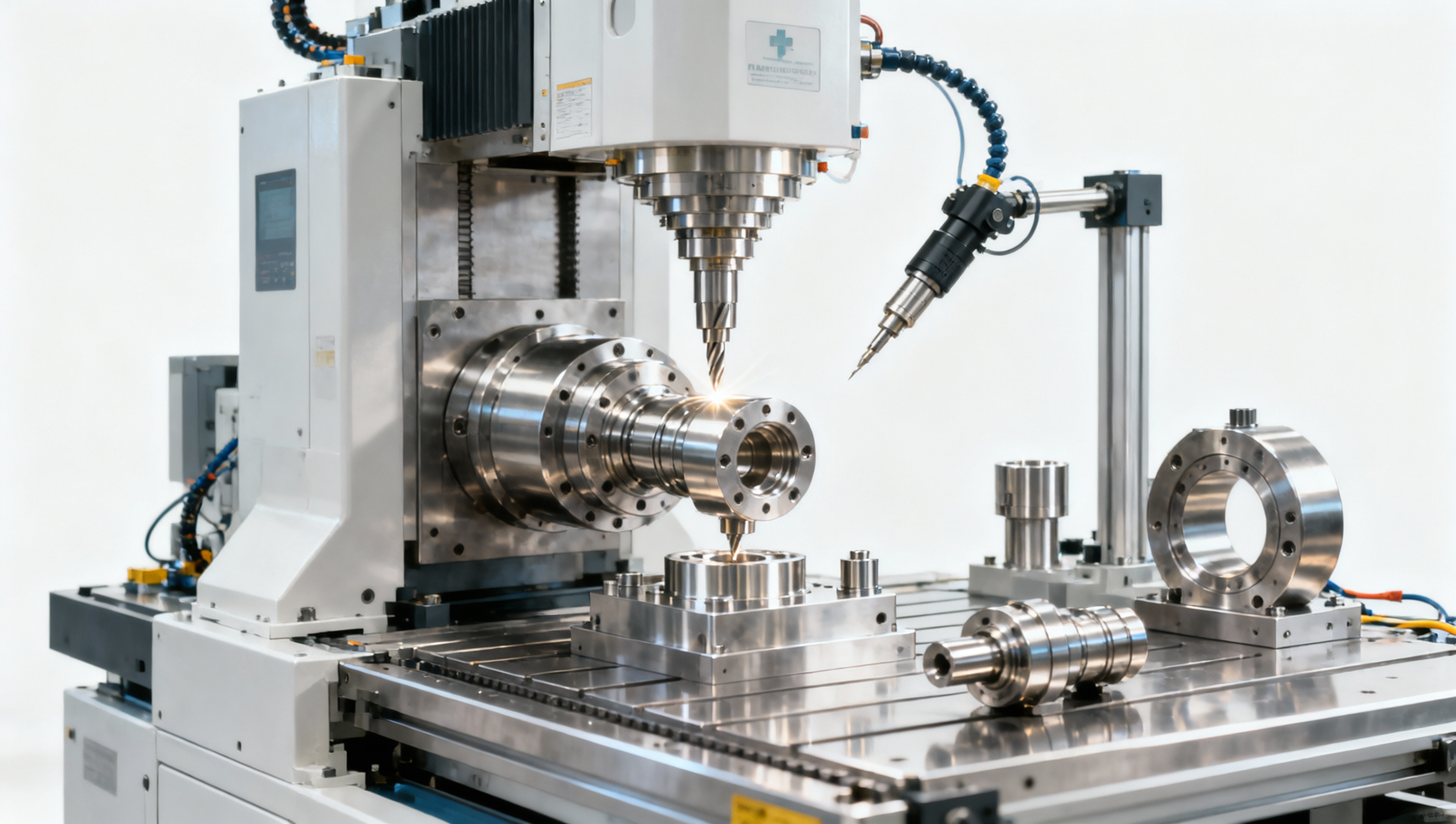
Many energy equipment parts have irregular geometries, deep cavities, angular features, or multiple precision surfaces. A Multi-axis Machining Process allows these features to be completed in fewer setups, which improves accuracy and reduces fixture changes, alignment errors, and cycle time.
This is especially useful for impellers, turbine blades, pump parts, housings, and structural components where geometry complexity directly affects product performance.
3. Industrial Automation integration for production line
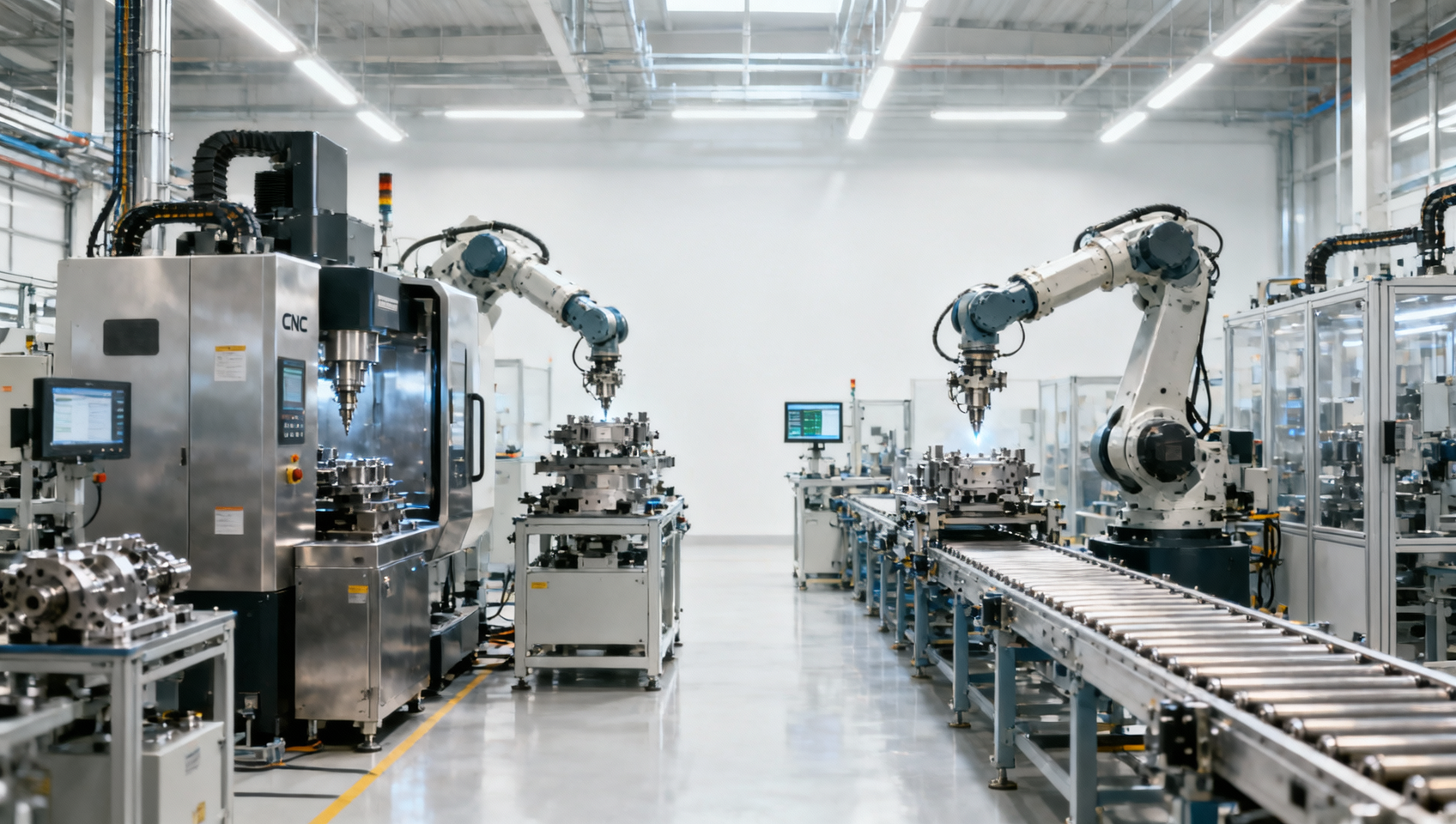
Automation is no longer limited to mass production. In energy equipment, Industrial Automation integration for production line can improve consistency in loading, transfer, positioning, assembly, and inspection. Robotic handling, automated tool changes, pallet systems, and coordinated production cells reduce dependence on manual intervention and improve uptime.
For manufacturers facing labor shortages or skill gaps, automation also helps maintain output stability while lowering operator fatigue and process variability.
4. In-process measurement and digital quality control
Advanced measurement systems allow manufacturers to detect deviations earlier instead of discovering defects only at final inspection. On-machine probing, coordinate measuring systems, and digital feedback loops help prevent expensive scrap and rework, which is critical when dealing with high-value energy equipment parts.
5. Smart factory and production data integration
When machines, tooling, scheduling, maintenance, and inspection data are connected, decision-makers can see where delays, downtime, and quality losses are actually happening. Smart manufacturing systems support better planning, predictive maintenance, and more accurate control of production efficiency.
What Problems Do Operators, Buyers, and Managers Most Want to Solve?
Although different readers have different roles, their concerns overlap around a few practical issues.
For operators and production teams
They want stable machining, easier setup, lower rework rates, reliable tool performance, and less unexpected downtime. Advanced manufacturing helps when it simplifies process flow, reduces manual adjustment, and gives operators clearer process control.
For procurement professionals
They want to know whether a machine, automation system, or production line can truly match the required workpiece size, material, tolerance, and output target. They also care about supplier reliability, maintenance support, training, spare parts, and lifecycle cost rather than just initial purchase price.
For business decision-makers
They want to understand whether a technology investment will improve delivery speed, quality consistency, plant utilization, and long-term competitiveness. They also want to reduce production risk and avoid buying advanced equipment that is impressive technically but poorly matched to actual manufacturing needs.
That is why the most useful way to evaluate advanced manufacturing technology is not by features alone, but by how well it solves these business and production realities.
How Advanced Manufacturing Improves Efficiency and Quality in Energy Equipment
The value of advanced manufacturing becomes clear when linked to specific outcomes.
Fewer setups, better accuracy
With multi-axis systems and more capable fixtures, manufacturers can complete more operations in a single clamping. This reduces cumulative positioning errors and improves consistency across batches.
Shorter production cycles
Integrated machining and automation reduce waiting time between operations. Faster setup, more efficient toolpaths, and better process planning all contribute to lower lead times.
Lower rework and scrap costs
In energy equipment, defective parts are expensive. Precision machining, real-time monitoring, and in-process inspection help catch errors earlier and reduce wasted material and labor.
Improved production flexibility
Energy equipment makers often handle customized or low-to-medium volume orders. Flexible CNC systems and modular automation cells allow faster switching between part types without sacrificing control.
Better traceability and compliance
Digital production systems make it easier to record machining parameters, inspection results, and process
NEXT ARTICLE
Recommended for You
 What Slows Down an Automation Line in Textile Production?Machine Tool Industry Editorial Team
 High Temperature Alloy Cutting Tools Wear Out for Hidden ReasonsCNC Machining Technology Center
 Automated Production Lines in Auto Manufacturing: Key BottlenecksMachine Tool Industry Editorial Team
 What Makes a 5 Axis Machining Center Fit Aerospace Parts?Machine Tool Industry Editorial Team
 Medical Equipment Machining Centers Need Accuracy Beyond SpecsMachine Tool Industry Editorial Team
 How to Compare CNC Tooling System Suppliers in GermanyGlobal Machine Tool Trade Research Center

Aris Katos
Future of Carbide Coatings
15+ years in precision manufacturing systems. Specialized in high-speed milling and aerospace grade alloy processing.
▶
Advanced Manufacturing Technology Reshaping Energy EquipmentManufacturing Market Research Center▶
Digital Manufacturing Technology for smart factory: Where data latency breaks real-time control loopsManufacturing Market Research Center▶
Industrial Robotics Adoption Is Rising Beyond Automotive PlantsManufacturing Market Research Center▶
Automated Production Needs Flexibility More Than Speed NowManufacturing Market Research Center▶
Global Manufacturing Is Shifting Where Machine Demand GrowsManufacturing Market Research Center
Mastering 5-Axis Workholding Strategies
Join our technical panel on Nov 15th to learn about reducing vibrations in thin-wall components.

Providing you with integrated sanding solutions
Before-sales and after-sales services
Comprehensive technical support