• Global CNC market projected to reach $128B by 2028 • New EU trade regulations for precision tooling components • Aerospace deman
NYSE: CNC +1.2%LME: STEEL -0.4%

Industrial Lathe Accuracy Problems That Look Like Tool Wear
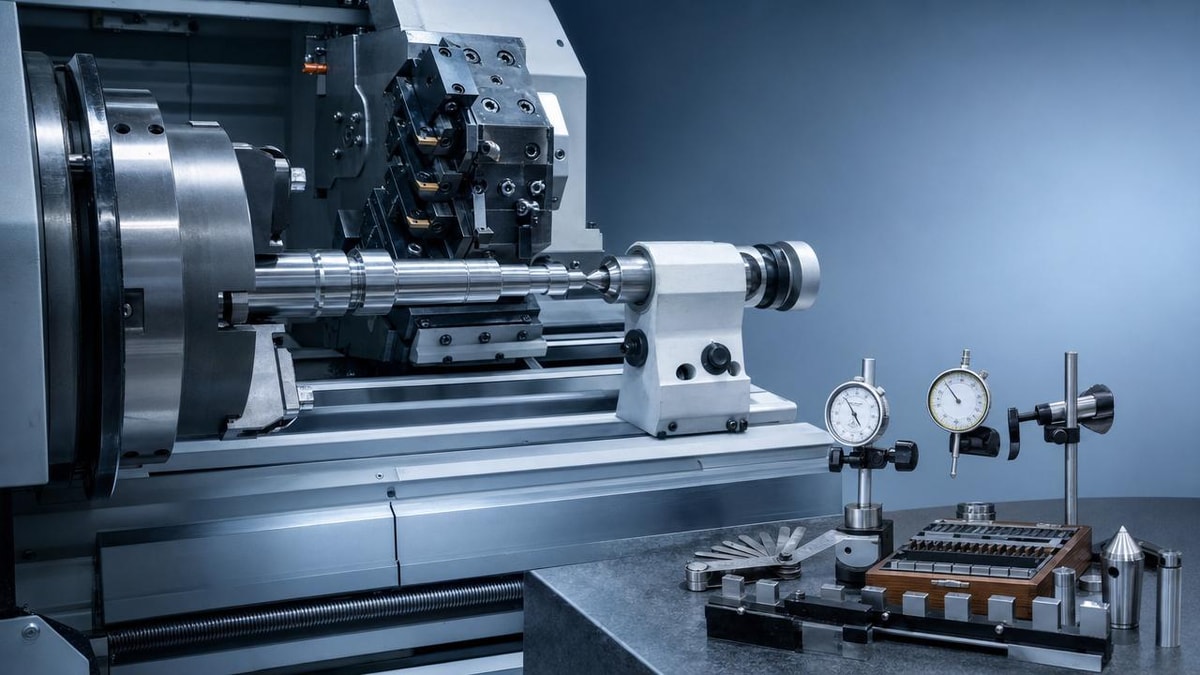
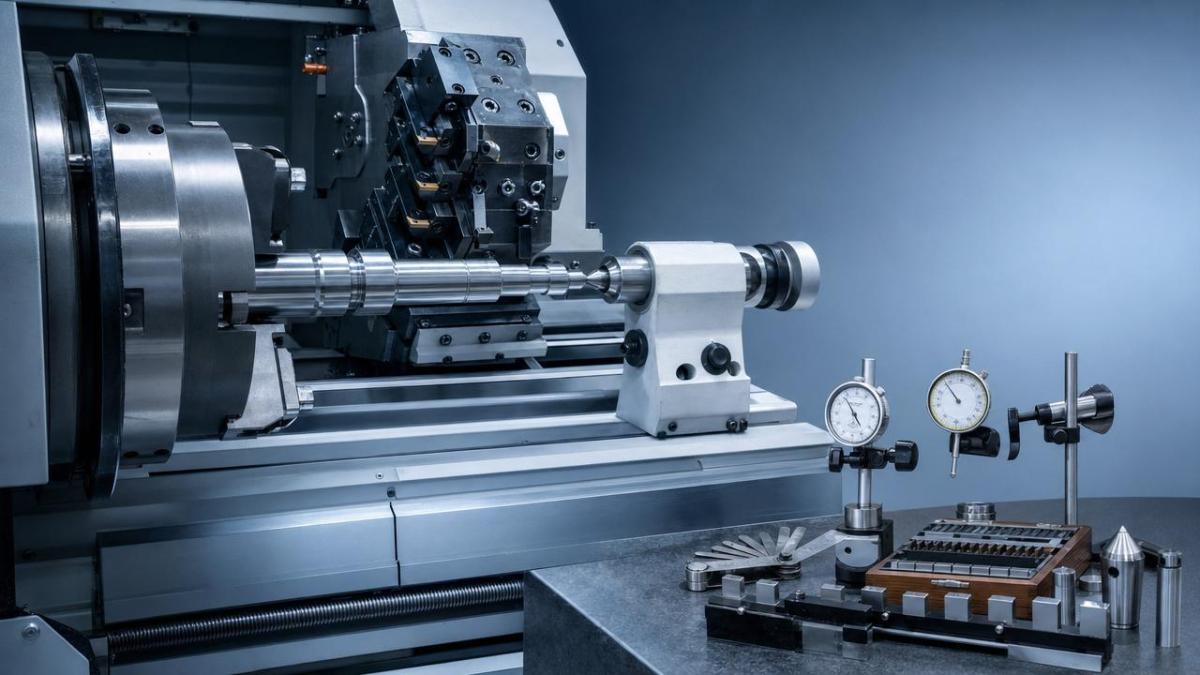
On an industrial lathe, declining part accuracy does not always mean the cutting edge is worn out. For after-sales maintenance teams, issues such as spindle runout, thermal drift, backlash, and poor alignment can create defects that closely resemble tool wear. Understanding these hidden causes is essential for faster troubleshooting, more accurate service decisions, and reducing unnecessary tool replacement in high-precision production environments.
A checklist-based approach is the fastest way to diagnose these accuracy complaints on an industrial lathe. In real service work, production teams often report taper, chatter marks, size drift, poor surface finish, or inconsistent repeatability and assume the insert is finished. However, after-sales technicians know that many of these symptoms come from the machine structure, motion system, clamping condition, lubrication status, thermal behavior, or setup error. When troubleshooting follows a fixed sequence, it becomes easier to separate real tool wear from machine-related accuracy loss, reduce downtime, and protect customer confidence.
Why maintenance teams should verify machine conditions before replacing tools
On an industrial lathe, replacing a tool too early can hide the actual cause of the problem for only a short time. A fresh insert may slightly improve cutting behavior, but if the spindle has radial runout, the turret is not indexing consistently, or the slide has backlash, the same dimensional error will return. This leads to repeat service calls, wasted consumables, and poor root-cause control.
A structured inspection also matters because accuracy defects often overlap. Surface tearing may come from edge wear, but it may also come from coolant instability, vibration, workholding movement, or bearing preload issues. Diameter variation may look like a worn tool nose radius, yet the real issue could be thermal growth of the spindle or ballscrew. For after-sales maintenance personnel, the goal is not just to fix the current part defect, but to establish a reliable judgment standard that can be repeated across shifts, materials, and production batches.
Primary checklist: what to confirm first on an industrial lathe
Use the following checklist in order. It is designed for field service conditions where time is limited and the machine may still be in production.
- Confirm the defect pattern. Check whether the issue is constant, random, heat-related, or only appears on certain materials, diameters, or toolpaths.
- Inspect the cutting tool physically. Verify edge chipping, built-up edge, flank wear, insert seating, clamping screw torque, and holder cleanliness.
- Check spindle runout at the spindle nose and at a test bar. Compare cold and warm conditions if possible.
- Measure turret or tool post repeatability. Poor indexing or face contact contamination can shift tool position and mimic wear.
- Evaluate backlash and axis reversal behavior on X and Z. Watch for size changes after direction changes.
- Verify machine alignment. Tailstock offset, turret squareness, and bed level can all create taper or uneven cutting load.
- Review chucking and workholding force. Part slip, jaw wear, and poor gripping geometry often create finish and size errors.
- Check lubrication and guideway condition. Stick-slip behavior can leave marks that are often blamed on a dull insert.
- Assess thermal stability. Compare first-piece dimensions with stabilized production dimensions after warm-up.
- Review the program and offsets. Wrong nose radius compensation, geometry offset drift, or incorrect wear compensation can imitate true tool degradation.
This sequence helps maintenance teams avoid a common trap on an industrial lathe: changing the most visible variable first instead of the most likely root cause.
Key symptoms and the hidden machine faults behind them
The easiest way to improve service speed is to connect each visible defect with several likely machine-side causes. The table below can be used as a quick judgment guide during site visits.
High-priority inspection points that are often missed
1. Spindle runout that only appears under load or heat
A cold spindle may measure within tolerance, while a warm spindle on an industrial lathe behaves differently after 30 to 60 minutes of operation. If the customer reports that first parts are acceptable but later parts drift, compare spindle condition at startup and after sustained cutting. Bearing wear, lubrication problems, or thermal expansion can alter the real cutting path enough to look like tool wear progression.
2. Backlash masked by compensation settings
Backlash is frequently misdiagnosed because compensation values hide the issue in one direction. The clue is inconsistent size after approach direction changes, especially during finishing passes. When the defect changes with axis reversal, do not blame the insert first. Check ballscrew condition, coupling tightness, servo tuning, and slide wear.
3. Turret face contamination or clamping weakness
A tiny chip between contact faces can shift tool position enough to create repeatability complaints on an industrial lathe. This often mimics random tool wear because the error may affect only one station or appear after a tool change. Clean contact surfaces, verify clamp force, and confirm repeat indexing before replacing inserts.
4. Workholding force variation
When jaws are worn, the hydraulic pressure is unstable, or the clamping length is too short, the part can move microscopically during cutting. The resulting finish problem or taper is often assigned to tool wear. Maintenance teams should verify jaw contact pattern, hydraulic pressure stability, jaw boring condition, and part extension ratio.
5. Thermal drift from the machine environment
Ambient temperature changes, coolant temperature variation, and intermittent machine loading all affect an industrial lathe. In precision applications, these effects can create predictable size drift that seems identical to normal insert wear compensation trends. If dimensions shift by time of day or production sequence, thermal influence should move high on the checklist.
How the checklist changes by service scenario
When the complaint is taper
- Prioritize bed level, tailstock offset, center alignment, and chuck gripping geometry.
- Check whether taper direction changes with part length or support method.
- Confirm tool center height and holder rigidity before concluding the insert is worn.
When the complaint is poor finish
- Look for vibration sources, not just edge wear.
- Inspect spindle bearings, chuck jaws, support stability, and coolant direction.
- Check whether the finish changes at specific RPM bands, which strongly suggests resonance.
When the complaint is unstable dimensions
- Compare cold start and fully warmed production results.
- Measure repeatability over several cycles with the same tool offset.
- Review servo alarms, compensation values, and offset edits made by operators.
Risk reminders before concluding it is true tool wear
There are several warning signs that the issue is probably not simple tool wear on an industrial lathe. If a brand-new insert gives only a brief improvement, if defects vary by station, if the error changes with warm-up time, or if multiple tools show the same pattern, the machine should be investigated more deeply. Another strong indicator is when measured wear on the insert is minor, but the part defect is severe or inconsistent. Real wear tends to create more predictable deterioration than mechanical looseness or thermal drift.
Also be careful with customer reports that describe the problem only by visual appearance. Terms such as “the tool is dragging,” “the insert is dying fast,” or “the lathe is cutting rough” are useful starting points, but they are not root causes. Maintenance decisions should be based on measured runout, repeatability, backlash, alignment, and thermal behavior whenever possible.
Practical execution advice for after-sales teams
To improve troubleshooting efficiency on an industrial lathe, standardize the service method. Start every visit by collecting the same baseline information: part drawing tolerance, material type, cutting parameters, tool model, holder type, offset history, warm-up condition, and sample parts from good and bad batches. Then perform a short mechanical verification sequence before making tooling recommendations.
It is also helpful to divide findings into three categories: confirmed tooling issue, confirmed machine issue, and mixed influence. Many real-world cases are mixed. For example, slight spindle runout may accelerate actual insert wear, or weak workholding may chip an otherwise suitable tool. This classification helps customers understand why simply changing inserts does not create lasting stability.
Where possible, create a small acceptance record for each industrial lathe after service. Include spindle runout values, axis backlash readings, turret repeatability, chuck pressure status, and thermal stabilization notes. Over time, this becomes a useful comparison history for future maintenance calls and supports predictive service planning.
FAQ: fast answers for common field questions
Can spindle runout really look like tool wear?
Yes. On an industrial lathe, spindle runout can create size variation, poor roundness, and finish defects that operators often interpret as a worn cutting edge.
If a new insert improves the result, does that prove the tool was the problem?
No. A new insert may temporarily mask vibration, clamping weakness, or alignment error. The improvement must remain stable over time to confirm that tool wear was the primary cause.
What should be checked first when size drift appears over a shift?
Prioritize thermal behavior, spindle and axis heating, coolant temperature consistency, and offset changes. This pattern often points beyond normal wear on an industrial lathe.
What to prepare before discussing a deeper service plan
If the customer wants a more permanent accuracy improvement, it is best to prepare several key items in advance: machine model and year, recent maintenance history, alarm records, part tolerance requirements, measured defect samples, tooling data, spindle runout records, backlash data, and typical production cycle time. With that information, it becomes easier to judge whether the industrial lathe needs adjustment, component replacement, geometric correction, thermal compensation review, or process optimization.
For after-sales maintenance teams, the main lesson is simple: do not let every accuracy complaint default to “tool wear.” On an industrial lathe, the most efficient path is a disciplined checklist that verifies spindle condition, axis behavior, alignment, clamping, lubrication, and thermal stability before recommending consumable changes. If you need to confirm machine parameters, suitability for a specific part family, service scope, turnaround time, budget range, or long-term maintenance cooperation, start by sharing measurable defect data and the inspection results from the checklist above.
PREVIOUS ARTICLE
Recommended for You
 Industrial Machining Equipment Lead Times Are Changing AgainManufacturing Market Research Center
 Where Industrial Robotics Adds Value Beyond Simple Labor SavingsMachine Tool Industry Editorial Team
 Shaft Parts Machining Problems That Show Up After Final InspectionCNC Machining Technology Center
 Production Process Variations That Quietly Raise Scrap RatesCNC Machining Technology Center
 Industrial Automation Projects Fail When Data Is Added Too LateCNC Machining Technology Center
 CNC Metal Cutting Quality Drops Often Start With ClampingMachine Tool Industry Editorial Team





Aris Katos
Future of Carbide Coatings
15+ years in precision manufacturing systems. Specialized in high-speed milling and aerospace grade alloy processing.
▶
Industrial Turning Jobs That Need Process Review Before QuotingCNC Machining Technology Center▶
Industrial Lathe Accuracy Problems That Look Like Tool WearCNC Machining Technology Center▶
Automated Lathe or Manual Setup: Where Downtime Really HidesCNC Machining Technology Center▶
Vertical lathe or horizontal setup for heavy parts?CNC Machining Technology Center▶
How to tell when a metal lathe no longer meets tolerance needsCNC Machining Technology Center
Mastering 5-Axis Workholding Strategies
Join our technical panel on Nov 15th to learn about reducing vibrations in thin-wall components.

Providing you with integrated sanding solutions
Before-sales and after-sales services
Comprehensive technical support