• Global CNC market projected to reach $128B by 2028 • New EU trade regulations for precision tooling components • Aerospace deman
NYSE: CNC +1.2%LME: STEEL -0.4%

Industrial Turning Jobs That Need Process Review Before Quoting
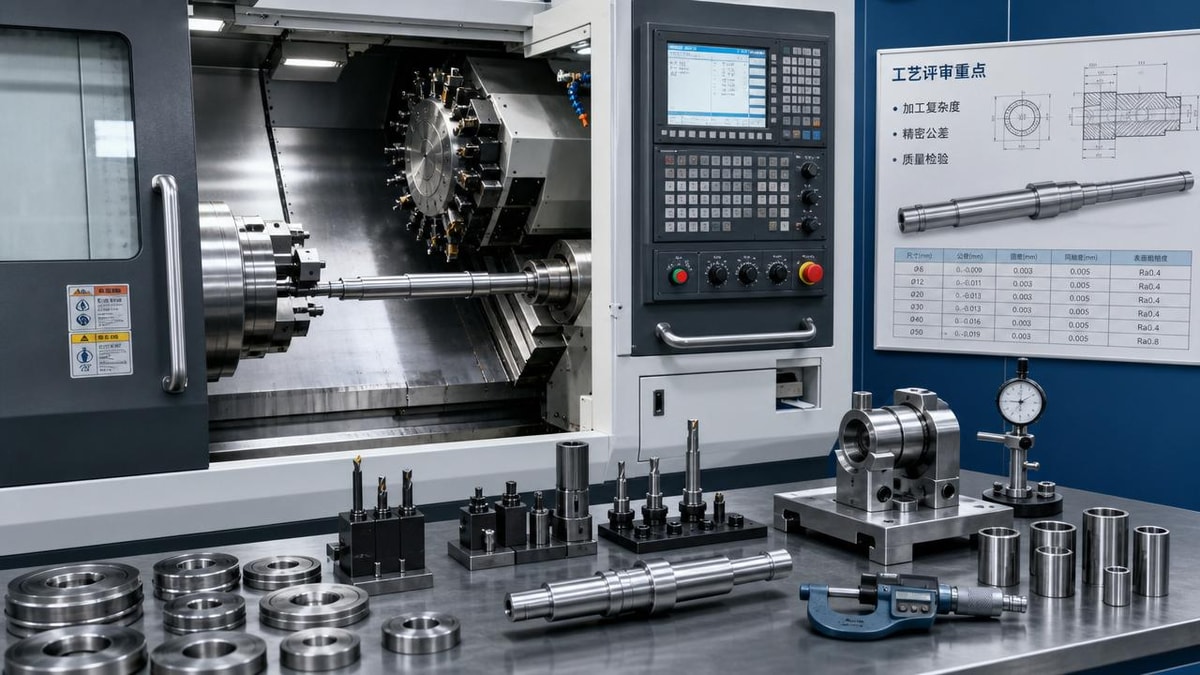
Not all industrial turning jobs can be priced accurately at first glance. For business evaluators, a thorough process review before quoting is essential to identify machining complexity, material challenges, tolerance requirements, and production risks. Understanding which projects demand deeper technical assessment helps reduce quoting errors, protect margins, and support more reliable decisions in today’s precision manufacturing environment.
Why do some industrial turning jobs require process review before quoting?
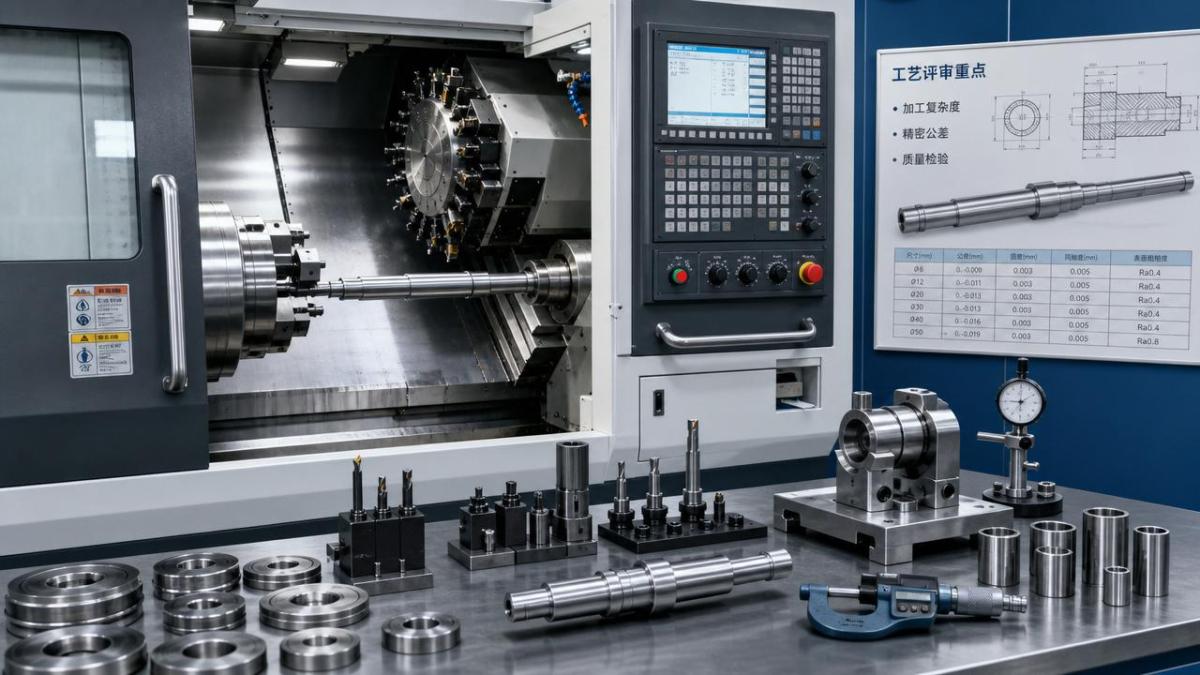
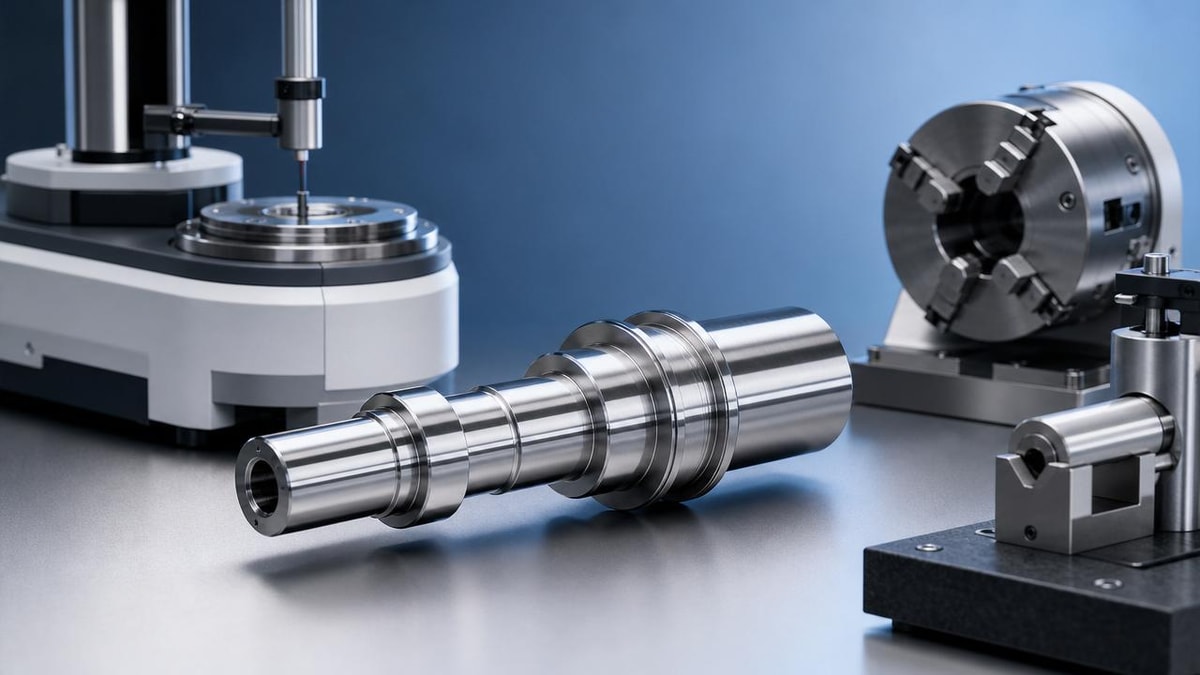
In the global CNC machining sector, many RFQs look simple on paper but become high-risk once the actual process route is examined. A turned shaft, sleeve, disc, or threaded part may appear standard, yet hidden challenges often sit in the material specification, concentricity target, secondary operations, inspection method, or batch consistency requirement.
For business evaluators, the real issue is not only whether a supplier can machine the part. The issue is whether the quote reflects the true manufacturing path. In industrial turning, price accuracy depends on cycle time, tooling strategy, setup effort, scrap risk, workholding difficulty, heat treatment sequence, and final quality assurance. If these elements are not reviewed early, the quoted price may look competitive but fail commercially later.
This is especially relevant in industries such as automotive, aerospace, energy equipment, electronics, and industrial automation, where CNC lathes, multi-axis systems, and integrated production lines are expected to deliver repeatable precision at scale. In such environments, a superficial quote can damage supplier relationships, lead time commitments, and margin control.
- Drawings may omit key notes on surface finish, datum logic, burr control, or edge break requirements.
- Material callouts may involve difficult-to-machine alloys, forged blanks, or variable stock conditions.
- Delivery terms may assume complete processing, including coating, grinding, balancing, or traceability documents.
- Annual volume may justify automation, while prototype volume may require manual setups and higher unit cost.
Which industrial turning parts are most likely to be misquoted?
Not every turned component needs the same level of review. Business evaluators should quickly identify job types where process assumptions can distort pricing. The table below highlights common industrial turning categories that usually need a deeper technical and commercial check before quotation approval.
A fast review of part geometry often reveals whether a standard lathe quote is enough or whether the job should move to a technical-commercial joint review. In industrial turning, the biggest quoting mistakes usually come from assuming “simple rotational part” means “simple process.”
What should business evaluators check before approving an industrial turning quote?
A practical review framework helps evaluators screen jobs quickly without becoming process engineers. The goal is to ask the right questions early. If several risk flags appear together, the quote should not be released until engineering confirms the process route, machine platform, and inspection method.
Core review checklist
- Material condition: Is the part machined from bar, forging, casting, tube, or pre-machined blank? Material form changes both scrap ratio and cycle time.
- Tolerance cluster: Are critical dimensions grouped around one datum, or do they require multiple setups and careful datum transfer?
- Surface finish and edge requirements: Are Ra values, chamfers, deburring, and cosmetic conditions clearly defined?
- Batch size: Does annual demand justify bar feeders, special fixtures, in-process gauging, or robotic loading?
- Secondary processes: Are heat treatment, coating, grinding, marking, washing, or assembly included in the quote scope?
- Quality documents: Are material certificates, inspection reports, PPAP-style submissions, or traceability labels expected?
When to escalate for engineering review
Escalation is recommended when the drawing combines hard materials, thin walls, deep bores, fine threads, or very tight geometric tolerances. It is also necessary when the customer demands process validation, first article inspection, or stable mass production across multiple lots. In these cases, industrial turning should be evaluated as a full process package, not only a machining operation.
How do process factors change cost, lead time, and quote reliability?
For many evaluators, the hardest part is translating technical detail into commercial impact. The following matrix connects major industrial turning process factors to quoting consequences. It can be used during supplier comparison, internal approval, or RFQ clarification.
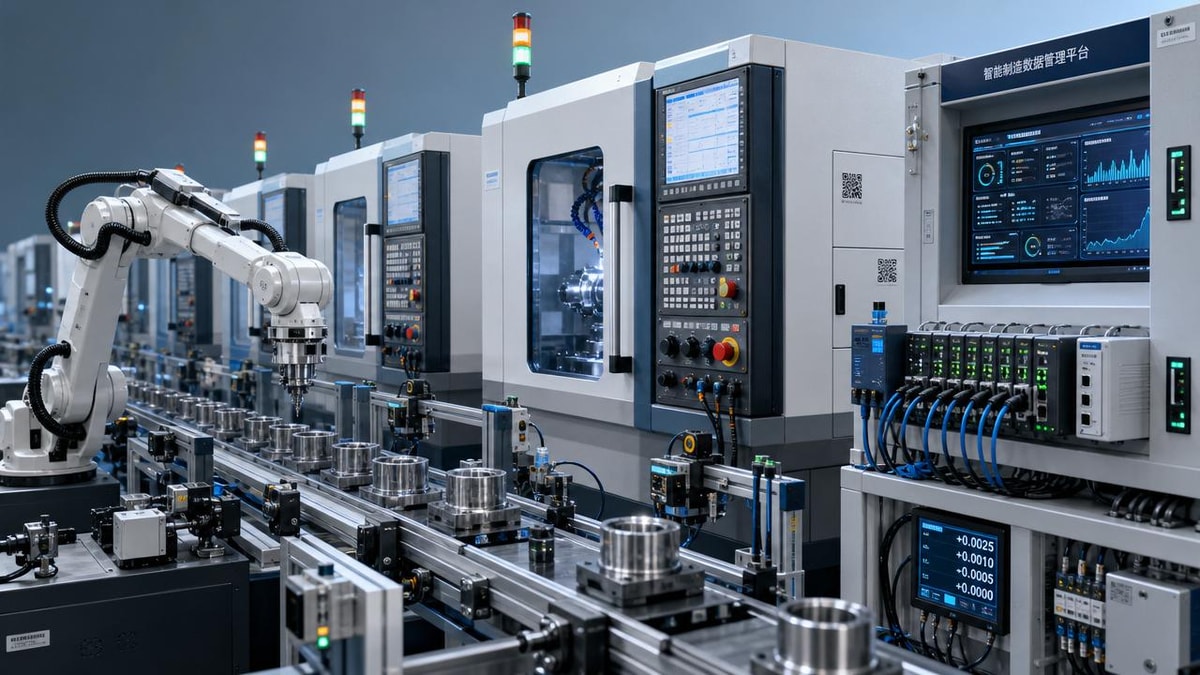
This kind of cost logic matters in smart manufacturing environments where CNC turning cells are integrated with automation, in-line inspection, and digital production control. Quote reliability improves when commercial teams understand what drives machine occupation, tool change frequency, inspection load, and production scheduling risk.
Which quote comparison mistakes are common in industrial turning procurement?
Business evaluators often compare unit prices without comparing process assumptions. That is risky. Two suppliers may quote the same industrial turning drawing using completely different manufacturing routes. One may include soft jaws, in-process gauging, and final inspection reports. Another may assume basic turning only and leave several obligations undefined.
Typical comparison errors
- Comparing prototype pricing with mass production pricing without adjusting for setup amortization.
- Ignoring whether raw material yield loss is included, especially for large-diameter bars or expensive alloys.
- Assuming all suppliers include secondary operations such as grinding, heat treatment, plating, passivation, or cleaning.
- Missing hidden quality costs, such as first article inspection, SPC records, or final dimensional reports.
- Selecting the lowest quote without verifying machine capability for long, heavy, thin-wall, or high-runout parts.
A better approach is to normalize quotes around scope, process route, tolerances, quality output, lead time basis, and supply conditions. In industrial turning procurement, a higher initial quote can be commercially safer if it reflects a stable process with lower nonconformance risk and fewer downstream surprises.
How should evaluators judge machine capability and process suitability?
Modern CNC turning capacity spans standard 2-axis lathes, live-tool turning centers, Y-axis machines, sub-spindle systems, and fully integrated turn-mill platforms. Evaluators do not need to know every technical detail, but they should understand the commercial effect of matching the part to the right platform.
Simple capability cues worth checking
- If the part needs front and back operations with strict positional control, ask whether a sub-spindle or one-cycle completion is planned.
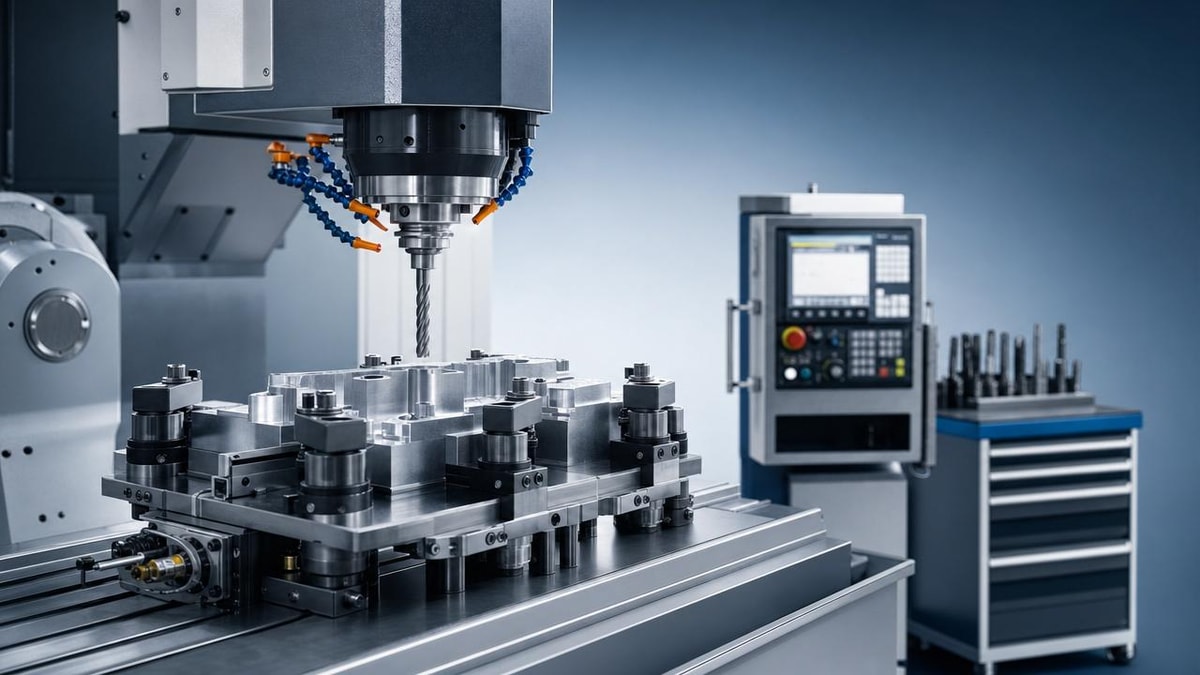
- If milled flats, keyways, radial holes, or helical features are present, confirm whether live tooling is included or outsourced.
- If the part is long and slender, ask what anti-vibration support or steady-rest method will be used.
- If large batch volumes are expected, confirm automation compatibility such as bar feeders, gantry loading, or robotic handling.
In sectors moving toward digital integration and flexible production lines, machine suitability is also tied to scheduling efficiency and repeatability. A supplier using capable equipment with stable process monitoring can often maintain better lead time control than a supplier relying on fragmented manual routing.
What standards, documentation, and compliance points affect the quote?
Industrial turning quotes can change materially when documentation and compliance expectations are clarified. This is common in regulated or quality-sensitive supply chains, including energy equipment, mobility systems, electronics, and export-oriented manufacturing. Even when no special certification is mandated, documentation workload can still affect cost and release timing.
Items that should be defined early
- Material certificates and traceability depth, especially if the part enters critical equipment or serial production.
- Inspection format, such as first article records, dimensional reports, sampling plan, or gauge calibration evidence.
- Surface treatment control, where outsourced processes may require additional vendor management and incoming inspection.
- Packaging and preservation requirements for export, corrosion-sensitive materials, or appearance-critical parts.
It is reasonable to reference broadly used quality frameworks and drawing standards where applicable, but evaluators should avoid assuming all suppliers include the same documentation set by default. In industrial turning, unclear compliance scope is a frequent source of re-quotation and delivery disputes.
A practical pre-quote workflow for industrial turning projects
A repeatable workflow improves speed without sacrificing accuracy. This is useful for sourcing teams, project buyers, and commercial staff handling mixed RFQs across global precision manufacturing supply chains.
This workflow is especially effective when evaluating suppliers across different manufacturing regions. As industrial clusters in China, Germany, Japan, and South Korea continue to support global sourcing, quote discipline becomes more important, not less. Geographic reach expands options, but only process clarity protects commercial outcomes.
FAQ: common questions about industrial turning quotes
How do I know if an industrial turning RFQ is too complex for a quick quote?
If the drawing includes hard materials, deep internal features, thin walls, strict runout, multiple secondary processes, or detailed quality documentation, it should not be handled as a quick-price item. Complexity is cumulative. One difficult feature may be manageable, but several together usually justify process review.
Should I always choose the supplier with the lowest industrial turning price?
No. The lower price may exclude tooling, inspection, finishing, or traceability work. It may also rely on a process route with weak capability for the required tolerance. The better commercial decision is the quote that balances realistic process planning, quality output, lead time, and total supply risk.
What documents should I request before confirming a quote?
Ask for a clear scope statement covering raw material basis, machining process, included secondary operations, inspection deliverables, lead time assumptions, and packaging conditions. For more demanding projects, first article expectations and material certification requirements should also be confirmed before PO release.
When does automation change industrial turning economics?
Automation becomes more attractive when annual volumes are stable, part families are similar, and manual loading or setup labor materially affects unit cost. Bar feeders, robotic loading, and in-line gauging can improve consistency and throughput, but only if batch size supports the investment and process stability is proven.
Why choose us for industrial turning quote support and sourcing decisions?
In precision manufacturing, good quoting starts with good process understanding. Our platform focuses on the global CNC machining and machine tool industry, covering technical developments, market movements, production trends, and international sourcing dynamics that directly affect industrial turning decisions. That perspective helps business evaluators connect engineering risk with commercial judgment.
If you are reviewing industrial turning RFQs, we can support practical pre-quote assessment around drawing complexity, material challenges, machining route selection, expected lead time, quality documentation scope, and supplier comparison logic. We can also help clarify whether a job fits standard CNC turning, turn-mill processing, automated production, or a more controlled multi-step route.
- Confirm key parameters that influence price, including material form, tolerance clusters, finish requirements, and batch volume.
- Discuss machine and process suitability for shafts, sleeves, discs, threaded parts, and combination turn-mill components.
- Review lead time expectations, sample support needs, and documentation or certification-related concerns.
- Compare quotation bases across suppliers so commercial decisions are made on equal scope, not just headline price.
If your team needs support with parameter confirmation, supplier selection, delivery planning, sample evaluation, certification-related questions, or quotation communication for industrial turning projects, contact us with the drawing set and target requirements. A well-reviewed quote is often the difference between a smooth project and an expensive correction later.
PREVIOUS ARTICLE
NEXT ARTICLE
Recommended for You
 Industrial Machining Equipment Lead Times Are Changing AgainManufacturing Market Research Center
 Where Industrial Robotics Adds Value Beyond Simple Labor SavingsMachine Tool Industry Editorial Team
 Shaft Parts Machining Problems That Show Up After Final InspectionCNC Machining Technology Center
 Production Process Variations That Quietly Raise Scrap RatesCNC Machining Technology Center
 Industrial Automation Projects Fail When Data Is Added Too LateCNC Machining Technology Center
 CNC Metal Cutting Quality Drops Often Start With ClampingMachine Tool Industry Editorial Team


Aris Katos
Future of Carbide Coatings
15+ years in precision manufacturing systems. Specialized in high-speed milling and aerospace grade alloy processing.
▶
Industrial Turning Jobs That Need Process Review Before QuotingCNC Machining Technology Center▶
Industrial Lathe Accuracy Problems That Look Like Tool WearCNC Machining Technology Center▶
Automated Lathe or Manual Setup: Where Downtime Really HidesCNC Machining Technology Center▶
Vertical lathe or horizontal setup for heavy parts?CNC Machining Technology Center▶
How to tell when a metal lathe no longer meets tolerance needsCNC Machining Technology Center
Mastering 5-Axis Workholding Strategies
Join our technical panel on Nov 15th to learn about reducing vibrations in thin-wall components.

Providing you with integrated sanding solutions
Before-sales and after-sales services
Comprehensive technical support