• Global CNC market projected to reach $128B by 2028 • New EU trade regulations for precision tooling components • Aerospace deman
NYSE: CNC +1.2%LME: STEEL -0.4%

CNC Programming mistakes that increase scrap without warning
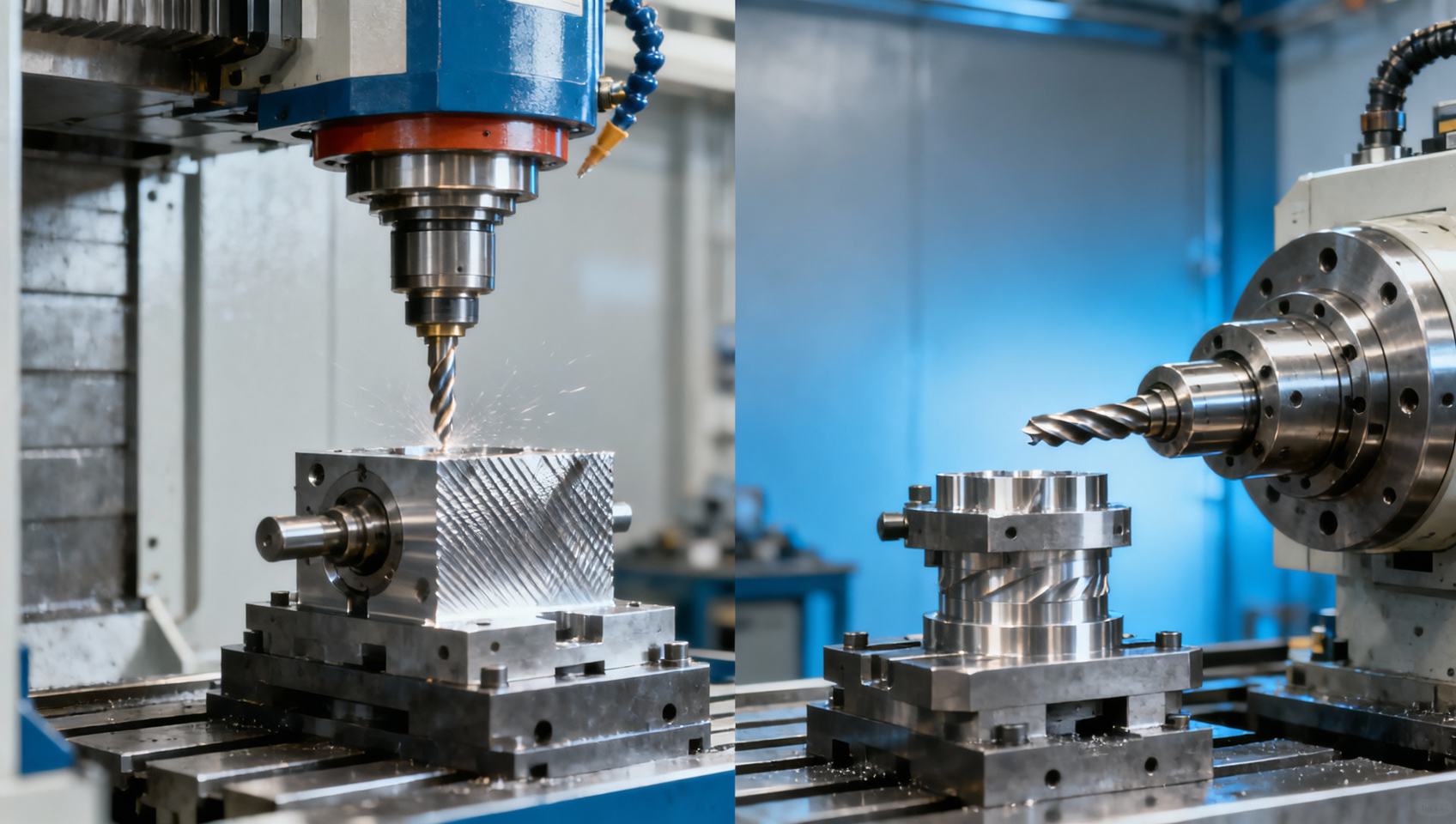
In CNC production, small CNC Programming mistakes can quietly raise scrap rates long before operators notice a pattern. From CNC milling and CNC cutting to automated lathe and metal lathe operations, even minor code, tooling, or setup errors can disrupt the production process, reduce consistency, and increase costs across industrial CNC and automated production environments.
For operators, the first warning may be a drifting dimension, unstable surface finish, or a sudden spike in tool wear. For buyers and plant managers, the problem usually appears later as higher material loss, more machine downtime, and lower on-time delivery. In high-mix and high-precision manufacturing, scrap rates do not always jump from 1% to 10% overnight. More often, they rise in small increments across 2 to 3 shifts until the trend becomes expensive.
This article focuses on the CNC programming mistakes that create hidden scrap risk, why they are difficult to detect early, and how manufacturers can reduce waste through stronger process control, verification routines, and cross-functional review. The discussion is relevant to machining centers, CNC lathes, multi-axis systems, and automated production lines serving automotive, aerospace, energy, and electronics production.
How hidden programming errors turn into scrap before anyone reacts
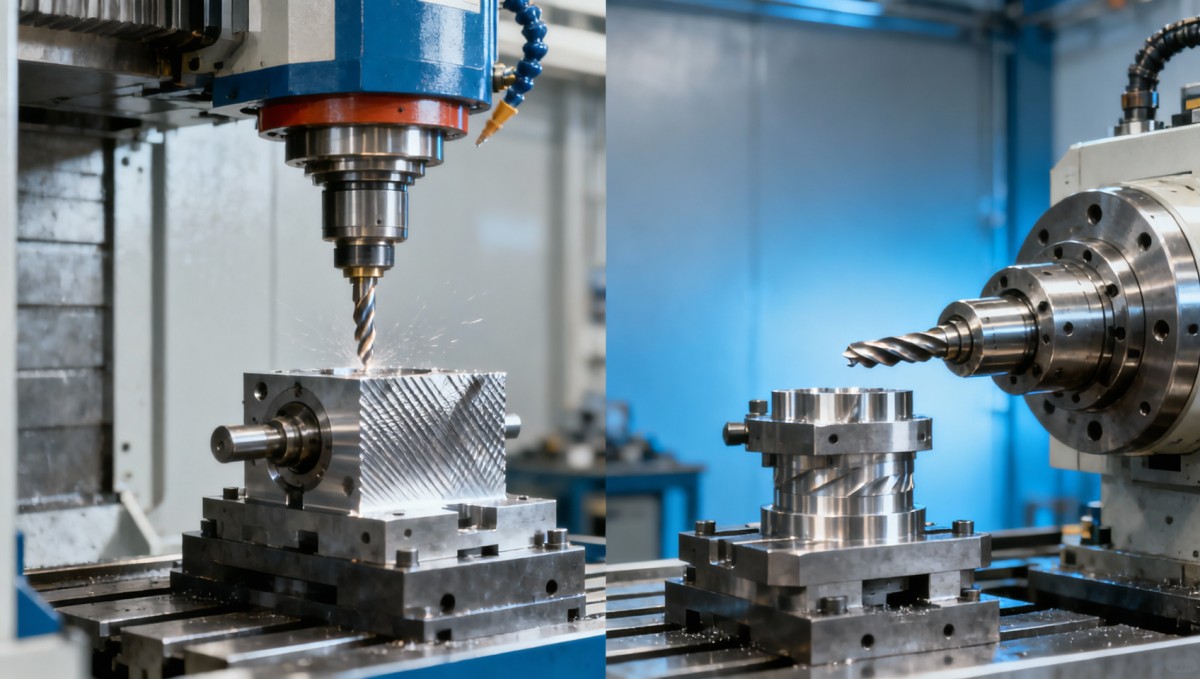
Not every CNC programming mistake causes an immediate crash or alarm. Many of the most costly problems are subtle. A feed rate that is 8% too aggressive, an incorrect tool length offset, or a finish pass allowance set at 0.05 mm instead of 0.15 mm may still allow the machine to complete a cycle. The part looks acceptable at first glance, but dimensional variation grows from one batch to the next.
This is especially common in automated production where one approved program may run for 200, 500, or even 2,000 parts before a quality engineer reviews trend data. In a connected factory, high spindle uptime is a target, but uptime without program validation can amplify loss. Scrap becomes a systems issue rather than a single operator error.
In CNC milling and CNC cutting, poor path transitions may leave excess material in corners, generate chatter, or create inconsistent heat zones. In automated lathe and metal lathe work, wrong compensation values can affect concentricity, taper, or shoulder dimensions. The machine may still run smoothly, which is why these errors often pass unnoticed for several hours or several production lots.
Procurement teams should care as much as production teams. Higher scrap raises the real cost per part, distorts quoting accuracy, and can force emergency purchases of raw material, inserts, and spare tools. A machine platform that appears efficient on paper may underperform financially if the programming discipline around it is weak.
Why scrap often appears as a trend, not a single event
The delayed pattern usually comes from cumulative variation. A wrong cutter compensation value may shift a profile by only 0.02 mm, which still fits early in the tolerance band. After tool wear, thermal growth, and fixture variation add another 0.03 mm to 0.05 mm, the process moves out of control. By then, 20 to 50 parts may already be nonconforming.
Another factor is sampling frequency. If first article inspection is completed but in-process checks happen every 30 or 60 parts, a flawed toolpath can continue unchecked. In high-speed machining, even a 15-minute gap between checks can be enough to create measurable loss.
Early warning signs operators should track
- Dimension drift beyond 20% to 30% of tolerance, even if parts are still technically acceptable.
- Tool life dropping from a normal range such as 120 parts to 80 parts without material or insert changes.
- Cycle time increasing by 3% to 7% because the machine is compensating through extra motion or air cuts.
- Surface finish worsening after program revision, especially on corners, bores, and blended profiles.
The most common CNC programming mistakes that raise scrap rates
Most scrap-related programming errors fall into a manageable set of categories. They include geometry mistakes, offset problems, unsafe assumptions about tools, poor sequencing, and failure to align the program with real machine conditions. The key issue is not complexity alone. Even 2-axis turning and 3-axis milling programs can generate repeated scrap if basic validation is weak.
The table below summarizes several high-frequency mistakes, the production symptoms they create, and the operational impact they can have across industrial CNC environments.
A practical takeaway is that many mistakes are not exotic. They come from version confusion, rushed edits on the machine, reused templates, and weak communication between CAM programmers, setup technicians, and operators. In shops producing 20 to 100 part numbers per week, revision control is often as important as spindle capability.
Mistakes that are easy to overlook in multi-axis and automated cells
In 4-axis and 5-axis machining, one common issue is a mismatch between simulated orientation and actual fixture clearance. The path may be collision-free in software but still create deflection, poor chip evacuation, or unstable engagement when the real setup differs by 1 to 2 degrees. This does not always stop production, but it can degrade accuracy through the entire run.
In robotic loading and automated production lines, another problem is assuming that part presentation is constant. If the CNC program has tight approach paths and the incoming blank varies by 0.3 mm to 0.5 mm, the system may cut inconsistent stock conditions. The result is not always a machine alarm. Sometimes it is a slow rise in nonconforming parts.
High-risk habits that should be reduced
- Editing production code directly at the machine without updating the master CAM file.
- Reusing old proven programs for new materials, tool grades, or holder lengths without full verification.
- Skipping dry runs because the cycle looks similar to a previous part family.
- Approving first article only by dimensions, without checking spindle load, vibration, and chip condition.
Process controls that catch errors before scrap spreads
Reducing scrap requires more than better coding. It requires a closed-loop process from programming to setup to in-process verification. Shops with stable performance usually define 4 to 6 mandatory checks before a new or revised program is released to production. These checks take time, but they are cheaper than scrapping material, delaying shipments, or reworking critical parts.
A strong control plan starts with simulation, but it cannot end there. Backplot verification, setup sheet review, tool list confirmation, and first-piece inspection must be connected. If the CAM system says Tool 12 is a 10 mm end mill but the setup sheet lists a 12 mm cutter, the problem is administrative before it becomes dimensional. That is why digital integration matters in modern machine tool operations.
Plants with mixed equipment from different generations should be especially careful. A program post-processed for one controller may require manual adjustment for another. Even a small difference in canned cycle behavior, arc interpretation, or tool change logic can create waste. Verification should reflect the real machine, real controller, and real fixture condition.
A practical verification workflow for production release
- Run software verification for collisions, overtravel, and stock removal consistency before downloading the code.
- Confirm 100% match between program tool list, holder assembly, measured offsets, and setup sheet revision level.
- Perform a dry run at reduced feed, commonly 5% to 25%, with attention to clearance planes and clamp proximity.
- Inspect the first 3 to 5 parts, not just one part, because heat and wear effects may appear after the initial cycle.
- Set in-process inspection frequency by risk, such as every 10 parts for tight tolerance features and every 30 parts for stable roughing features.
The next table shows a simple control framework that many machining businesses use to reduce hidden scrap in CNC milling, turning, and automated cells.
The key conclusion is that scrap prevention improves when controls are distributed across the workflow. One final inspection at the end of the line is too late. The best-performing plants typically place verification at 4 points: programming, setup, first-piece approval, and periodic in-process review.
What buyers and decision-makers should evaluate beyond machine specifications
For procurement teams and business leaders, scrap is not only a quality issue. It is a purchasing and management issue. When evaluating CNC machine tools, software, or integration partners, many buyers focus on spindle speed, axis travel, controller brand, and quoted cycle time. Those are important, but they do not guarantee stable output if the programming ecosystem is weak.
A better evaluation method includes programming support, post-processor quality, training depth, revision management, and service response time. For example, a machine supplier that provides application support within 24 to 48 hours may help prevent days of scrap-related delay. A lower-cost solution with limited technical backup may look attractive at purchase stage but cost more over a 12-month period.
Decision-makers should also examine whether the production environment supports standardized setup sheets, digital tool libraries, probing routines, and machine-level traceability. In a smart factory strategy, scrap reduction often comes from process visibility rather than from buying the most advanced machine alone.
Key evaluation criteria for CNC production reliability
The table below can help buyers compare equipment or solution providers when the goal is not only capacity, but lower scrap risk and stronger process repeatability.
This comparison shows that preventing CNC programming mistakes is partly a technical question and partly a sourcing decision. Buyers who evaluate only the machine price may miss process risks that appear during the first 3 to 6 months of production ramp-up.
Questions leadership teams should raise internally
- Do we have a formal release process for program revisions across every CNC machine and shift?
- Are scrap costs tracked by root cause, such as programming, setup, tooling, or material variation?
- Can we identify which 10 parts or 10 jobs generate the highest recurring waste each month?
- Do suppliers provide process optimization support, or only machine installation and basic service?
Implementation tips, operator guidance, and practical FAQ
The fastest way to reduce hidden scrap is to make error prevention routine rather than reactive. In many shops, a focused 30-day improvement effort can produce visible gains without major capital spending. The goal is to tighten programming discipline, improve setup repeatability, and use inspection data earlier in the cycle instead of after a full batch is complete.
For operators, consistency matters more than heroic recovery. If a surface finish degrades, if spindle load rises by 10% to 15%, or if offsets need repeated compensation within a short run, that is useful process data. Reporting those changes quickly helps programmers and engineers correct issues before scrap accumulates across later shifts.
For managers, one practical method is to review the top 5 scrap causes every week and assign corrective action to a named owner. In many cases, 2 or 3 recurring programming-related issues account for a large share of lost material, extra labor, and schedule disruption.
A 5-step improvement plan
- Audit the last 60 to 90 days of scrap records and separate programming mistakes from tooling and setup errors.
- Standardize first-piece approval so that dimensions, finish, spindle load, and tool condition are all checked.
- Lock revision control to prevent unofficial machine-side edits from becoming production standards.
- Train operators on 4 to 6 early warning indicators, including drift, wear trend, vibration, and cycle anomalies.
- Review results after 4 weeks and update the checklist for the highest-risk parts and machines.
How often should CNC programs be reviewed?
Any new part, engineering change, material change, or tooling change should trigger a review. For stable repeat jobs, many shops still benefit from a quarterly review every 3 months, especially if actual tool life or scrap trends have changed since the program was first approved.
Which parts are most vulnerable to hidden scrap from programming errors?
Tight-tolerance bores, thin-wall features, blended surfaces, multi-axis contours, and parts with several datums are common risk areas. Components used in automotive, aerospace, energy equipment, and electronics housings often require tighter control because a 0.02 mm to 0.05 mm shift may affect final assembly or downstream process stability.
Can automation reduce scrap by itself?
Automation can reduce manual inconsistency, but it can also multiply a bad program faster. If an automated line runs unattended for 2 hours with an incorrect offset or unstable cut condition, the total loss may be higher than in manual production. Automation works best when paired with robust verification, probing, and traceability.
CNC programming mistakes do not always announce themselves with alarms, collisions, or visible defects. More often, they appear as gradual cost leakage through scrap, rework, shortened tool life, and unstable output. Manufacturers that connect programming accuracy with setup discipline, in-process inspection, and supplier evaluation are in a better position to protect margins and delivery performance.
If you are reviewing CNC machine investments, improving current machining performance, or building a more reliable automated production workflow, now is the right time to examine how programming control affects scrap. Contact us to discuss your production challenges, get a tailored solution, or learn more about practical strategies for CNC machining and precision manufacturing operations.
PREVIOUS ARTICLE
Recommended for You
 Heavy-duty Machining Center for mold making: Why coolant filtration standards evolve faster than OEM manualsMachine Tool Industry Editorial Team
 Quick-change Fixture Design for CNC turning: Why clamping force consistency drops after 200 cyclesCNC Machining Technology Center
 5 Axis Machining for impeller manufacturing: Why toolpath smoothing affects surface fatigue lifeCNC Machining Technology Center
 Lean Production Process implementation: Where value stream mapping fails to expose hidden machine downtimeManufacturing Market Research Center
 Modular Tooling System for flexible manufacturing: Why interface repeatability degrades faster than expectedMachine Tool Industry Editorial Team
 Industrial Automation control system for CNC machines: When cybersecurity updates disrupt scheduled maintenanceMachine Tool Industry Editorial Team



Aris Katos
Future of Carbide Coatings
15+ years in precision manufacturing systems. Specialized in high-speed milling and aerospace grade alloy processing.
▶
5 Axis Machining for impeller manufacturing: Why toolpath smoothing affects surface fatigue lifeCNC Machining Technology Center▶
Efficient Machining Process for aluminum alloys: Why chip evacuation defines success more than feed rateCNC Machining Technology Center▶
Multi-axis machine tool: When kinematic error mapping exposes hidden geometry driftCNC Machining Technology Center▶
CNC Programming for Multi Axis Parts Where Errors BeginCNC Machining Technology Center▶
CNC Milling Feed Rate Choices That Ruin Corner AccuracyCNC Machining Technology Center
Mastering 5-Axis Workholding Strategies
Join our technical panel on Nov 15th to learn about reducing vibrations in thin-wall components.

Providing you with integrated sanding solutions
Before-sales and after-sales services
Comprehensive technical support