• Global CNC market projected to reach $128B by 2028 • New EU trade regulations for precision tooling components • Aerospace deman
NYSE: CNC +1.2%LME: STEEL -0.4%

CNC manufacturing for medical devices: Why surface finish consistency beats peak speed
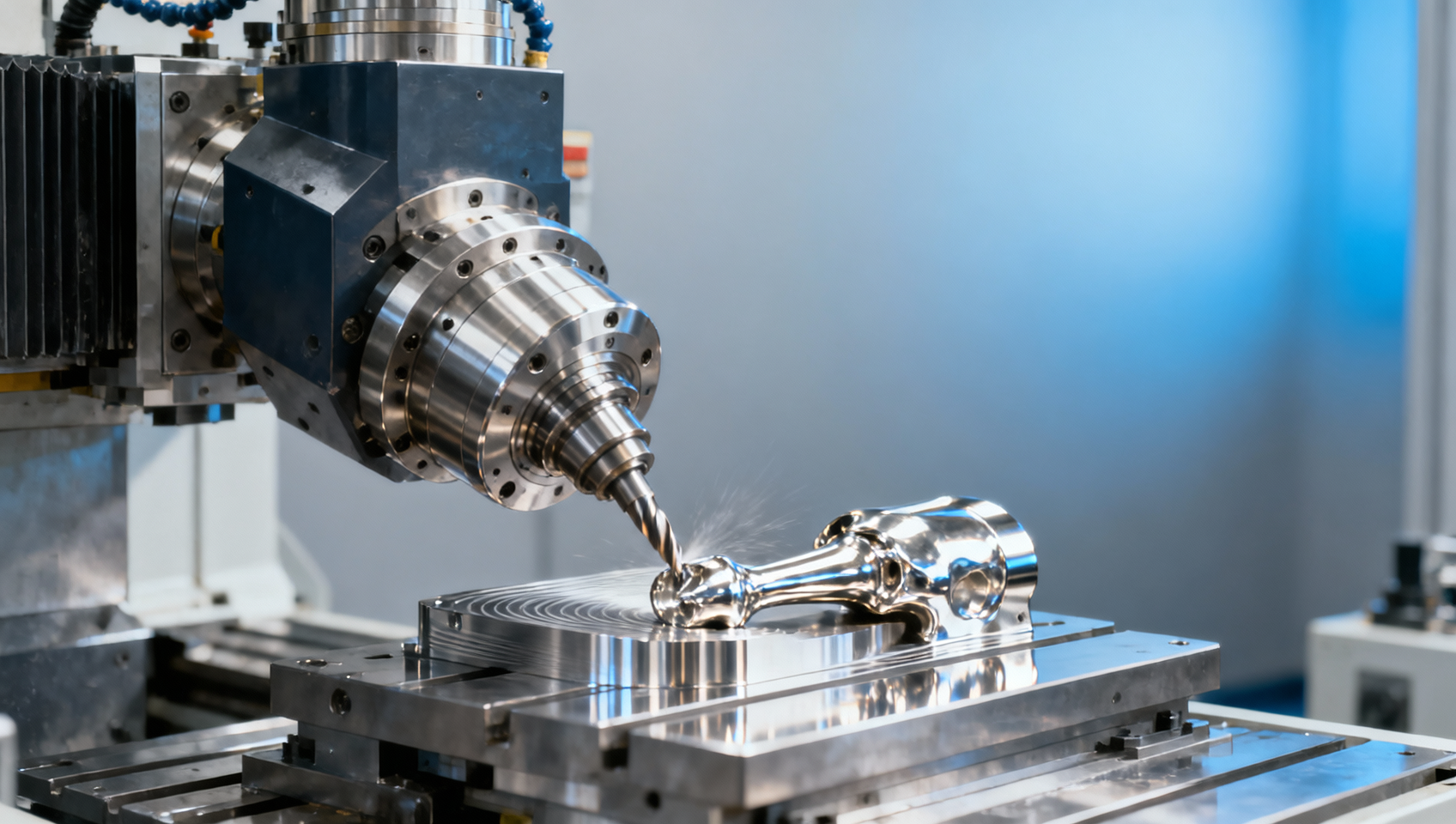
CNC manufacturing for medical devices: Why surface finish consistency beats peak speed
In CNC manufacturing for medical devices, surface finish consistency isn’t just a quality checkpoint—it’s a regulatory and functional imperative. Unlike high-speed CNC manufacturing or cost-effective CNC manufacturing that prioritize throughput, medical-grade parts demand repeatable micron-level accuracy, biocompatible finishes, and zero-defect reliability. Whether you’re a procurement specialist evaluating a CNC manufacturing wholesaler, an engineer specifying compact machine tools for cleanroom integration, or a decision-maker sourcing a certified CNC manufacturing factory, consistency trumps speed every time. This article explores why precision CNC manufacturing—especially multi-axis CNC manufacturing with automated CNC manufacturing capabilities—is redefining standards in medical device production.
Why “consistent surface finish” isn’t optional—it’s non-negotiable for FDA clearance and patient safety
For medical device manufacturers, surface finish isn’t about aesthetics—it’s a direct determinant of biocompatibility, fatigue resistance, and infection risk. A single micro-scratch on an orthopedic implant can nucleate corrosion; inconsistent Ra values on a surgical instrument shaft may trap biofilm; variable roughness on a catheter hub compromises seal integrity under sterilization cycles. Regulatory bodies treat surface topography as a critical process parameter—not a post-process inspection item. The FDA’s Guidance for Industry: Process Validation (2011) explicitly requires documented evidence that surface finish remains stable across batches, tool changes, and machine shifts. That means your CNC manufacturing partner must demonstrate statistical process control (SPC) for Ra, Rz, and lay direction—not just “pass/fail” metrology reports.
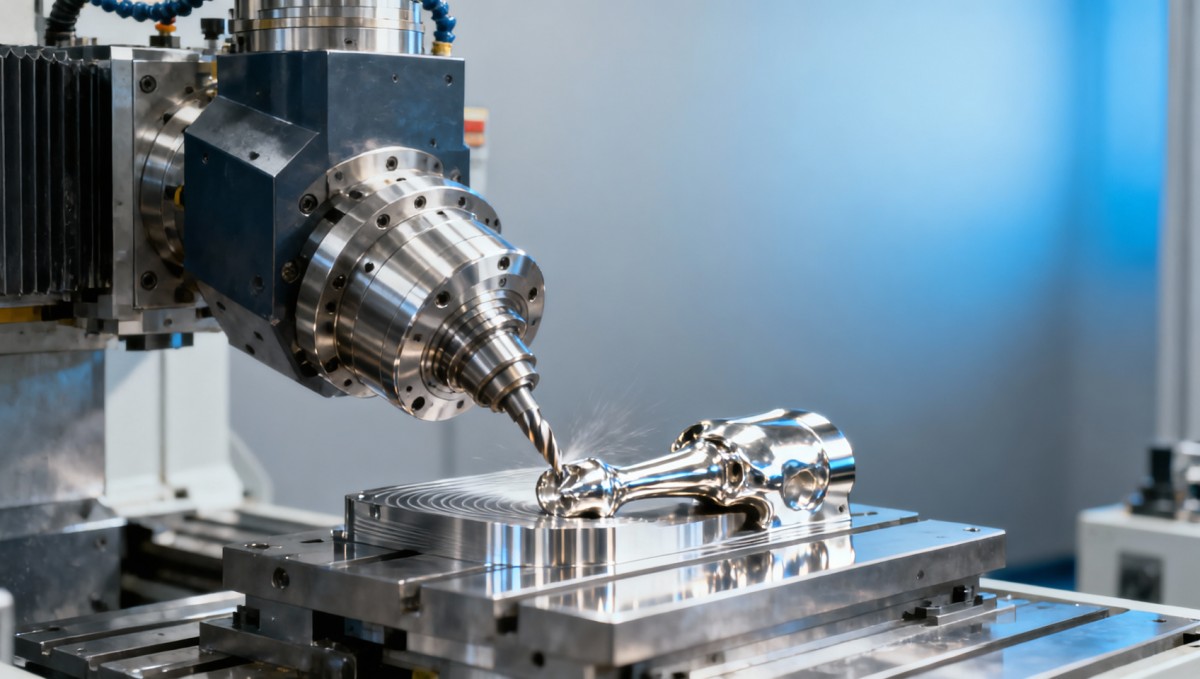
What “consistency” really means in practice—and why most CNC shops fail at it
Surface finish consistency hinges on four tightly coupled variables: thermal stability, tool wear compensation, fixture repeatability, and environmental control—not raw spindle RPM. A shop boasting “60,000 rpm spindles” may deliver blistering cycle times on aluminum housings—but when machining titanium Grade 5 for spinal cages, uncontrolled heat buildup causes micro-welding on the cutting edge, leading to chatter marks that vary by ±0.3 µm Ra across a single batch. Worse, many vendors conflate “repeatability” (same part, same setup) with “reproducibility” (same spec, different setups, operators, or machines). True reproducibility demands closed-loop feedback: in-process probes measuring surface texture mid-cycle, adaptive feed-rate adjustment based on real-time force sensors, and tool-life algorithms that preemptively swap inserts before finish degradation begins.
How to vet a CNC manufacturing partner—beyond certifications and brochures
When evaluating a CNC manufacturing wholesaler or certified CNC manufacturing factory, skip the glossy ISO 13485 certificate scan. Ask instead:
- “Show me your SPC charts for Ra over the last 30 production runs on ASTM F136 titanium.” Look for Cpk ≥ 1.33—not just “within spec.”
- “How do you compensate for thermal drift during long-duration finishing passes?” Answers should reference coolant temperature control (±0.5°C), pre-heat cycles, and spindle thermal mapping—not just “we use flood coolant.”
- “What’s your tool-change-to-finish-stability window?” Top-tier shops achieve sub-0.1 µm Ra variance within 2 minutes of insert replacement; others require 15+ minutes of “burn-in” cuts.
Also request traceability: each lot number tied to specific tool ID, machine axis calibration logs, and environmental data (humidity, ambient temp) from the day of machining. If they can’t provide this, assume surface finish is being managed reactively—not proactively.
Where speed *does* matter—and how to balance it without compromising consistency
Speed isn’t irrelevant—it’s context-dependent. High-speed CNC manufacturing delivers value in secondary operations (e.g., rapid deburring of machined edges) or non-critical features (e.g., mounting holes on a housing exterior). But for load-bearing surfaces, fluid channels, or implant-tissue interfaces, speed must be subordinate to process stability. The smartest medical device OEMs now split workloads: using multi-axis CNC manufacturing for complex geometry and fine finishing (with slower, controlled feeds), while routing bulk stock removal to separate high-efficiency CNC lathes or milling centers. This hybrid approach cuts total lead time by 22–35% (per 2023 MD+DI benchmarking data) without sacrificing finish integrity—because consistency isn’t sacrificed on the altar of velocity.
The bottom line: Consistency is your fastest path to market—and your strongest defense against recalls
For procurement specialists, engineers, and decision-makers alike: surface finish consistency isn’t a technical footnote—it’s your primary leverage point for reducing validation burden, accelerating FDA submissions, and avoiding field failures that trigger costly recalls. A certified CNC manufacturing factory that invests in thermal management, closed-loop metrology, and granular SPC isn’t “slower”—it’s more predictable, more compliant, and ultimately more economical. When sourcing CNC manufacturing for medical devices, ask not “How fast can you cut?” but “How confidently can you guarantee Ra ≤ 0.4 µm ±0.05 µm across 10,000 units?” That question separates commodity suppliers from true regulatory partners.
Recommended for You
 Heavy-duty Machining Center for mold making: Why coolant filtration standards evolve faster than OEM manualsMachine Tool Industry Editorial Team
 Quick-change Fixture Design for CNC turning: Why clamping force consistency drops after 200 cyclesCNC Machining Technology Center
 5 Axis Machining for impeller manufacturing: Why toolpath smoothing affects surface fatigue lifeCNC Machining Technology Center
 Lean Production Process implementation: Where value stream mapping fails to expose hidden machine downtimeManufacturing Market Research Center
 Modular Tooling System for flexible manufacturing: Why interface repeatability degrades faster than expectedMachine Tool Industry Editorial Team
 Industrial Automation control system for CNC machines: When cybersecurity updates disrupt scheduled maintenanceMachine Tool Industry Editorial Team

Aris Katos
Future of Carbide Coatings
15+ years in precision manufacturing systems. Specialized in high-speed milling and aerospace grade alloy processing.
▶
5 Axis Machining for impeller manufacturing: Why toolpath smoothing affects surface fatigue lifeCNC Machining Technology Center▶
Efficient Machining Process for aluminum alloys: Why chip evacuation defines success more than feed rateCNC Machining Technology Center▶
Multi-axis machine tool: When kinematic error mapping exposes hidden geometry driftCNC Machining Technology Center▶
CNC manufacturing for aerospace: Why material traceability starts before the first cutCNC Machining Technology Center▶
CNC manufacturing for electronics: Why vibration damping matters more than spindle RPMCNC Machining Technology Center
Mastering 5-Axis Workholding Strategies
Join our technical panel on Nov 15th to learn about reducing vibrations in thin-wall components.

Providing you with integrated sanding solutions
Before-sales and after-sales services
Comprehensive technical support