• Global CNC market projected to reach $128B by 2028 • New EU trade regulations for precision tooling components • Aerospace deman
NYSE: CNC +1.2%LME: STEEL -0.4%

Multi-axis CNC manufacturing: When 5-axis capability adds cost without real part benefit
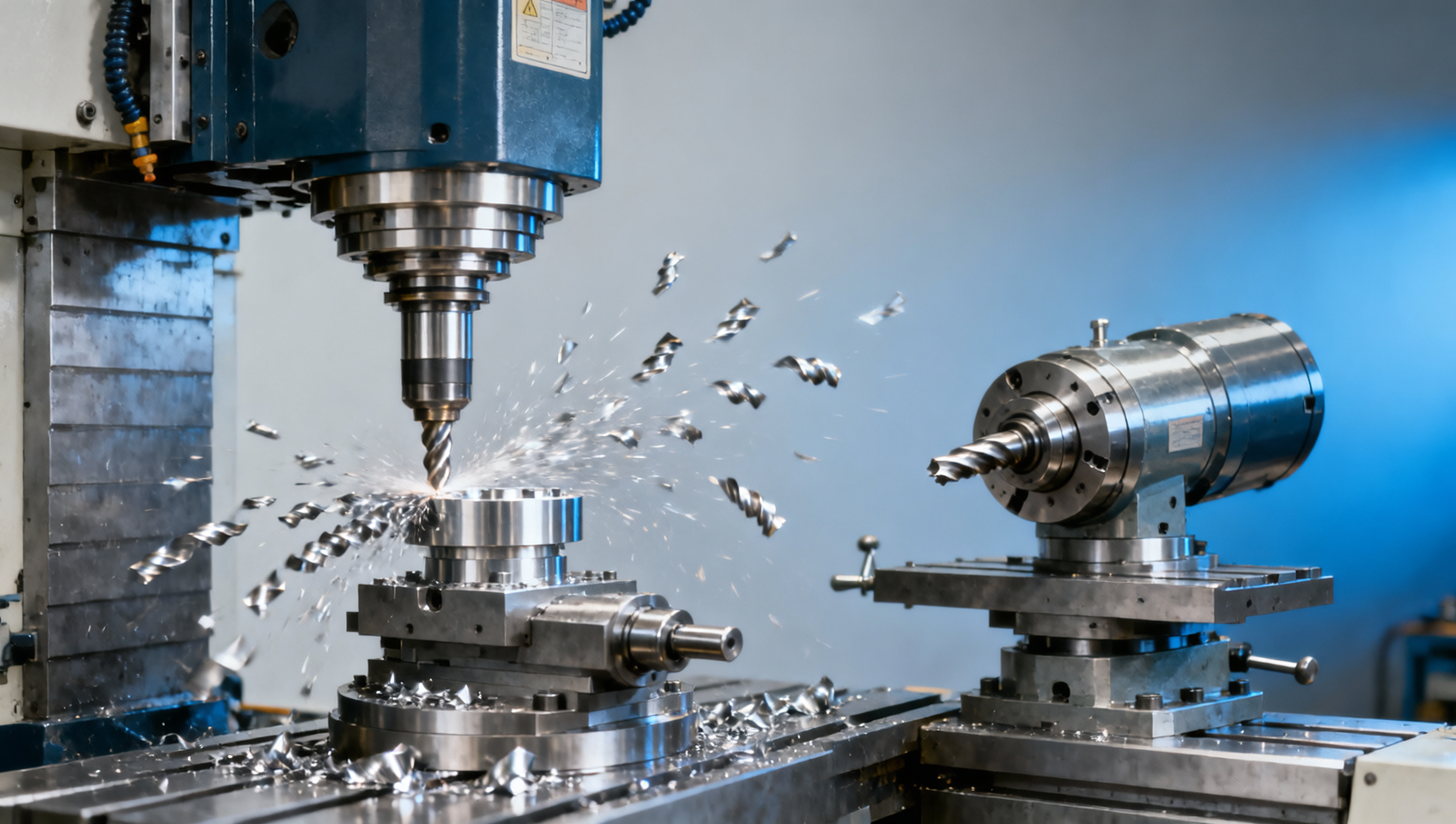
Multi-axis CNC manufacturing: When 5-axis capability adds cost without real part benefit
While multi-axis CNC manufacturing—especially 5-axis machining—offers undeniable advantages for complex aerospace, medical, and energy equipment parts, it’s not always the optimal choice. Many buyers and engineers overlook a critical reality: adding 5-axis capability often inflates cost, footprint, and maintenance without delivering tangible part benefits. For applications in automotive, electronics, or compact mold making, space-saving CNC manufacturing, quick-setup CNC manufacturing, or cost-effective CNC manufacturing may deliver superior ROI. This article examines when true multi-axis machine tool investment pays off—and when it’s better to choose high-precision, automated CNC manufacturing with smarter process design instead.
Ask first: Does your part *really* need simultaneous 5-axis motion—or just smart positioning?
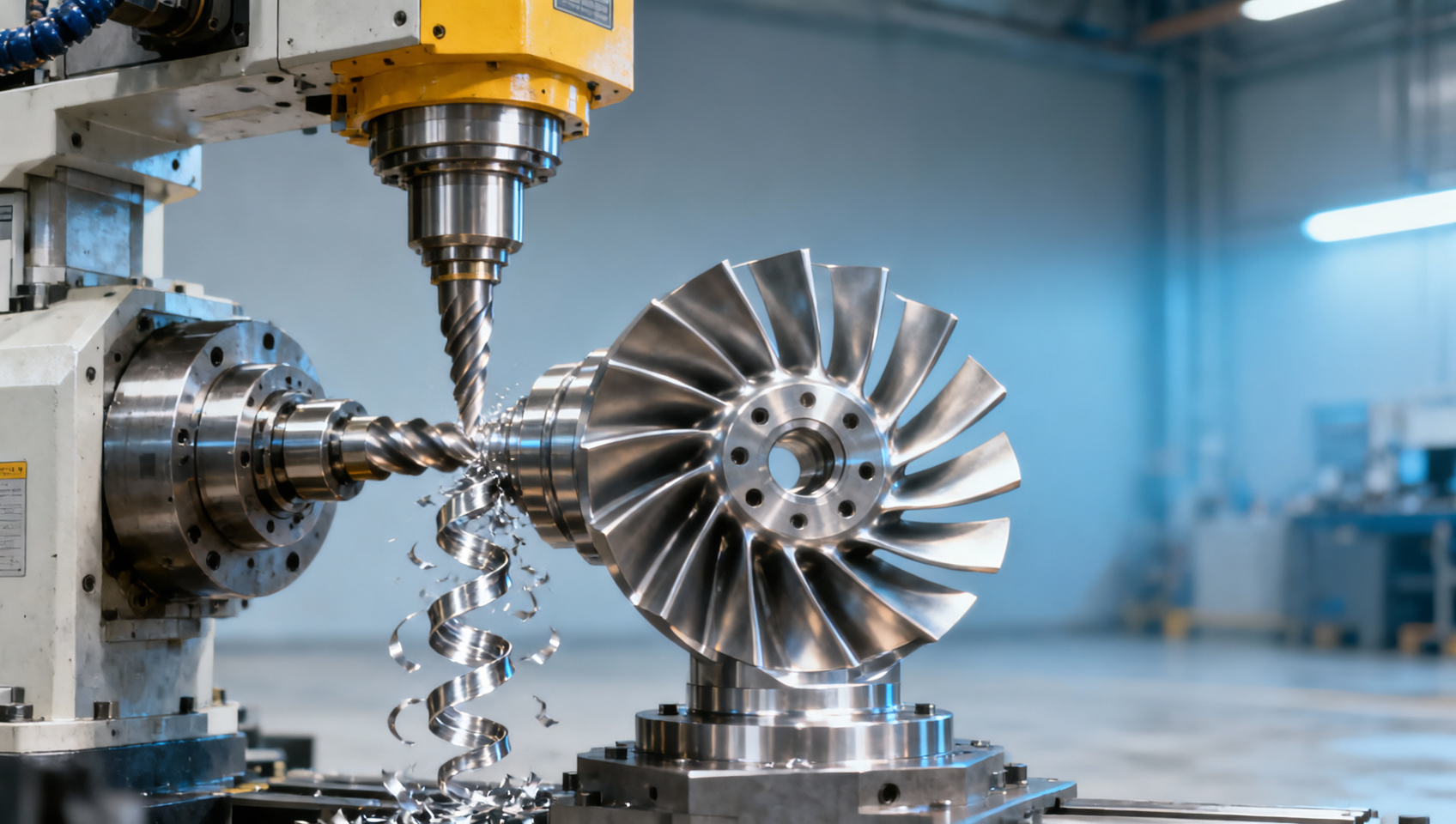
Most procurement managers and shop-floor engineers assume “more axes = more capability.” But that’s a costly misconception. True 5-axis *simultaneous* machining—where all five axes move in coordinated motion during cutting—is essential only for specific geometries: deeply undercut turbine blades, organic medical implants, or contoured aerospace structural ribs. If your part can be fully machined using 3+2 axis (indexed) positioning—where the rotary axes lock into place before milling—you’re likely over-specifying. In fact, over 60% of parts quoted for 5-axis work in mid-volume automotive and electronics production require no simultaneous motion at all. A high-precision 4-axis machining center with fast indexing, rigid toolholding, and intelligent CAM-driven setup can achieve identical tolerances, surface finish, and cycle time—at 35–50% lower capital cost and significantly reduced training and maintenance overhead.
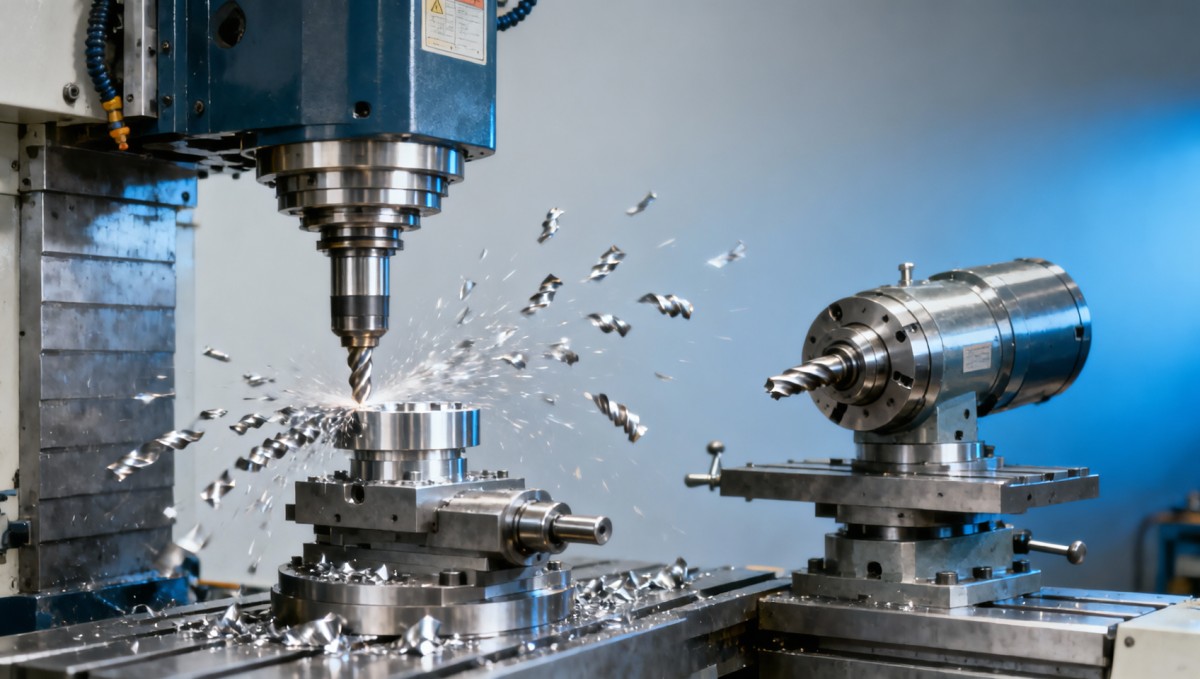
The hidden cost stack: Why “5-axis ready” rarely means “5-axis justified”
It’s not just the $250K–$850K price tag. The real ROI drag comes from four layered costs:
- Floor space & infrastructure: 5-axis machines average 30–45% larger footprint; require reinforced flooring, higher-capacity HVAC, and dedicated power conditioning—adding $40K–$120K in facility prep.
- Operator & programming burden: Programming true 5-axis toolpaths demands specialized CAM expertise (often scarce); verification cycles take 2–4× longer; operator training extends by 3–6 weeks versus 3+2 setups.
- Maintenance complexity: Dual rotary tables or swiveling spindles introduce 2–3× more precision-machined interfaces, lubrication points, and calibration dependencies—increasing scheduled downtime by ~18% annually (per MTBF data from AMT 2023 benchmark).
- Tooling & fixturing overhead: Complex parts demand custom kinematic fixtures, high-angle toolholders, and shorter, stiffer cutters—raising consumable costs by 22–37% versus optimized 3-axis or 4-axis workflows.
For companies producing high-mix, low-to-mid volume parts—think EV battery housings, sensor enclosures, or injection molds under 300 mm—this cost stack rarely delivers measurable gains in quality, throughput, or scrap reduction.
When 5-axis *does* deliver clear, quantifiable value
Investment pays off decisively—not conditionally—in three tightly defined scenarios:
- Single-setup consolidation for safety-critical parts: Aerospace engine casings or orthopedic joint implants where feature alignment tolerance is ≤ ±0.01 mm across non-planar surfaces. Here, eliminating re-fixturing avoids cumulative datum errors that cause 12–28% scrap in multi-setup 3-axis alternatives.
- Surface integrity requirements no other process meets: Titanium blisks or cobalt-chrome dental frameworks requiring Ra < 0.4 µm on freeform surfaces—achievable only via continuous 5-axis contouring with optimal tool engagement angles.
- Production scalability for geometrically constrained families: When >70% of your part family shares deep cavities, steep walls (>75°), or undercuts that force manual deburring or secondary EDM if machined on fewer axes. In those cases, 5-axis ROI becomes visible within 14–18 months—even at moderate volumes.
If your application doesn’t meet at least two of these criteria, your engineering team should run a side-by-side process simulation—not just a quote comparison—before approving the spec.
Better alternatives: Where precision, automation, and workflow intelligence outperform raw axis count
Instead of defaulting to 5-axis, forward-thinking manufacturers are achieving equivalent or better outcomes with targeted upgrades:
- High-speed 4-axis machining centers with B-axis tilt (±110°) and live-tooling—ideal for complex rotational parts like pump impellers or gear carriers, reducing setups by 40–60% vs. legacy 3-axis lines.
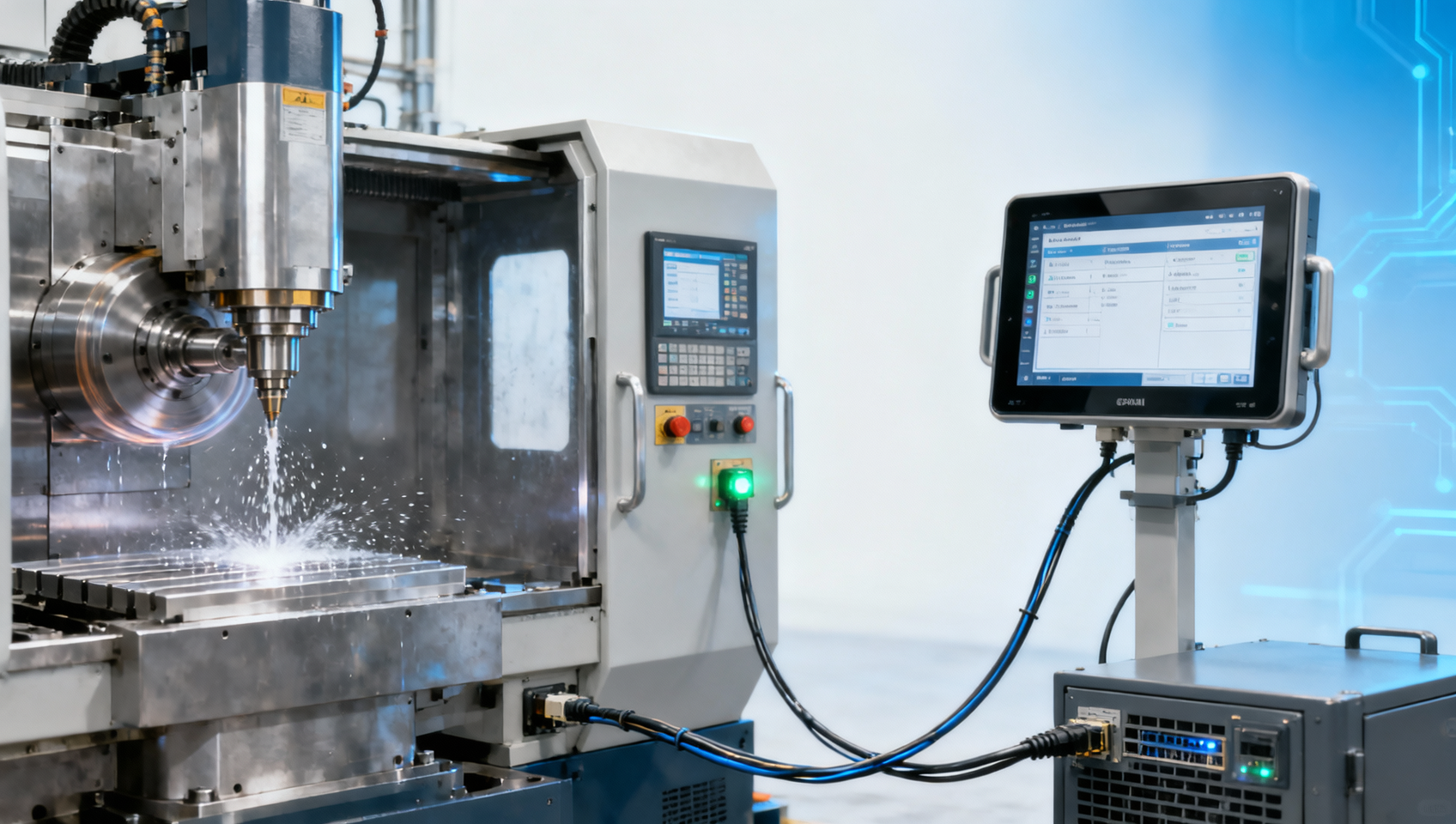
- Modular pallet systems + AI-driven setup optimization: Combine standardized tombstones, vision-guided probing, and auto-compensating toolpath generation to cut average changeover time from 47 to <9 minutes—delivering “quick-setup CNC manufacturing” ROI in under 6 months.
- Hybrid additive-subtractive platforms for near-net-shape metal parts: Build topology-optimized structures additively, then finish critical surfaces with high-accuracy 3-axis milling—cutting material waste by up to 75% and eliminating 5-axis complexity entirely.
These approaches align with the industry’s real shift—not toward more axes, but toward *smarter axis utilization*, tighter integration between CAD/CAM/MTConnect, and predictive process control.
Bottom line: Axis count is a means—not the metric—of manufacturing excellence
5-axis CNC manufacturing is a powerful capability—but it’s neither universally necessary nor automatically superior. For information researchers, operators, procurement specialists, and decision-makers alike, the smarter question isn’t “Can we use 5-axis?” but “What part geometry, tolerance, volume, and business objective *forces us to?*” If your answer relies on convenience, future-proofing, or vendor enthusiasm rather than documented process validation, you’re likely paying for unused capability. Prioritize precision, repeatability, and workflow efficiency—then let axis count follow the part, not the brochure.
Recommended for You
 Heavy-duty Machining Center for mold making: Why coolant filtration standards evolve faster than OEM manualsMachine Tool Industry Editorial Team
 Quick-change Fixture Design for CNC turning: Why clamping force consistency drops after 200 cyclesCNC Machining Technology Center
 5 Axis Machining for impeller manufacturing: Why toolpath smoothing affects surface fatigue lifeCNC Machining Technology Center
 Lean Production Process implementation: Where value stream mapping fails to expose hidden machine downtimeManufacturing Market Research Center
 Modular Tooling System for flexible manufacturing: Why interface repeatability degrades faster than expectedMachine Tool Industry Editorial Team
 Industrial Automation control system for CNC machines: When cybersecurity updates disrupt scheduled maintenanceMachine Tool Industry Editorial Team

Aris Katos
Future of Carbide Coatings
15+ years in precision manufacturing systems. Specialized in high-speed milling and aerospace grade alloy processing.
▶
5 Axis Machining for impeller manufacturing: Why toolpath smoothing affects surface fatigue lifeCNC Machining Technology Center▶
Efficient Machining Process for aluminum alloys: Why chip evacuation defines success more than feed rateCNC Machining Technology Center▶
Multi-axis machine tool: When kinematic error mapping exposes hidden geometry driftCNC Machining Technology Center▶
Cost-effective CNC manufacturing: How hidden programming and fixturing costs erode marginsCNC Machining Technology Center▶
CNC manufacturing for aerospace: Why material traceability starts before the first cutCNC Machining Technology Center
Mastering 5-Axis Workholding Strategies
Join our technical panel on Nov 15th to learn about reducing vibrations in thin-wall components.

Providing you with integrated sanding solutions
Before-sales and after-sales services
Comprehensive technical support