• Global CNC market projected to reach $128B by 2028 • New EU trade regulations for precision tooling components • Aerospace deman
NYSE: CNC +1.2%LME: STEEL -0.4%

Why CNC cutting accuracy drops on thin metal sheets
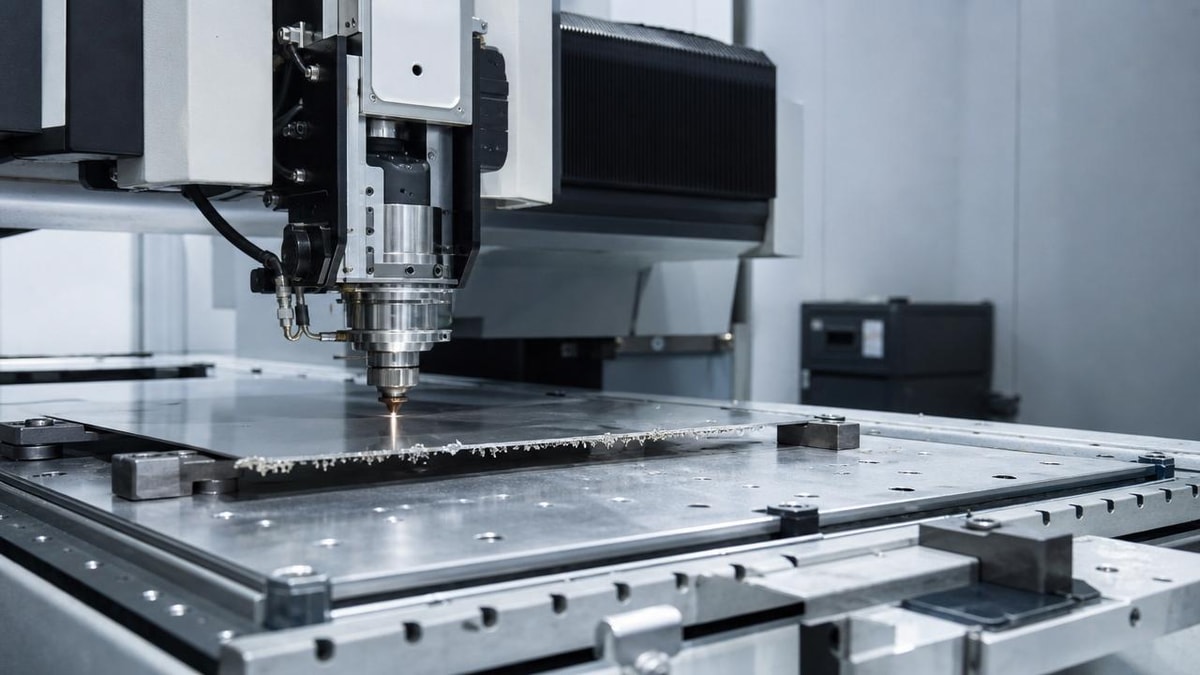
When CNC cutting thin metal sheets, even a well-programmed machine can lose accuracy due to vibration, heat, poor clamping, or tool wear. For operators, these small issues often lead to burrs, dimensional errors, and wasted material. Understanding why CNC cutting accuracy drops on thin sheets is the first step toward improving part quality, reducing rework, and keeping production stable.
What this problem means in daily production
In modern manufacturing, CNC cutting is expected to deliver repeatable dimensions, clean edges, and stable throughput. That expectation becomes harder to meet when the workpiece is a thin metal sheet. Compared with thick plate or solid stock, a thin sheet has lower rigidity, reacts faster to heat, and can move under even modest cutting force. As a result, the machine may still be accurate, but the full CNC cutting system can behave inaccurately because the material itself is unstable during machining.
This issue matters across the broader machine tool industry. Whether parts are used in automotive brackets, electronics housings, ventilation panels, light structural covers, or energy equipment enclosures, thin-sheet components are often selected to reduce weight and material cost. However, once dimensional drift, warping, chatter marks, or burrs appear, the benefits disappear through scrap, rework, and assembly problems. For operators, understanding the physical reasons behind poor CNC cutting accuracy is more useful than only adjusting offsets after defects appear.
Why the industry pays close attention to thin-sheet CNC cutting
The global CNC machine tool sector is moving toward higher precision, automation, and digital control. At the same time, manufacturers are pushing for lighter products, tighter tolerances, and shorter production cycles. These trends increase the importance of stable CNC cutting on thin materials. In smart factories, one unstable operation can affect downstream bending, welding, assembly, and inspection. A small inaccuracy at the cutting stage can therefore become a larger quality and scheduling problem later.
Thin sheets also appear in many industries served by CNC equipment: aerospace uses lightweight panels, electronics uses fine metal covers, automotive uses stamped and cut components, and general fabrication uses cabinets, frames, and machine guards. Because these parts are often produced in volume, even minor accuracy loss can create significant cost. That is why operators, process engineers, and production managers all focus on CNC cutting stability for thin sheet applications.
Core reasons CNC cutting accuracy drops on thin metal sheets
The most common causes are mechanical movement, thermal distortion, tool condition, and setup quality. Thin sheets do not resist force well. If the sheet lifts, flexes, or vibrates, the cutter no longer meets the programmed geometry in a consistent way. Even when the CNC path is correct, the actual cut can shift because the workpiece is physically moving.
Heat is another major factor. During CNC cutting, friction and shearing generate localized temperature rise. Thin material cannot absorb and spread heat as effectively as thicker stock, so it may expand quickly, bow upward, or distort around the cut path. When the part cools, dimensions can change again. Operators may then measure a different result than what was seen during machining.
Tool wear also reduces accuracy in a gradual but serious way. A worn tool increases cutting force, raises temperature, and leaves rougher edges. On thin sheet, that extra force is enough to bend or pull the material. Likewise, spindle condition, backlash, feed instability, and poor fixture contact all become more visible because the workpiece offers so little resistance.
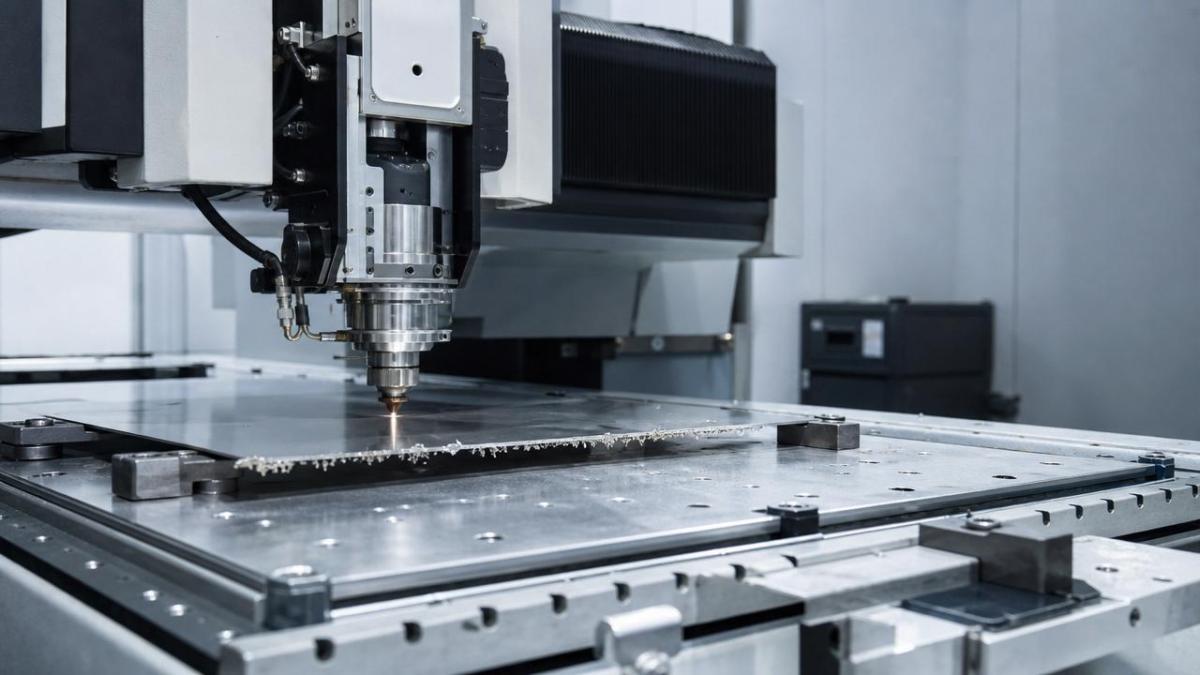
A practical overview of the main causes
For operators, it helps to connect the defect seen on the part with the likely source inside the CNC cutting process. The table below summarizes the most common patterns.
How material behavior changes the result
Not all thin metal sheets react the same way in CNC cutting. Aluminum, stainless steel, galvanized steel, copper alloys, and coated sheet each respond differently to force and heat. Softer materials may deform more easily under clamping pressure, while harder materials may generate more heat or accelerate tool wear. Surface coatings can also influence friction, chip evacuation, and edge condition.
Thickness tolerance and residual stress from prior rolling or leveling are equally important. Two sheets with the same nominal thickness may behave differently if one already contains internal stress. During CNC cutting, releasing that stress can cause the part to spring, twist, or open slightly after the path is complete. Operators often blame the machine first, but the sheet condition itself may be the hidden variable.
Typical application scenarios where accuracy loss becomes critical
Accuracy problems are especially visible when the cut part must fit another process immediately. In the general manufacturing sector, thin-sheet CNC cutting is commonly used for enclosures, control cabinets, heat shields, brackets, covers, and formed components. The thinner the part and the tighter the assembly requirement, the more noticeable even a small deviation becomes.
What operators should check first on the shop floor
A practical troubleshooting sequence improves CNC cutting results faster than random parameter changes. First, verify that the sheet is fully supported near the cutting area. Unsupported zones encourage vibration and part movement. Second, review clamping force and clamp position. Too little force allows shifting, but too much force can deform the sheet before cutting even begins.
Third, inspect tool sharpness and tool type. A suitable tool for thin-sheet CNC cutting should minimize cutting force and promote stable chip removal. Fourth, check feed rate, spindle speed, and depth strategy. Operators often increase speed to save cycle time, but on thin material that choice can trigger chatter or heat buildup. Fifth, observe whether defects worsen at corners, long straight paths, or narrow webs. The location of the problem often reveals whether the root cause is thermal, mechanical, or tool-related.
Process strategies that improve CNC cutting accuracy
Improvement usually comes from controlling force, heat, and movement together. Better support fixtures, vacuum tables, sacrificial backing, or tailored clamping layouts can reduce vibration significantly. In many cases, changing the cutting sequence is also effective. For example, cutting internal features before releasing the outer profile helps the sheet remain stable longer. Leaving small tabs until the end can prevent part shift during the final pass.
Toolpath planning matters as much as hardware. Shorter engagement, smoother lead-in and lead-out moves, and balanced cut distribution can reduce thermal concentration. Operators should also monitor chip evacuation and coolant delivery where applicable. If chips remain in the path, they can re-cut the surface, increase friction, and disturb the sheet. Consistent maintenance of spindle, guides, and fixture surfaces is another basic but high-value action for preserving CNC cutting accuracy.
Useful control points during setup
- Confirm sheet flatness before loading, not only after defects appear.
- Match tool geometry to material type and thickness.
- Reduce unnecessary heat by avoiding overly aggressive settings.
- Support narrow sections and long overhanging edges.
- Measure first-piece dimensions after cooling if thermal expansion is suspected.
Business value of solving this accuracy problem
Improving CNC cutting performance on thin metal sheets is not only a quality task. It directly affects productivity, material efficiency, and delivery reliability. Better accuracy reduces scrap and secondary deburring, shortens inspection time, and helps downstream bending or assembly run with fewer interruptions. In automated and digitally managed production lines, process stability is especially valuable because it supports predictable output and easier data-based optimization.
For companies in the wider CNC machine tool and precision manufacturing ecosystem, stable thin-sheet cutting also strengthens competitiveness. Customers increasingly expect light, precise, and consistent components. Shops that can maintain CNC cutting accuracy under these conditions are better positioned to serve automotive, electronics, aerospace support manufacturing, industrial enclosures, and energy equipment applications.
Conclusion and next practical step
When CNC cutting accuracy drops on thin metal sheets, the cause is rarely just one setting. The real issue is usually the interaction of material flexibility, heat, clamping, tool condition, and machine stability. Operators who understand these relationships can diagnose defects more quickly and correct them with less trial and error.
A useful next step is to review one recent unstable part and trace the problem in a structured way: support method, clamp layout, tool wear, cutting parameters, and defect location. That simple review often reveals where CNC cutting performance starts to drift. In a manufacturing environment that values precision, automation, and repeatability, mastering thin-sheet behavior is one of the most practical ways to improve both part quality and production confidence.
PREVIOUS ARTICLE
Recommended for You
 Industrial Robotics payback depends on more than labor savingsManufacturing Market Research Center
 Shaft Parts machining problems that show up after final inspectionCNC Machining Technology Center
 Which Production Process changes bring the fastest output gains?CNC Machining Technology Center
 Industrial Automation projects fail when integration is underestimatedCNC Machining Technology Center
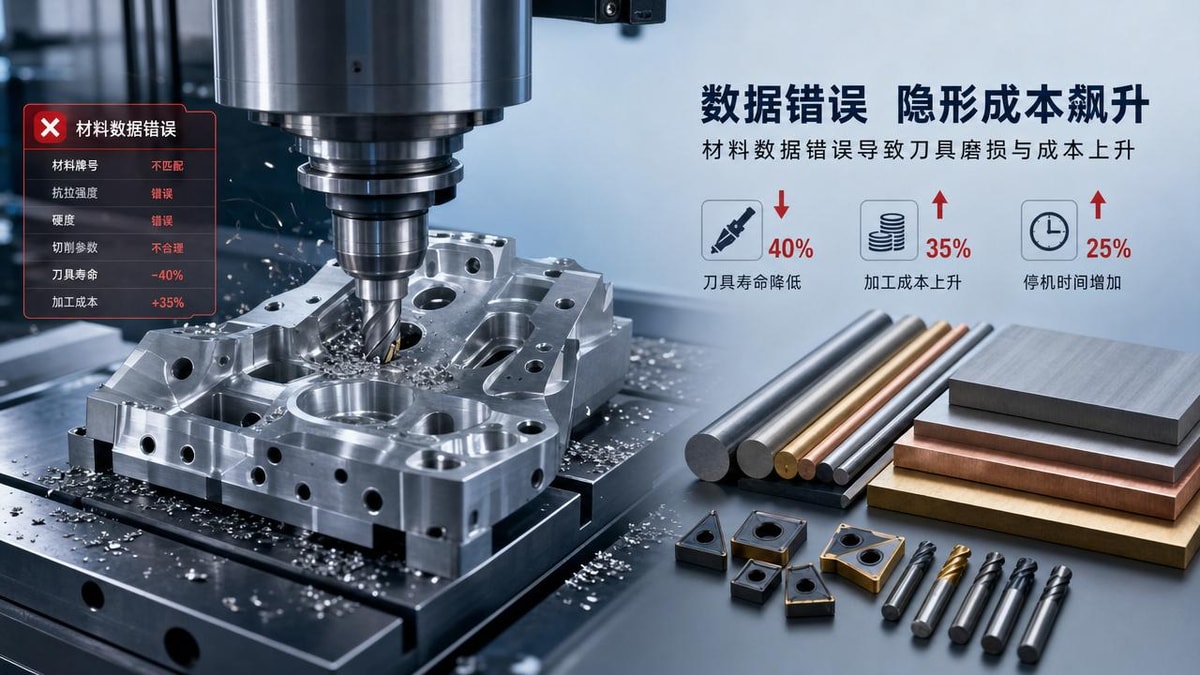
 CNC metal cutting costs rise fast when material data is wrongCNC Machining Technology Center
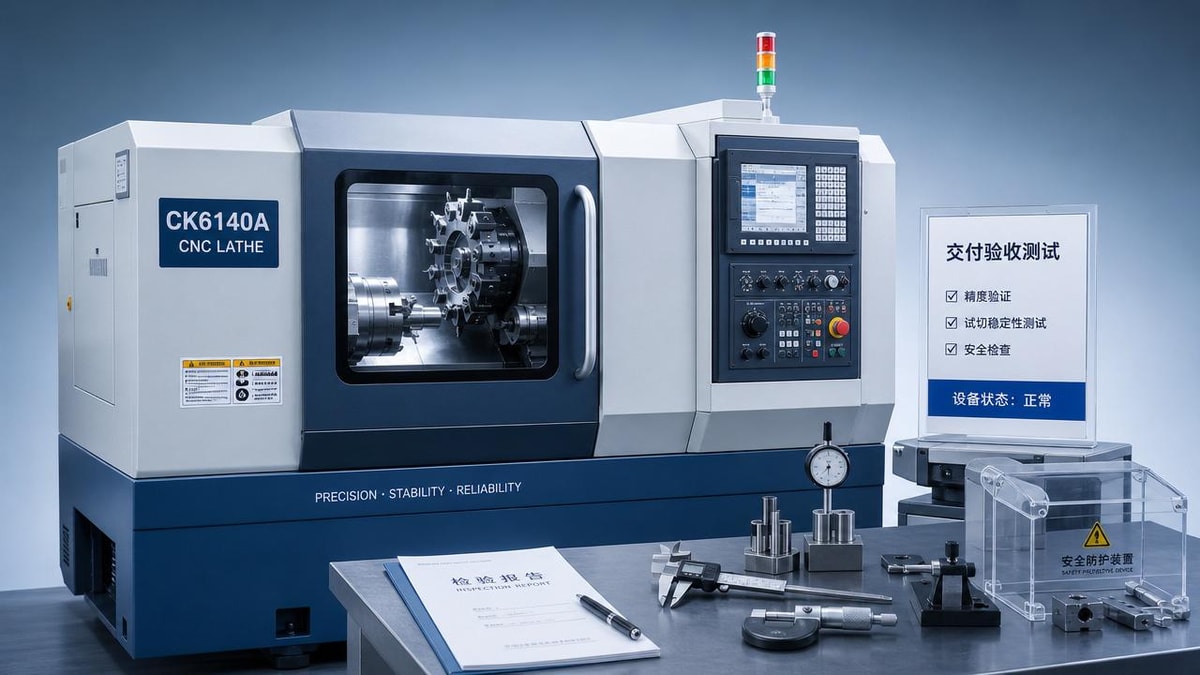
 High precision lathe claims to verify before accepting deliveryMachine Tool Industry Editorial Team

Aris Katos
Future of Carbide Coatings
15+ years in precision manufacturing systems. Specialized in high-speed milling and aerospace grade alloy processing.
▶
CNC metal cutting costs rise fast when material data is wrongCNC Machining Technology Center▶
Why CNC cutting accuracy drops on thin metal sheetsCNC Machining Technology Center▶
Why CNC Cutting Costs Rise Faster Than ExpectedCNC Machining Technology Center▶
CNC metal cutting defects that look minor but raise total costCNC Machining Technology Center▶
CNC cutting speed vs edge quality: where production losses startCNC Machining Technology Center
Mastering 5-Axis Workholding Strategies
Join our technical panel on Nov 15th to learn about reducing vibrations in thin-wall components.

Providing you with integrated sanding solutions
Before-sales and after-sales services
Comprehensive technical support