• Global CNC market projected to reach $128B by 2028 • New EU trade regulations for precision tooling components • Aerospace deman
NYSE: CNC +1.2%LME: STEEL -0.4%

CNC milling burrs at pocket edges usually point to this mismatch
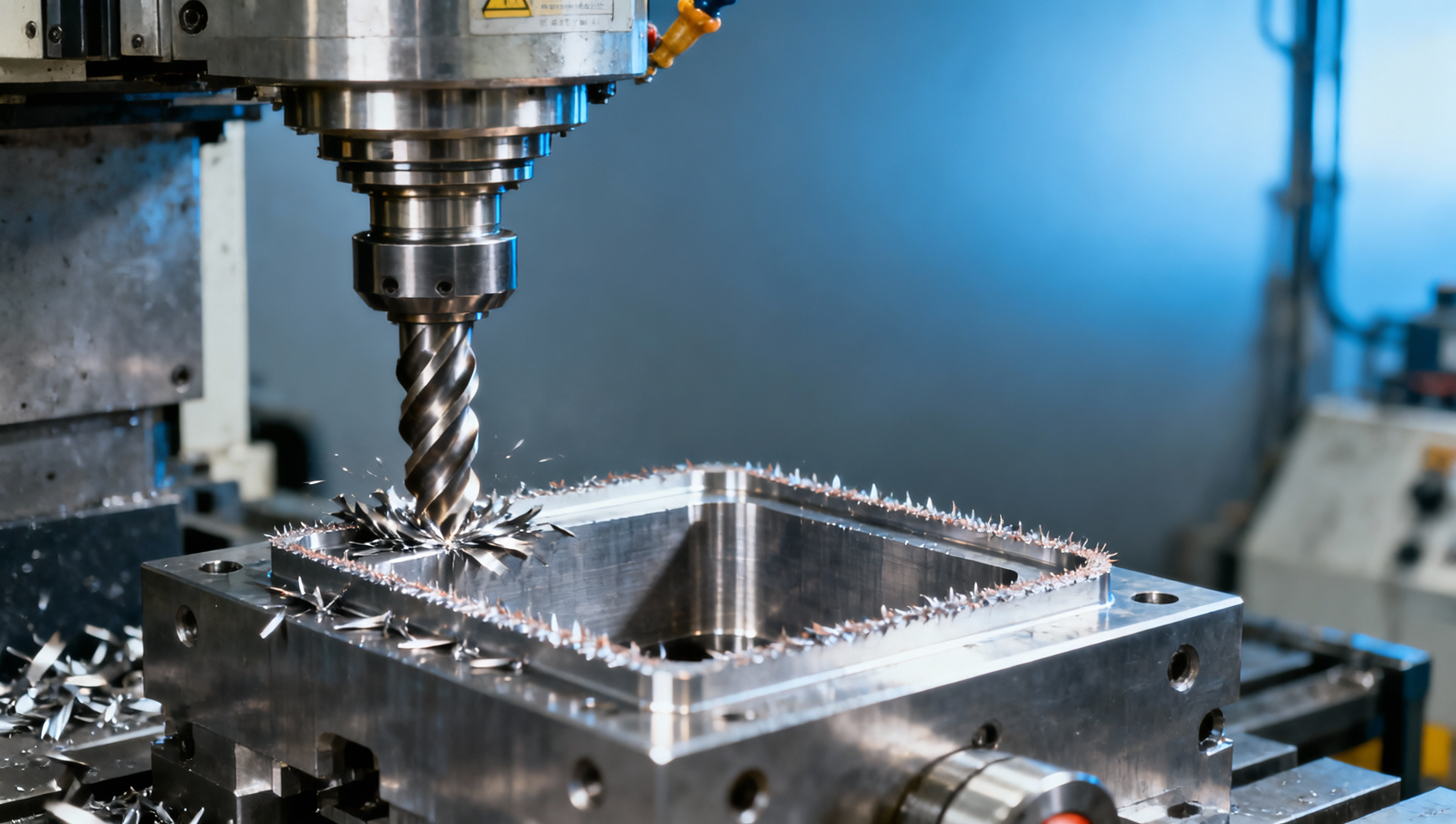
Burrs at pocket edges in CNC milling often signal a mismatch between tool geometry, cutting parameters, and material behavior. In metal machining and industrial CNC production, this issue can reduce part quality, slow automated production, and increase rework. This article explains how CNC cutting, CNC Programming, and Production Process settings interact, helping operators, buyers, and decision-makers identify the real cause and improve CNC metalworking results.
In practical shop-floor conditions, burr formation is rarely caused by one factor alone. Pocket edge burrs often appear when radial engagement, tool wear, spindle stability, and workpiece support fall out of balance. For operators, that means more deburring and unstable dimensions. For procurement teams, it can reveal weak tool selection or an unsuitable machine-tool-package match. For decision-makers, it directly affects cycle time, scrap risk, and delivery reliability.
Understanding this mismatch matters across automotive, aerospace, energy equipment, and electronics manufacturing. In high-volume production, even a burr height increase of 0.05 mm to 0.15 mm can create downstream assembly issues, manual finishing costs, or inspection failures. The most effective response is not simply to slow the program, but to align cutter geometry, cutting strategy, and process control around the actual material and pocket design.
Why Pocket Edge Burrs Usually Indicate a Process Mismatch
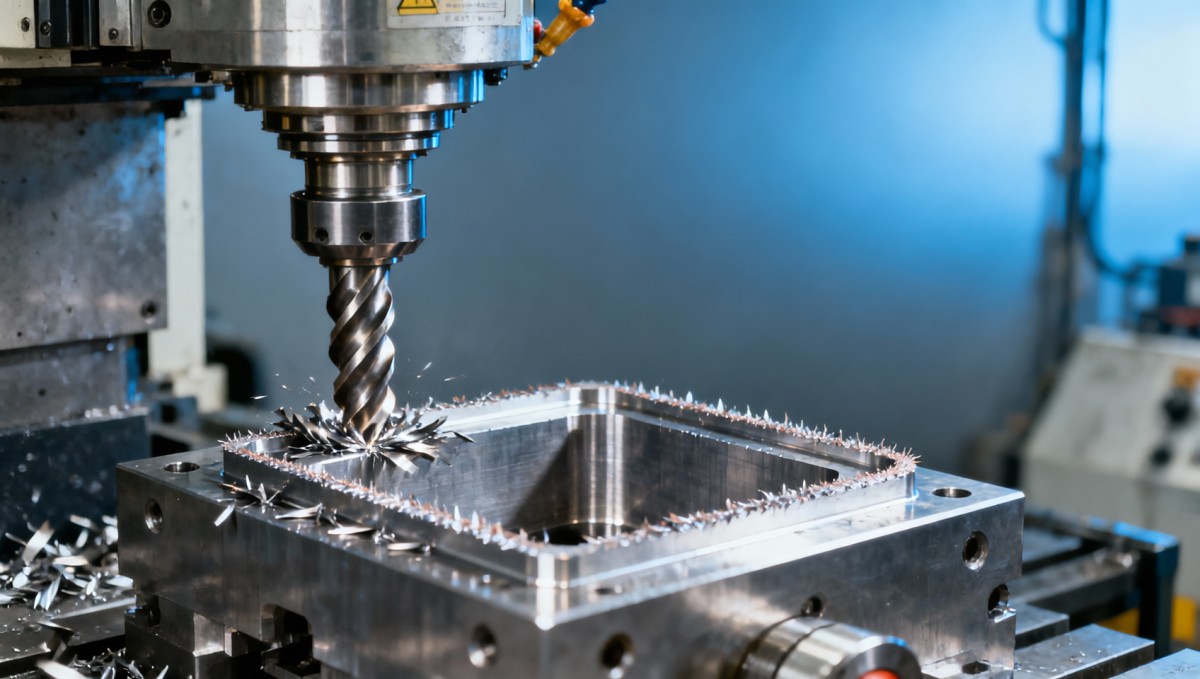
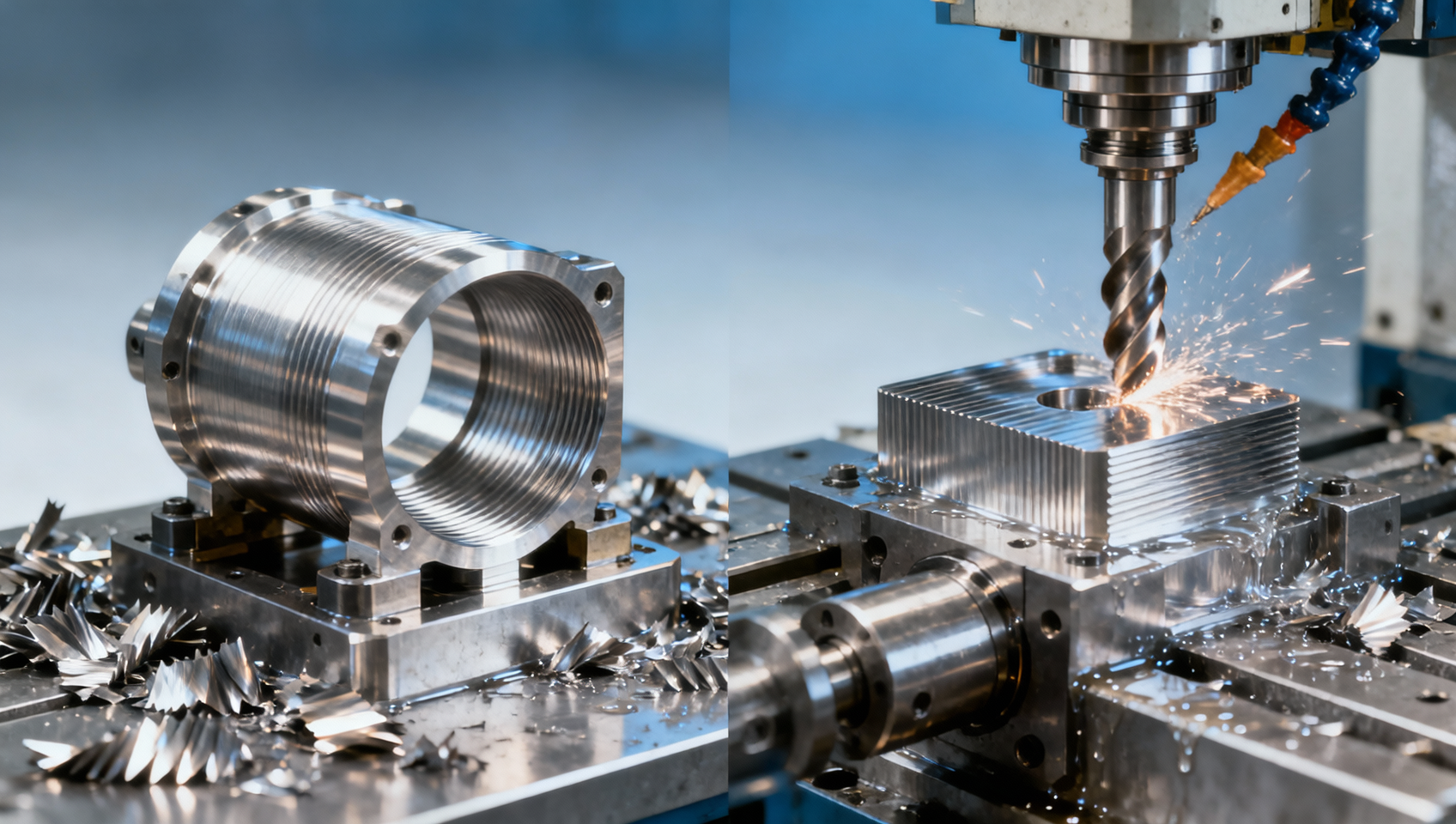
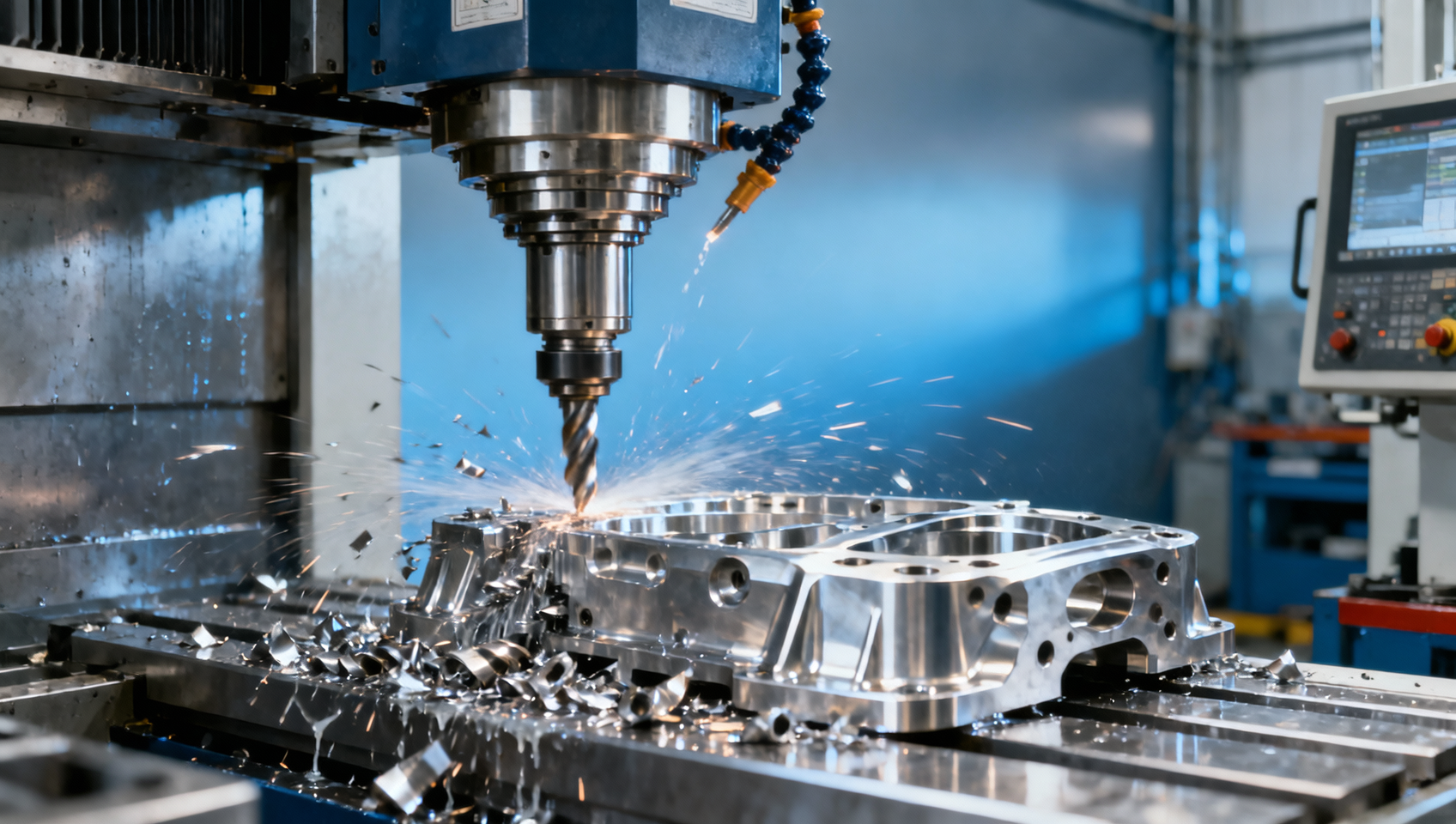
Pocket milling creates a demanding cutting condition because the tool is repeatedly entering corners, changing engagement, and moving between stable and unstable chip formation zones. When burrs appear at the pocket edge, especially at the exit side or around top edges, the process is often telling you that one part of the machining system is working against another. The mismatch may be geometric, mechanical, or programming-related.
A common example is using a sharp, high-positive aluminum-style end mill on a tougher steel pocket. The tool may cut freely at first, but the edge can push material outward near the top wall instead of shearing it cleanly. Another example is using a strong edge-prep tool intended for stainless steel on soft aluminum, where the edge may rub more than cut at low chip loads. In both cases, the burr is a symptom, not the root problem.
Material behavior also changes the picture. Low-carbon steels, ductile aluminum grades, and some copper alloys tend to form more plastically deformed burrs than brittle materials. If feed per tooth is too low, the cutting edge can plow and smear the material. If it is too high in a weak setup, vibration can tear the edge instead. Typical problem zones appear on pocket exits, thin walls, and corners where cutter engagement briefly rises above 50% to 70%.
For production teams, the key takeaway is that burrs are not only a finishing problem. They are a process control signal. If a pocket requires deburring in more than 10% to 15% of parts, or if burr size changes significantly between batches, the issue usually involves tool-path strategy, machine condition, or cutting data consistency rather than operator technique alone.
Three mismatch categories to check first
- Tool-to-material mismatch: coating, rake angle, flute count, and edge hone do not fit the workpiece alloy or hardness range.
- Parameter mismatch: spindle speed, feed per tooth, radial step-over, and axial depth generate rubbing, tearing, or unstable chip evacuation.
- Setup and path mismatch: weak clamping, excessive tool overhang, poor corner smoothing, or an incorrect climb/conventional strategy amplifies burr formation.
How burr location helps identify the source
The exact location of the burr provides diagnostic value. A continuous top-edge burr around the full pocket often suggests dull tooling or low chip load. Burrs concentrated at one side may indicate spindle runout, fixture deflection, or machine backlash. Local burrs in corners often point to abrupt toolpath direction changes, excessive radial engagement, or insufficient smoothing tolerance in CNC Programming.
If the burr appears mainly after roughing and remains after finishing, the finishing allowance may be too small to remove the deformed layer. In many shops, leaving only 0.05 mm stock on a ductile alloy is not enough when roughing has already rolled material over the edge. A finishing allowance of 0.15 mm to 0.30 mm is often more forgiving, depending on wall height, rigidity, and tool diameter.
Tool Geometry, Cutting Data, and Material Behavior Must Work Together
The most frequent technical cause of burrs at pocket edges is poor coordination between tool geometry and cutting parameters. Shops may choose a premium cutter, but if flute count, helix angle, and edge preparation are wrong for the application, burrs can still increase. In pocket milling, clean edge formation depends on stable shearing, controlled chip thickness, and minimal top-edge material rollover.
For aluminum pockets, 2-flute or 3-flute tools often support chip evacuation and lower cutting forces, especially in deeper cavities. For steel, 4-flute or 5-flute tools may improve productivity, but only if feed and spindle power remain in a stable range. Tool overhang should ideally stay below 3×D in general pocket work. Once it moves beyond 4×D, the risk of chatter, edge breakdown, and burr growth rises quickly.
Cutting data must also reflect actual engagement. A programmed feed that looks correct on paper may become too low in corners after control smoothing or toolpath deceleration. That lowers chip thickness and increases rubbing. In many cases, burrs become worse when operators reduce feed by 20% to 30% without adjusting speed, because the cutter stops cutting efficiently and starts deforming the top edge.
Material condition matters as much as nominal material grade. Rolled plate, cast stock, and forged blanks can behave very differently even within the same alloy family. Residual stress, skin hardness, and local inclusions influence burr tendency. A process that works on one incoming batch may become unstable on the next if the material condition changes and the machining window is already narrow.
Typical mismatch patterns in CNC pocket milling
The table below summarizes common combinations that lead to pocket edge burrs and the adjustment direction typically used in production environments.
The important conclusion is that burr control is not solved by one universal parameter change. A reduction in spindle speed may help one alloy and worsen another. What matters is matching the cutter edge, engagement model, and machine rigidity to the workpiece behavior at the pocket boundary.
Parameter ranges that often improve edge quality
- Use radial step-over below 20% to 30% of tool diameter for stable finishing around pocket walls.
- Keep finishing stock between 0.15 mm and 0.30 mm when roughing leaves visible material rollover.
- Limit tool runout to less than 0.01 mm for small-diameter finishing tools whenever possible.
- Review burr trend after every 1 shift or every 50–100 parts in repeat production, not only after customer complaints.
Programming and Production Process Settings That Influence Burr Formation
CNC Programming has a direct effect on pocket edge burrs because the toolpath controls how the cutter enters, exits, and loads the material. Even with a correct tool and acceptable cutting data, poor path design can create localized over-engagement. This is especially common when legacy pocket routines use sharp directional changes, full-width clean-up moves, or abrupt step-down transitions in materials that already show ductile edge behavior.
Adaptive clearing and constant-engagement roughing strategies often reduce burrs because they avoid sudden force spikes. However, they are not enough by themselves. The finishing sequence matters just as much. A good production process usually separates roughing, semi-finishing, and finishing rather than expecting a single pass to control both cycle time and edge quality. In many industrial CNC production environments, a 3-stage pocket process delivers more stable results than a 2-stage shortcut.
Exit direction also matters. Burrs tend to worsen where the cutter pushes unsupported material outward at the pocket lip. Reversing the final contour direction, changing the climb strategy on the finish pass, or adding a spring pass can reduce the final deformation layer. Thin-wall pockets need even more attention because wall deflection can amplify top-edge tearing during the last 0.10 mm to 0.20 mm of stock removal.
Production Process control includes more than the NC code. Workholding, blank variation, coolant delivery, chip evacuation, and tool-life management all influence whether burrs remain stable or become unpredictable. If chips pack in a deep pocket for even a few seconds, recutting can damage the edge and create a false impression that the problem comes from feed or spindle speed.
A practical process review checklist
- Confirm whether roughing leaves enough and consistent stock for finishing, ideally within a controlled range rather than random local excess.
- Check corner engagement and smoothing tolerance in CAM output, especially on small internal radii.
- Review tool overhang, holder type, and spindle condition before changing the entire program.
- Verify coolant direction and chip evacuation path for pockets deeper than 1×D to 1.5×D.
- Measure burr trend across first-off, mid-tool-life, and end-of-tool-life parts to identify wear-related drift.
How process choices change results
The table below compares common pocket milling process choices and their typical effect on burr control, cycle stability, and rework risk.
For many users, the best improvement comes from standardizing process review rather than relying on trial-and-error edits. Once a shop tracks burr location, tool life stage, and path type together, root causes become much easier to isolate. This is valuable not only for operators but also for engineering teams responsible for cost, repeatability, and capacity planning.
Common programming mistakes that increase burrs
- Leaving too little finishing stock after aggressive roughing.
- Ignoring feed reduction effects in corners and small radii.
- Using long tool overhang to reach depth when a different holder or setup is available.
- Treating all pockets in one part family as identical although wall thickness and exit conditions differ.
What Buyers and Decision-Makers Should Evaluate Before Changing Tools or Machines
Pocket edge burrs are often addressed at the machine, tooling, or process-supply level, so purchasing decisions matter. A buyer may see recurring deburring costs and assume a new cutter grade will solve the problem. In reality, the issue may come from holder accuracy, spindle wear, coolant delivery, or CAM strategy. Decision-makers should assess the full machining chain before investing in additional tools, retrofits, or new equipment.
For procurement teams, it helps to compare not only tool price but also total production effect. A cutter that costs 15% more can still reduce total cost if it extends stable edge quality across 80 parts instead of 40 parts. Likewise, a high-precision holder with lower runout may deliver better pocket finish and less burr rework than a cheaper holder that creates uneven tooth loading from the start.
Machine capability should also be reviewed in application terms, not brochure terms. For burr-sensitive pocket milling, spindle stability at small radial engagement, acceleration behavior in corners, and thermal repeatability during 2-shift or 3-shift operation can matter more than peak speed alone. In automated production, consistent results over 8 to 16 hours are often more valuable than short-term test performance.
This is especially important in multi-site manufacturing or supplier qualification. If one plant has a deburring rate below 5% and another runs above 18% on the same part family, the gap usually reflects a mismatch in process package standardization. The right purchasing question is not only “Which tool is best?” but “Which combination of tool, holder, programming method, and support service keeps burrs under control at production scale?”
A practical evaluation framework for sourcing decisions
The following table can help buyers and plant managers compare tooling and machining packages with a stronger focus on burr control and production reliability.
The main lesson for B2B procurement is that burr control should be part of the sourcing specification, not a hidden shop-floor issue. When RFQs and supplier reviews include edge quality expectations, expected deburring limits, and process support requirements, the resulting package is usually more stable and easier to scale.
Questions worth asking suppliers and internal teams
- What burr height or post-process deburring limit is acceptable for this pocket feature?
- Has the recommended tool been validated on similar materials, wall heights, and pocket depths?
- Can the supplier support parameter tuning within 24–72 hours if production issues appear?
- Is the current machine-holder-tool package capable of repeatable low-runout finishing?
Implementation Tips, Risk Control, and FAQ for Stable CNC Metalworking Results
Once the mismatch is identified, implementation should follow a controlled sequence. Changing three or four variables at once makes diagnosis harder. A practical method is to lock the workholding, material batch, and holder, then test one factor at a time: first tool geometry, then feed and speed, then path refinement. In many shops, 3 to 5 planned trials are enough to reduce burr-related rework significantly without disrupting the entire production schedule.
Risk control should also include inspection timing. If burrs are checked only at final quality inspection, the line may already have produced dozens of affected parts. It is better to inspect the first 3 parts, then one mid-run sample, then one end-of-tool-life sample. This simple pattern can reveal whether the issue is start-up, steady-state, or wear-related. For automated cells, adding in-process vision or touch-probe verification may be justified when burrs affect downstream assembly or sealing performance.
From an operational standpoint, standard work instructions help prevent the problem from returning. These instructions should define burr acceptance level, tool change intervals, holder cleaning steps, and the approved NC revision. Shops that document these controls typically reduce variability more effectively than those relying only on operator experience. That is especially true in multi-shift production where small setup differences can produce large edge-quality changes.
The long-term goal is not only fewer burrs, but a more predictable CNC metalworking process. Stable edge quality improves inspection flow, lowers manual finishing, and protects delivery commitments. In sectors where precision and repeatability are critical, such as aerospace components or electronics fixtures, this stability can be as important as raw cutting speed.
FAQ: How do I know whether the tool or the program is the main problem?
Start by looking at burr consistency. If burrs grow gradually over 30 to 80 parts, tool wear is a strong suspect. If burrs appear from the first part and are concentrated in corners or at exits, the program or engagement pattern is more likely. If they appear on only one side, check runout and clamping before changing the toolpath.
FAQ: Is slowing the feed the safest way to reduce burrs?
Not always. Lower feed can reduce force, but it can also reduce chip thickness below the effective cutting threshold, causing rubbing and worse burr formation. A better approach is to test feed, speed, and engagement together. In some ductile materials, raising feed per tooth by 10% to 15% actually improves edge quality by restoring proper shearing.
FAQ: When should a company consider new holders or machine upgrades?
If runout repeatedly exceeds 0.01 mm to 0.02 mm on small finishing tools, or if burr issues persist across multiple qualified tools and proven programs, holder or spindle condition should be reviewed. For high-mix, high-precision pocket milling, investment in better holder accuracy or machine maintenance often pays back faster than repeated trial tooling.
Recommended implementation sequence
- Document burr location, height trend, tool life stage, and material batch.
- Measure runout, tool overhang, and clamping stability before changing CAM data.
- Test one geometry or parameter change at a time under controlled conditions.
- Lock the improved process into standard work and procurement specifications.
Pocket edge burrs in CNC milling usually reveal a mismatch between tooling, programming, and material response rather than an isolated defect. By reading burr location carefully, aligning tool geometry with alloy behavior, refining CNC Programming, and reviewing machine-holder-process capability as one system, manufacturers can reduce rework and improve part consistency. If you are evaluating tooling options, process optimization support, or a more reliable CNC production setup, contact us to discuss your application, request a tailored solution, or learn more about practical machining strategies for precision manufacturing.
PREVIOUS ARTICLE
Recommended for You
 What causes chatter in metal machining and how to stop itCNC Machining Technology Center
 Industrial CNC lead times are shifting in 2026Manufacturing Market Research Center
 When CNC industrial upgrades cut output instead of raising itMachine Tool Industry Editorial Team
 Automated lathe errors that often start with bar feedingMachine Tool Industry Editorial Team
 Why CNC metalworking scrap rates rise on thin wall partsCNC Machining Technology Center
 CNC cutting speed or finish quality: where losses beginCNC Machining Technology Center

Aris Katos
Future of Carbide Coatings
15+ years in precision manufacturing systems. Specialized in high-speed milling and aerospace grade alloy processing.
▶
Why CNC metalworking scrap rates rise on thin wall partsCNC Machining Technology Center▶
CNC milling burrs at pocket edges usually point to this mismatchCNC Machining Technology Center▶
Shaft Parts runout problems are not always caused by the spindleCNC Machining Technology Center▶
CNC metalworking quality checks that catch warping earlierCNC Machining Technology Center▶
How CNC milling accuracy shifts when cutting hardened alloy steelsCNC Machining Technology Center
Mastering 5-Axis Workholding Strategies
Join our technical panel on Nov 15th to learn about reducing vibrations in thin-wall components.

Providing you with integrated sanding solutions
Before-sales and after-sales services
Comprehensive technical support