• Global CNC market projected to reach $128B by 2028 • New EU trade regulations for precision tooling components • Aerospace deman
NYSE: CNC +1.2%LME: STEEL -0.4%

Industrial CNC Buying Checklist: Cost Drivers, Lead Times, and Supplier Risks
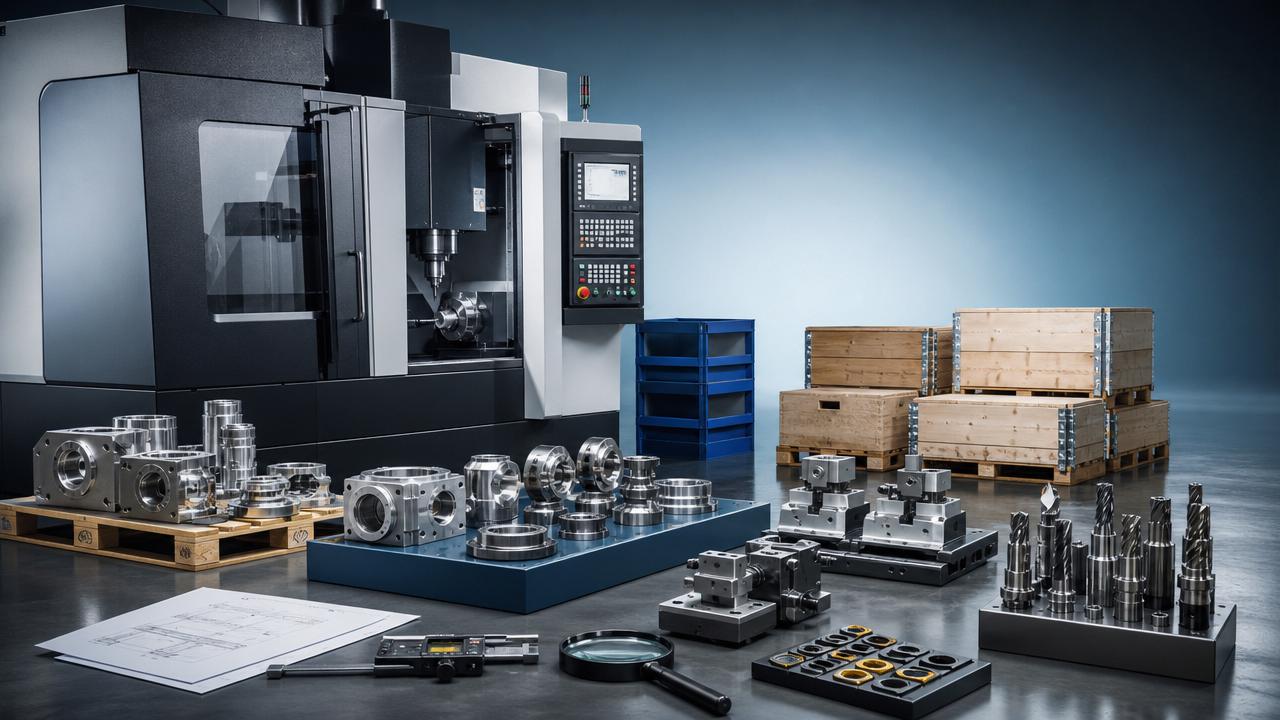
Why is buying industrial CNC equipment more complex than comparing quotes?
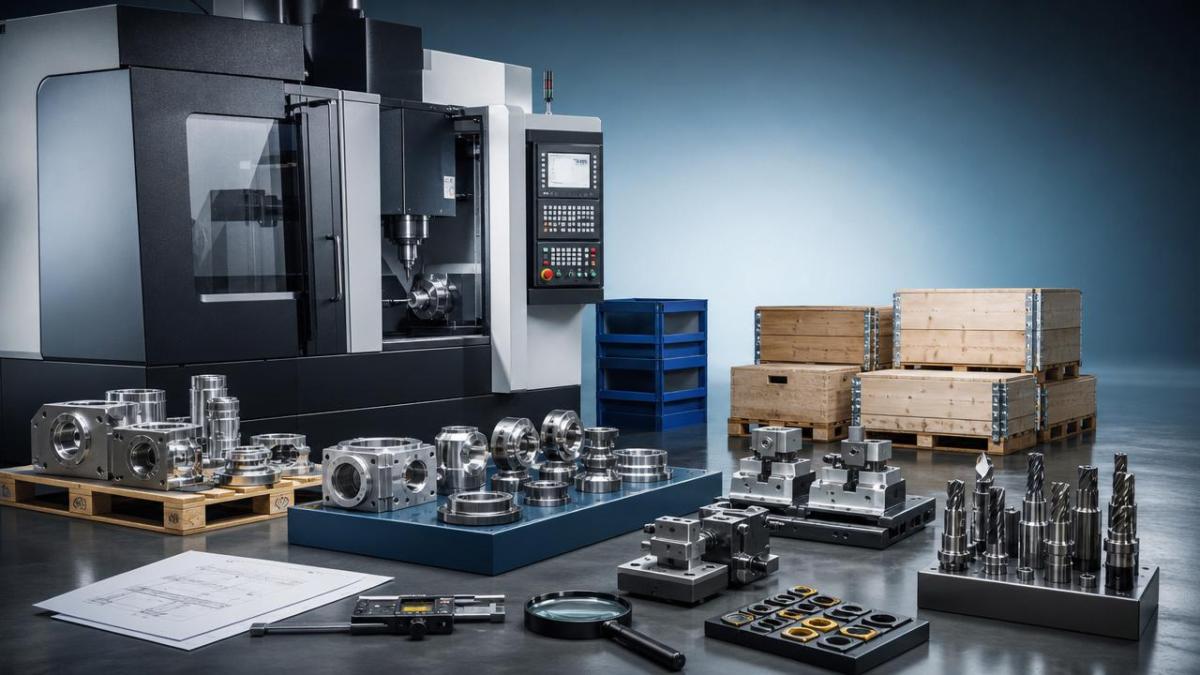
Buying industrial CNC equipment usually starts with a price sheet, but the real decision goes much deeper.
An industrial CNC system affects output quality, cycle time, maintenance planning, software compatibility, and future expansion.
That matters across automotive parts, aerospace structures, energy equipment, electronics housings, and precision component production.
In practical terms, two machines with similar spindle power can perform very differently once tooling, rigidity, controls, and service response are considered.
A lower quote may still create higher ownership cost if installation takes longer, accuracy drifts early, or spare parts are slow to arrive.
The better approach is to treat industrial CNC sourcing as a checklist exercise.
That means linking machine capability to part geometry, expected output, factory readiness, and supplier reliability before any contract is signed.
Which cost drivers usually change the total price the most?
The purchase price is only the visible layer.
For industrial CNC projects, the largest cost swings often come from configuration choices and hidden implementation details.
More advanced control systems, higher spindle speeds, linear guides, automatic tool changers, probing, and multi-axis capability can raise pricing quickly.
At the same time, these features may reduce setup time and scrap, which changes the long-term economics.
Other major cost drivers are less obvious.
- Foundation work, power upgrades, air supply, coolant systems, and chip handling
- Tooling packages, fixtures, workholding, and first-batch process validation
- CAM post-processors, software licenses, and control integration
- Training, commissioning, travel support, and after-sales response commitments
- Import duties, inland transport, insurance, and installation delays
A simple rule helps here.
If the industrial CNC machine is expected to run complex parts, tight tolerances, or long unattended shifts, cost should be judged against uptime and consistency, not sticker price.
If the work is stable and low mix, a simpler configuration may deliver better value.
A quick comparison table for industrial CNC budget checks
This table helps separate headline pricing from the factors that usually decide real project cost.
How should lead times be judged when delivery promises look similar?
Published lead time and usable lead time are not always the same thing.
One industrial CNC supplier may quote fourteen weeks for shipment, while another quotes sixteen weeks for delivery and commissioning.
The second offer may actually put parts into production sooner.
A reliable timeline usually includes several stages.
- Engineering confirmation and drawing approval
- Machine assembly and purchased component availability
- Factory acceptance testing with actual part requirements
- Export packing, customs handling, and inland transport
- Installation, alignment, training, and trial production
More global sourcing now means more exposure to component bottlenecks.
Controls, servo systems, bearings, ball screws, and electrical parts can extend industrial CNC lead times even when the machine frame is ready.
A useful question is not only “When will it ship?” but also “What parts are still not secured?”
Needless surprises often appear at the interface stage.
If automation, robot loading, MES links, or special fixtures are planned, lead time should include that integration work from the beginning.
What supplier risks matter most before placing an industrial CNC order?
Supplier risk is rarely about one dramatic failure.
More often, it appears as small gaps in communication, documentation, or technical ownership that become expensive later.
The first area to check is technical clarity.
If an industrial CNC proposal lacks detailed tolerance assumptions, sample cycle data, control brand confirmation, or spindle duty information, comparison becomes risky.
The second area is execution capability.
A supplier may show strong references in standard vertical machining centers but limited experience in multi-axis machining, difficult materials, or automated cells.
That difference matters when part geometry is demanding.
The third area is support depth after startup.
In precision manufacturing, downtime costs more than a discount saves.
It is worth checking whether local service exists, which spare parts are stocked regionally, and how remote diagnostics are handled.
These warning signs deserve extra caution.
- Frequent changes to quoted specifications
- Vague answers on repeatability or thermal stability
- No clear acceptance criteria for delivered performance
- Unclear source of key components
- Weak documentation for maintenance and training
When does a cheaper industrial CNC option become the expensive one?
This usually happens when the machine fits the quote sheet better than the production reality.
A low-price industrial CNC model can become costly if it needs frequent manual intervention, struggles with hard materials, or loses accuracy during longer runs.
That pattern is common in mixed production environments.
For example, a machine may look suitable for aluminum parts, then underperform when steel, titanium, or thin-wall precision parts enter the schedule.
Another hidden cost comes from underestimating process stability.
If the industrial CNC setup needs repeated offsets, frequent tool checks, or extra inspection time, labor cost rises and throughput drops.
This is why sample part validation matters more than brochure language.
A sound comparison should look at:
- Expected tolerance retention over full shift operation
- Actual cycle time with required surface finish
- Tool life in the intended material family
- Ease of changeover for high-mix production
- Planned maintenance intervals and consumable cost
In other words, the cheaper option becomes expensive when it cannot support the process discipline the factory really needs.
What should be on a practical industrial CNC buying checklist?
A strong checklist keeps the purchase grounded in facts instead of assumptions.
It also makes supplier comparison easier when offers come from different countries or machine tool clusters.
Industrial CNC sourcing often spans China, Germany, Japan, South Korea, and other manufacturing bases, so a common evaluation structure helps.
The most useful checklist usually includes these points:
- Confirm part sizes, materials, tolerances, and annual volume
- Match axis configuration and spindle range to real process needs
- Request acceptance standards tied to sample parts
- Break out all auxiliary costs before approval
- Review lead time by milestone, not by shipping date alone
- Check spare parts access and service escalation routes
- Verify software, automation, and data integration compatibility
If digital integration is part of the plan, one more check is essential.
Make sure the industrial CNC platform can connect cleanly with production monitoring, tool management, and future smart factory workflows.
That flexibility becomes more valuable as automation expands.
A final question before moving forward
The best industrial CNC purchase is not always the fastest quote or the most advanced machine.
It is the option that matches part requirements, startup timing, support reliability, and total operating economics with the fewest surprises.
Before making a final choice, compare offers against one checklist, test assumptions with real production data, and confirm where cost, lead time, and supplier risk may shift.
That next step usually reveals which industrial CNC investment is genuinely built for long-term value.
Recommended for You
![]() Mitsubishi Electric Announces Physical AI System Linking Humanoid Robots and CNC MachinesMachine Tool Industry Editorial Team
Mitsubishi Electric Announces Physical AI System Linking Humanoid Robots and CNC MachinesMachine Tool Industry Editorial Team Precision Machining for Defense: Supplier Quality and Traceability ChecksManufacturing Market Research Center
![]() Nidec Machine Tool Launches MVR-5X Five-Axis Gantry MachineMachine Tool Industry Editorial Team
Nidec Machine Tool Launches MVR-5X Five-Axis Gantry MachineMachine Tool Industry Editorial Team Choosing a Precision Disc Parts Manufacturer in China: Tolerances and Quality ChecksManufacturing Market Research Center
![]() Siemens Executive Says AI Could Raise Factory Automation to 80%Manufacturing Market Research Center
Siemens Executive Says AI Could Raise Factory Automation to 80%Manufacturing Market Research Center Choosing Automated Machine Tools for High-Mix, Low-Volume ProductionMachine Tool Industry Editorial Team


Aris Katos
Future of Carbide Coatings
15+ years in precision manufacturing systems. Specialized in high-speed milling and aerospace grade alloy processing.
▶
How to Evaluate a Machine Tool Factory Before Sourcing CNC EquipmentGlobal Machine Tool Trade Research Center▶
How to Evaluate a CNC Machine Tool Manufacturer for Precision and Service SupportGlobal Machine Tool Trade Research Center▶
What Affects Cost-Effective CNC Manufacturing? Key Drivers Behind Part Price and Lead TimeGlobal Machine Tool Trade Research Center▶
How to Evaluate a CNC Tooling System Supplier in Germany for Quality, Lead Time, and CostGlobal Machine Tool Trade Research Center▶
How to Evaluate a CNC Tooling System Supplier in Germany for Quality, Lead Time, and SupportGlobal Machine Tool Trade Research Center
▶
Mastering 5-Axis Workholding Strategies
Join our technical panel on Nov 15th to learn about reducing vibrations in thin-wall components.

Providing you with integrated sanding solutions
Before-sales and after-sales services
Comprehensive technical support