• Global CNC market projected to reach $128B by 2028 • New EU trade regulations for precision tooling components • Aerospace deman
NYSE: CNC +1.2%LME: STEEL -0.4%

Automated CNC Manufacturing vs Manual Machining: Which Fits High-Mix Production?
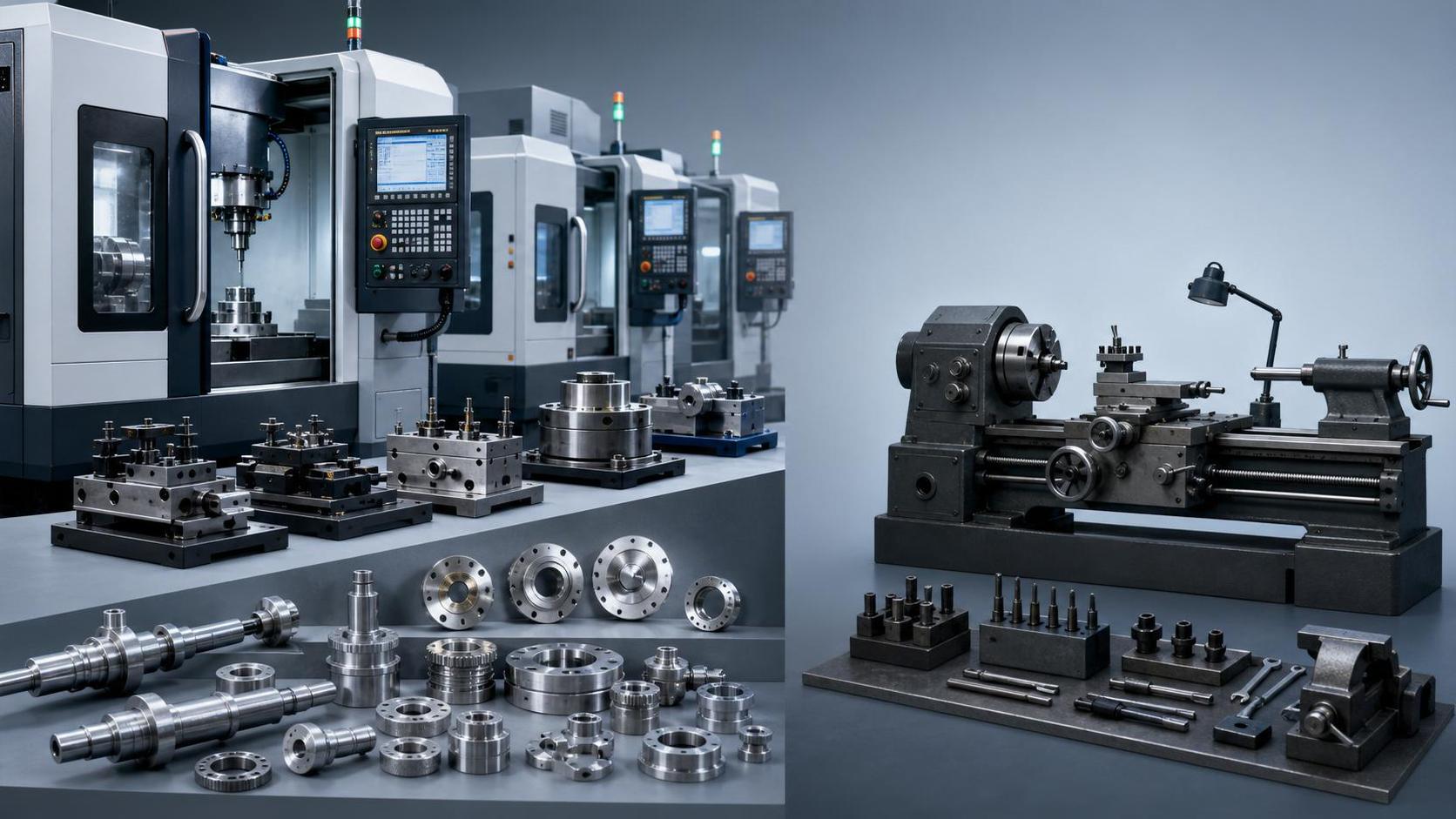
High-mix production puts machining strategy under constant pressure. Part numbers change, batch sizes move up and down, and tolerances still stay tight. In that environment, the choice between automated CNC manufacturing and manual machining is less about ideology than fit. It shapes setup time, repeatability, scheduling stability, and the real cost of flexibility.
That question matters more now because the global machine tool sector is moving toward higher precision, digital integration, and smarter factory coordination. From automotive and aerospace to electronics and energy equipment, manufacturers increasingly rely on CNC lathes, machining centers, multi-axis systems, tooling, and fixtures that can handle complexity without slowing delivery.
What the comparison really means in high-mix work
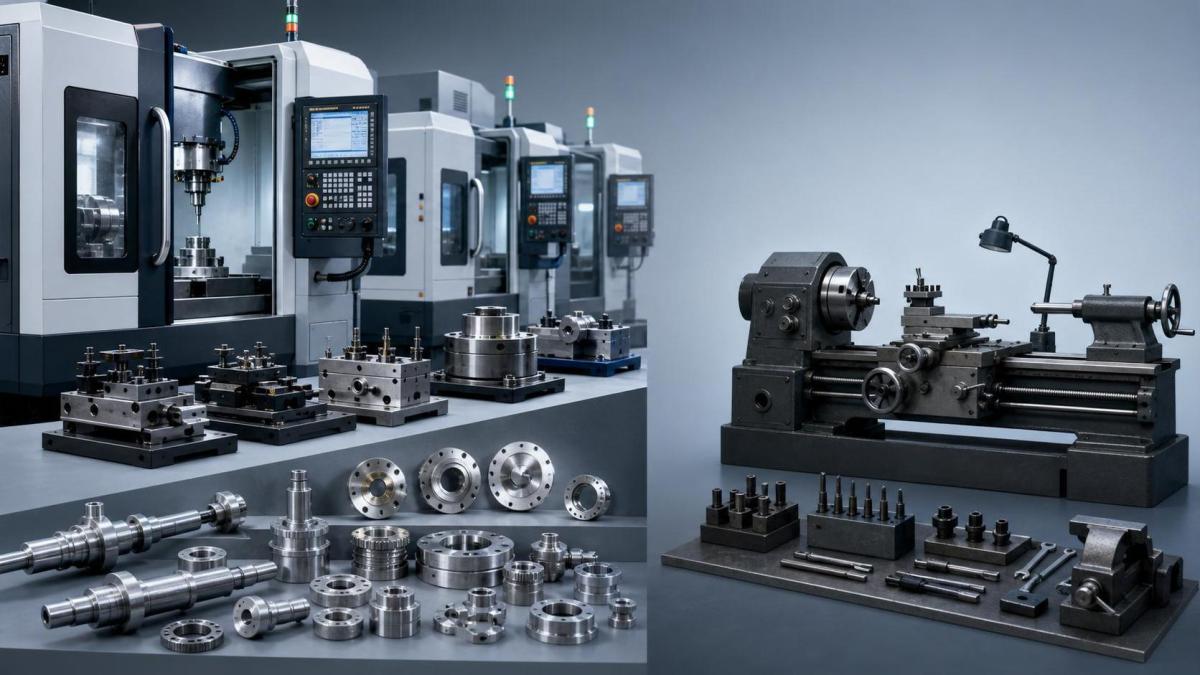
The difference is not simply machine control versus hand operation. In practice, it is a comparison between two production logics.
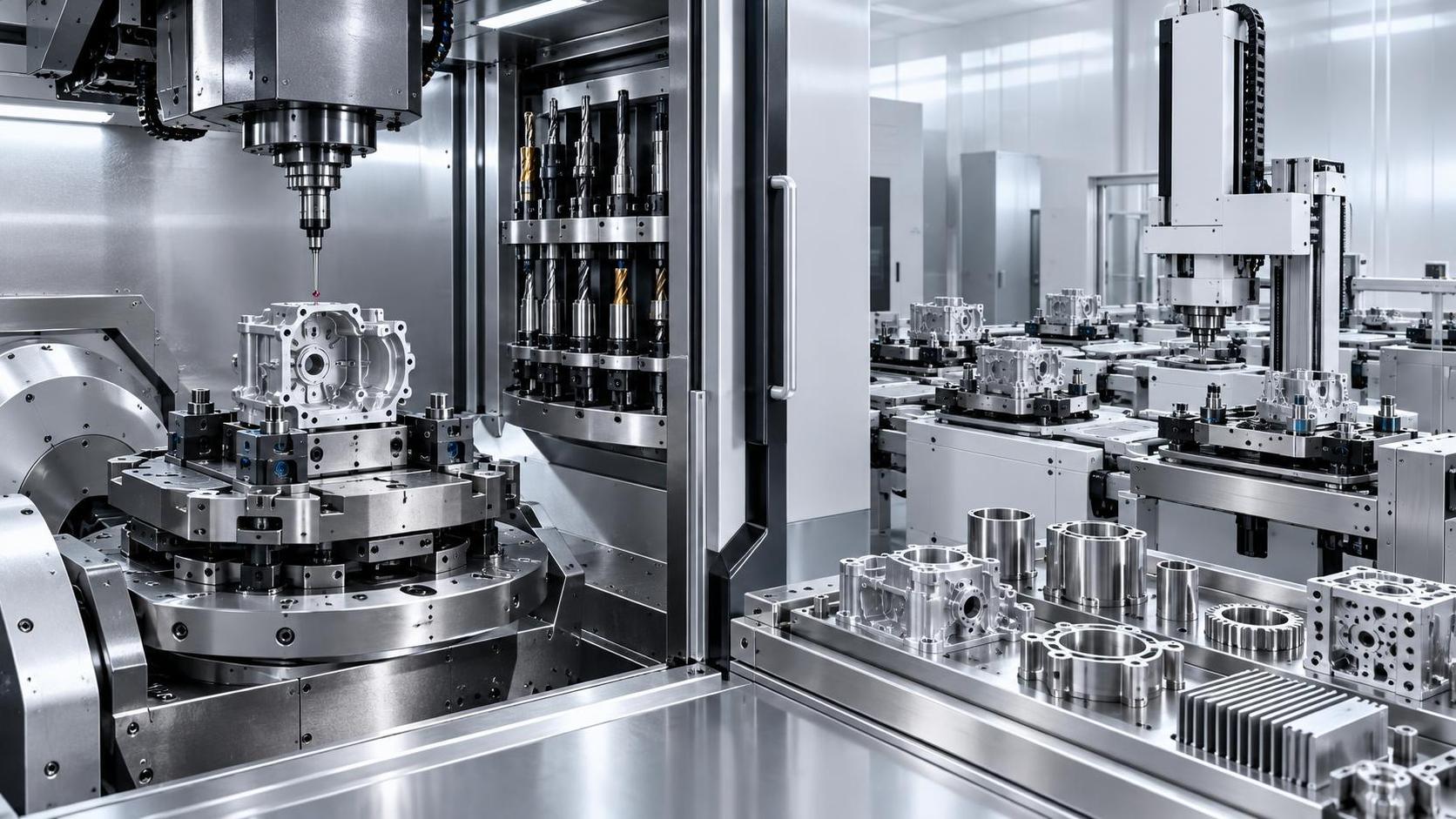
Automated CNC manufacturing depends on programmed toolpaths, controlled repeatability, and often a broader system around the machine. That system may include quick-change fixtures, tool management, probing, pallet handling, and digital job data.
Manual machining relies far more on operator intervention at each step. It can be highly capable, especially for simple geometries, urgent repair work, or low-volume parts that would take too long to program.
In high-mix settings, the real issue is how often change happens. If production switches between materials, dimensions, tolerances, and part families every day, the hidden cost of changeovers becomes decisive.
Why automated CNC manufacturing gets more attention now
The rise of automated CNC manufacturing is tied to a wider industrial shift. Precision is no longer enough on its own. Manufacturers also need traceability, faster response to drawing revisions, and more predictable throughput.
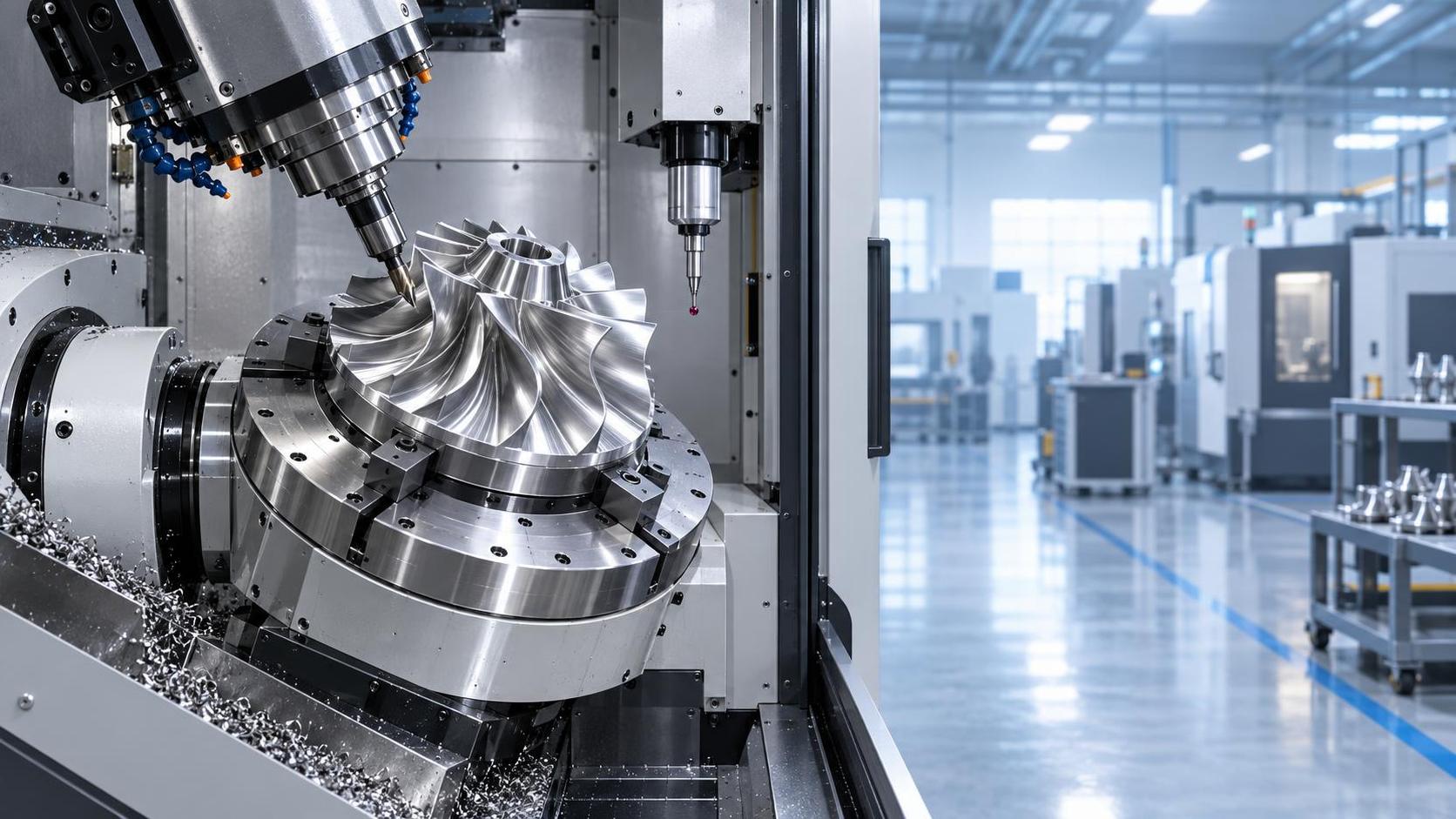
This is especially relevant in sectors producing complex shafts, precision discs, housings, and structural components. Multi-axis machining, in-process measurement, and connected production data reduce variation when part complexity increases.
Global competition reinforces the trend. Industrial clusters in China, Germany, Japan, and South Korea keep pushing machine tool performance, automation depth, and integration quality. As suppliers expand internationally, buyers compare not only machine capability but process maturity.
For high-mix production, that matters because strong automation is no longer limited to mass production. Flexible production cells, robot tending, modular fixturing, and software-driven scheduling are increasingly designed for mixed-part environments.
Where manual machining still makes business sense
Manual machining remains relevant because not every job benefits from full digital preparation. Some parts move faster through a skilled manual process.
Typical situations include
- One-off maintenance parts with immediate delivery pressure.
- Simple geometries where programming time exceeds cutting time.
- Early-stage prototype adjustments that change hour by hour.
- Low-criticality parts with moderate tolerance demands.
- Support operations such as deburring, rework, or fit correction.
Manual machining can also help when production data is incomplete. If CAD models, process plans, or fixture concepts are not yet stable, a manual route may buy time while the process is clarified.
The limitation appears when variability scales. Once more part numbers, tighter tolerances, or frequent repeats enter the schedule, manual consistency becomes harder to maintain across shifts and operators.
Where automated CNC manufacturing delivers stronger value
Automated CNC manufacturing becomes more attractive when high-mix does not mean random chaos, but structured variation. That includes families of parts sharing materials, tooling logic, datum schemes, or fixture concepts.
In those cases, automation reduces repeated setup effort and protects process consistency. Programs can be revised, stored, and reused. Offsets can be managed systematically. Inspection data can feed back into process control.
The strongest gains usually come from system thinking rather than the machine alone. Tool presetting, fixture repeatability, stable post-processing, and clean part data are what make automated CNC manufacturing effective in mixed production.
The risk is assuming high-mix always favors one side
High-mix production is often misunderstood. Some workshops treat it as proof that automation will fail. Others assume any CNC upgrade automatically solves variation. Both views miss the operational details.
A shop running twenty unrelated parts per week may struggle with poorly planned automation. A shop running two hundred variants within defined families may benefit greatly from automated CNC manufacturing.
The practical question is not volume alone. It is whether variation is manageable through standard process elements.
Useful indicators include
- How often tools, fixtures, and datums can be shared.
- How frequently revised drawings affect existing programs.
- Whether setup time or cutting time drives total cost.
- How much first-piece verification delays release to production.
- Whether quality records must support regulated or global supply chains.
A practical way to evaluate the best fit
A useful assessment starts with part families, not machine brochures. Group jobs by geometry, tolerance level, material, and annual repeat frequency.
Then compare how each group behaves in production. Some will reward manual responsiveness. Others will justify automated CNC manufacturing because setup knowledge can be captured and reused.
Key evaluation points
- Measure setup hours per part family, not only spindle time.
- Track scrap and rework during product changeovers.
- Review whether inspection bottlenecks come from inconsistency or complexity.
- Check if CAM programming time can be reduced through templates.
- Estimate how digital job data improves repeat orders and transfer between sites.
This approach fits current industry reality. The machine tool market is no longer defined only by hardware horsepower. Integration, software discipline, and flexible automation now shape competitiveness across international manufacturing networks.
Choosing a direction without overcommitting
For many operations, the answer is not absolute replacement. A hybrid model often works better.
Manual resources can absorb urgent one-offs, repairs, and unstable prototypes. Automated CNC manufacturing can handle repeatable mixed-part work where precision, documentation, and lead-time control matter more.
That balance is especially useful when production serves multiple sectors at once. Automotive suppliers, aerospace subcontractors, electronics component producers, and energy equipment manufacturers often face different rhythms inside the same plant.
The next step is to map demand variability against process standardization. If changeovers are frequent but structured, automated CNC manufacturing deserves close attention. If jobs are highly irregular and data remains unstable, manual capacity may still protect responsiveness.
A sound decision usually comes from reviewing actual setup history, repeat-order patterns, fixture strategy, and quality risk together. That creates a clearer basis for choosing where automation should expand, where manual methods should remain, and where both should coexist.
Recommended for You
 Smart Manufacturing for Small Businesses: Where Automation Delivers the Fastest ROIMachine Tool Industry Editorial Team
 How to Specify a CNC Lathe for High-Volume Automotive Shaft ProductionCNC Machining Technology Center
 How Automated Precision Machining Maintains Tolerance in High-Mix ProductionCNC Machining Technology Center
 How to Evaluate a Machine Tool Factory Before Sourcing CNC EquipmentGlobal Machine Tool Trade Research Center
 CNC Programming Explained: From CAD Models to Reliable Shop-Floor ToolpathsCNC Machining Technology Center
 How Multi-Axis Machining Produces Complex Components With Fewer SetupsCNC Machining Technology Center



Aris Katos
Future of Carbide Coatings
15+ years in precision manufacturing systems. Specialized in high-speed milling and aerospace grade alloy processing.
▶
Smart Manufacturing for Small Businesses: Where Automation Delivers the Fastest ROIMachine Tool Industry Editorial Team▶
How Smart Manufacturing Technology Improves OEE Across Industry 4.0 Production LinesMachine Tool Industry Editorial Team▶
How to Evaluate an Automation Line for Electronics Production Before InvestmentMachine Tool Industry Editorial Team▶
How to Evaluate an Automated Production Line for Output, Flexibility, and ROIMachine Tool Industry Editorial Team▶
How Smart Manufacturing Improves Traceability and Quality Control in Aerospace?Machine Tool Industry Editorial Team
Mastering 5-Axis Workholding Strategies
Join our technical panel on Nov 15th to learn about reducing vibrations in thin-wall components.

Providing you with integrated sanding solutions
Before-sales and after-sales services
Comprehensive technical support