• Global CNC market projected to reach $128B by 2028 • New EU trade regulations for precision tooling components • Aerospace deman
NYSE: CNC +1.2%LME: STEEL -0.4%

Smart Manufacturing for Aerospace Industry: Where It Improves Quality and Throughput
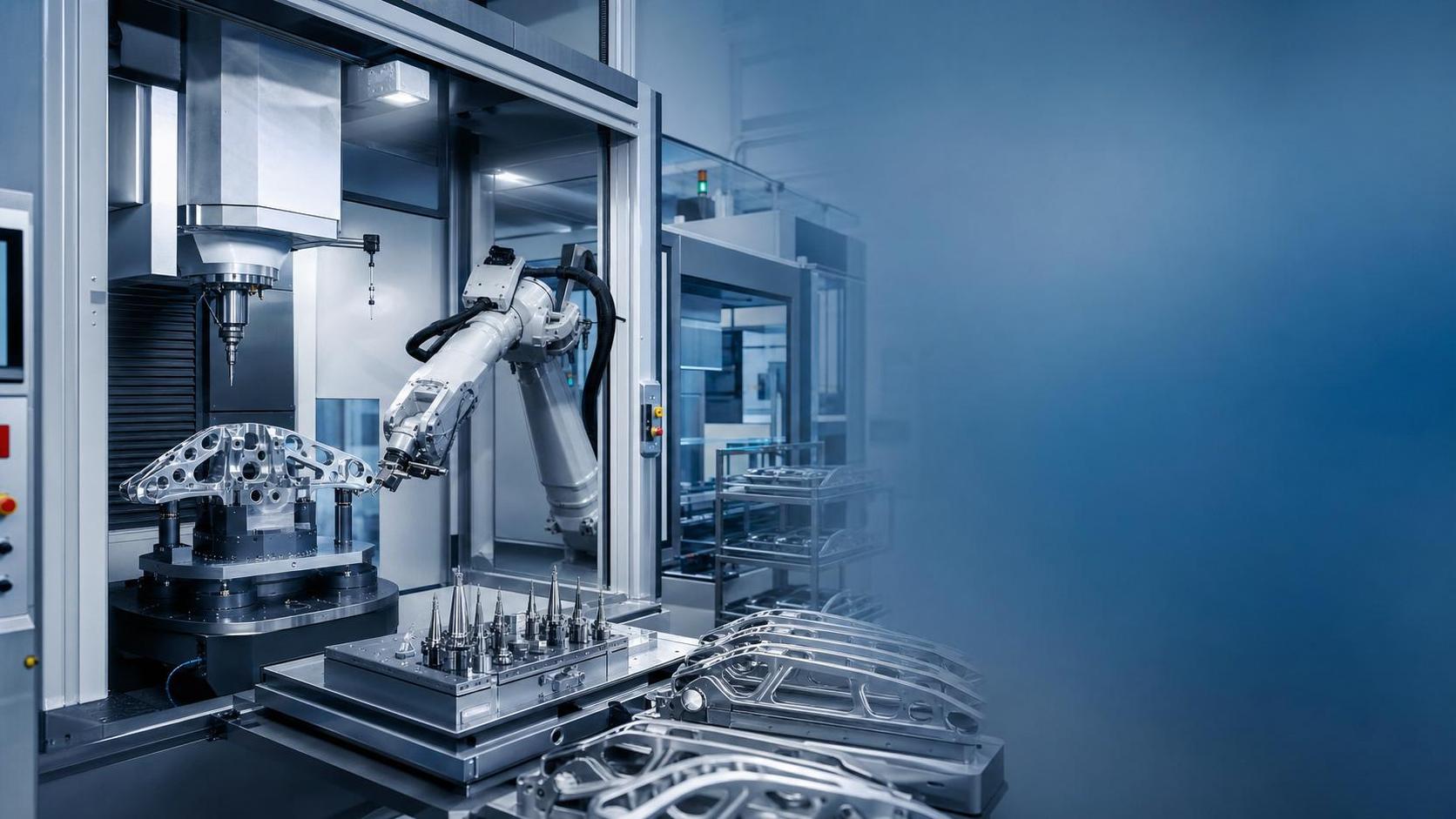
Where Smart Manufacturing for Aerospace Industry Creates Immediate Value
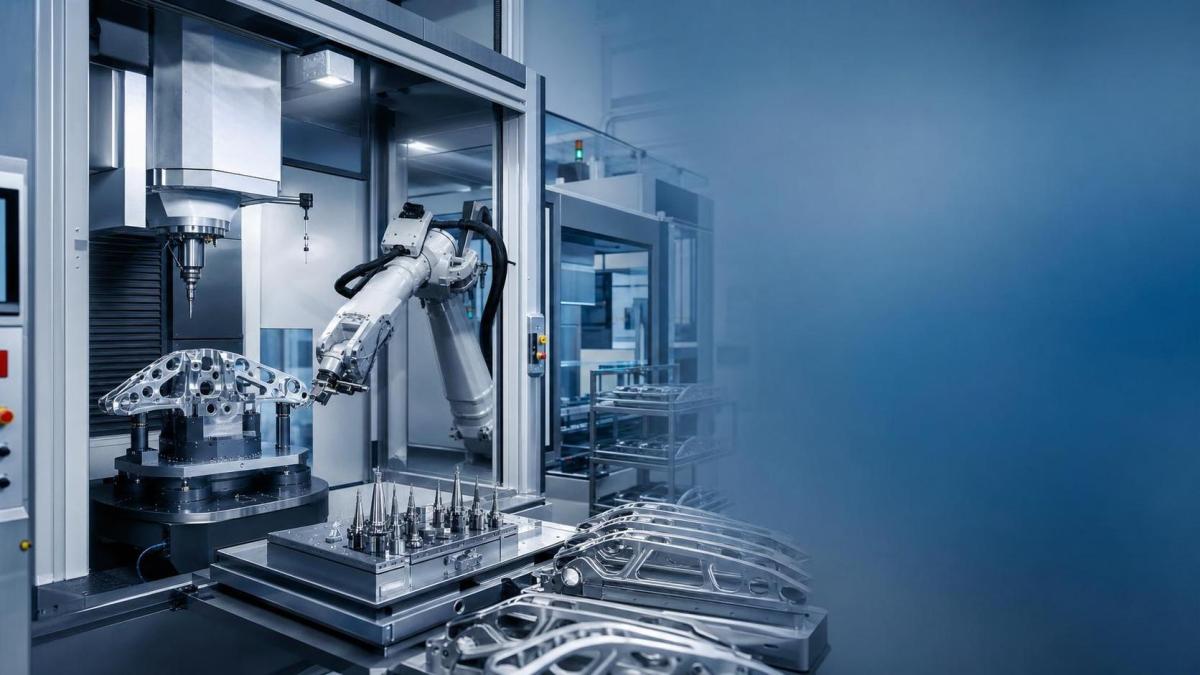
Smart Manufacturing for Aerospace Industry matters most where precision, repeatability, and delivery pressure meet on the same production floor.
In aerospace machining, a small variation can affect fit, fatigue life, inspection time, or downstream assembly stability.
That is why smarter production is not only about adding automation.
It is about connecting CNC machine tools, multi-axis machining, tooling data, in-process measurement, and scheduling logic into one reliable workflow.
The wider machine tool industry already shows this direction clearly.
High-precision CNC lathes, machining centers, robotic handling, and flexible lines are now expected in advanced manufacturing, not treated as optional upgrades.
For aerospace, the pressure is even sharper because quality requirements, traceability demands, and part complexity rise together.
Smart Manufacturing for Aerospace Industry improves quality and throughput when it is matched to the real production scenario, not deployed as a generic digital package.
Why the Same Factory Does Not Have the Same Priorities Everywhere
Different aerospace parts create different control points.
A structural bracket, a turbine-related component, and a precision housing may all run on advanced CNC equipment, yet their risks are not the same.
Some jobs are limited by spindle time.
Others are limited by inspection delays, fixture stability, material behavior, or setup consistency between shifts.
In actual production, Smart Manufacturing for Aerospace Industry works best when the planning team identifies what really constrains output.
If scrap risk is highest, process monitoring and tool-life control usually matter more than adding another machine.
If bottlenecks sit between machining and inspection, digital quality records and automated measurement feedback often bring faster gains.
This is where smart manufacturing becomes practical rather than theoretical.
Complex geometry changes the improvement path
Multi-axis parts often require fewer handoffs but tighter control of tool paths, thermal drift, and fixture repeatability.
Smart Manufacturing for Aerospace Industry in this case depends on simulation accuracy, real-time machine status, and stable post-processing routines.
Mixed-volume production changes the scheduling logic
Aerospace production rarely behaves like simple mass manufacturing.
One workshop may handle prototypes, low-volume certified parts, and recurring programs at the same time.
Here, digital scheduling, tool presetting, and standardized setup data often improve throughput more than raw machine speed.
High-value part machining usually needs tighter digital control
When each workpiece carries high material cost, the first concern is rarely output alone.
The bigger issue is avoiding irreversible loss after long cycle times.
In this scenario, Smart Manufacturing for Aerospace Industry supports quality by linking machining data to tool wear, offsets, coolant condition, and inspection checkpoints.
This is especially relevant for titanium, nickel-based alloys, and thin-wall parts.
These jobs often look stable during the first pieces, then drift as tools age or heat builds across longer runs.
A practical approach is to define alarm thresholds around actual process behavior, not catalog values alone.
That includes spindle load trends, dimensional compensation logic, and automated checks before the part reaches final inspection.
More common than expected is a factory that invests in advanced machine tools but keeps offset correction manual.
That gap weakens the benefits of Smart Manufacturing for Aerospace Industry because the data loop stays incomplete.
Assembly-driven parts need consistency more than isolated machine performance
Some aerospace parts pass individual inspection yet still create trouble during assembly.
Hole position relationships, surface finish consistency, and batch-to-batch variation can slow final integration.
In these cases, Smart Manufacturing for Aerospace Industry should focus on process repeatability across machines, fixtures, and shifts.
A digitally connected line helps standardize setup sheets, fixture verification, and revision control for NC programs.
That reduces the hidden losses caused by local workarounds.
The key judgment here is simple.
If final assembly absorbs too much adjustment time, the issue may sit upstream in machining consistency rather than in assembly itself.
Throughput gains often appear first in mixed and automated cells
Not every throughput problem comes from slow cutting.
In many workshops, parts wait longer for loading, setup confirmation, tool replacement, or routing decisions than for actual machining.
Smart Manufacturing for Aerospace Industry improves throughput when those interruptions are visible and measured.
Automated pallet systems, robotic handling, and machine monitoring are valuable here, but only if exception paths are designed well.
A line that runs unattended for simple parts may struggle with aerospace components if part identification, clamping confirmation, and rework routing remain weak.
That is why a realistic throughput plan looks beyond headline spindle utilization.
It checks queue time, setup time, inspection release time, and machine recovery after alarms.
What usually deserves attention first
- Program changeover frequency and whether setup data stays standardized.
- Tool inventory visibility across CNC cells and automated lines.
- Machine downtime caused by inspection holds rather than machine failure.
- Recovery time after interrupted cycles, especially in low-volume critical jobs.
Common misjudgments before adopting Smart Manufacturing for Aerospace Industry
One frequent mistake is treating similar parts as identical digital candidates.
Two aluminum components may share geometry features but require different controls because one feeds direct assembly while the other allows secondary correction.
Another mistake is judging only by machine specification.
A high-end multi-axis machine does not guarantee better results if fixture design, tool management, and measurement feedback remain disconnected.
It is also common to underestimate implementation cost outside equipment purchase.
Integration time, data cleaning, operator training, and quality procedure updates often decide whether Smart Manufacturing for Aerospace Industry delivers measurable returns.
The safer approach is to map one complete production flow first.
That flow should include machining, inspection, tool replacement, material traceability, and nonconformance handling.
How to match the setup to the real aerospace workflow
A workable Smart Manufacturing for Aerospace Industry plan usually starts with one narrow question.
Is the main target better first-pass quality, more stable throughput, or faster response to program changes?
That choice influences the system architecture.
If quality stability is the priority, connect machine data, tool offsets, and metrology feedback before expanding automation scope.
If throughput is the immediate issue, focus first on changeover reduction, automated handling logic, and scheduling visibility.
If product mix changes frequently, standardizing digital work instructions and fixture references often delivers quicker benefits than adding more sensors.
- Define the part families that justify shared automation and shared quality logic.
- Confirm which process variables must be recorded for compliance and rework analysis.
- Check whether current CNC systems, robots, and metrology tools exchange usable data.
- Estimate maintenance effort for sensors, fixtures, software updates, and calibration routines.
- Pilot the workflow on a constrained cell before expanding across the plant.
Smart Manufacturing for Aerospace Industry delivers the strongest results when the process logic is clear before the technology stack grows.
A practical next step is to compare scenarios before expanding investment
The most useful next move is not broad digital expansion.
It is a disciplined comparison of real aerospace production scenarios.
Review where quality escapes begin, where throughput actually stalls, and where CNC data already exists but remains unused.
Then separate high-value parts, assembly-critical components, and mixed-volume cells into different improvement tracks.
That method keeps Smart Manufacturing for Aerospace Industry grounded in operational reality.
It also helps balance precision targets, implementation effort, maintenance needs, and delivery commitments with fewer wrong assumptions.
When those conditions are clear, smarter manufacturing stops being a broad concept and becomes a measurable production advantage.
Recommended for You
 How to Select a Slant Bed Lathe for High-Precision Shaft and Chuck WorkCNC Machining Technology Center
 Smart Manufacturing for Small Businesses: Where Automation Delivers the Fastest ROIMachine Tool Industry Editorial Team
 How to Specify a CNC Lathe for High-Volume Automotive Shaft ProductionCNC Machining Technology Center
 How Automated Precision Machining Maintains Tolerance in High-Mix ProductionCNC Machining Technology Center
 How to Evaluate a Machine Tool Factory Before Sourcing CNC EquipmentGlobal Machine Tool Trade Research Center
 CNC Programming Explained: From CAD Models to Reliable Shop-Floor ToolpathsCNC Machining Technology Center



Aris Katos
Future of Carbide Coatings
15+ years in precision manufacturing systems. Specialized in high-speed milling and aerospace grade alloy processing.
▶
Smart Manufacturing for Small Businesses: Where Automation Delivers the Fastest ROIMachine Tool Industry Editorial Team▶
How Smart Manufacturing Technology Improves OEE Across Industry 4.0 Production LinesMachine Tool Industry Editorial Team▶
How to Evaluate an Automation Line for Electronics Production Before InvestmentMachine Tool Industry Editorial Team▶
How to Evaluate an Automated Production Line for Output, Flexibility, and ROIMachine Tool Industry Editorial Team▶
How Smart Manufacturing Improves Traceability and Quality Control in Aerospace?Machine Tool Industry Editorial Team
Mastering 5-Axis Workholding Strategies
Join our technical panel on Nov 15th to learn about reducing vibrations in thin-wall components.

Providing you with integrated sanding solutions
Before-sales and after-sales services
Comprehensive technical support