• Global CNC market projected to reach $128B by 2028 • New EU trade regulations for precision tooling components • Aerospace deman
NYSE: CNC +1.2%LME: STEEL -0.4%

Industrial Robotics for Welding Applications: Which Parts and Weld Types Fit Best?
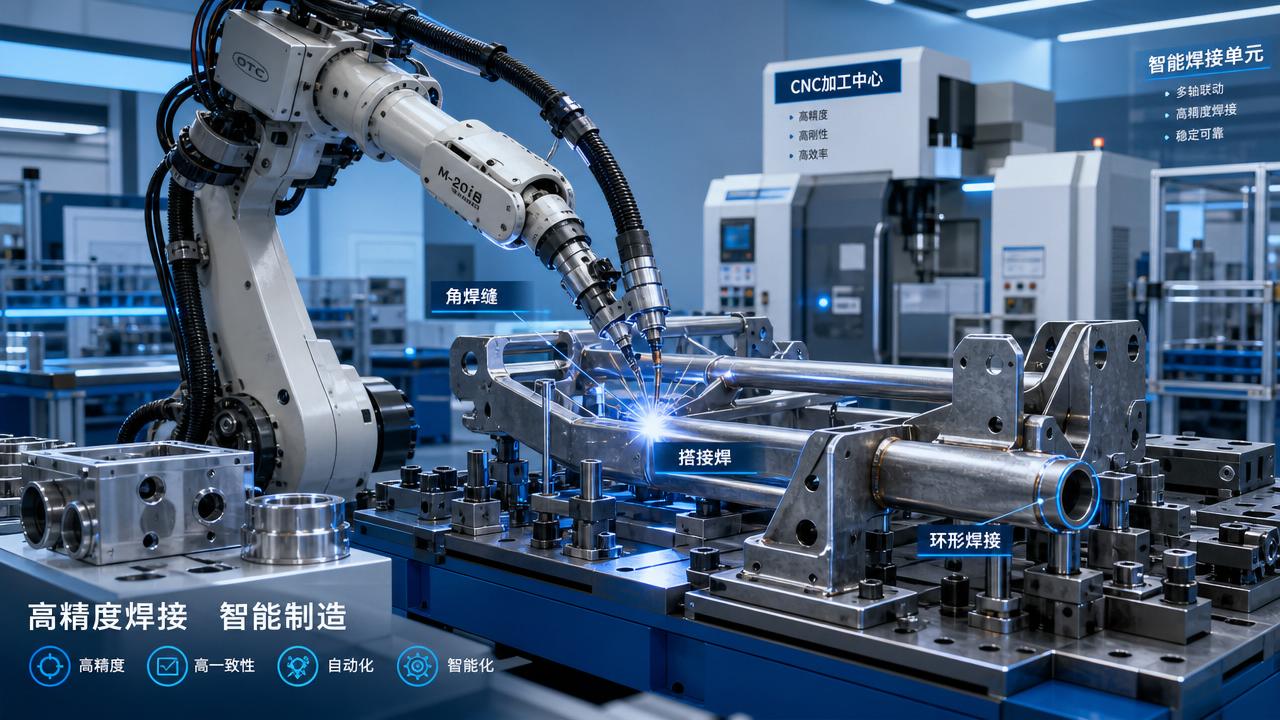
Industrial Robotics for Welding Applications: Which Parts and Weld Types Fit Best?
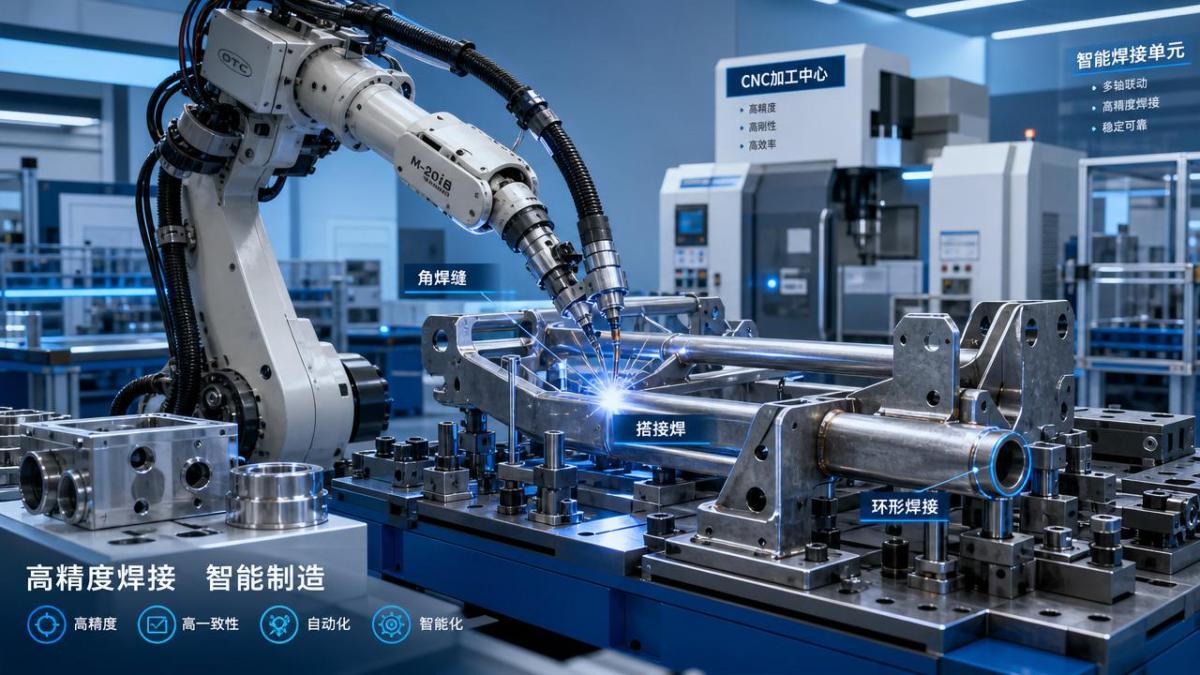
Industrial Robotics for Welding Applications are changing how manufacturers judge part fit, weld stability, and line efficiency.
That shift matters even more in CNC-centered production, where part accuracy already sets a high baseline.
When robotic welding is paired with precision machining, the result can be faster throughput, tighter quality control, and lower rework.
Still, not every part is a good candidate, and not every weld type benefits equally from automation.
In practical terms, the key question is simple: where do Industrial Robotics for Welding Applications create the strongest return?
The answer depends on part geometry, joint accessibility, material variation, fixture quality, and production mix.
It also depends on how well the robotic cell connects with machining, inspection, and downstream assembly.
From recent industry changes, a clearer pattern is emerging.
Manufacturers no longer ask only whether welding can be automated.
They ask which parts, which welds, and which production conditions justify automation first.
Why Part Suitability Comes First
Industrial Robotics for Welding Applications work best when part variation is controlled before the arc starts.
This is where CNC machining and robotic welding naturally support each other.
Machined edges, consistent hole locations, and repeatable fixturing reduce the guesswork that often hurts manual welding results.
A robot repeats a path very well, but it does not magically solve poor part consistency.
That is why technical evaluation should begin with dimensional stability, tolerance stack-up, and joint presentation.
The best candidates usually share a few traits.
- Stable geometry across batches
- Predictable joint locations
- Easy torch access and clearance
- Repeatable clamping and orientation
- Moderate to high production volume
- Clear quality criteria for inspection
If these basics are weak, even advanced Industrial Robotics for Welding Applications will struggle to produce reliable outcomes.
This also means a welding robot project often starts upstream, with part redesign or fixture optimization.
Which Parts Fit Robotic Welding Best
The strongest fit for Industrial Robotics for Welding Applications is usually repeatable metal components with defined seams.
Automotive brackets are a classic example.
So are seat frames, chassis subassemblies, battery trays, and suspension supports.
These parts often combine high volume with tight repeatability requirements.
In energy equipment, robotic welding often fits frames, housings, pipe modules, mounting structures, and heavy welded bases.
In precision manufacturing, machine guards, fabricated enclosures, support structures, and welded fixtures are also strong candidates.
For aerospace-related production, the answer is more selective.
Industrial Robotics for Welding Applications can support repeatable structural parts, but material sensitivity and traceability demands are much higher.
Thin-wall components can also be good candidates, but only when heat input control is robust.
More importantly, the parts should not require constant human judgment to locate the weld seam.
If every workpiece arrives slightly different, setup time can erase the automation advantage.
Best Part Categories
- Sheet metal assemblies with fixed seam paths
- Tubular frames with repeatable nodes
- Machined and fabricated hybrid structures
- Medium-thickness brackets and supports
- Pipe or vessel subassemblies with accessible joints
- Welded bases for machine tools and automation cells
Which Weld Types Match Best
Not all weld types deliver the same value in Industrial Robotics for Welding Applications.
Fillet welds are usually the easiest place to start.
They are common, accessible, and often tolerant of highly repeatable robotic motion.
Lap joints and T-joints also perform well, especially in fabricated frames and sheet metal assemblies.
Straight seam welds on fixtures, enclosures, and structural supports are another strong fit.
Circumferential welds can be ideal too, particularly when positioners rotate the part instead of forcing the robot into awkward angles.
Butt welds can work well, though gap control becomes more critical.
If fit-up varies too much, robotic consistency may expose defects faster than manual welding would hide them.
Plug welds and spot welding are also widely automated, especially in automotive production.
For GTAW or laser-based processes, the opportunity is real, but the tolerance demands are usually stricter.
Best Weld Types for Robotic Systems
Where Industrial Robotics for Welding Applications Struggle
It is just as important to know where robotic welding may underperform.
Low-volume custom fabrication is one common challenge.
If part designs change every week, programming time can outweigh production gains.
Deep cavities, blocked torch angles, and cramped corners also reduce robotic efficiency.
The same goes for parts with heavy distortion, inconsistent edge prep, or unreliable tack positioning.
In these cases, manual welding may still be more flexible.
Another weak point appears when upstream process control is immature.
Industrial Robotics for Welding Applications amplify process discipline.
That is an advantage when the line is stable.
It becomes a risk when incoming quality is still unpredictable.
Common Warning Signs
- Frequent part redesigns
- Large fit-up variation between batches
- Poor fixture repeatability
- Hidden weld zones with limited access
- Very low annual production volume
- Weak process data and traceability
How to Evaluate a Welding Automation Opportunity
A practical review of Industrial Robotics for Welding Applications should be structured, not theoretical.
Start by mapping part families rather than isolated parts.
This reveals whether one cell can handle multiple variants with shared tooling logic.
Next, review weld length, cycle time, and defect history.
Then compare current welding labor with expected programming, fixturing, and maintenance requirements.
In many factories, the hidden driver is not labor replacement alone.
It is quality stability, throughput planning, and reduced dependency on scarce welding skills.
Evaluation Checklist
- Confirm part repeatability from CNC or forming processes.
- Measure joint accessibility for torch angle and collision risk.
- Review weld type, weld length, and heat input sensitivity.
- Check whether fixtures hold parts with stable datum control.
- Estimate annual volume by part family, not single SKU.
- Identify inspection needs, traceability rules, and rework cost.
- Assess whether positioners, seam tracking, or vision are necessary.
- Model total cell impact on upstream and downstream operations.
This kind of review gives a more realistic picture than quoting a robot arm alone.
The Role of CNC and Smart Manufacturing Integration
For the CNC machine tool industry, Industrial Robotics for Welding Applications become more valuable when linked to digital production systems.
Machined part consistency helps robots weld with fewer corrections.
In return, robotic data can feed quality systems, maintenance planning, and process optimization.
This is especially relevant in automotive, aerospace, electronics equipment, and energy systems manufacturing.
A robotic welding cell should not be judged as a standalone machine.
It should be assessed as part of a larger automated flow that may include machining centers, metrology, conveyors, fixtures, and MES connectivity.
That broader view often explains why some projects scale well while others stall after pilot runs.
A Practical Decision Path
If the goal is a realistic adoption path, start with the easiest wins.
Choose parts with high repeatability, simple access, and recurring weld demand.
Prioritize fillet welds, lap joints, and straightforward structural seams.
Build fixture quality before adding complex sensing.
Then expand toward more demanding weld types once process control is proven.
That approach reduces project risk and creates measurable value earlier.
In the end, Industrial Robotics for Welding Applications fit best where part precision, weld repeatability, and production discipline already exist or can be built quickly.
For manufacturers moving toward smarter automation, the smartest next step is to match the robot to the right weld, not force it into the wrong job.
Recommended for You
![]() FANUC Links FIELD System Data with Copilot to Advance Shop-Floor Data UseCNC Machining Technology Center
FANUC Links FIELD System Data with Copilot to Advance Shop-Floor Data UseCNC Machining Technology Center Smart Manufacturing for Aerospace: Building Traceability Across CNC OperationsCNC Machining Technology Center
![]() Mitsubishi Electric Announces Physical AI System Linking Humanoid Robots and CNC MachinesMachine Tool Industry Editorial Team
Mitsubishi Electric Announces Physical AI System Linking Humanoid Robots and CNC MachinesMachine Tool Industry Editorial Team Precision Machining for Defense: Supplier Quality and Traceability ChecksManufacturing Market Research Center
![]() Nidec Machine Tool Launches MVR-5X Five-Axis Gantry MachineMachine Tool Industry Editorial Team
Nidec Machine Tool Launches MVR-5X Five-Axis Gantry MachineMachine Tool Industry Editorial Team Choosing a Precision Disc Parts Manufacturer in China: Tolerances and Quality ChecksManufacturing Market Research Center

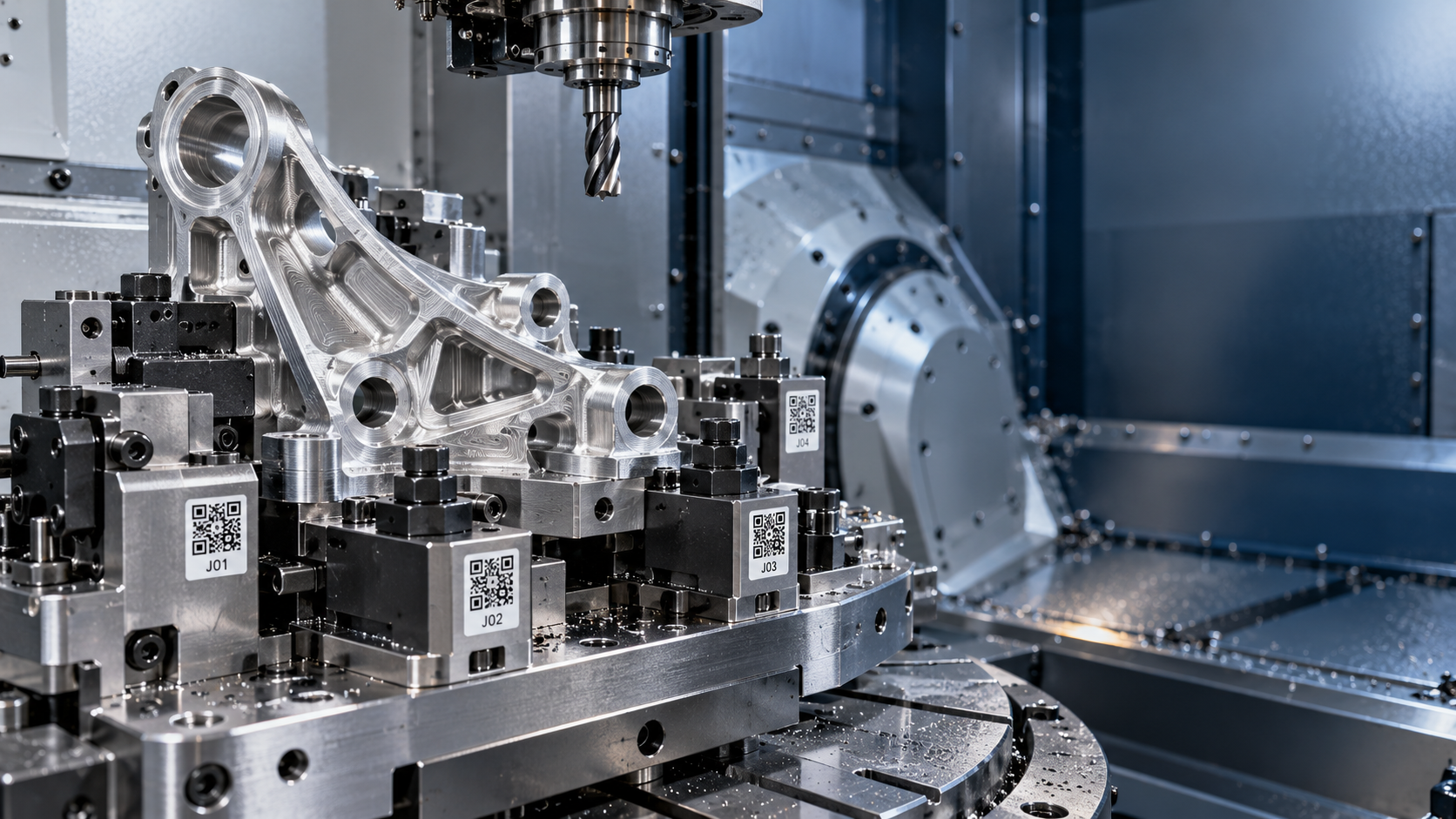
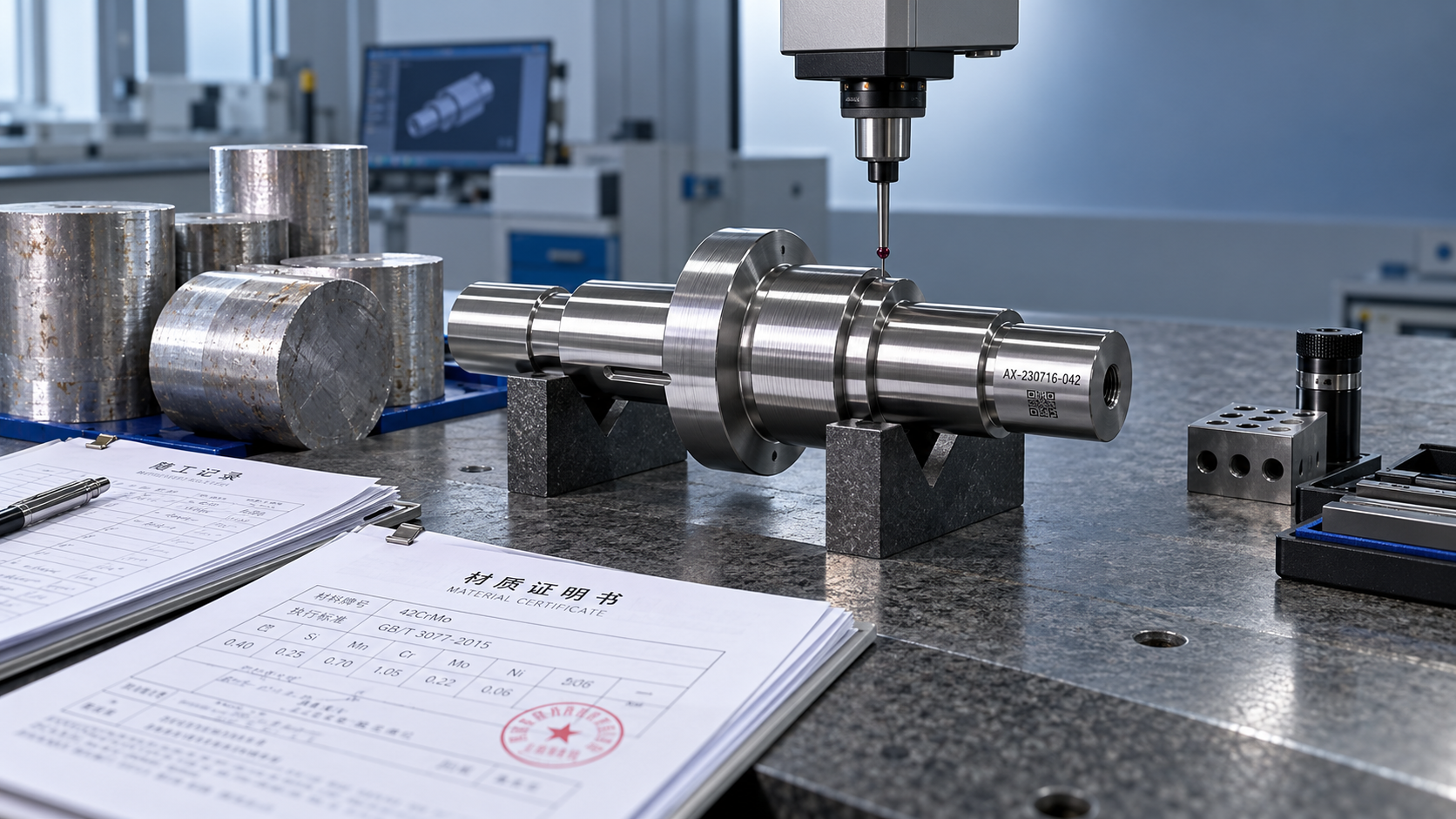

Aris Katos
Future of Carbide Coatings
15+ years in precision manufacturing systems. Specialized in high-speed milling and aerospace grade alloy processing.
▶
Choosing Automated Machine Tools for High-Mix, Low-Volume ProductionMachine Tool Industry Editorial Team▶
Choosing Industrial Robots for Warehouse Picking and PalletizingMachine Tool Industry Editorial Team▶
Digital Manufacturing for Smart Factories: Connecting Legacy Machines to MESMachine Tool Industry Editorial Team▶
Selecting Machine Tools for Automotive Parts: Accuracy, Throughput, and AutomationMachine Tool Industry Editorial Team▶
Smart Manufacturing for Small Businesses: Where Automation Delivers the Fastest ROIMachine Tool Industry Editorial Team
▶
Mastering 5-Axis Workholding Strategies
Join our technical panel on Nov 15th to learn about reducing vibrations in thin-wall components.

Providing you with integrated sanding solutions
Before-sales and after-sales services
Comprehensive technical support