• Global CNC market projected to reach $128B by 2028 • New EU trade regulations for precision tooling components • Aerospace deman
NYSE: CNC +1.2%LME: STEEL -0.4%

Automated Production Line Planning: How to Balance Takt Time, Labor, and Floor Space
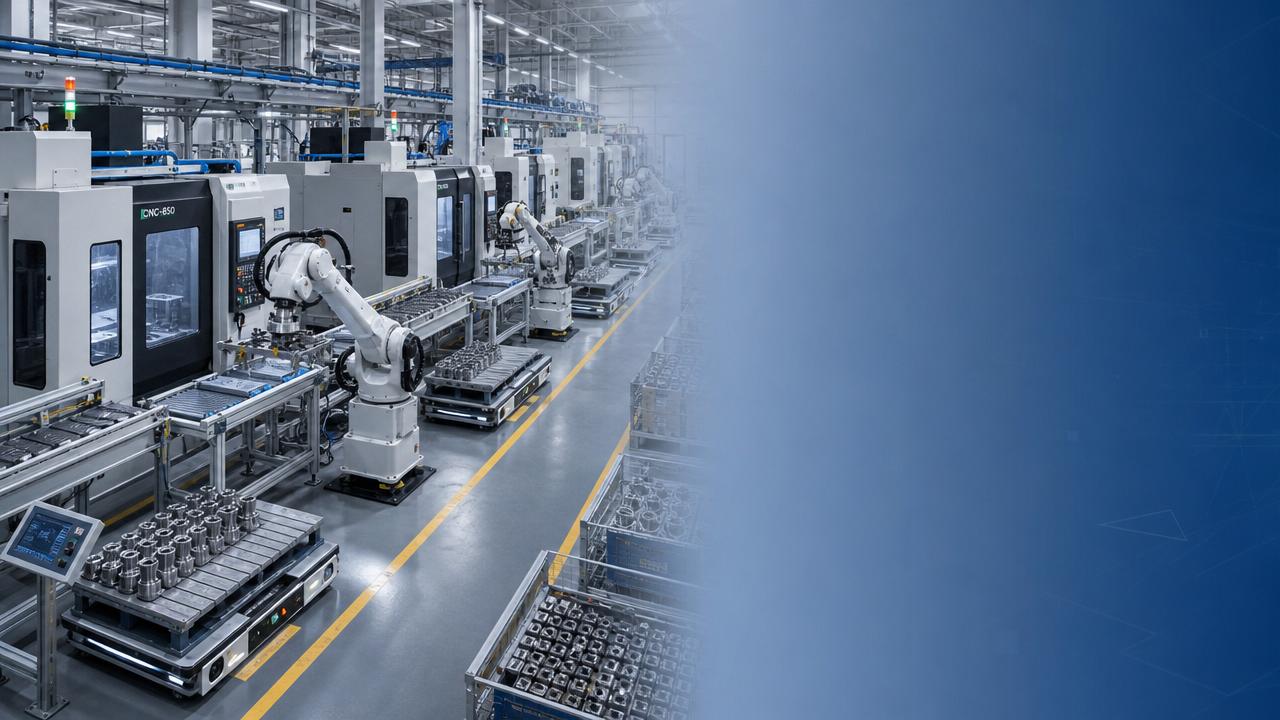
Automated Production Line planning is no longer a narrow layout exercise. In precision manufacturing, it shapes output stability, capital efficiency, and delivery reliability.
That is especially true in CNC machining, where cycle times, part accuracy, tool changes, and material flow must work together. A faster machine alone does not create a better line.
The real challenge is balance. Takt time defines the rhythm, labor determines responsiveness, and floor space sets physical limits on what the system can support.
When these factors are aligned, an Automated Production Line can deliver higher throughput without creating hidden bottlenecks, wasted motion, or expensive underused assets.
Why line planning matters more in today’s manufacturing environment
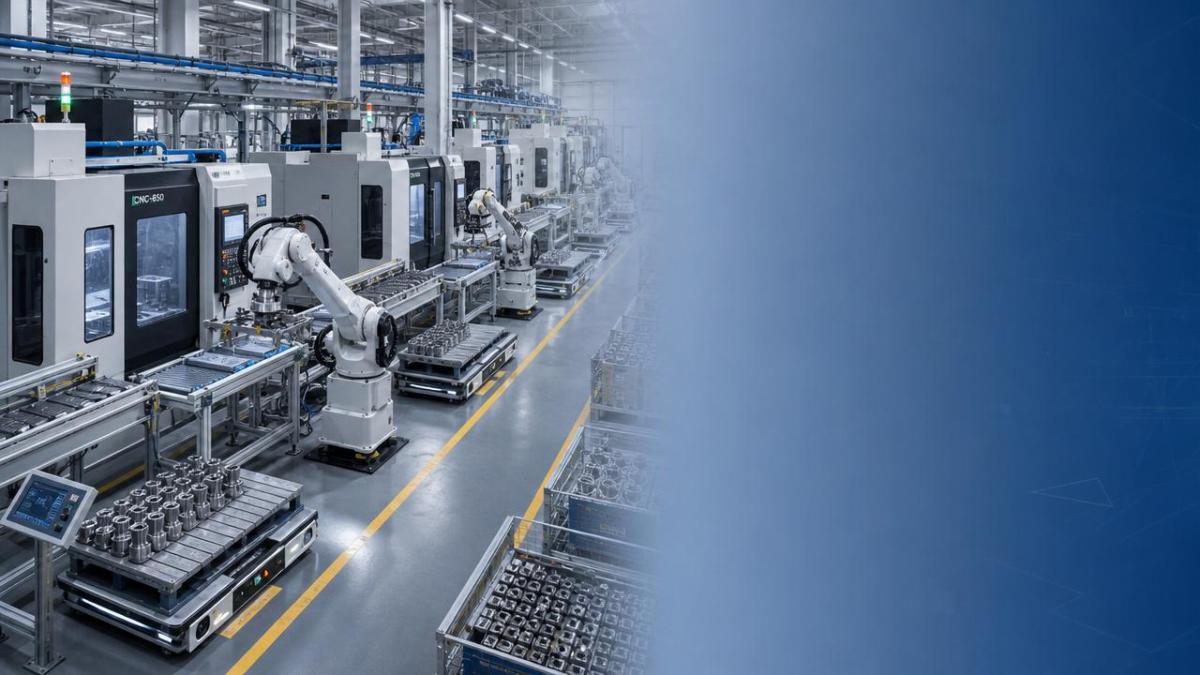
Global manufacturing is moving toward tighter tolerances, shorter lead times, and more digital control. That shift is visible across automotive, aerospace, energy equipment, and electronics production.
CNC lathes, machining centers, multi-axis systems, robots, and automated assembly units now operate as connected production assets rather than isolated machines.
In this context, Automated Production Line decisions influence much more than output volume. They affect scheduling flexibility, maintenance access, changeover speed, traceability, and expansion potential.
Industrial clusters in China, Germany, Japan, and South Korea have reinforced this trend. Competition increasingly depends on how efficiently production resources are arranged and coordinated.
A line that looks efficient on paper can still struggle in practice if operators walk too far, buffers are too small, or machine utilization is pushed beyond a realistic level.
The three variables that define a workable system
Most Automated Production Line plans succeed or fail around three linked variables: takt time, labor, and floor space. None should be optimized in isolation.
Takt time sets the pace
Takt time is the production pace required to meet customer demand. It is not the same as machine cycle time, and that distinction matters.
If takt time is 60 seconds, every station does not need a 60-second cycle. The line needs a flow structure that consistently supports that output rhythm.
In CNC environments, actual timing also includes loading, unloading, inspection, tool offset confirmation, pallet transfer, and occasional recovery tasks.
Labor adds flexibility and risk control
Even highly automated systems still depend on labor. People handle exceptions, monitor quality, replenish tools, manage setups, and respond to disturbances that software cannot fully absorb.
Too little labor creates idle machines during minor disruptions. Too much labor raises cost and often hides layout inefficiencies that should be fixed at the source.
Floor space is a strategic constraint
Floor space is more than a real estate issue. It affects logistics routes, safety clearance, buffer positioning, utility connections, and room for future process additions.
A compact Automated Production Line may reduce travel distance, but excessive compression can limit maintenance access and create congestion around loading zones.
Where imbalance usually appears first
In real projects, imbalance rarely starts with one dramatic failure. It usually appears as small losses that accumulate across shifts.
- A machining center finishes early, but parts wait for transfer.
- An operator serves too many stations and misses a quality check window.
- A robot cell meets cycle targets, yet upstream buffers overflow.
- A narrow aisle slows forklift movement and delays material replenishment.
- Maintenance requires line stoppage because access space was underestimated.
These issues are common in lines producing shaft parts, discs, housings, and precision structural components, where process variation is small but operational sensitivity is high.
The more integrated the system becomes, the more important it is to test interactions instead of reviewing machines one by one.
A practical way to balance takt time, labor, and space
A useful planning method starts with demand, then maps process reality, and only after that locks the layout. Reversing this order often creates expensive redesign work.
Start from demand and part mix
The target output should reflect actual product mix, not a single ideal part. Different materials, geometries, and tolerances change cutting time and handling requirements.
This is especially relevant for flexible CNC lines serving multiple variants on shared equipment.
Measure full-cycle work content
Cycle analysis should include machine time, manual touches, inspection points, automatic transfers, buffer waiting, and restart procedures after minor stops.
An Automated Production Line may appear balanced if only spindle time is measured. That view is incomplete.
Assign labor by intervention frequency
Labor planning works better when based on how often intervention is needed, not only on how many machines are present.
A stable cell with pallet changers may need limited attention. A line with frequent gauging, chip control, or tool replacement needs closer support.
Design space for flow, not for appearance
The best layouts reduce crossings between people, material, tools, scrap, and maintenance activity. Clean visual symmetry is helpful, but functional flow matters more.
How this applies across manufacturing scenarios
Different sectors use Automated Production Line planning in different ways, even when the balancing logic stays the same.
Automotive and high-volume machining
Here, takt stability often takes priority. The line must protect throughput while controlling quality drift across long runs.
Aerospace and complex precision parts
Cycle times are longer and part value is higher. Labor and inspection integration become more important than extreme layout density.
Energy equipment and large components
Space planning becomes critical because part handling, fixture storage, and crane paths shape the entire workflow.
Electronics and mixed-model production
Flexibility matters more. The Automated Production Line must support quick model changes without excessive manual reset time.
Signals that a line design is ready for investment review
Before final approval, several signals indicate whether the line concept is mature enough for deeper evaluation.
- The target takt time includes realistic downtime and quality checks.
- Manual work content is visible at station level, not hidden in assumptions.
- Material flow and maintenance routes are tested in the layout.
- Buffer logic is defined for both normal flow and disruption recovery.
- The design allows future process upgrades or part family expansion.
These checkpoints matter because machine tool projects increasingly sit inside broader digital manufacturing strategies, not standalone equipment purchases.
That makes line planning a business decision as much as an engineering decision.
Turning planning into the next decision
A strong Automated Production Line plan does not chase maximum automation at any cost. It matches production rhythm, human support, and available space to the real process.
For CNC machining and precision manufacturing, that balance supports consistent quality, smoother scheduling, and more reliable capacity planning.
The next useful step is to compare current demand, station work content, and layout constraints on one decision map. Gaps usually become visible quickly.
From there, it becomes easier to judge whether the better move is more automation, a revised labor model, a different buffer strategy, or a smarter use of floor space.
Recommended for You
![]() FANUC Links FIELD System Data with Copilot to Advance Shop-Floor Data UseCNC Machining Technology Center
FANUC Links FIELD System Data with Copilot to Advance Shop-Floor Data UseCNC Machining Technology Center Smart Manufacturing for Aerospace: Building Traceability Across CNC OperationsCNC Machining Technology Center
![]() Mitsubishi Electric Announces Physical AI System Linking Humanoid Robots and CNC MachinesMachine Tool Industry Editorial Team
Mitsubishi Electric Announces Physical AI System Linking Humanoid Robots and CNC MachinesMachine Tool Industry Editorial Team Precision Machining for Defense: Supplier Quality and Traceability ChecksManufacturing Market Research Center
![]() Nidec Machine Tool Launches MVR-5X Five-Axis Gantry MachineMachine Tool Industry Editorial Team
Nidec Machine Tool Launches MVR-5X Five-Axis Gantry MachineMachine Tool Industry Editorial Team Choosing a Precision Disc Parts Manufacturer in China: Tolerances and Quality ChecksManufacturing Market Research Center


Aris Katos
Future of Carbide Coatings
15+ years in precision manufacturing systems. Specialized in high-speed milling and aerospace grade alloy processing.
▶
Choosing Automated Machine Tools for High-Mix, Low-Volume ProductionMachine Tool Industry Editorial Team▶
Choosing Industrial Robots for Warehouse Picking and PalletizingMachine Tool Industry Editorial Team▶
Digital Manufacturing for Smart Factories: Connecting Legacy Machines to MESMachine Tool Industry Editorial Team▶
Selecting Machine Tools for Automotive Parts: Accuracy, Throughput, and AutomationMachine Tool Industry Editorial Team▶
Smart Manufacturing for Small Businesses: Where Automation Delivers the Fastest ROIMachine Tool Industry Editorial Team
▶
Mastering 5-Axis Workholding Strategies
Join our technical panel on Nov 15th to learn about reducing vibrations in thin-wall components.

Providing you with integrated sanding solutions
Before-sales and after-sales services
Comprehensive technical support