• Global CNC market projected to reach $128B by 2028 • New EU trade regulations for precision tooling components • Aerospace deman
NYSE: CNC +1.2%LME: STEEL -0.4%

How to Choose a Machine Tool for Mold Making: Key Specs for Accuracy and Surface Finish
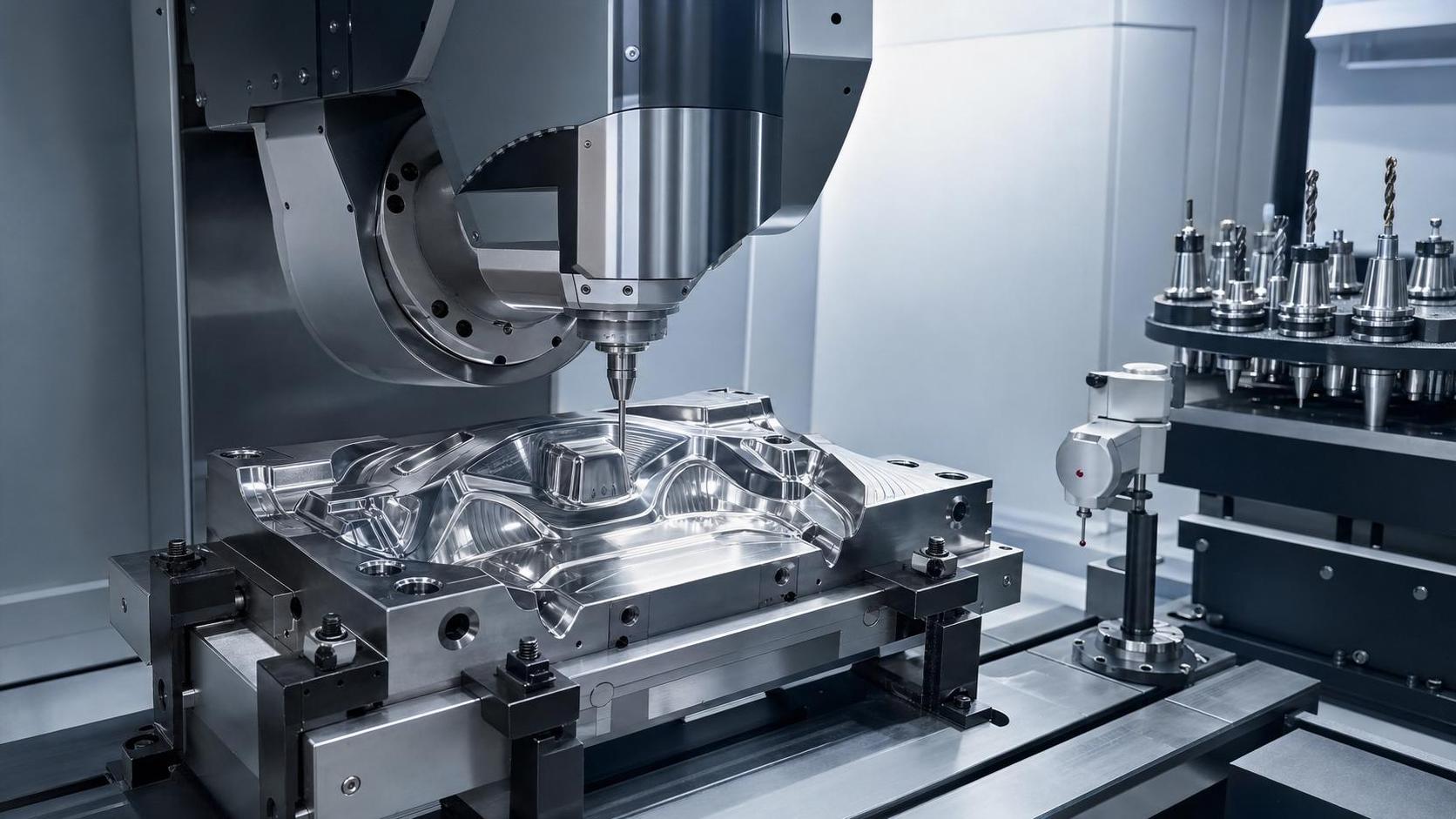
Choosing a machine tool for mold making is rarely a simple equipment decision. It sets the ceiling for dimensional control, surface quality, cycle stability, and the amount of manual polishing required after machining.
That matters even more now, because mold production sits inside a broader manufacturing shift toward tighter tolerances, automated workflows, and digitally connected production systems.
In sectors such as automotive, electronics, energy equipment, and aerospace supply chains, a capable machine tool for mold making supports not only part accuracy, but also repeatable process performance across batches.
The practical question is not just which machine looks advanced on paper. The real task is matching key specifications to mold geometry, material behavior, finish targets, and long-term process consistency.
What the right machine must actually deliver
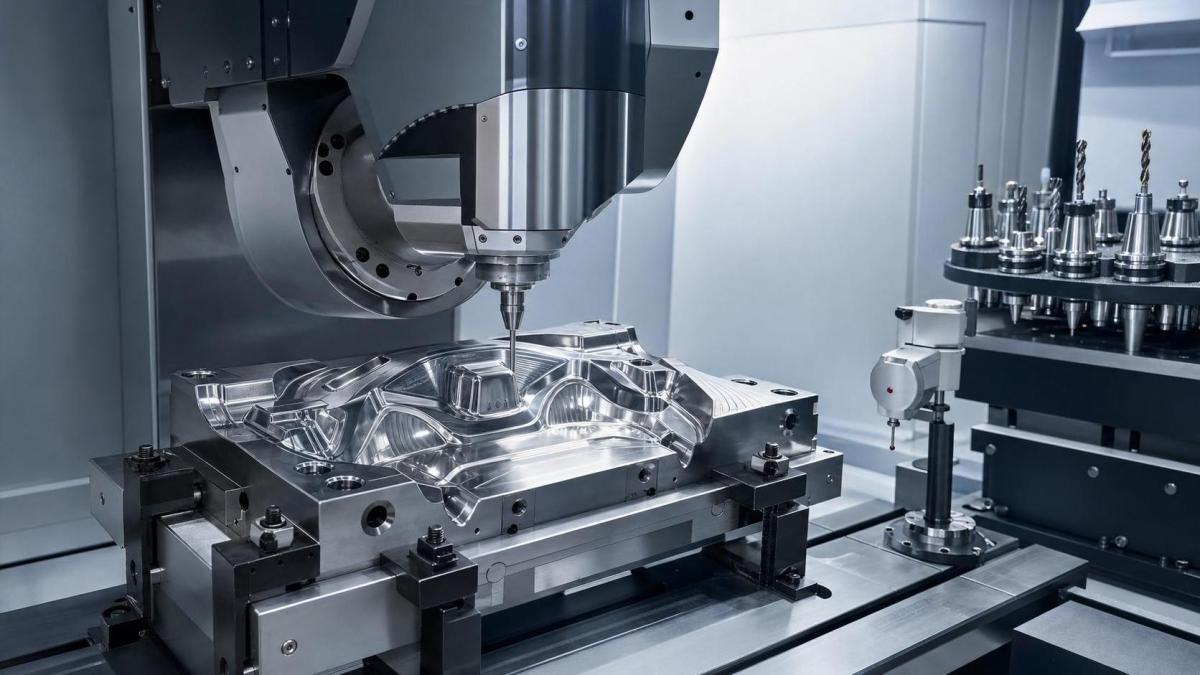
A machine tool for mold making must do more than remove material quickly. It needs to hold geometry over long cutting cycles while preserving surface integrity on cavities, cores, ribs, and fine contour details.
For mold work, accuracy has two layers. One is geometric accuracy, including size, position, roundness, and contour fidelity. The other is process accuracy, meaning the machine repeats the same result under real shop conditions.
Surface finish is also broader than roughness values alone. A good result includes stable cutter marks, low vibration traces, minimal heat distortion, and less bench work before final assembly or polishing.
This is why high-speed machining centers, precision three-axis platforms, and five-axis systems are evaluated differently for mold work than for general prismatic components.
Why this topic is gaining attention across manufacturing
Global machine tool development is moving toward higher precision, greater automation, and digital integration. Mold making is directly affected, because tooling quality influences downstream production efficiency and part consistency.
A weak machine choice often creates hidden costs. These appear as longer finishing time, unstable dimensional results, more fitting work, shorter tool life, and slower release of production molds.
At the same time, international competition has raised expectations. Suppliers from China, Germany, Japan, and South Korea continue to improve spindle technology, control systems, thermal compensation, and automation compatibility.
For operations following smart manufacturing strategies, the machine tool for mold making is no longer isolated equipment. It becomes part of a connected process that includes CAM, tooling, probing, fixture design, and production traceability.
Specifications that influence accuracy and finish most
Some specifications matter more than others in mold machining. Sales sheets often emphasize speed, but mold quality usually depends on a more balanced combination of motion control, stiffness, and thermal behavior.
Spindle speed and spindle character
High spindle speed supports fine step-over finishing, especially in hardened steel and complex freeform surfaces. But speed alone does not guarantee a better machine tool for mold making.
More important is whether the spindle remains stable at operating speed. Runout, bearing quality, vibration control, and power delivery across the speed range strongly affect finish quality and tool wear.
Rigidity of structure and feed system
Machine base design, column stiffness, guideway quality, ballscrew or linear drive behavior, and damping capacity all shape cutting stability. Small deflections can become visible surface errors on fine cavity work.
A rigid machine is especially valuable when roughing and finishing occur on the same platform. It reduces chatter risk and protects surface quality during changes in tool engagement.
Positioning, repeatability, and contouring
Catalog positioning accuracy is useful, but repeatability often tells more about daily production confidence. Mold work depends on consistent motion over complex toolpaths, not just one isolated axis check.
Look closely at interpolation smoothness, servo response, look-ahead control, and contour error management. These factors determine whether curved surfaces appear clean or faceted.
Thermal stability
Thermal growth remains one of the most underestimated issues in selecting a machine tool for mold making. Long machining cycles generate heat in spindles, drives, coolant systems, and surrounding environments.
Machines with better thermal design, compensation logic, and stable structural layout maintain size and alignment more reliably through extended machining programs.
Matching machine configuration to mold type
Not every mold requires the same machine architecture. A practical comparison should begin with the mold family, material state, cavity depth, surface target, and the amount of multi-face access needed.
This is where selection becomes more strategic. The best machine tool for mold making is not always the highest specification model, but the one that fits the dominant job mix without creating unnecessary complexity.
Details that often separate strong options from average ones
Several secondary factors can decide whether a machine performs well in actual mold production. They may look minor at first, yet they strongly influence reliability, setup time, and finish consistency.
- Toolholder and interface quality affect runout, balance, and finish at high spindle speed.
- Probing systems improve datum control, in-process verification, and correction before errors grow.
- Coolant strategy matters, especially when balancing chip evacuation and thermal control.
- Control software functions influence smoothing, acceleration handling, and CAM program execution.
- Automation readiness becomes useful when electrode handling, pallet change, or unattended shifts are planned.
In practical use, these points often explain why two similar machines produce very different polishing hours and dimensional correction workloads.
How to evaluate a machine beyond the brochure
A sound assessment should move from specification review to process validation. Mold making exposes machine behavior over long cycle times, varied toolpaths, and demanding surface transitions.
It helps to compare candidate machines using representative parts, similar material hardness, and realistic cutter assemblies. A test that ignores actual mold geometry may produce misleading conclusions.
Useful evaluation questions
- Can the machine hold accuracy after roughing heat buildup and then move directly into finishing?
- How much hand polishing is still required after a typical finishing program?
- Does performance stay stable across hardened steel, pre-hardened steel, and copper electrode work?
- How well does the control handle dense toolpaths from modern CAM systems?
- What maintenance pattern is expected for spindle, guideways, and positioning systems?
These questions keep the discussion focused on output quality rather than only machine headline data.
A broader view of value in mold machining
The value of a machine tool for mold making extends beyond the mold shop. Better cavity quality can shorten sampling cycles, improve molded part consistency, and reduce fitting delays in production launch.
This is especially relevant in industries where product updates move quickly. Electronics housings, automotive interior parts, and precision industrial components all depend on tooling that reaches target quality without repeated correction.
When aligned with digital manufacturing goals, the machine also supports better data capture, process repeatability, and integration with automated production planning.
What to prioritize next
A useful next step is to rank requirements in order: mold size range, material condition, finish expectation, tolerance risk, and preferred level of automation. That ranking usually narrows the machine field quickly.
After that, compare each machine tool for mold making against real process evidence, not only specification claims. Focus on thermal behavior, contour quality, rigidity under load, and the polishing hours left after machining.
In a market shaped by precision, automation, and global competition, the strongest choice is the one that keeps mold quality predictable from the first cavity to repeated production runs.
Recommended for You
 How to Select a CNC Lathe for Small Parts Without Sacrificing Accuracy or Cycle TimeCNC Machining Technology Center
 How to Select a Slant Bed Lathe for High-Precision Shaft and Chuck WorkCNC Machining Technology Center
 Smart Manufacturing for Small Businesses: Where Automation Delivers the Fastest ROIMachine Tool Industry Editorial Team
 How to Specify a CNC Lathe for High-Volume Automotive Shaft ProductionCNC Machining Technology Center
 How Automated Precision Machining Maintains Tolerance in High-Mix ProductionCNC Machining Technology Center
 How to Evaluate a Machine Tool Factory Before Sourcing CNC EquipmentGlobal Machine Tool Trade Research Center


Aris Katos
Future of Carbide Coatings
15+ years in precision manufacturing systems. Specialized in high-speed milling and aerospace grade alloy processing.
▶
How to Compare Machine Tools for Small-Batch vs Mass Production JobsMachine Tool Industry Editorial Team▶
Multi-Axis Machine Tool Selection Guide: Travel, Spindle, Accuracy, and Control SystemMachine Tool Industry Editorial Team▶
How to Evaluate Precision Equipment for Tight-Tolerance Parts and Stable OutputMachine Tool Industry Editorial Team▶
KATS Tightens CNC Grinder Import Test RulesMachine Tool Industry Editorial Team▶
Precision Lathe Types Compared: Swiss-Type, Slant Bed, and Flat Bed DifferencesMachine Tool Industry Editorial Team
Mastering 5-Axis Workholding Strategies
Join our technical panel on Nov 15th to learn about reducing vibrations in thin-wall components.

Providing you with integrated sanding solutions
Before-sales and after-sales services
Comprehensive technical support