• Global CNC market projected to reach $128B by 2028 • New EU trade regulations for precision tooling components • Aerospace deman
NYSE: CNC +1.2%LME: STEEL -0.4%

Is a Heavy-Duty Machining Center Best for Mold Making
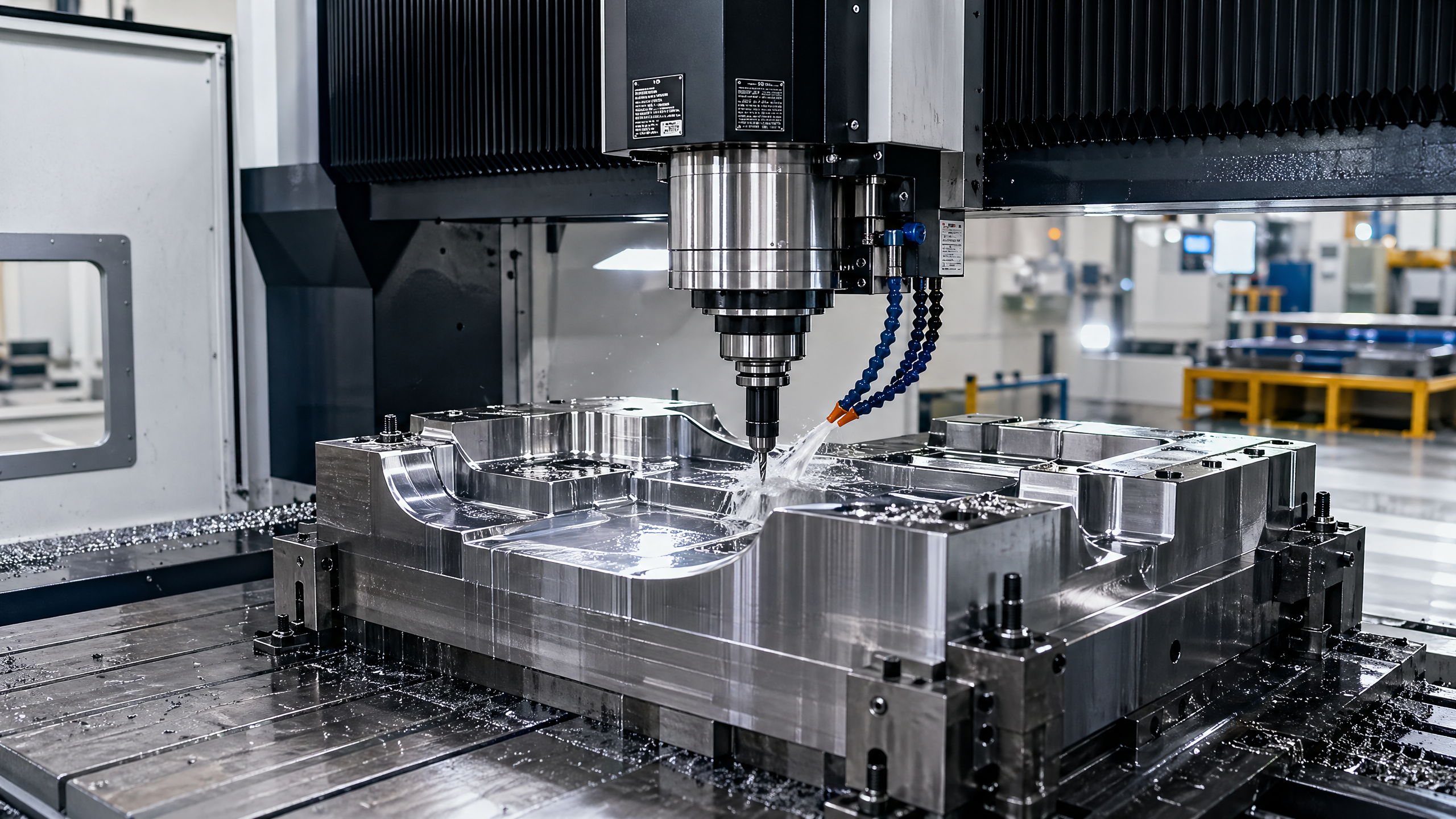
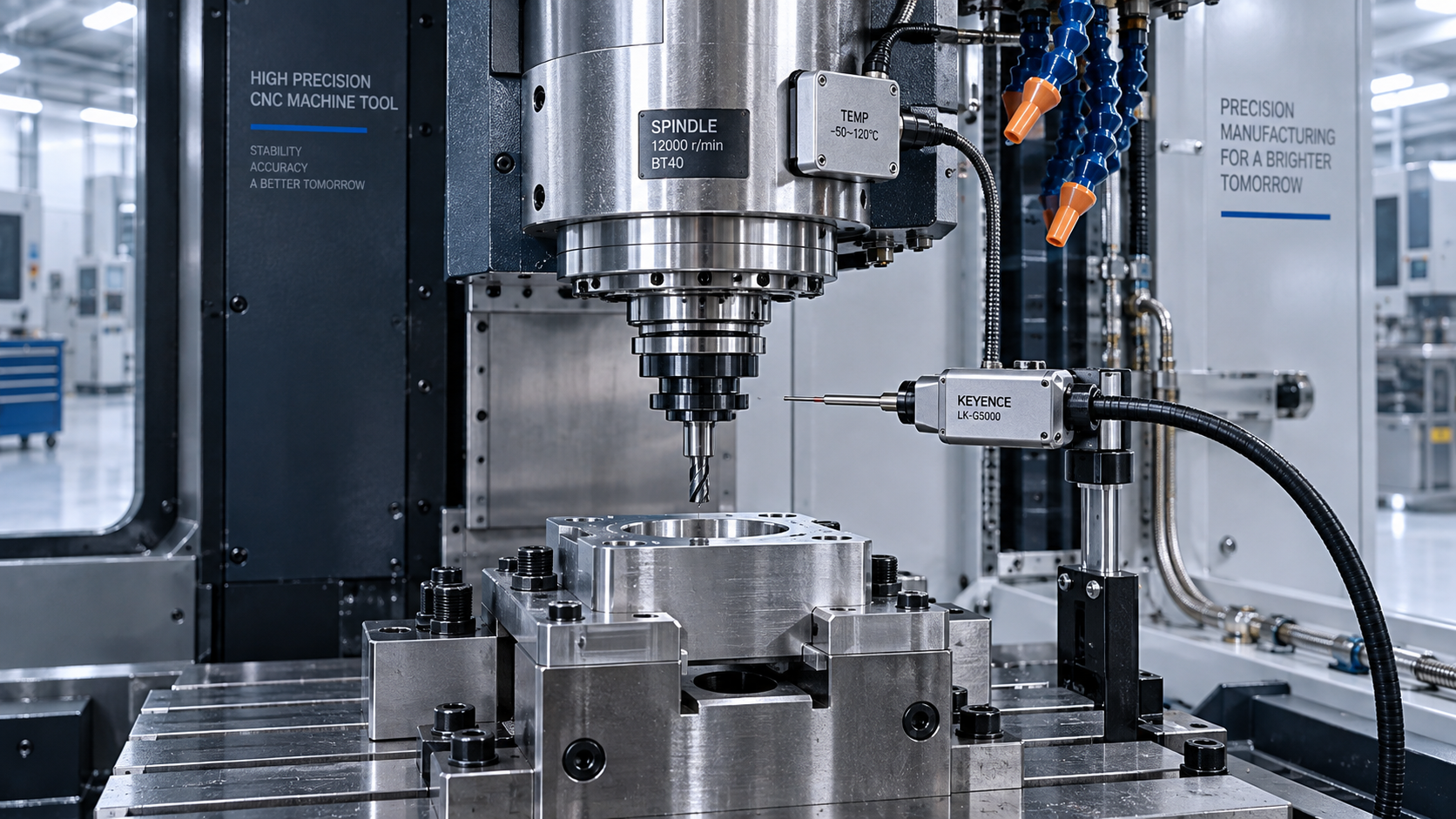
For mold makers evaluating whether a Heavy-duty Machining Center for mold making is the right investment, the answer depends on precision, rigidity, and production goals. Compared with a compact machine tool or portable machine tool, a heavy duty machine tool often delivers more stable performance for precision CNC manufacturing, multi-axis CNC manufacturing, and high precision machine tool applications, especially where complex molds, tighter tolerances, and efficient machining are critical.
That said, “best” does not always mean “largest” or “most expensive.” In mold making, the right machining center must match part size, material hardness, required surface finish, cycle time, and long-term production strategy. For operators, the concern is process stability and ease of setup. For procurement teams, the focus is total cost of ownership, delivery reliability, and future capacity. For business evaluators, the machine must support margin, throughput, and customer quality expectations.
This article examines when a heavy-duty machining center makes sense for mold manufacturing, when it may be excessive, and which technical and commercial criteria should guide the decision. It is written for researchers, machine users, buyers, and decision-makers who need practical guidance rather than generic claims.
What a Heavy-Duty Machining Center Really Means in Mold Manufacturing
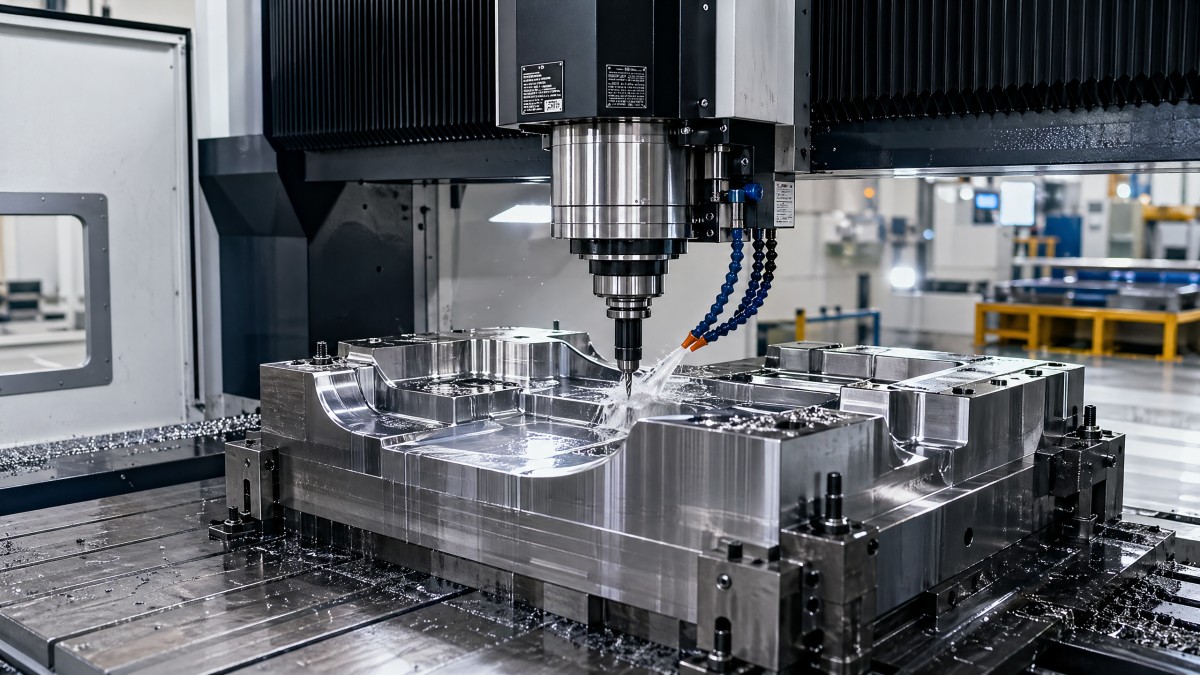
In the CNC machine tool industry, a heavy-duty machining center is typically defined less by marketing language and more by structural capability. For mold making, this usually means a machine with higher spindle stability, stronger column and bed rigidity, greater load capacity, and more consistent thermal behavior over long machining cycles of 6–20 hours. These features matter when machining large cavity blocks, hardened steel inserts, or deep rib structures that demand accuracy over time.
A standard vertical machining center may perform well for aluminum molds, small inserts, or short-run jobs. However, once mold sizes move into the 800 mm to 2,000 mm range, or when workpiece weights exceed 1,500 kg, machine deflection, vibration, and thermal drift become more important. In those cases, a heavy duty machine tool can reduce chatter, improve repeatability, and support more aggressive roughing without sacrificing finishing quality.
For high precision machine tool applications, rigidity directly affects the relationship between cutting force and dimensional control. In precision CNC manufacturing, even a small loss of structural stiffness can lead to tolerance drift in the ±0.01 mm to ±0.03 mm range, especially during multi-face machining. That is why many mold shops producing automotive, appliance, and industrial tooling compare not only spindle speed, but also machine weight, guideway design, and axis acceleration.
Core characteristics buyers should verify
Before classifying any machine as suitable for heavy-duty mold making, it is useful to review a practical checklist. Technical brochures often highlight horsepower, but mold performance depends on a broader configuration package.
- Machine structure: cast iron bed, reinforced column, and wide guideway span for vibration resistance.
- Spindle range: roughing often benefits from strong low-end torque, while finishing may still require 8,000–15,000 rpm depending on material and tool size.
- Axis travel and table load: the machine should support both current mold dimensions and 12–24 months of projected orders.
- Thermal management: coolant circulation, spindle cooling, and compensation logic matter during long unattended cycles.
- Control capability: mold shops increasingly need 3-axis plus 4th/5th-axis options for multi-axis CNC manufacturing.
The table below shows how a heavy-duty machining center typically differs from a compact machine tool in mold production conditions.
The key conclusion is simple: a heavy-duty machining center is not automatically the best machine for every mold shop, but it becomes highly relevant when mold size, material, uptime requirements, and tolerance consistency start to exceed the comfort zone of lighter platforms.
When a Heavy-Duty Machine Tool Is the Better Choice
Heavy-duty equipment is often justified in mold making when the shop must handle larger steel blocks, deep cavities, hard materials, and frequent repeat work. Typical examples include automotive bumper molds, large appliance molds, die-casting tooling, and structural tooling for industrial components. In these cases, roughing volume may be high, and stable semi-finishing and finishing become essential to avoid rework that can consume 10%–20% of total job time.
Another common trigger is material hardness. If the shop regularly cuts pre-hardened steels in the 30–40 HRC range or hardened inserts above 45 HRC, a heavier machine structure usually helps maintain tool life and geometry control. The goal is not only to remove material faster, but to do so with less vibration. Reduced chatter often improves both cutter longevity and surface consistency, especially in rib, corner, and pocket features.
Multi-axis CNC manufacturing is also changing the decision. Shops moving from 3-axis to 4-axis or 5-axis mold machining often discover that high dynamic motion alone is not enough. When the workpiece is heavy and the toolpath includes steep-wall machining or deep contouring, a more rigid base platform provides a better foundation for positional accuracy and collision-free access.
Production scenarios where the investment is easier to justify
A heavy-duty machining center is more likely to create value under the following operating conditions:
- Monthly mold throughput exceeds 8–12 medium or large tools, making spindle utilization a direct profit driver.
- Average part weight is above 1 ton, creating setup and stability challenges for lighter machines.
- Required tolerance bands are consistently within ±0.02 mm on critical surfaces.
- Roughing and finishing are both performed in-house, reducing the benefit of splitting work across multiple smaller machines.
- Customer delivery windows are tight, often 2–4 weeks, leaving little margin for remachining.
Where smaller machines still make sense
A compact machine tool or portable machine tool can still be the smarter option for prototype tooling, mold repair, graphite electrode work, and small cavity inserts. If 70% of a shop’s orders are below 500 mm and made from aluminum or P20-class steel, a heavy-duty platform may remain underutilized. In that situation, the machine’s higher capital cost can slow return on investment.
The practical question is not whether heavy-duty is better in theory, but whether the shop’s order mix supports enough high-load machining hours per month. For many B2B buyers, the threshold is whether the machine can maintain productive use for at least 60%–75% of available spindle time within the first year.
Technical Selection Criteria for Precision, Rigidity, and Long-Term Value
When comparing machines for mold making, procurement decisions should move beyond nameplate power. The best choice comes from matching process requirements to machine structure, spindle behavior, control functions, and service support. For precision CNC manufacturing, the right combination often matters more than any single specification.
Start with mold size and weight. A machine with 20%–30% extra table capacity over the largest routine workpiece usually offers a safer operating margin than one selected at the exact upper limit. Likewise, axis travel should allow not only part placement, but also fixture clearance, tool access, and future part growth. Shops that buy too close to current minimum requirements often face constraints within 12–18 months.
Spindle selection should reflect the real mix of roughing and finishing. A mold shop cutting large steel blocks may prioritize torque and thermal stability, while a shop focused on fine surface finishing in smaller molds may emphasize spindle speed and motion smoothness. In many cases, the best machine for mold making is one that balances both, rather than maximizing one extreme.
Selection matrix for buyers and technical teams
The following table can be used during supplier comparison, especially when evaluating a heavy duty machine tool for medium-to-large mold production.
From a commercial standpoint, buyers should also assess installation lead time, local service response, and spare parts access. A machine that looks attractive on paper can become expensive if key parts take 4–8 weeks to arrive. For mold makers working to customer milestones, downtime risk can outweigh small differences in purchase price.
Four procurement questions worth asking suppliers
- What test-cut data can be shared for steel mold materials and not only general-purpose machining?
- What is the recommended preventive maintenance interval: weekly, monthly, and every 2,000 operating hours?
- How quickly can service engineers respond on-site, and what is the average spare part fulfillment window?
- Can the control system support future automation, probing, and 4th/5th-axis upgrades without major redesign?
These questions help separate a general machining platform from a machine that is truly practical for mold manufacturing and long-term capacity expansion.
Cost, ROI, and Operational Trade-Offs Buyers Should Not Ignore
A heavy-duty machining center usually requires higher initial investment, greater floor space, stronger foundation planning, and more disciplined maintenance. For that reason, business evaluators should compare not only machine price, but also setup labor, tool consumption, workpiece handling, scrap exposure, and cycle stability. In mold making, one of the biggest hidden costs is not the machine itself, but rework caused by instability or inaccurate process repeatability.
If a heavier platform reduces roughing time by 15% and cuts rework by even 5% on high-value molds, the financial benefit can become meaningful over 12 months. On the other hand, if the machine is used only for occasional large jobs while most work remains small and fast-turnaround, utilization may stay too low to support the investment. Buyers therefore need a realistic production model rather than a best-case scenario.
For users and operators, the operational trade-off is also important. Heavier machines often improve process security, but they may require more planning in fixture handling, crane support, and job scheduling. Shops without stable material flow or clear process routing may not fully capture the machine’s advantages.
A practical ROI framework
Before approval, many purchasing teams benefit from a 5-point review model:
- Estimate monthly spindle utilization for heavy mold work over the first 6–12 months.
- Calculate current rework hours caused by chatter, tolerance drift, or unstable finishing.
- Compare expected cycle time savings across 3–5 typical mold families.
- Include operator training, tooling changes, and installation requirements in total project cost.
- Assess whether the machine supports future smart manufacturing steps such as probing, automation, or MES integration.
The table below summarizes common cost-benefit considerations.
In many cases, the best buying decision comes from balancing technical capability with actual order structure. A machine that is slightly less aggressive but consistently well utilized can outperform a larger machine that sits idle for long periods.
Implementation, Maintenance, and Common Mistakes After Purchase
Selecting the right machine is only part of the result. Mold shops often lose performance after installation because they underestimate setup discipline, tooling strategy, and preventive maintenance. A heavy-duty machining center performs best when machine capability, CAM strategy, fixtures, cutting tools, and inspection routines are aligned from the start.
Implementation usually works best in 3 stages. First comes site preparation, including foundation review, power supply, coolant management, and material handling. Second comes process validation, where 2–3 representative mold jobs are used to establish feeds, speeds, toolpaths, and inspection checkpoints. Third comes operational stabilization, typically over the first 30–90 days, when operator habits and maintenance practices are standardized.
For operators, daily routines matter. Warm-up cycles, spindle condition checks, guideway lubrication, coolant concentration control, and chip evacuation all affect heavy-load mold machining. Even a rigid high precision machine tool can lose performance if thermal conditions and cutting parameters are not managed consistently.
Common mistakes to avoid
- Buying based on spindle power alone while ignoring machine weight, damping, and thermal compensation.
- Using the same tooling strategy from a lighter machine without adjusting for higher cutting force potential.
- Skipping fixture redesign, which can create instability even on a rigid platform.
- Undertraining operators on multi-axis CNC manufacturing functions, probing, and offset management.
- Delaying preventive maintenance until positioning accuracy or surface finish begins to drift.
FAQ for mold shops and procurement teams
How do I know if my mold shop is too small for a heavy-duty machining center?
If most jobs are under 500 mm, materials are relatively soft, and monthly utilization would likely remain below 50%–60%, a standard machine may be more economical. Review your last 6–12 months of job history before making the decision.
Is a heavy-duty machine always better for precision?
Not automatically. Precision depends on machine condition, thermal control, programming, tooling, and inspection. A heavy-duty machine improves the foundation for stability, but process discipline still determines results.
What delivery and ramp-up timeline should buyers expect?
For general industry projects, installation and commissioning can often take several days to 2 weeks after arrival, while process stabilization may require another 2–6 weeks depending on part complexity, operator experience, and automation level.
Which industries benefit most from this kind of machine in mold making?
Automotive, appliance, energy equipment, electronics tooling, and industrial component manufacturing often benefit most, especially where larger molds, repeat orders, and high precision machine tool performance are required.
A heavy-duty machining center can be the best choice for mold making when the application demands large-part stability, strong roughing capability, long-cycle precision, and room for future automation. It is particularly valuable for mold manufacturers serving automotive, appliance, industrial, and other precision manufacturing sectors where tolerance control, rigidity, and repeatability directly affect delivery and profit.
The right decision should be based on workpiece range, material hardness, spindle utilization, process complexity, and support readiness rather than machine size alone. If you are comparing heavy duty machine tool options for precision CNC manufacturing or planning a transition toward multi-axis CNC manufacturing, now is the time to review your real production data and selection criteria carefully.
To explore a machine configuration that fits your mold size, tolerance targets, and production goals, contact us today to get a tailored solution, discuss technical details, and learn more about practical CNC machining options for your business.
PREVIOUS ARTICLE
Recommended for You
 Choosing Industrial Robots for Warehouse Picking and PalletizingMachine Tool Industry Editorial Team
 How to Cut CNC Machining Energy Use per Part Without Longer Cycle TimesCNC Machining Technology Center
 How thermal drift affects accuracy in high-precision manufacturingCNC Machining Technology Center
 How to verify spare part compatibility for Yunnan CY Group lathesMachine Tool Industry Editorial Team
 Digital Manufacturing for Smart Factories: Connecting Legacy Machines to MESMachine Tool Industry Editorial Team
 How to Select a CNC Metal Lathe for Tight-Tolerance Shaft and Sleeve PartsCNC Machining Technology Center

Aris Katos
Future of Carbide Coatings
15+ years in precision manufacturing systems. Specialized in high-speed milling and aerospace grade alloy processing.
▶
How to Select a Machine Tool for Aerospace Parts with Tight Tolerances?Machine Tool Industry Editorial Team▶
How to Compare Machine Tools for Small-Batch vs Mass Production JobsMachine Tool Industry Editorial Team▶
Multi-Axis Machine Tool Selection Guide: Travel, Spindle, Accuracy, and Control SystemMachine Tool Industry Editorial Team▶
How to Evaluate Precision Equipment for Tight-Tolerance Parts and Stable OutputMachine Tool Industry Editorial Team▶
KATS Tightens CNC Grinder Import Test RulesMachine Tool Industry Editorial Team
Mastering 5-Axis Workholding Strategies
Join our technical panel on Nov 15th to learn about reducing vibrations in thin-wall components.

Providing you with integrated sanding solutions
Before-sales and after-sales services
Comprehensive technical support