• Global CNC market projected to reach $128B by 2028 • New EU trade regulations for precision tooling components • Aerospace deman
NYSE: CNC +1.2%LME: STEEL -0.4%

What Digital Manufacturing Technology Means for Smart Factories
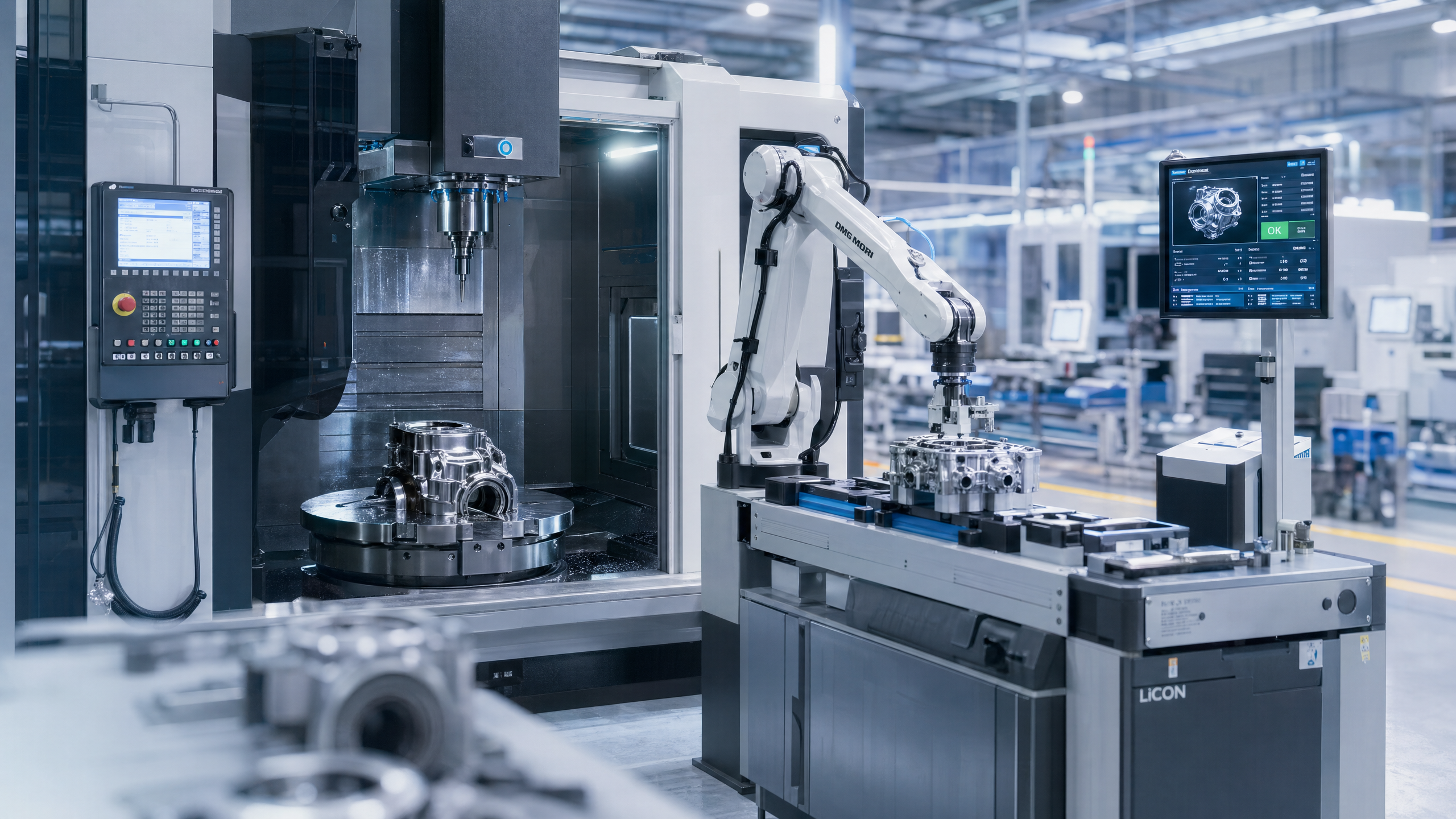
Digital Manufacturing Technology for smart factory is reshaping how modern producers achieve high precision, flexibility, and speed. From automated CNC manufacturing and multi-axis machine tool systems to cost-effective CNC manufacturing for aerospace, automotive, electronics, and energy equipment, smart factories rely on connected machines, Industrial Automation control system for CNC machines, and lean workflows to boost output, reduce downtime, and stay globally competitive.
For researchers, operators, buyers, and business evaluators, the meaning of digital manufacturing is no longer limited to software or machine connectivity. It now covers data-driven process control, equipment interoperability, predictive maintenance, flexible production scheduling, and measurable improvements in quality and delivery performance. In CNC machining and precision manufacturing, these capabilities directly affect throughput, scrap rates, labor efficiency, and supplier competitiveness.
Smart factories are especially relevant in sectors where tolerances may range from ±0.005 mm to ±0.02 mm, delivery windows are often 2–6 weeks, and machine utilization targets commonly exceed 75%. In such environments, digital manufacturing technology helps align machine tools, cutting tools, fixtures, robots, and inspection systems into one coordinated production ecosystem rather than a collection of isolated assets.
What Digital Manufacturing Technology Actually Includes in a Smart Factory
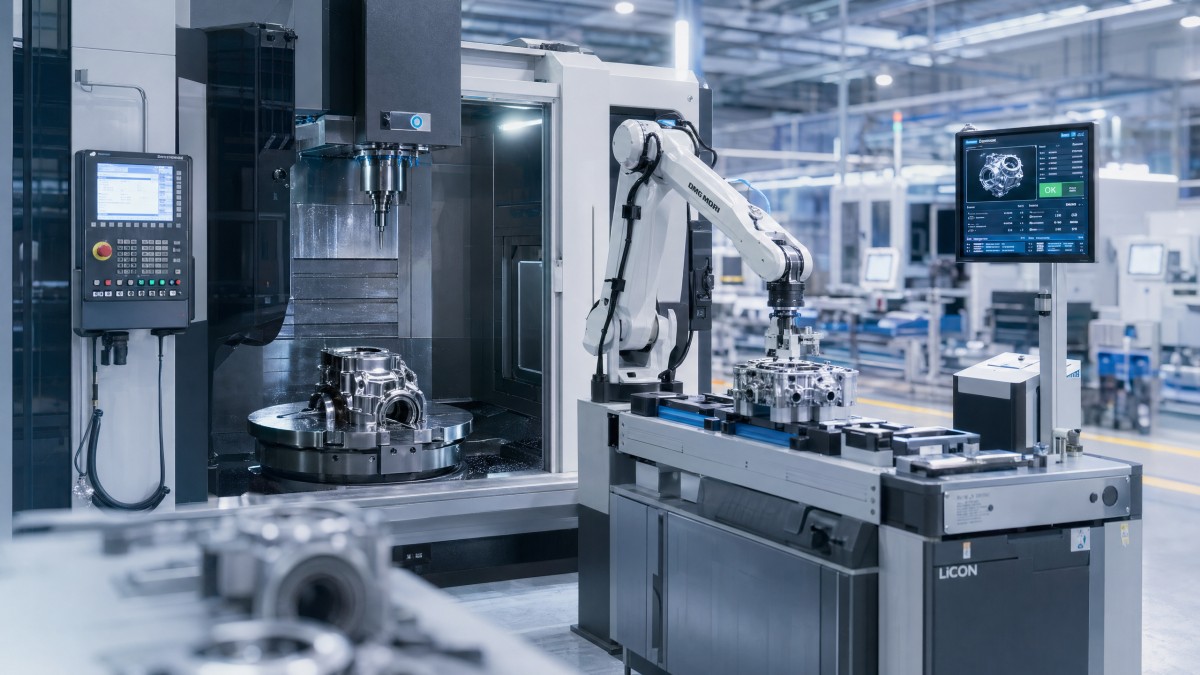
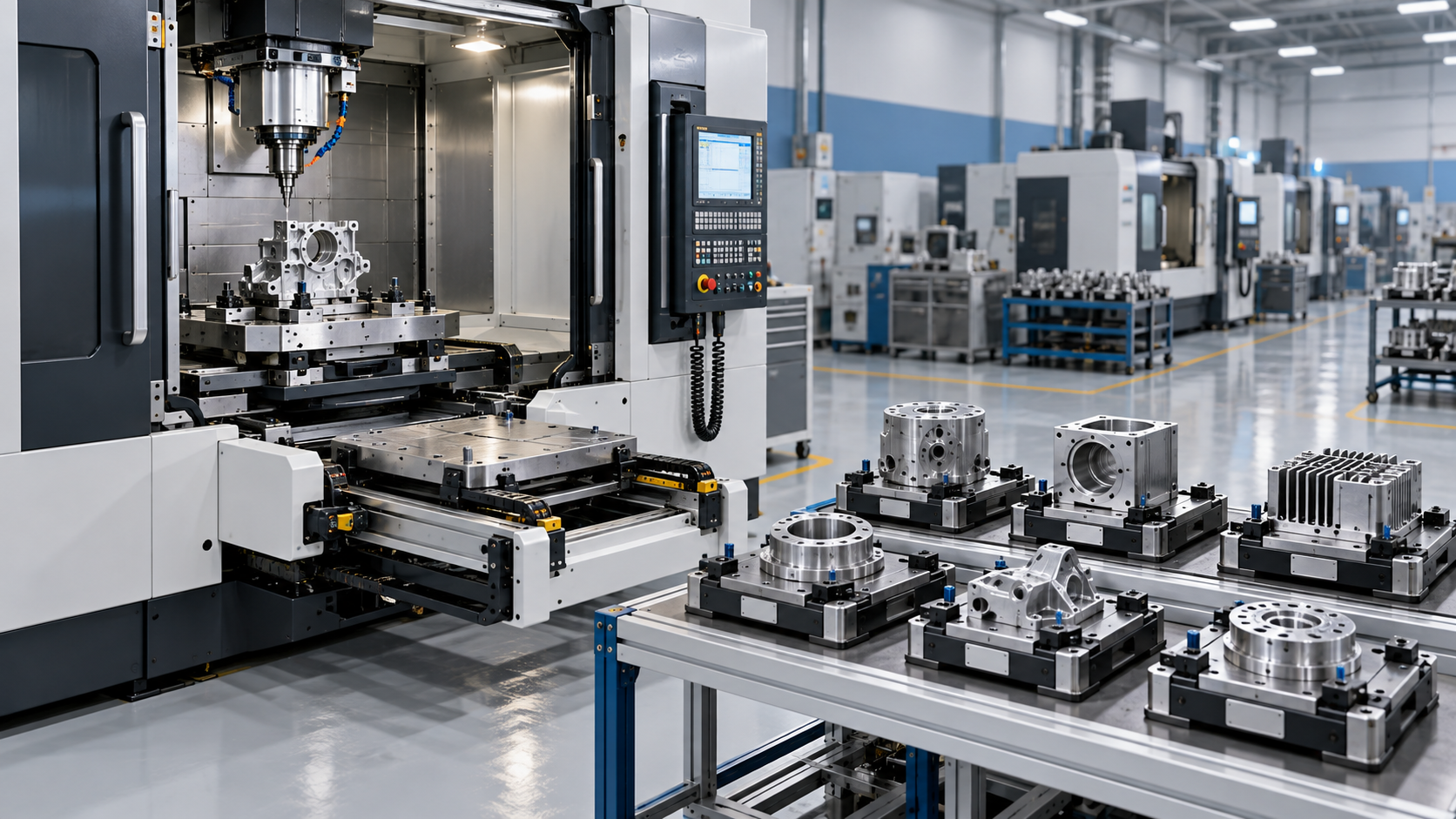
In practical manufacturing terms, digital manufacturing technology combines CNC equipment, software platforms, sensors, industrial networks, and process data into an integrated operating model. A smart factory does not become “smart” because it owns advanced machine tools alone. It becomes smart when machining centers, CNC lathes, multi-axis systems, robots, and quality inspection devices share information in near real time and support faster operational decisions.
For precision manufacturing, the core building blocks usually include CAD/CAM integration, machine monitoring, tool life management, MES connectivity, automated workholding, and industrial automation control systems for CNC machines. These elements reduce the gap between engineering intent and shop-floor execution. In many facilities, setup times can be reduced by 15%–30% when digital work instructions, tool offset records, and automated program revision control are properly managed.
The shift is also important for mixed-volume production. Aerospace and energy equipment often require smaller batches with complex geometries, while automotive and electronics may require faster cycles and repeatability across larger volumes. Digital manufacturing supports both by making routing, scheduling, traceability, and changeover more consistent. This is one reason flexible production lines have become central to modern CNC environments.
Key technology layers inside the factory
A useful way to understand digital manufacturing is to break it into layers. The machine layer includes CNC machine tools, servo systems, tool changers, probing units, and spindle monitoring. The control layer includes PLCs, HMI systems, SCADA functions, and industrial automation controls. The execution layer covers MES, scheduling, traceability, and quality records. The analytics layer supports OEE tracking, maintenance planning, and process optimization.
- Machine layer: lathes, machining centers, 3-axis to 5-axis systems, robots, and automated loading units.
- Control layer: machine signals, cycle status, alarms, load monitoring, and communication gateways.
- Execution layer: job dispatching, digital travelers, material tracking, and inspection checkpoints.
- Analytics layer: downtime analysis, tool wear prediction, cycle benchmarking, and energy monitoring.
When these layers are connected, managers can compare target cycle time versus actual cycle time, operators can identify recurring stoppages within minutes, and procurement teams can evaluate whether capital investment is creating measurable operational gain within 12–24 months rather than remaining underused.
The table below shows how digital manufacturing functions map to common shop-floor priorities in CNC and precision manufacturing operations.
The main takeaway is that digital manufacturing technology is not one product. It is a coordinated system that turns CNC assets into traceable, measurable, and adaptable production resources. That distinction matters when companies evaluate machine investments, automation upgrades, or factory expansion plans.
Why It Matters for CNC, Multi-Axis Machining, and Precision Production
In traditional machining environments, productivity losses often come from disconnected decisions rather than poor equipment alone. A machine may stop because tooling data was outdated, material was delayed, the fixture changeover took 40 minutes instead of 20, or an operator had no early warning that spindle load had increased beyond a normal threshold. Digital manufacturing addresses these bottlenecks by making operating conditions visible and easier to standardize.
This is especially important in automated CNC manufacturing. Multi-axis machine tool systems can create complex shaft parts, precision discs, housings, and structural components in fewer setups, but they also demand higher discipline in programming, collision avoidance, fixturing, and tool management. A 5-axis process may reduce total handling steps by 30%–50%, yet it can also increase the cost of programming mistakes if process control is weak.
For operators, digital support means fewer manual checks, clearer setup instructions, and quicker troubleshooting. For procurement teams, it means a better way to compare machine capability against actual business need. For business evaluators, it creates a more reliable basis for calculating output per shift, planned versus actual OEE, and payback time for automation projects.
Performance gains that smart factories target
Most factories do not adopt digital manufacturing simply to gather more data. They do it to improve a few specific metrics that directly influence cost and delivery. In many CNC operations, the first targets are setup reduction, machine uptime, first-pass yield, tool consumption, and shorter response time to abnormalities.
- Setup reduction: digital setup sheets and preset tooling can cut preparation time by 10%–25%.
- Downtime control: alarm pattern analysis can identify repetitive stoppages within 1–2 weeks.
- Quality consistency: probe verification and in-process inspection improve repeatability on critical dimensions.
- Labor efficiency: automation cells allow one operator to supervise 2–4 machines in suitable applications.
- Traceability: digital records simplify root-cause analysis for high-value parts and regulated sectors.
Aerospace and energy applications benefit from process control because part complexity is high and rework can be expensive. Automotive and electronics benefit because takt time, repeatability, and throughput matter more strongly across larger production volumes. In both cases, digital manufacturing helps align precision with speed instead of forcing companies to choose only one.
Where the business value becomes visible
The business value often becomes visible in three areas within the first 6–18 months: reduced machine idle time, better schedule adherence, and lower variation between shifts. If a factory runs 20 CNC machines and each machine recovers just 30 minutes of productive time per day, that adds up to 10 extra machine-hours daily. Over a 22-day production month, this can materially improve capacity without adding new floor space.
That is why digital manufacturing technology matters beyond engineering. It influences quoting accuracy, supply reliability, spare parts planning, energy use, and customer confidence in delivery commitments. In global manufacturing, those factors often determine whether a supplier stays preferred or becomes replaceable.
How Buyers and Plant Teams Should Evaluate Digital Manufacturing Solutions
Choosing the right digital manufacturing path requires more than selecting the newest machine or software. The better approach is to evaluate the production mix, tolerance requirements, batch size, operator skill level, maintenance maturity, and integration capacity. A factory producing 50 repeatable automotive parts per day has different needs from a workshop producing 5 high-complexity aerospace components each week.
For buyers, the most common mistake is focusing on equipment price without measuring integration cost, training time, and data compatibility. A lower-cost CNC system may become expensive if it cannot connect with shop-floor monitoring tools or if post-processing support is limited. In many implementations, software setup, operator training, and process validation represent 15%–35% of the project effort, even when the machine hardware is already selected.
For operators and production engineers, usability matters as much as specification. Interfaces should support clear alarm logic, revision control, tool data access, and quick maintenance feedback. If the digital system adds complexity without reducing routine decisions, adoption will be slow and performance gains will remain theoretical.
Core evaluation criteria for procurement and planning
The following comparison framework is useful when evaluating smart factory investments related to CNC machining, machine tools, and automated production lines.
The comparison shows that selection should balance hardware, software, and service readiness. Buyers that validate these three dimensions early usually avoid the costly situation where advanced equipment is installed but underutilized because workflows were never fully aligned.
A simple 5-step selection approach
- Define the target application: precision shafts, housing parts, structural components, or mixed-batch production.
- List the current bottlenecks: setup time, tool wear instability, low visibility, labor shortages, or missed delivery dates.
- Audit available assets: machine age, control systems, probing capability, robot interfaces, and network readiness.
- Estimate return windows: compare expected benefits over 12, 18, and 24 months instead of using a single payback estimate.
- Run a pilot cell first: validate 1 line or 2–3 machines before scaling plant-wide.
This phased method is useful for both new plants and existing facilities planning digital upgrades. It lowers implementation risk and gives decision-makers measurable evidence before expanding budgets.
Implementation Priorities: From Pilot Cell to Full Smart Factory Operation
Successful implementation usually starts with one controlled production area rather than a factory-wide launch. A pilot may include 1 automated CNC cell, 2 machining centers, a robot loading system, and one inspection station. This limited scope allows teams to test communication reliability, SOP clarity, setup discipline, and maintenance response before introducing additional variables across the plant.
In CNC and precision manufacturing, early implementation should focus on the most expensive forms of waste: machine waiting time, unstable setup quality, repeated manual data entry, and unplanned stoppages. These issues often create larger cost leakage than managers expect. A machine with a theoretical 85% utilization rate may perform closer to 60%–68% once changeovers, waiting, and minor stoppages are counted accurately.
The implementation team should include at least four roles: production, maintenance, process engineering, and IT or automation support. Without this cross-functional model, digital manufacturing projects may become software deployments without enough operational ownership, or equipment projects without enough data discipline.
Recommended rollout sequence
- Baseline measurement: record cycle time, setup time, downtime reasons, and scrap for 2–4 weeks.
- Connectivity setup: connect selected CNC machines, sensors, and operator interfaces.
- Process standardization: align programs, tools, workholding, and digital work instructions.
- Performance review: compare before-and-after results across one full production month.
- Scale-up decision: expand only after the pilot proves stable alarm handling, data accuracy, and operator acceptance.
A practical rollout should also include training checkpoints. Operators may need 1–3 days for interface use, while programmers and maintenance staff may require 1–2 weeks of deeper exposure to diagnostic logic, data tagging, and exception handling. Skipping these steps often leads to incomplete usage of otherwise capable systems.
Common implementation risks and how to avoid them
The most common risks are unclear objectives, too many dashboards, weak machine data quality, and poor change management. If the project goal is not specific, teams may collect hundreds of signals without improving one critical metric. A better target is to reduce setup time by 20%, cut repeated alarms by 15%, or improve schedule attainment from 82% to above 90% within a defined time frame.
Another risk is assuming old and new equipment will integrate equally well. Some legacy CNC machines may need gateways or limited signal mapping, which affects visibility depth. That is not a reason to stop the project, but it should be reflected in planning and budget. Realistic expectations are essential in smart factory programs.
Industry Applications, Typical Scenarios, and Frequently Asked Questions
Digital manufacturing technology creates value differently across industries, even when the equipment base looks similar. In automotive production, priority often goes to takt stability, tool life consistency, and low-cost repetitive output. In aerospace, the focus shifts toward traceability, low-batch complexity, and high-value part protection. Electronics manufacturing often emphasizes compact part handling, quick changeovers, and tight dimensional control, while energy equipment projects may require large-part stability and long machining cycles.
That is why smart factory planning should be aligned with actual application scenarios instead of generic automation goals. The right combination of CNC machines, multi-axis systems, cutting tools, fixtures, robots, and digital controls depends on the part family, quality requirements, and delivery model.
The scenario table below helps readers match digital manufacturing priorities with common production environments.
The table highlights a simple point: the same digital manufacturing concept supports different business goals depending on the production context. Selection and rollout should therefore be use-case driven rather than technology driven alone.
How do you know if a factory is ready for digital manufacturing?
A factory is usually ready when three conditions are present: stable core processes, basic machine data access, and management willingness to standardize workflows. It does not need to be fully automated on day one. Even facilities with partial legacy equipment can begin if they identify 1–2 pilot applications and maintain reliable operating discipline.
What payback period is realistic for CNC-related digital upgrades?
For focused projects such as machine monitoring, tool management, or automated loading in repeatable applications, many companies evaluate returns within 12–24 months. Larger projects involving multiple systems, line redesign, or enterprise integration may take longer. The key is to measure labor reduction, uptime recovery, scrap avoidance, and schedule performance together rather than relying on one metric.
What are the most common buying mistakes?
The most common mistakes are overbuying features that operators rarely use, underestimating training needs, and ignoring service responsiveness. Another frequent issue is treating the project as only an equipment purchase instead of a process transformation. In smart factories, machine capability, digital control, and workflow design must move together.
Can digital manufacturing help smaller suppliers, not only large plants?
Yes. Small and mid-sized manufacturers often gain quickly from targeted improvements such as digital scheduling, tool life tracking, and machine utilization visibility. A plant with 5–10 CNC machines can still benefit from fewer setup delays, faster problem detection, and better delivery confidence. Scale changes the architecture, but not the value of better data and process control.
Digital manufacturing technology means turning CNC machining, precision machine tools, automated production lines, and industrial controls into one responsive production system. For smart factories, that translates into better visibility, more stable quality, shorter changeovers, and stronger delivery performance across automotive, aerospace, electronics, and energy equipment applications.
For information researchers, equipment users, sourcing teams, and business decision-makers, the real priority is not adopting technology for its own sake. It is selecting solutions that match part complexity, production volume, skill level, and integration goals. A phased, measurable approach creates lower risk and better long-term value.
If you are evaluating CNC digitalization, automated machining cells, or smart factory upgrades, now is the right time to compare your options in detail. Contact us to discuss your production scenario, request a tailored solution, or learn more about practical digital manufacturing strategies for precision manufacturing and global industrial supply chains.
PREVIOUS ARTICLE
NEXT ARTICLE
Recommended for You
![]() Mitsubishi Electric Announces Physical AI System Linking Humanoid Robots and CNC MachinesMachine Tool Industry Editorial Team
 Precision Machining for Defense: Supplier Quality and Traceability ChecksManufacturing Market Research Center
![]() Nidec Machine Tool Launches MVR-5X Five-Axis Gantry MachineMachine Tool Industry Editorial Team
 Choosing a Precision Disc Parts Manufacturer in China: Tolerances and Quality ChecksManufacturing Market Research Center
![]() Siemens Executive Says AI Could Raise Factory Automation to 80%Manufacturing Market Research Center
 Choosing Automated Machine Tools for High-Mix, Low-Volume ProductionMachine Tool Industry Editorial Team


Aris Katos
Future of Carbide Coatings
15+ years in precision manufacturing systems. Specialized in high-speed milling and aerospace grade alloy processing.
▶
Siemens Executive Says AI Could Raise Factory Automation to 80%Manufacturing Market Research Center▶
Manufacturing Technology Trends That Improve Throughput and Quality ControlManufacturing Market Research Center▶
Global Manufacturing Trends: How Supply Chains and Regional Shifts Affect SourcingManufacturing Market Research Center▶
Small-Batch Production and Smart Manufacturing for Small Businesses: Where to Start FirstManufacturing Market Research Center▶
What Smart Manufacturing Technology for Industry 4.0 Means for Mid-Sized FactoriesManufacturing Market Research Center
▶
Mastering 5-Axis Workholding Strategies
Join our technical panel on Nov 15th to learn about reducing vibrations in thin-wall components.

Providing you with integrated sanding solutions
Before-sales and after-sales services
Comprehensive technical support