• Global CNC market projected to reach $128B by 2028 • New EU trade regulations for precision tooling components • Aerospace deman
NYSE: CNC +1.2%LME: STEEL -0.4%

How to Choose a Multi-axis Machining System for Composite Materials
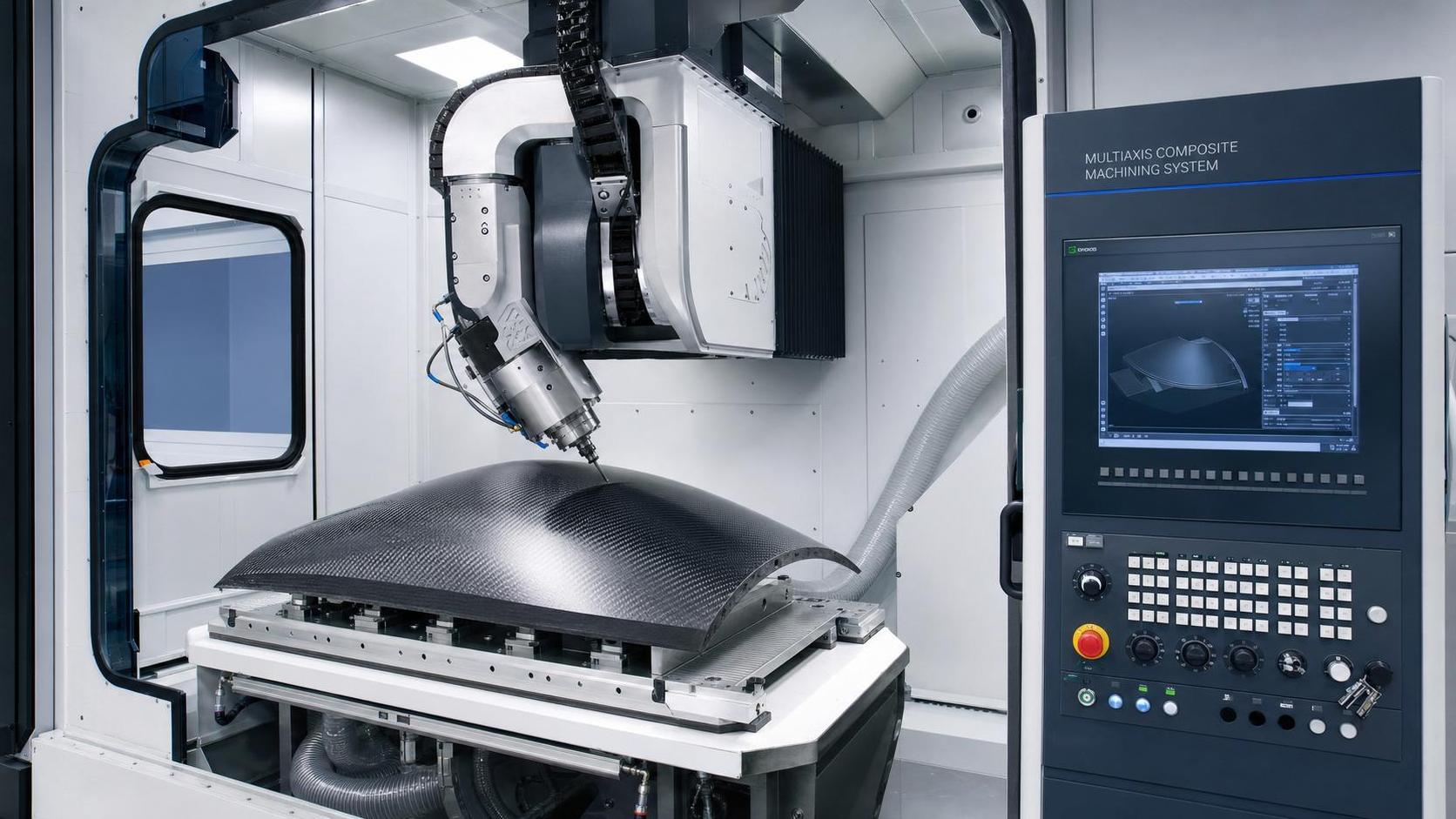
Choosing a Multi-axis Machining System for Composite Materials is no longer a niche decision. It sits at the intersection of precision manufacturing, automation strategy, and product quality, especially as composite parts move deeper into aerospace, automotive, energy, and advanced electronics.
The challenge is not simply finding a machine with more axes. A suitable system must hold tight tolerances, protect fragile material structures, control dust and heat, and fit into a broader digital production environment without creating process instability.
That is why evaluation often goes beyond spindle power or travel range. Surface integrity, toolpath flexibility, fixture strategy, automation compatibility, and lifecycle cost all influence whether a system performs well in real composite machining conditions.
Why composite machining demands a different selection logic
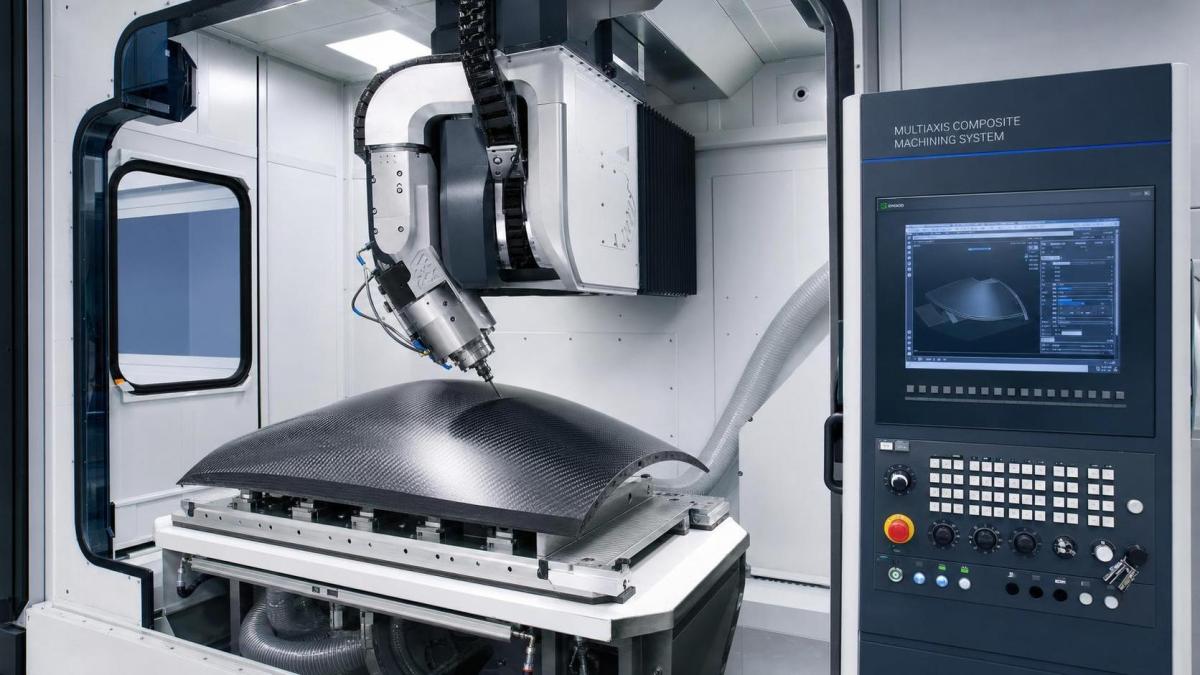
Composites behave differently from metals. Carbon fiber reinforced polymers, glass fiber laminates, and hybrid sandwich structures can delaminate, fray, burn, or chip when machining conditions are poorly matched.
A Multi-axis Machining System for Composite Materials must therefore do more than create complex shapes. It has to manage cutting direction, tool engagement, vibration, and material support across curved or layered geometries.
This matters because many composite parts are not simple flat panels. They include contoured edges, pockets, trimmed openings, drilled interfaces, and bonded assembly features that require precise orientation control.
In the wider CNC machine tool industry, this fits a larger shift toward higher precision, smarter automation, and integrated production lines. Composite machining now needs the same digital discipline already expected in metalworking.
What defines a capable multi-axis platform
Not every five-axis or gantry machine is automatically suitable for composites. Capability depends on how the machine structure, control system, tooling setup, and environmental management work together.
Kinematic flexibility
Multi-axis movement allows the tool to maintain a favorable cutting angle. That reduces tearing at edges and improves access to deep contours, trim lines, and angled surfaces.
Structural stability
Composite cutting often uses high spindle speeds and light but precise cuts. A rigid frame, stable axis response, and low vibration behavior are essential for consistent edge quality.
Process cleanliness
Dust extraction is not an accessory issue. Fine composite particles affect machine health, operator safety, sensor reliability, and downstream cleanliness in automated manufacturing cells.
Control accuracy
A Multi-axis Machining System for Composite Materials should deliver smooth interpolation and predictable acceleration. Jerky motion can damage edges even when nominal dimensions remain acceptable.
The selection criteria that matter most
A practical evaluation becomes easier when the machine is judged as a process platform rather than a stand-alone asset. The following dimensions usually separate a strong choice from a risky one.
These checks align with broader market trends. Global machine tool suppliers increasingly compete on digital integration, stable automation, and application-specific performance rather than machine size alone.
Application context changes the right answer
The best Multi-axis Machining System for Composite Materials depends heavily on the part family. A machine that performs well for aircraft interiors may be poorly matched to wind energy tooling or structural automotive components.
Aerospace structures
Thin walls, tight tolerance zones, and certified process repeatability are common requirements. Here, positional accuracy and edge condition often matter as much as cycle time.
Automotive composite parts
Higher throughput and fixture repeatability become more important. The machine should support fast changeovers, automated loading options, and consistent quality across larger production volumes.
Energy and industrial equipment
Larger work envelopes and flexible tool access often dominate. Parts may include thick laminates, large molds, or hybrid assemblies that require adaptable machining strategies.
In practical terms, selection starts with the part mix. Geometry, laminate structure, trim complexity, tolerance stack, annual volume, and inspection method should shape every technical comparison.
Common evaluation mistakes
Several purchasing errors appear repeatedly when organizations compare machine platforms for composites. Most come from borrowing assumptions from metal machining without adjusting for material behavior.
- Choosing by axis count alone, without checking motion quality under real toolpaths.
- Focusing on peak spindle power, while ignoring thermal drift, runout, and low-load stability.
- Underestimating fixture design, especially for thin, large, or curved composite parts.
- Treating dust extraction as a secondary utility rather than a core process requirement.
- Comparing quoted cycle times without including setup, rework, tool change, and cleaning losses.
- Missing software and automation compatibility issues that later slow production scaling.
A well-chosen Multi-axis Machining System for Composite Materials should reduce hidden process risk, not just satisfy a specification sheet.
How to compare systems in a realistic way
Benchmarking should be tied to representative parts and measurable outcomes. Machine demonstrations based on simple contours rarely reveal the full behavior of a composite machining process.
Build a process-based comparison
Use the same part geometry, similar laminate construction, and comparable tool strategy across candidate systems. Then compare burr formation, delamination, dimensional stability, and actual takt time.
Review digital and operational fit
The machine should fit CAM workflows, inspection routines, MES connections, and automated material handling plans. This is increasingly important in smart factory environments.
Calculate ownership beyond purchase price
Include tooling consumption, filtration maintenance, spare part availability, operator training, downtime exposure, and future upgrade options. These often outweigh small differences in initial capital cost.
When global suppliers are involved, service reach also matters. Response speed, application support, and access to replacement components can influence long-term production security more than brochure specifications suggest.
A practical path to the final decision
A sound decision usually comes from narrowing the evaluation into a few structured questions. Which parts define the process window? Which defects are unacceptable? Where is flexibility more valuable than raw speed?
From there, rank each Multi-axis Machining System for Composite Materials against part quality, repeatability, integration, maintainability, and expansion potential. That approach creates a clearer basis for internal alignment and supplier discussion.
The next useful step is often a targeted trial plan. A short list of sample parts, inspection criteria, and operating assumptions can reveal whether a machine is truly ready for composite production, not just capable in theory.
In a market moving toward higher precision, automation, and digital coordination, the strongest choice is the one that supports stable machining today while remaining compatible with tomorrow’s production model.
Recommended for You
 How to Select a Slant Bed Lathe for High-Precision Shaft and Chuck WorkCNC Machining Technology Center
 Smart Manufacturing for Small Businesses: Where Automation Delivers the Fastest ROIMachine Tool Industry Editorial Team
 How to Specify a CNC Lathe for High-Volume Automotive Shaft ProductionCNC Machining Technology Center
 How Automated Precision Machining Maintains Tolerance in High-Mix ProductionCNC Machining Technology Center
 How to Evaluate a Machine Tool Factory Before Sourcing CNC EquipmentGlobal Machine Tool Trade Research Center
 CNC Programming Explained: From CAD Models to Reliable Shop-Floor ToolpathsCNC Machining Technology Center



Aris Katos
Future of Carbide Coatings
15+ years in precision manufacturing systems. Specialized in high-speed milling and aerospace grade alloy processing.
▶
How Automated Precision Machining Maintains Tolerance in High-Mix ProductionCNC Machining Technology Center▶
CNC Programming Explained: From CAD Models to Reliable Shop-Floor ToolpathsCNC Machining Technology Center▶
How Multi-Axis Machining Produces Complex Components With Fewer SetupsCNC Machining Technology Center▶
How Much Does CNC Programming Software Cost in 2026?CNC Machining Technology Center▶
CNC Machining Explained: Processes, Tolerances, and Parts It Can ProduceCNC Machining Technology Center
Mastering 5-Axis Workholding Strategies
Join our technical panel on Nov 15th to learn about reducing vibrations in thin-wall components.

Providing you with integrated sanding solutions
Before-sales and after-sales services
Comprehensive technical support