• Global CNC market projected to reach $128B by 2028 • New EU trade regulations for precision tooling components • Aerospace deman
NYSE: CNC +1.2%LME: STEEL -0.4%

Huawei Launches First AI Glasses with Industrial AR Engine

Huawei officially launched the HUAWEI Vision Glass Pro on May 16, 2026 — its first AI-powered smart glasses featuring an in-house industrial-grade augmented reality (AR) engine. The device targets precision manufacturing applications, particularly CNC remote maintenance and fixture calibration. This development is especially relevant for machine tool integrators, industrial automation solution providers, and high-precision machining manufacturers operating under international compliance frameworks.
Event Overview
On May 16, 2026, Huawei introduced the HUAWEI Vision Glass Pro. It integrates a proprietary industrial AR engine enabling three verified capabilities: digital twin–based remote diagnostics for CNC machines; step-by-step 3D spatial calibration guidance for multi-brand fixtures; and ISO 2768 tolerance visualization with on-glass annotation. The device has obtained CE, FCC, and IEC 62366-1 human factors certification. It is designed to operate as a standalone module compatible with existing overseas CNC systems, aiming to lower barriers for intelligent upgrades. Several international machine tool system integrators have initiated compatibility testing.
Industries Affected by This Development
Machine Tool System Integrators
Why affected: Integration of third-party AR interfaces into legacy CNC control stacks requires validation against real-time motion tracking, latency thresholds, and safety-critical UI responsiveness. The Vision Glass Pro’s modular design and pre-certified status reduce integration risk but shift responsibility toward interface mapping and workflow alignment.
Impact areas: Increased demand for AR-ready HMI adaptation services; revised project timelines for smart retrofitting tenders; potential re-evaluation of proprietary AR tooling investments.
Precision Machining OEMs & Tier-1 Suppliers
Why affected: Adoption of standardized AR-guided calibration and tolerance verification could compress setup time and reduce reliance on specialized metrology personnel. However, it also raises expectations for traceable, auditable calibration records aligned with ISO 2768.
Impact areas: Adjustments to operator training curricula; need for version-controlled digital work instructions; possible revision of internal quality audit checklists to include AR-assisted verification logs.
Industrial Automation Component Distributors
Why affected: As AR-enabled diagnostics gain traction, demand may rise for complementary hardware — such as certified mounting brackets, ambient-light-optimized lenses, or ruggedized battery packs — that meet the same regulatory benchmarks (e.g., IEC 62366-1).
Impact areas: Inventory planning for accessory SKUs aligned with certified AR wearables; technical support capability upgrades to cover interoperability troubleshooting; channel partner enablement around use-case–specific bundling.
What Enterprises and Practitioners Should Monitor and Do Now
Track official compatibility documentation and firmware update cadence
The device is currently undergoing compatibility testing with multiple international integrators. Analysis shows that actual deployment readiness will depend less on launch announcements and more on published API specifications, SDK availability, and documented latency/accuracy performance under industrial lighting and vibration conditions.
Assess current CNC fleet architecture against modular AR integration requirements
Observably, successful embedding requires open communication protocols (e.g., OPC UA, MTConnect), timestamp-synchronized sensor feeds, and secure edge compute capacity. Enterprises should audit whether their existing controllers or edge gateways support low-latency video stream ingestion and pose estimation — not just data telemetry.
Distinguish between certification scope and operational scope
While the Vision Glass Pro holds CE, FCC, and IEC 62366-1 certification, these apply to electromagnetic compatibility, radio emissions, and usability — not functional safety (e.g., IEC 61508) or process validation (e.g., AS9100). From industry perspective, end users must determine whether AR-guided calibration satisfies their internal quality gate requirements before replacing traditional methods.
Prepare for pilot evaluation with documented success metrics
Current more suitable approach is to define measurable KPIs — such as average fixture setup time reduction, first-pass calibration success rate, or technician upskilling duration — before initiating vendor-led trials. Avoid treating AR adoption as infrastructure rollout; instead, frame it as a human-system interaction optimization initiative.
Editorial Perspective / Industry Observation
This launch is better understood as a signal than an immediate market inflection point. Analysis shows Huawei is targeting interoperability at the system-integration layer rather than displacing incumbent CNC control vendors. Its emphasis on modularity and pre-certification suggests a strategic focus on lowering adoption friction — not delivering turnkey factory-floor autonomy. Observably, the broader implication lies in normalizing AR as a certified, embeddable component within industrial control ecosystems — shifting the conversation from ‘Can AR work here?’ to ‘How do we govern AR-assisted decisions?’ Industry stakeholders should therefore monitor how standards bodies respond to AR-mediated inspection and calibration workflows over the next 12–18 months.
Conclusion
The HUAWEI Vision Glass Pro does not redefine industrial AR capabilities, but it advances their practical deployability within regulated manufacturing environments. Its significance lies not in technological novelty, but in bridging certification rigor with field-level usability. For now, it is best interpreted as an early indicator of maturing industrial AR infrastructure — one that prioritizes integration readiness and regulatory alignment over standalone feature spectacle.
Source Attribution
Primary source: Official Huawei press release dated May 16, 2026, announcing the HUAWEI Vision Glass Pro. Additional details confirmed via publicly disclosed certification documents (CE, FCC, IEC 62366-1) and statements from participating international machine tool integrators. Ongoing compatibility test results remain pending public disclosure and are subject to further observation.
PREVIOUS ARTICLE
Recommended for You
 How to Select CNC Equipment for High-Mix, Low-Volume ProductionCNC Machining Technology Center
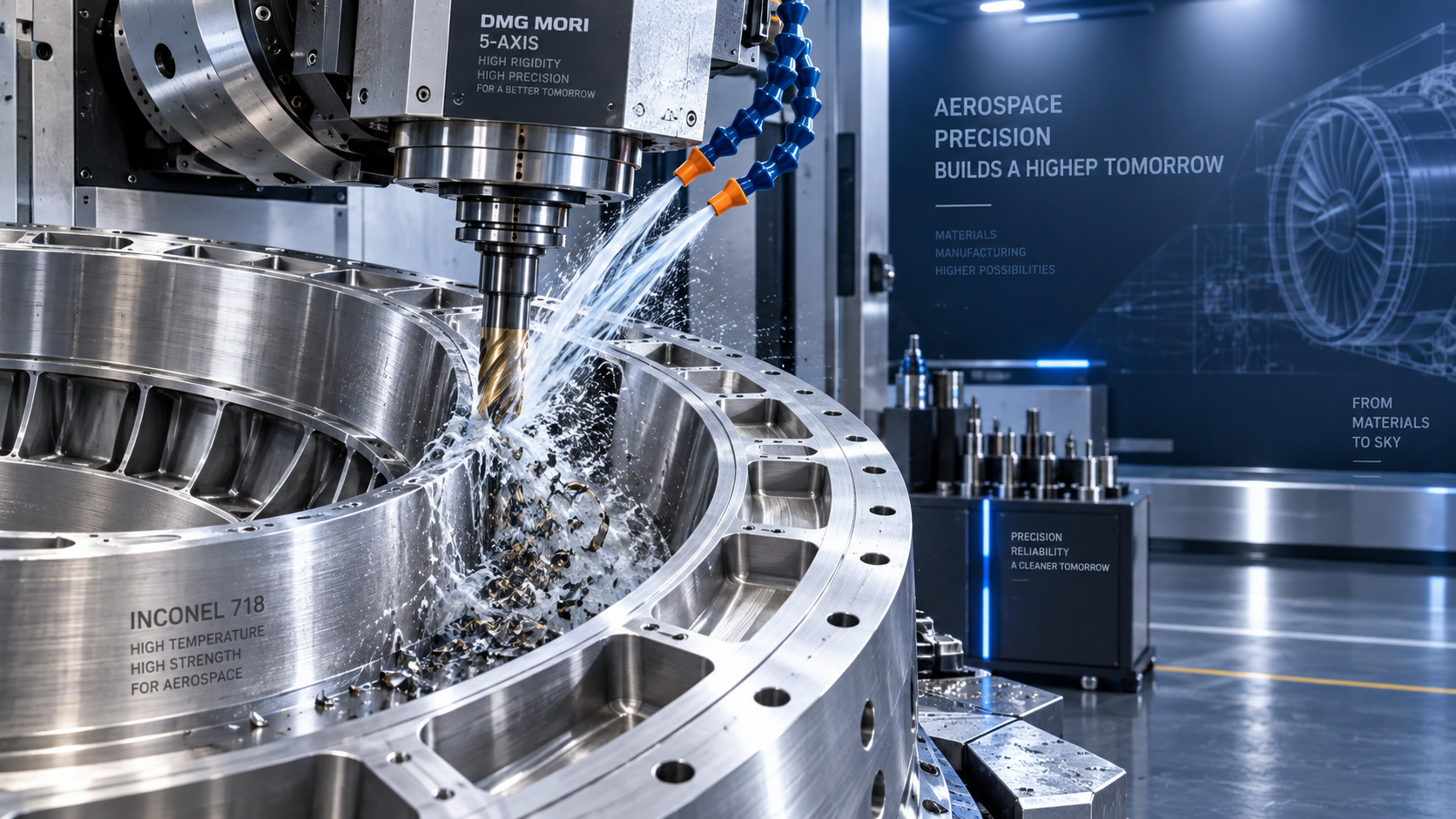
 Can CNC Machining Inconel Control Tool Wear in High-Temperature Aerospace Parts?CNC Machining Technology Center
 Machine Tool Market Outlook: Demand Drivers, Capacity Shifts, and Investment RisksManufacturing Market Research Center
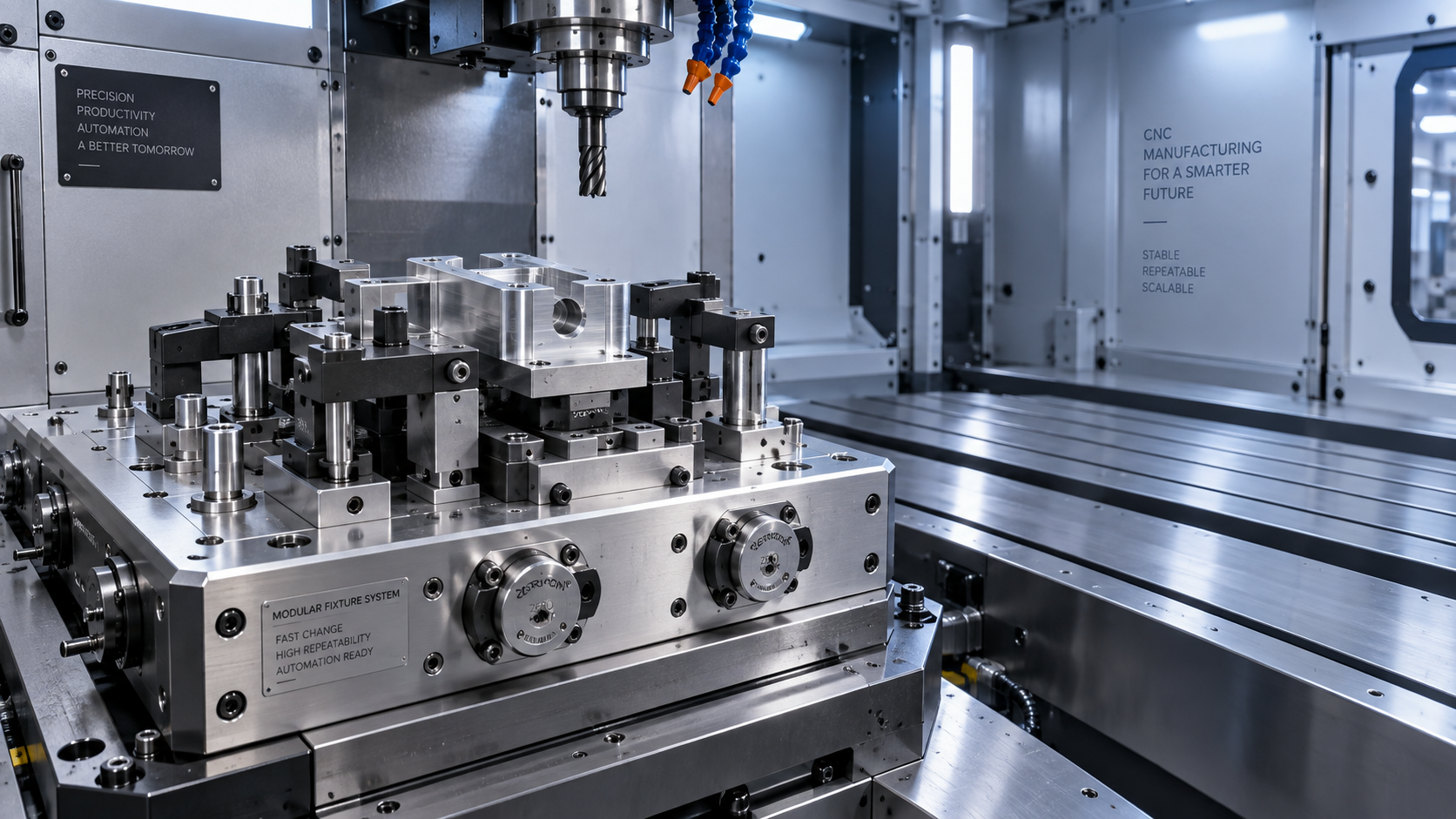
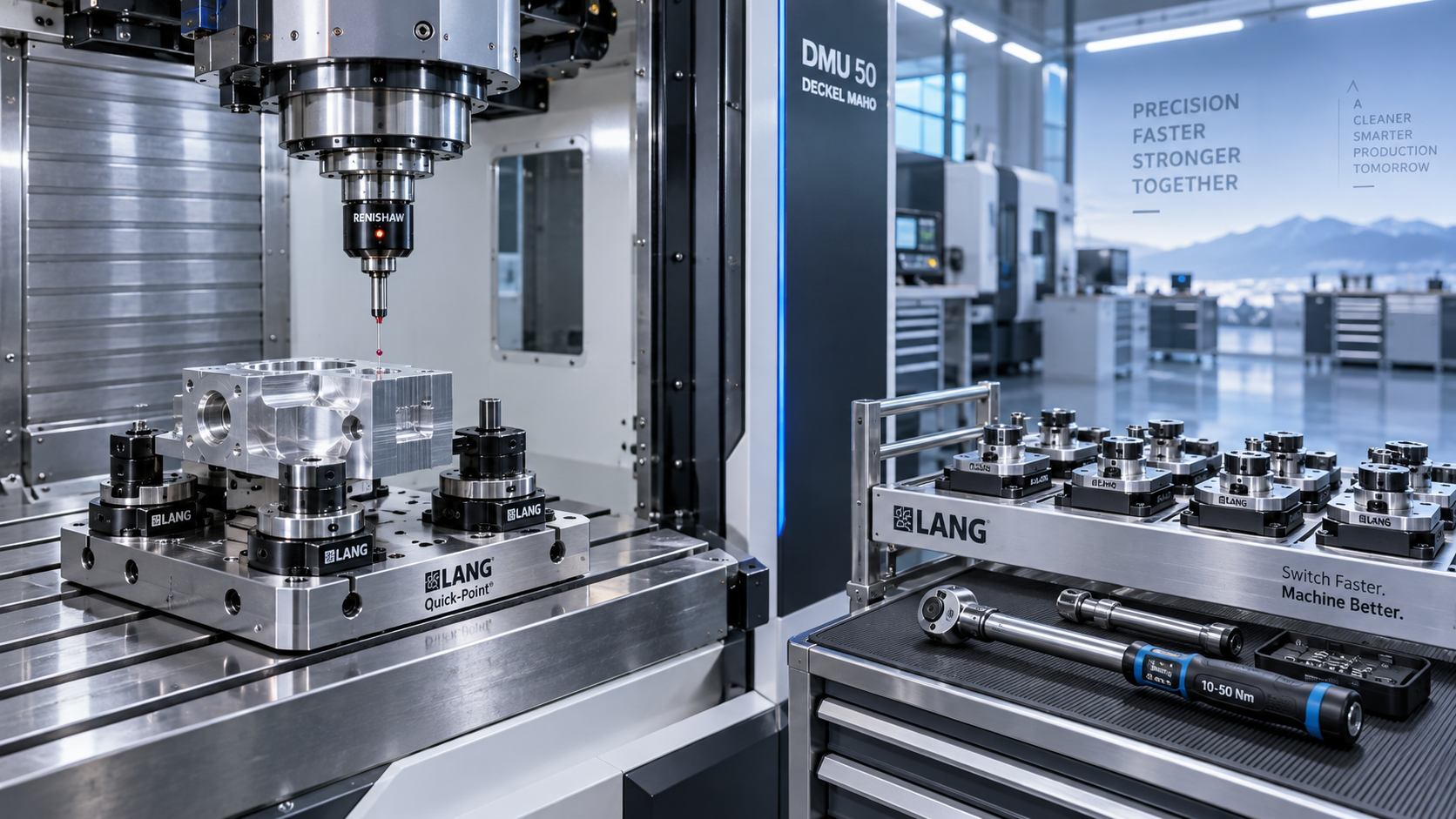
 Zero-Point Clamping or Modular Fixtures? Choosing a Faster CNC Changeover SystemCNC Machining Technology Center
 How to Cut CNC Fixture Changeover Time Without Sacrificing Part AccuracyCNC Machining Technology Center
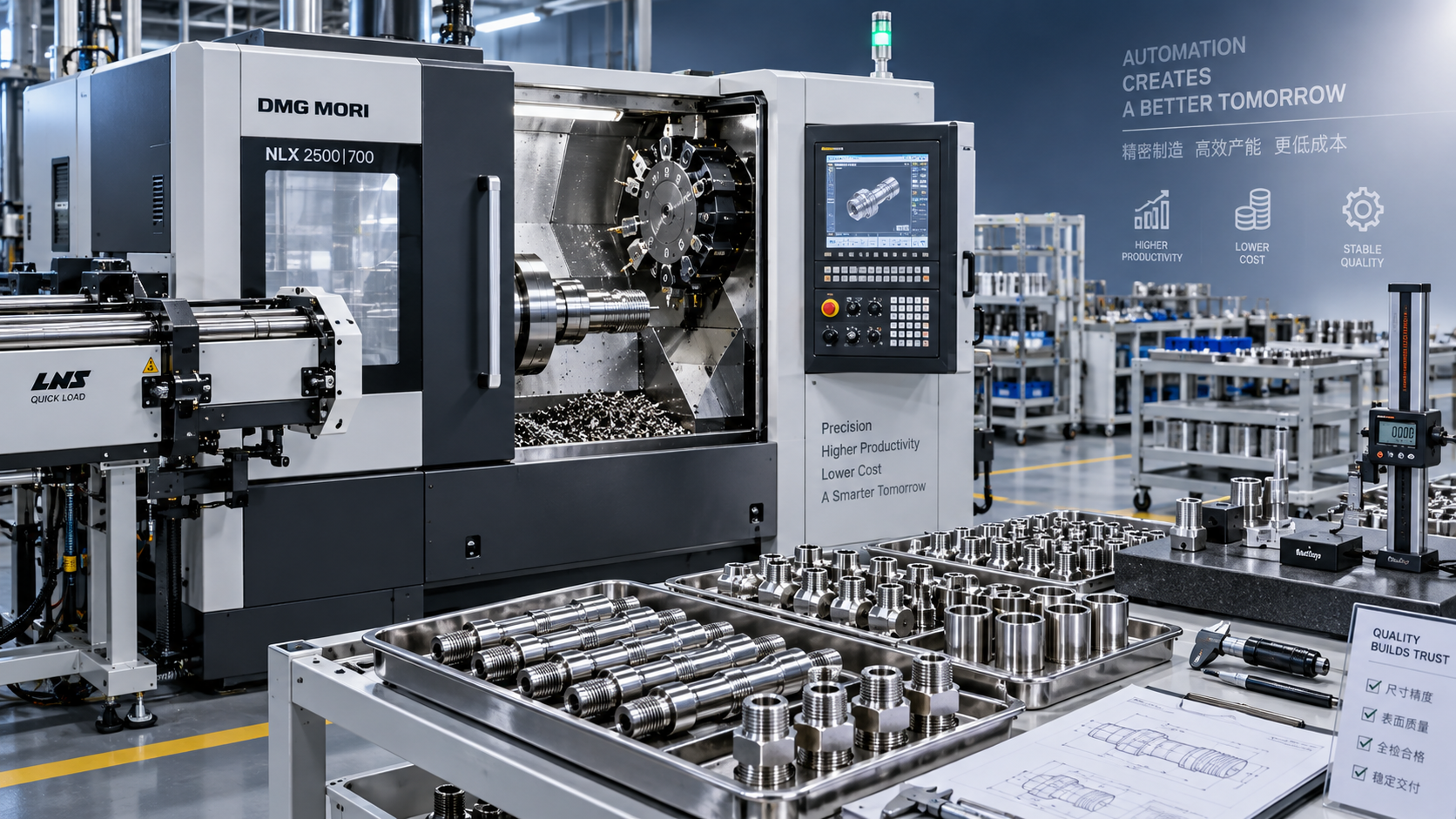
 When Does CNC Turning Pay Off? A Break-Even Guide by Annual Part VolumeMachine Tool Industry Editorial Team



Aris Katos
Future of Carbide Coatings
15+ years in precision manufacturing systems. Specialized in high-speed milling and aerospace grade alloy processing.
▶
How to Select CNC Equipment for High-Mix, Low-Volume ProductionCNC Machining Technology Center▶
Can CNC Machining Inconel Control Tool Wear in High-Temperature Aerospace Parts?CNC Machining Technology Center▶
How Automated Precision Machining Maintains Tolerance in High-Mix ProductionCNC Machining Technology Center▶
CNC Programming Explained: From CAD Models to Reliable Shop-Floor ToolpathsCNC Machining Technology Center▶
How Multi-Axis Machining Produces Complex Components With Fewer SetupsCNC Machining Technology Center
Mastering 5-Axis Workholding Strategies
Join our technical panel on Nov 15th to learn about reducing vibrations in thin-wall components.

Providing you with integrated sanding solutions
Before-sales and after-sales services
Comprehensive technical support