• Global CNC market projected to reach $128B by 2028 • New EU trade regulations for precision tooling components • Aerospace deman
NYSE: CNC +1.2%LME: STEEL -0.4%

What Does Automated Industrial Mean in Manufacturing Systems and Where Is It Used?
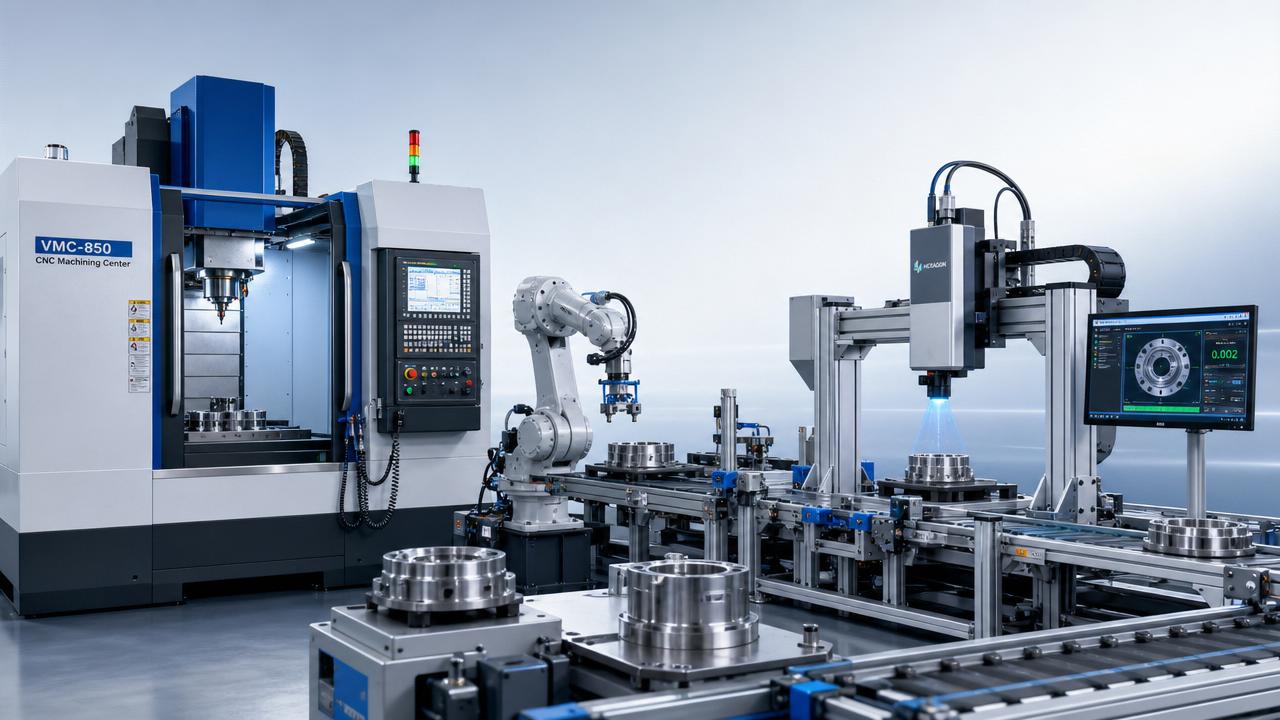
What does automated industrial mean in manufacturing systems?
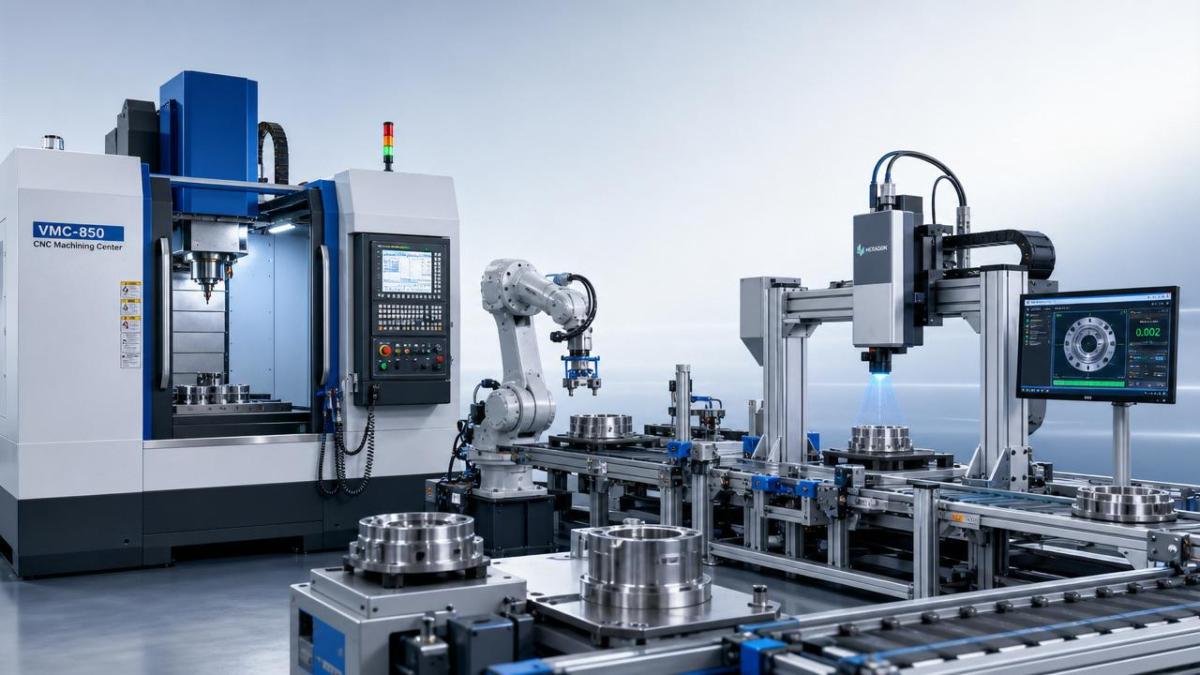
In simple terms, automated industrial describes factory systems that let machines, software, and control devices handle repeatable work with limited manual intervention.
In manufacturing, that usually includes CNC machine tools, robots, sensors, conveyors, vision systems, and digital control platforms working as one process.
The goal is not automation for its own sake.
The real aim is tighter precision, faster cycle times, fewer quality variations, and better production visibility from machining to inspection.
This matters because modern factories no longer produce only simple parts.
They often handle complex shafts, precision discs, structural components, and high-accuracy assemblies that demand stable, repeatable execution.
That is why the automated industrial concept is closely tied to CNC machining, flexible production lines, and smart factory development.
A useful way to think about it is this.
A standalone machine can be automated, but an automated industrial system connects multiple steps, data points, and decisions across the production flow.
Where is automated industrial used most often today?
The most common applications appear in sectors where part complexity, consistency, and output speed directly affect cost and reliability.
Automotive production is a clear example.
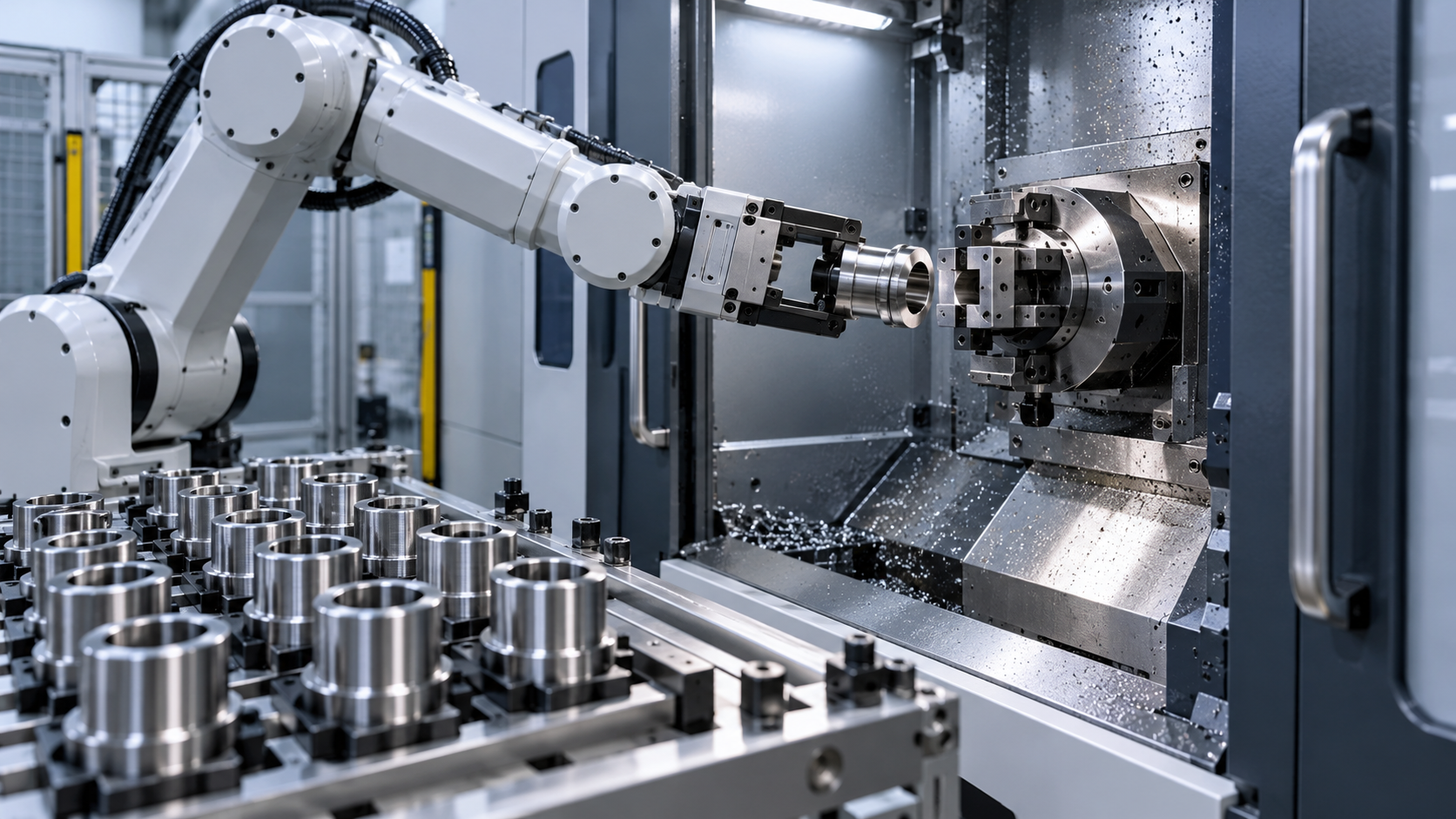
Engine housings, transmission parts, brake components, and battery system parts often move through automated industrial cells with machining, loading, gauging, and traceability.
Aerospace uses automated industrial solutions differently.
Volumes may be lower, but accuracy demands are higher, so multi-axis machining, in-process measurement, and digital verification become essential.
Electronics manufacturing also relies on automated industrial methods.
Precision frames, heat sinks, connector parts, and small structural components need repeatability that manual workflows struggle to maintain at scale.
Energy equipment is another major area.
Turbine parts, valve bodies, pump housings, and power transmission components often require heavy-duty CNC systems and automated handling.
In practical terms, automated industrial is used wherever production teams need one or more of these conditions:
- High dimensional accuracy across repeated batches
- Stable quality under continuous production schedules
- Reduced dependence on manual loading or inspection
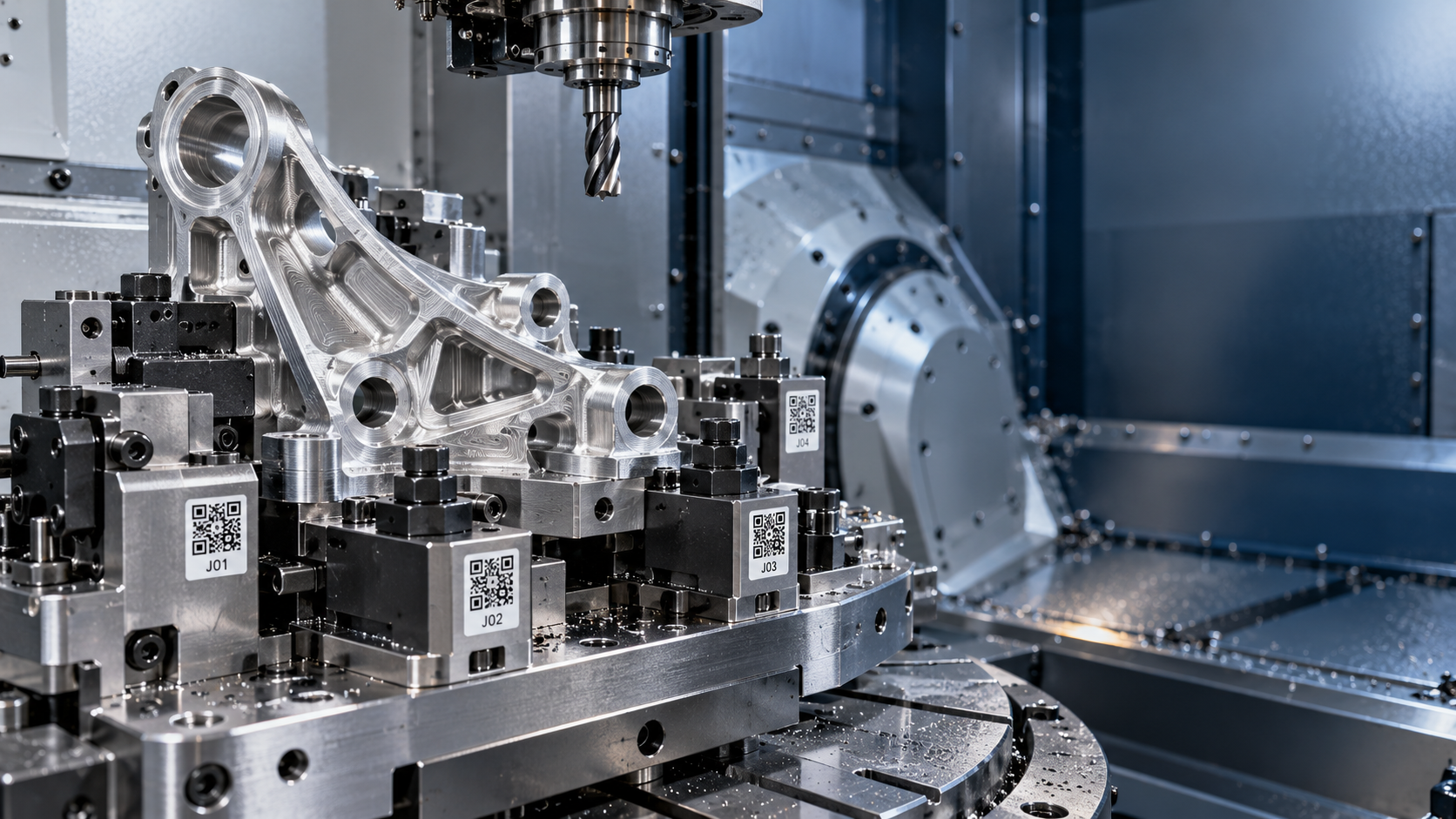
- Traceable production data for quality and compliance
- Faster response to product changes or volume shifts
This broad use is one reason machine tool clusters in China, Germany, Japan, and South Korea remain strategically important.
These regions support not just machines, but also tooling, controls, fixtures, and integration expertise.
How is it different from basic factory automation?
People often treat the two terms as interchangeable, but they are not exactly the same.
Basic automation usually means one task is mechanized.
For example, a machine may automatically feed material, stop at a preset count, or trigger a simple sensor response.
Automated industrial systems go further by connecting machines, controls, measurement, and data into a coordinated production structure.
That difference becomes easier to see in a quick comparison.
So when someone asks what automated industrial means, the better answer is not simply “machines doing work automatically.”
It means production steps are engineered to operate together with precision, coordination, and measurable control.
When does an automated industrial setup make sense?
Not every factory needs full integration from day one.
A more practical question is whether the process has enough repetition, quality risk, or labor intensity to justify the investment.
It usually makes sense when production runs are frequent, tolerances are tight, and downtime is expensive.
It also becomes attractive when traceability is no longer optional.
Industries with safety, export, or compliance requirements often need digital records that manual systems cannot maintain consistently.
In real operations, the decision is often based on a few signals:
- Scrap rises when experienced operators are unavailable
- Part demand is stable enough for repeatable programming
- Setup time limits output more than machine cutting speed
- Manual inspection creates delays between operations
- Production data is needed for process improvement
A common mistake is assuming automated industrial always means a fully lights-out factory.
More often, companies start with one CNC cell, one robotic loading unit, or one automated inspection link.
That staged approach usually creates better results than trying to automate every process at once.
What should you check before adopting automated industrial systems?
The biggest risk is buying equipment before defining the process problem clearly.
An automated industrial system works best when the part flow, tooling logic, fixturing, and inspection plan are already well understood.
Needle-moving improvements usually come from preparation, not hardware alone.
Before moving ahead, it helps to review the following points.
It is also worth checking supplier ecosystem strength.
In global machine tool markets, strong integration support often matters as much as the machine specification itself.
That is especially true when combining CNC lathes, machining centers, robotics, and digital monitoring in one line.
Are there common misconceptions about automated industrial investment?
Yes, and they often lead to disappointing results.
One misconception is that automated industrial always reduces cost immediately.
In reality, early stages may increase spending because programming, tooling upgrades, integration, and training all require time and budget.
Another misunderstanding is that automation removes the need for skilled people.
It usually changes the skill mix instead.
More value shifts toward process planning, maintenance, data analysis, tool management, and quality engineering.
A third misconception is that more technology always means better performance.
If part flow is unstable or product mix changes too often, a simpler semi-automated solution may perform better.
The better approach is to match the automated industrial level to the process reality.
That means looking beyond machine speed and asking about uptime, consistency, rework, changeovers, and digital traceability.
What is the best next step if you are still evaluating the term?
Start by mapping one real production route rather than trying to define the whole factory at once.
Identify where variation happens, where labor time is concentrated, and where quality checks interrupt flow.
That exercise usually reveals whether an automated industrial upgrade should begin with machining, loading, inspection, or data collection.
It also helps to compare current performance with the needs of the target market.
High-growth sectors such as automotive electrification, aerospace components, electronics, and energy systems increasingly reward stable, connected production.
So, what does automated industrial mean in manufacturing systems and where is it used?
It means integrated production built around precision, repeatability, and control, and it is used wherever complex parts must be made reliably at industrial scale.
If the next step is evaluation, focus on process bottlenecks, required tolerances, tooling readiness, data needs, and implementation pace before comparing solutions.
Recommended for You
![]() Zhongshan Xiaolan Machinery Exhibition Opens With Global Product DebutsMachine Tool Industry Editorial Team
Zhongshan Xiaolan Machinery Exhibition Opens With Global Product DebutsMachine Tool Industry Editorial Team Automated Production Machining: Which Parts and Batch Sizes Are a Good Fit?Machine Tool Industry Editorial Team
![]() FANUC Links FIELD System Data with Copilot to Advance Shop-Floor Data UseCNC Machining Technology Center
FANUC Links FIELD System Data with Copilot to Advance Shop-Floor Data UseCNC Machining Technology Center Smart Manufacturing for Aerospace: Building Traceability Across CNC OperationsCNC Machining Technology Center
![]() Mitsubishi Electric Announces Physical AI System Linking Humanoid Robots and CNC MachinesMachine Tool Industry Editorial Team
Mitsubishi Electric Announces Physical AI System Linking Humanoid Robots and CNC MachinesMachine Tool Industry Editorial Team Precision Machining for Defense: Supplier Quality and Traceability ChecksManufacturing Market Research Center


Aris Katos
Future of Carbide Coatings
15+ years in precision manufacturing systems. Specialized in high-speed milling and aerospace grade alloy processing.
▶
What Is Metal Processing? From Raw Material to Finished Machine PartsCNC Machining Technology Center▶
How long does CNC machine delivery and installation usually take?CNC Machining Technology Center▶
CNC Machine Arrival Inspection: Check Shipping Damage, Accuracy, Safety, and DocumentsCNC Machining Technology Center▶
What Should You Check When a CNC Machine Arrives at Your Factory?CNC Machining Technology Center▶
What Safety Checks Are Required for CNC Cutting Operations?CNC Machining Technology Center
▶
Mastering 5-Axis Workholding Strategies
Join our technical panel on Nov 15th to learn about reducing vibrations in thin-wall components.

Providing you with integrated sanding solutions
Before-sales and after-sales services
Comprehensive technical support