• Global CNC market projected to reach $128B by 2028 • New EU trade regulations for precision tooling components • Aerospace deman
NYSE: CNC +1.2%LME: STEEL -0.4%

How CNC Manufacturing for Aerospace Handles Tight Tolerances
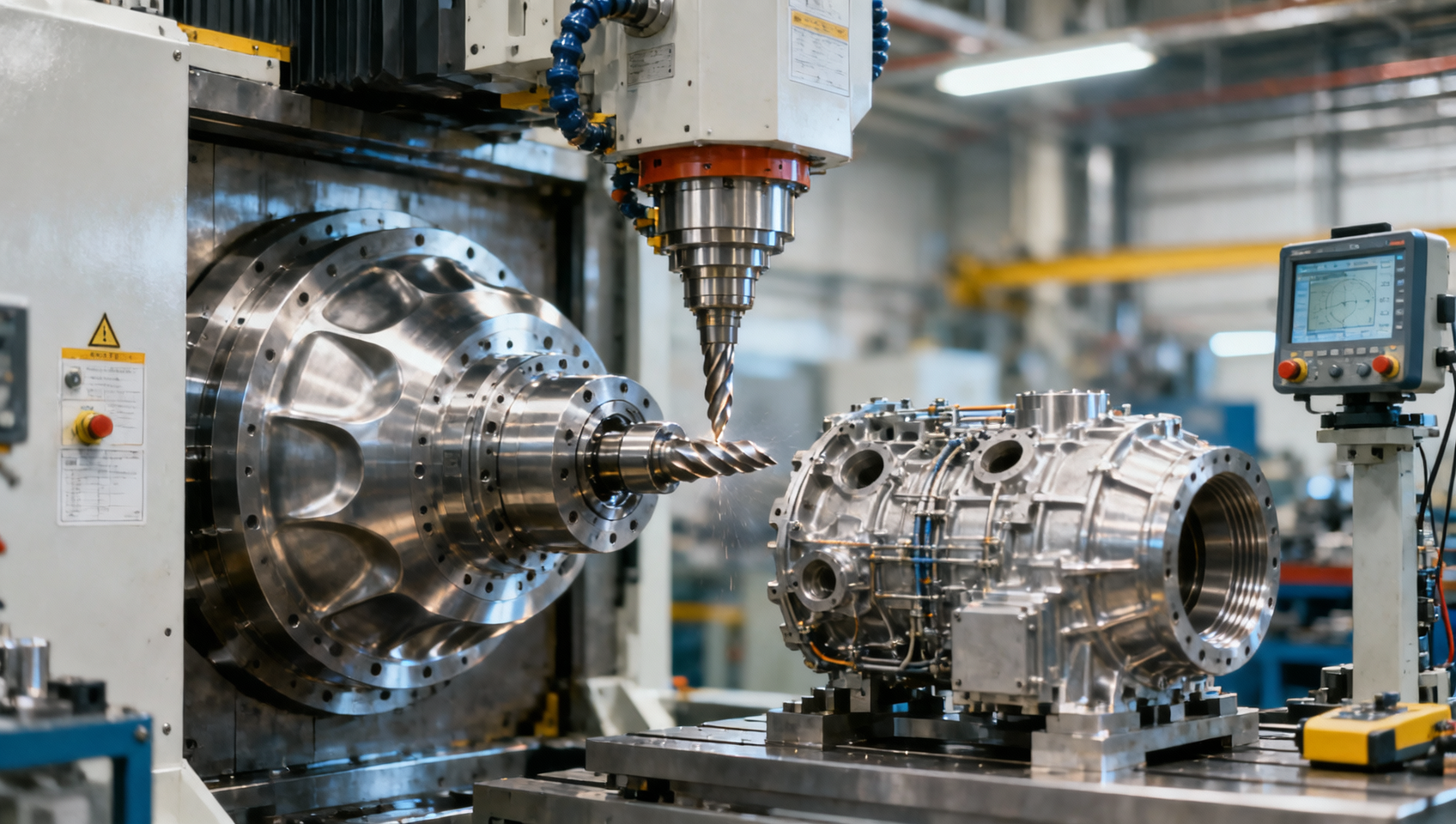
In aerospace, tight tolerances are not just a quality target—they are a safety, certification, and performance requirement. When buyers, engineers, and production teams ask how CNC manufacturing for aerospace handles these demands, the short answer is this: it depends on a controlled system, not a single machine. High precision CNC manufacturing, multi-axis CNC manufacturing, stable materials, experienced process engineering, and rigorous inspection all work together to keep parts within specification. For aerospace suppliers and OEMs, the real question is not only whether a shop can machine a part accurately once, but whether it can repeat that result consistently, efficiently, and with full traceability.
This article explains how aerospace CNC machining achieves tight tolerances, what drives success or failure, and how procurement teams, operators, and decision-makers can evaluate CNC machine tool manufacturer and machining partner capabilities with more confidence.
Why tight tolerances matter so much in aerospace machining
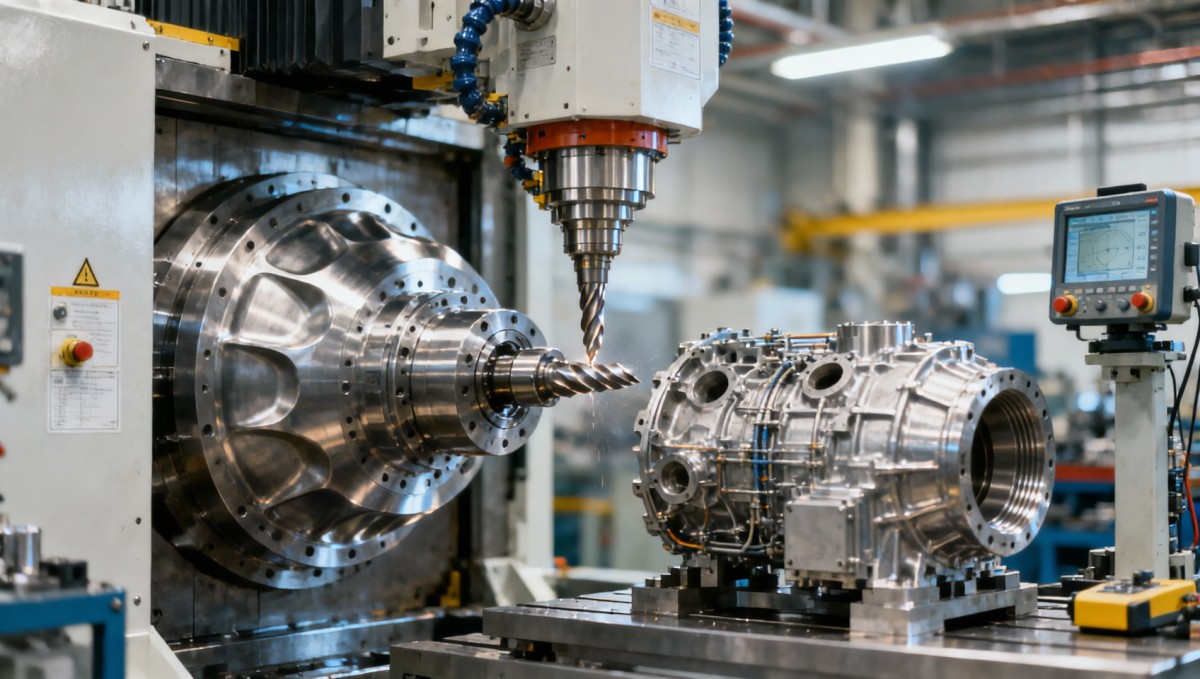
Aerospace components operate in environments where vibration, heat, pressure, fatigue, and weight all matter at the same time. A minor dimensional deviation can affect fit, sealing, balance, aerodynamic performance, or structural integrity. That is why CNC manufacturing for aerospace often works to far stricter tolerances than general industrial machining.
Common aerospace parts that demand tight control include:
- Engine housings and turbine-related components
- Structural brackets and airframe fittings
- Hydraulic manifolds and fluid system parts
- Landing gear components
- Precision shafts, discs, and mounting interfaces
In many cases, tolerance requirements are tied directly to assembly reliability and regulatory compliance. If mating surfaces, hole positions, wall thicknesses, or critical diameters drift out of range, downstream assembly becomes difficult, scrap increases, and certification risk grows. For this reason, aerospace machining is built around process capability and repeatability, not just nominal part geometry.
What actually allows aerospace CNC shops to hold tight tolerances
Many readers assume tolerance control comes mainly from buying an advanced machine. In reality, aerospace-grade results come from several factors working together.
Machine rigidity and thermal stability
A stable machine platform is essential. High-end CNC lathes, machining centers, and multi-axis machining systems used in aerospace are designed to reduce vibration, maintain axis accuracy, and control thermal drift over long production cycles. Even small temperature changes can affect spindle growth, workpiece expansion, and dimensional repeatability.
Multi-axis CNC manufacturing for fewer setups
Multi-axis CNC manufacturing helps reduce tolerance stack-up by machining more features in a single setup. When a part is repositioned multiple times, small location errors can accumulate. Five-axis and mill-turn systems allow shops to access complex surfaces, angled holes, and compound geometries while minimizing re-clamping errors.
Precision workholding and fixturing
Even the best machine cannot hold tolerance if the part is not clamped correctly. Aerospace parts are often thin-walled, lightweight, or made from difficult materials, so fixture design is critical. Proper fixtures reduce distortion, improve repeatability, and ensure datum consistency throughout the machining process.
Cutting tool strategy
Tool geometry, tool wear control, cutting speed, feed rate, and toolpath design all influence final accuracy. In aerospace materials such as titanium, Inconel, and high-strength aluminum alloys, heat generation and tool wear can change dimensions quickly if not managed carefully. This is why tool monitoring and planned tool replacement are common in advanced CNC manufacturing environments.
Process engineering and in-process compensation
Experienced process engineers build compensation into the machining process. They account for material spring-back, thermal effects, machine behavior, and expected tool wear. This is one reason why aerospace suppliers with deep application knowledge often outperform shops that simply have modern equipment.
How material choice affects tolerance control
Aerospace materials are selected for performance, but many are difficult to machine. This directly affects how tight tolerances are achieved.
For example:
- Titanium alloys offer excellent strength-to-weight ratio, but they generate heat and resist machining, increasing the risk of tool wear and dimensional variation.
- Nickel-based superalloys are used in high-temperature applications, but they are tough on tools and require highly controlled cutting conditions.
- Aluminum aerospace grades are easier to machine, but thin-wall distortion and burr control can still create tolerance problems.
- Stainless and hardened steels may require special tooling, coolant strategy, and finishing operations to maintain precision.
Because of these challenges, high precision CNC manufacturing in aerospace is closely tied to material-specific process planning. Shops must select the right machine, spindle strategy, tooling package, cutting parameters, and finishing sequence for each material family.
How the machining process is designed to reduce variation
An efficient machining process in aerospace is not only about faster cycle time. It is about reducing variation while keeping production commercially viable.
Stable setup planning
Good setup planning starts with datums, feature relationships, and part rigidity. Engineers decide which surfaces are machined first, how the part will be located in later operations, and where stock allowance should remain for finishing.
Roughing and finishing separation
Many aerospace components are roughed first to remove material and release internal stresses, then semi-finished and finish-machined later. This staged process helps prevent distortion from ruining final dimensions.
Controlled coolant and chip management
Heat and chip recutting can damage surface finish and push dimensions out of tolerance. Advanced coolant delivery, high-pressure systems, and well-designed chip evacuation are often necessary, especially in deep pockets, bores, and hard-to-reach features.
Automation for consistency
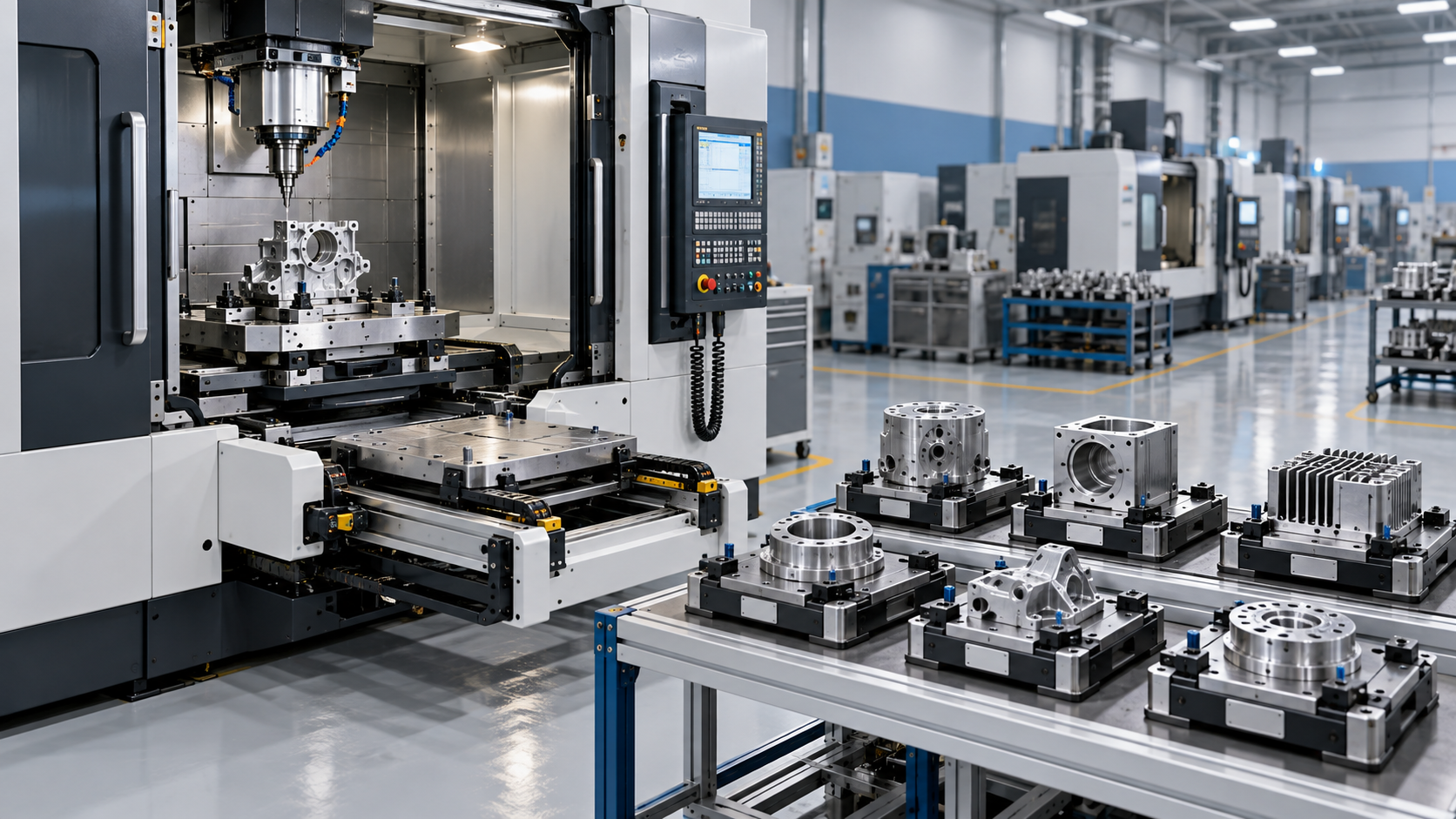
Automated CNC manufacturing supports repeatability by reducing human variation between cycles. Tool presetting, pallet systems, probing, automatic compensation, and connected production data all help aerospace manufacturers maintain stable results across batches.
For larger-scale production, automation also improves machine utilization and delivery reliability, which matters to procurement teams balancing quality with lead time and cost.
What quality control looks like in aerospace CNC manufacturing
Inspection is where many buyers focus first, but in aerospace the best quality control starts before the final measurement stage. Strong suppliers combine prevention, monitoring, and verification.
In-process probing
Modern machines often use in-machine probing to verify work offsets, detect setup variation, and measure key features during production. This allows adjustments before defects multiply.
CMM and precision metrology
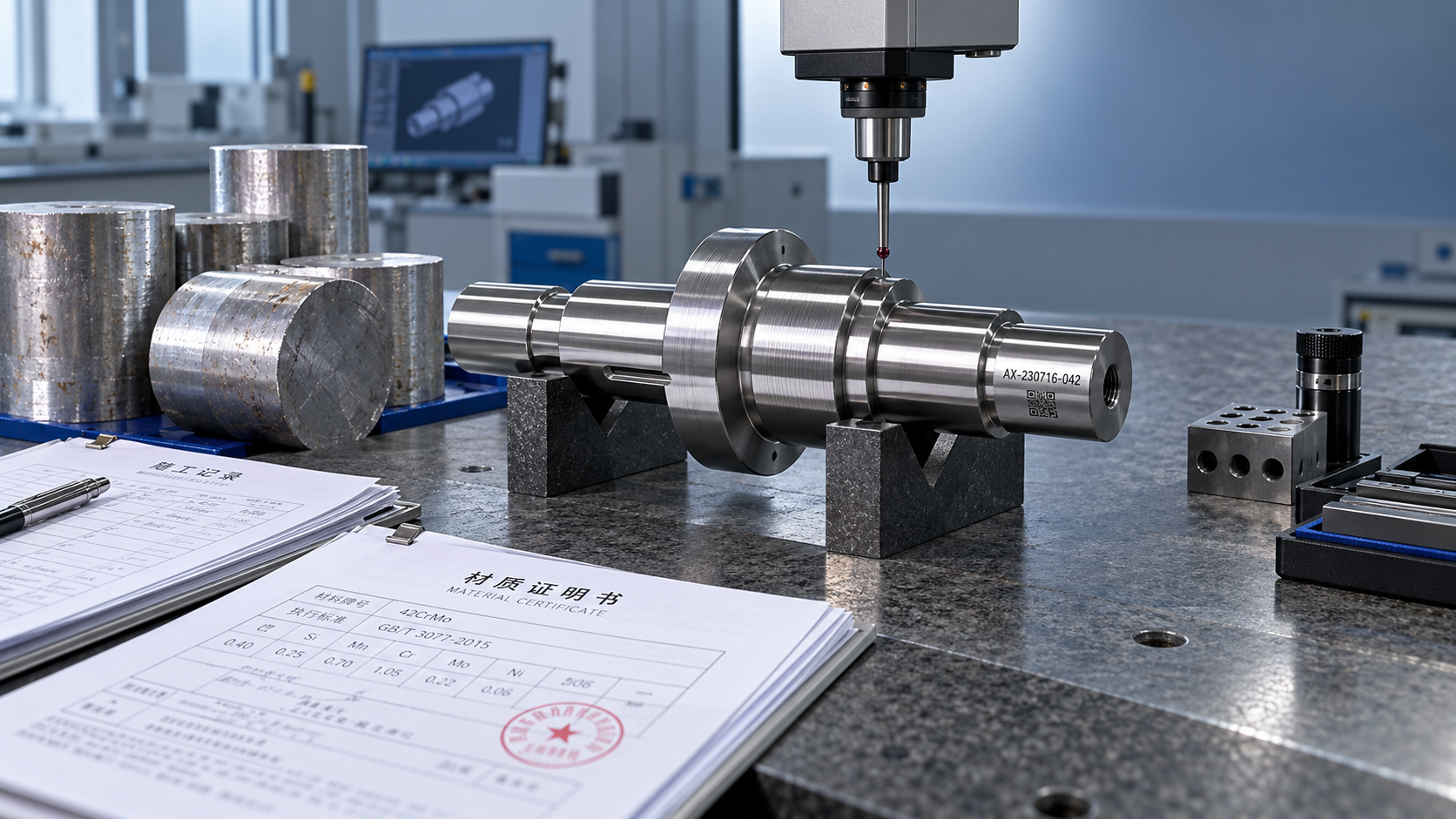
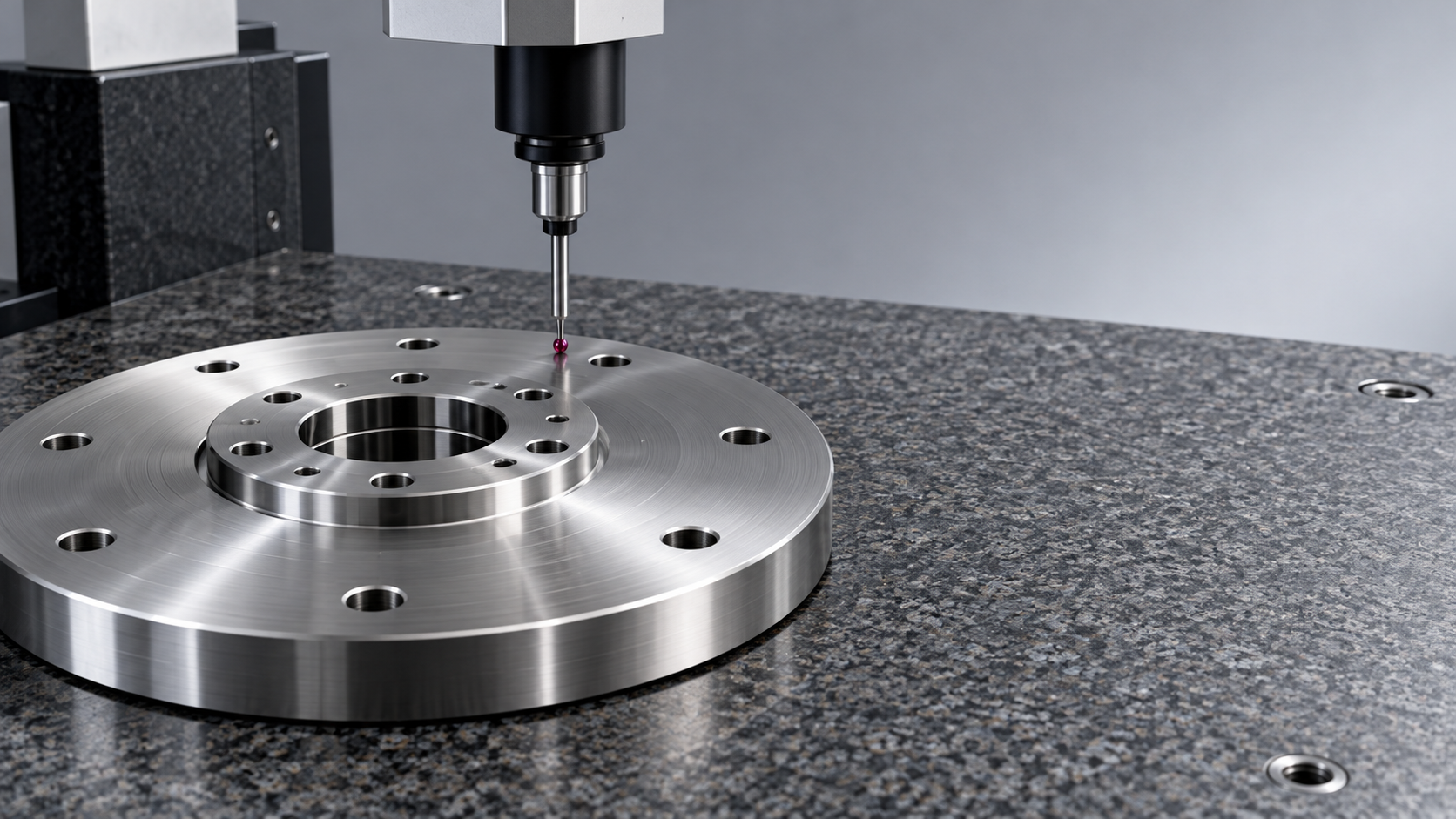
Coordinate measuring machines, height gauges, bore gauges, roundness testers, and surface finish instruments are used to verify critical dimensions and geometric tolerances. For aerospace parts, measurement capability must match the tolerance being claimed.
Statistical process control
For repeat production, process capability data helps determine whether a supplier can consistently hold the required specification, not just pass one first article. This is highly valuable for enterprise decision-makers comparing sourcing options.
Traceability and documentation
Aerospace customers often require material certificates, inspection records, process routing, calibration status, and batch traceability. A supplier that can machine accurately but cannot provide controlled documentation may still fall short of aerospace expectations.
How buyers and decision-makers should evaluate a CNC supplier for aerospace parts
For procurement teams and managers, the key issue is risk reduction. A supplier should be evaluated not just on quote price, but on its ability to deliver reliable parts without hidden quality costs.
Key evaluation points include:
- Relevant aerospace experience: Has the supplier machined similar parts, materials, and tolerance levels before?
- Machine capability: Are the available CNC lathes, machining centers, or multi-axis systems suited to the part geometry and size?
- Process engineering depth: Can the team explain how it will control distortion, heat, tooling, and critical datums?
- Inspection capability: Does the supplier have the metrology system and quality discipline to support aerospace-level verification?
- Production consistency: Can it repeat results at low volume, prototype stage, and scaled production?
- Documentation and compliance readiness: Are traceability and reporting systems mature enough for regulated industries?
Decision-makers should also ask for examples of first article inspection, process control plans, and corrective action methods. These details often reveal more about real capability than marketing claims about “high precision” alone.
Where tight tolerance challenges usually appear in production
Even capable suppliers face recurring challenges in aerospace CNC manufacturing. Understanding them helps readers make better judgments.
Thin-wall deformation
Lightweight aerospace design often means low rigidity parts. These can deflect during clamping or cutting, making dimensional control difficult.
Deep cavity and long-reach machining
As tool overhang increases, vibration risk rises. This can affect surface quality, profile accuracy, and tool life.
Feature-to-feature positional accuracy
Complex housings and manifolds may require very accurate relationships between bores, faces, ports, and mounting features. Setup strategy and machine kinematics become critical here.
Batch-to-batch consistency
Holding tolerance on one part is not enough. Aerospace customers need consistency across runs, shifts, and material lots. This is where automation, standard work, and disciplined quality systems create real value.
How cost-effective CNC manufacturing is possible without sacrificing precision
Many buyers assume tight tolerance work is automatically expensive. While aerospace machining is never low-cost in the commodity sense, it can still be cost-effective CNC manufacturing when the process is well designed.
Cost is controlled by:
- Reducing setups through multi-axis machining
- Using stable fixtures that lower scrap risk
- Applying tool strategies that extend tool life
- Automating probing and compensation to reduce manual intervention
- Preventing rework through strong first-pass quality
- Improving planning to shorten lead times and avoid bottlenecks
For enterprise buyers, the lowest quoted unit price may not be the lowest total cost. Delays, nonconformance, excess inspection, and supplier communication problems can quickly outweigh an initial price advantage. In aerospace, reliable process capability often creates better business value than aggressive pricing.
What this means for operators, engineers, and sourcing teams
For operators and manufacturing engineers, tight tolerances in aerospace depend on discipline in setup, tooling, machine monitoring, and inspection. Small process deviations that might be acceptable in other industries can become serious issues here.
For sourcing teams and managers, the most useful takeaway is that supplier selection should focus on system capability. A strong CNC machine tool manufacturer or machining partner demonstrates not only advanced equipment, but also practical process control, quality verification, and repeatable execution.
In other words, aerospace precision is achieved through a manufacturing ecosystem: machine tool quality, process knowledge, automation, metrology, and documentation all matter together.
To summarize, CNC manufacturing for aerospace handles tight tolerances by combining high precision CNC manufacturing methods, multi-axis CNC manufacturing, material-specific machining strategies, and strict quality control. The shops that perform best are those that can repeat precision reliably, not just achieve it occasionally. For researchers, operators, buyers, and business leaders, that is the clearest standard for evaluating aerospace CNC capability.
PREVIOUS ARTICLE
Recommended for You
![]() Mitsubishi Electric Announces Physical AI System Linking Humanoid Robots and CNC MachinesMachine Tool Industry Editorial Team
 Precision Machining for Defense: Supplier Quality and Traceability ChecksManufacturing Market Research Center
![]() Nidec Machine Tool Launches MVR-5X Five-Axis Gantry MachineMachine Tool Industry Editorial Team
 Choosing a Precision Disc Parts Manufacturer in China: Tolerances and Quality ChecksManufacturing Market Research Center
![]() Siemens Executive Says AI Could Raise Factory Automation to 80%Manufacturing Market Research Center
 Choosing Automated Machine Tools for High-Mix, Low-Volume ProductionMachine Tool Industry Editorial Team


Aris Katos
Future of Carbide Coatings
15+ years in precision manufacturing systems. Specialized in high-speed milling and aerospace grade alloy processing.
▶
How thermal drift affects accuracy in high-precision manufacturingCNC Machining Technology Center▶
Industrial Machining: Selecting Processes for Tight-Tolerance Metal PartsCNC Machining Technology Center▶
How Does Precision Machining Differ From Standard Machining?CNC Machining Technology Center▶
CNC Precision: Which Tolerances, Materials, and Processes Fit Your Part?CNC Machining Technology Center▶
How to Choose Metal Machining Processes for Tight Tolerances and Production VolumeCNC Machining Technology Center
▶
Mastering 5-Axis Workholding Strategies
Join our technical panel on Nov 15th to learn about reducing vibrations in thin-wall components.

Providing you with integrated sanding solutions
Before-sales and after-sales services
Comprehensive technical support