• Global CNC market projected to reach $128B by 2028 • New EU trade regulations for precision tooling components • Aerospace deman
NYSE: CNC +1.2%LME: STEEL -0.4%

2026 Roller Conveyor Trends: Flexibility & Digital Twin Drive Overseas Procurement

Roller conveyor line suppliers and industrial automation buyers are observing a strategic shift in overseas procurement priorities, as highlighted in a May 5, 2026 report by Qianzhan Industry Research Institute. Demand for reconfigurable roller conveyor systems is rising notably in Europe, North America, and Southeast Asia—driven by needs for multi-variety, small-batch production, digital twin integration, and rapid modular changeover. This development signals implications for manufacturers, system integrators, and export-oriented automation suppliers.
Event Overview
On May 5, 2026, Qianzhan Industry Research Institute released a report indicating increased procurement interest in ‘reconfigurable roller conveyor lines’ across European, U.S., and Southeast Asian markets. Key requirements cited include support for mixed-product, low-volume manufacturing; compatibility with digital twin monitoring interfaces; and modular, fast-changeover design. Chinese leading automation line suppliers have launched smart roller conveyor systems compliant with OPC UA protocol; these systems are currently under trial at Tesla’s Berlin Gigafactory and electronics contract manufacturers in Vietnam.
Impact on Specific Industry Segments
Direct Exporters of Automation Equipment
Exporters supplying conveyor systems or integrated assembly lines to overseas OEMs and EMS providers face heightened technical specification expectations. The growing emphasis on OPC UA compliance and digital twin readiness means legacy product documentation, communication protocols, and interface testing procedures may no longer meet buyer evaluation criteria.
Contract Manufacturers & Electronics Assemblers (especially in Vietnam/Thailand)
These firms are increasingly evaluating conveyor infrastructure not only for throughput but for operational adaptability. As end customers (e.g., EV or consumer electronics brands) demand shorter product cycles and variant-rich SKUs, fixed-layout conveyors risk becoming bottlenecks. Reconfigurable systems directly affect line changeover time, validation effort, and MES integration scope.
System Integrators Serving Automotive & High-Mix Industries
Integrators deploying material handling solutions for Tier 1 automotive suppliers or medical device manufacturers must now assess whether their standard conveyor offerings support real-time data exchange via OPC UA—and whether they can demonstrate interoperability with client-side digital twin platforms (e.g., Siemens MindSphere, Rockwell FactoryTalk).
Industrial Software Providers (MES/SCADA/Digital Twin Platforms)
Vendors whose platforms ingest conveyor-level telemetry must verify compatibility with OPC UA–enabled hardware from Chinese suppliers now entering trial phases abroad. Lack of certified drivers or prebuilt connectors for new hardware may delay deployment timelines or trigger custom integration requests.
What Relevant Enterprises or Practitioners Should Focus On
Monitor official certification pathways for OPC UA–compliant conveyor hardware
While trial deployments are underway, formal conformance certifications (e.g., OPC Foundation Certified status) remain pending for many newly launched systems. Buyers should track certification progress—not just vendor claims—to assess long-term interoperability assurance.
Assess digital twin interface readiness beyond protocol compliance
OPC UA compliance is necessary but insufficient. Practitioners should verify whether the hardware exposes semantic models (e.g., via companion specifications), supports historical data buffering, and enables event-triggered notifications—capabilities critical for digital twin synchronization.
Evaluate modularity claims against physical and software-defined reconfiguration limits
‘Reconfigurable’ does not imply infinite topology changes. Users should request documented constraints: minimum curve radius, maximum load variation per zone, supported axis count for motion-linked rollers, and software-defined logic reuse across configurations.
Prepare for extended validation cycles in pilot-to-scale transitions
Trial deployments at Tesla Berlin and Vietnamese EMS sites involve controlled environments. Scaling to full production lines requires additional validation of mechanical durability under frequent reconfiguration, cybersecurity hardening of exposed OPC UA endpoints, and version-controlled firmware update processes.
Editorial Perspective / Industry Observation
Observably, this trend reflects a broader convergence between physical line flexibility and software-defined operations—not a standalone product upgrade. The emphasis on digital twin compatibility suggests that conveyor systems are transitioning from passive transport assets to active data sources within factory-wide simulation and predictive maintenance frameworks. Analysis shows this is still an early-phase signal: widespread adoption hinges on interoperability standards maturation, not just hardware availability. From an industry perspective, it is more accurate to view current trials as capability stress tests than as validated commercial benchmarks. Continuous observation is warranted—not for immediate procurement shifts, but for evolving interface expectations in RFPs and tender documents over the next 12–18 months.
This development underscores how infrastructure-level automation components are increasingly evaluated through the lens of system-level agility and data sovereignty—not just mechanical performance. It signals a quiet but consequential recalibration in what qualifies as ‘future-proof’ material handling equipment for global manufacturing networks.
Information Source: Qianzhan Industry Research Institute, May 5, 2026 report. Note: Trial deployments at Tesla Berlin Gigafactory and Vietnamese electronics contract manufacturers are confirmed; certification status, scalability timelines, and commercial rollout details remain under observation.
PREVIOUS ARTICLE
Recommended for You
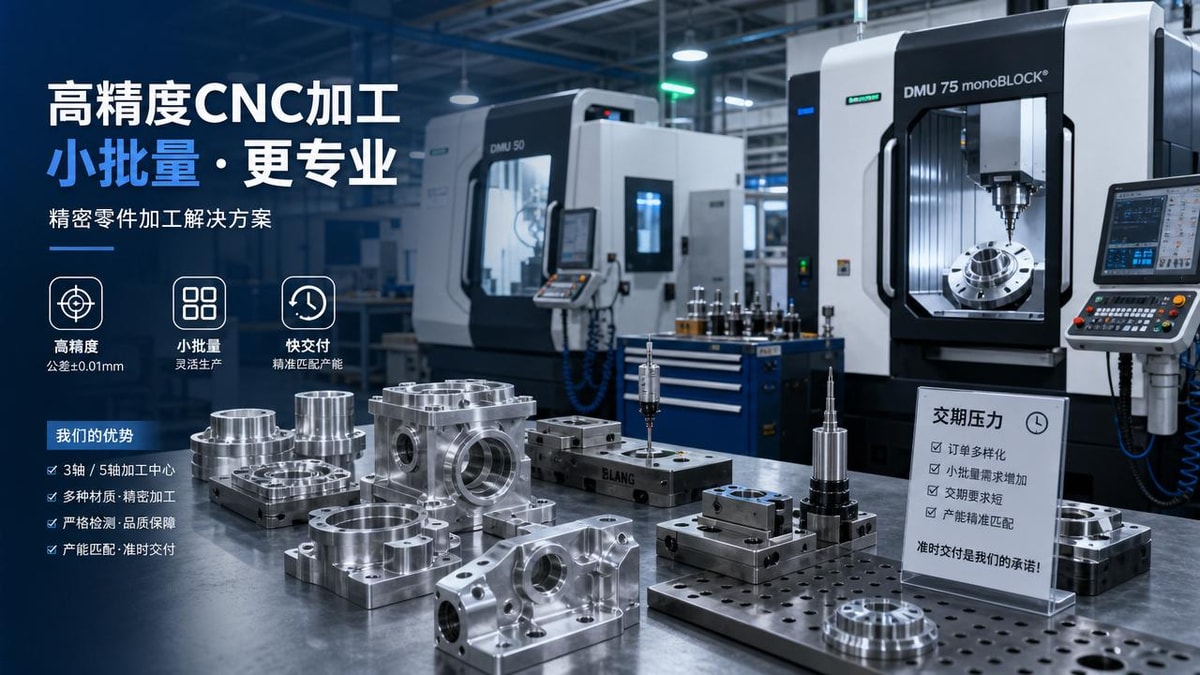
 CNC Milling Capacity Gaps Can Hurt Small Batch ProfitabilityManufacturing Market Research Center
 Industrial Robotics Payback Is Changing in Mid-Size PlantsManufacturing Market Research Center
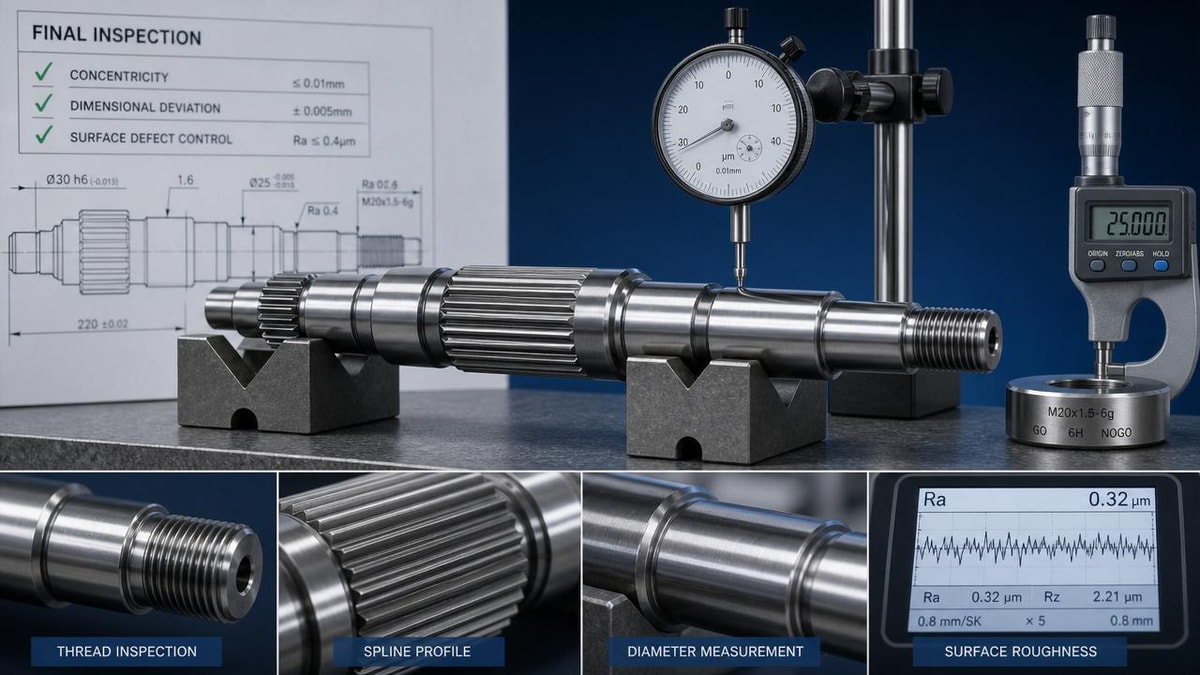
 Shaft Parts Machining Problems That Show Up at Final InspectionCNC Machining Technology Center
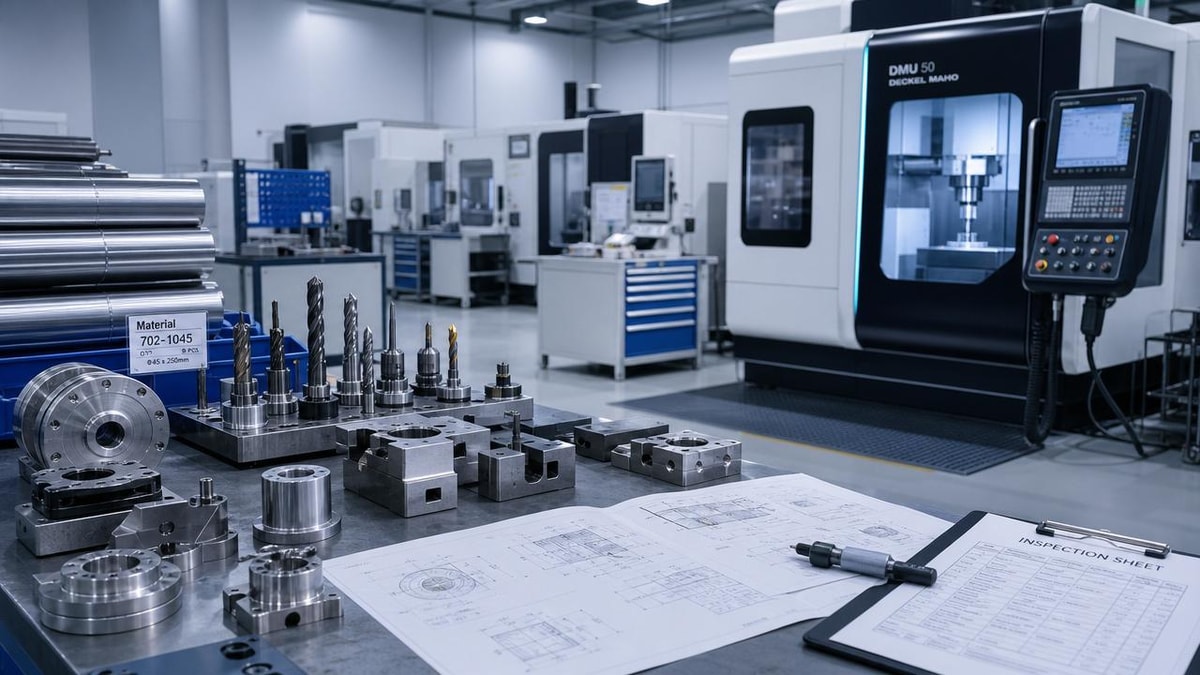
 Production Process Delays Usually Start Before Machining BeginsCNC Machining Technology Center
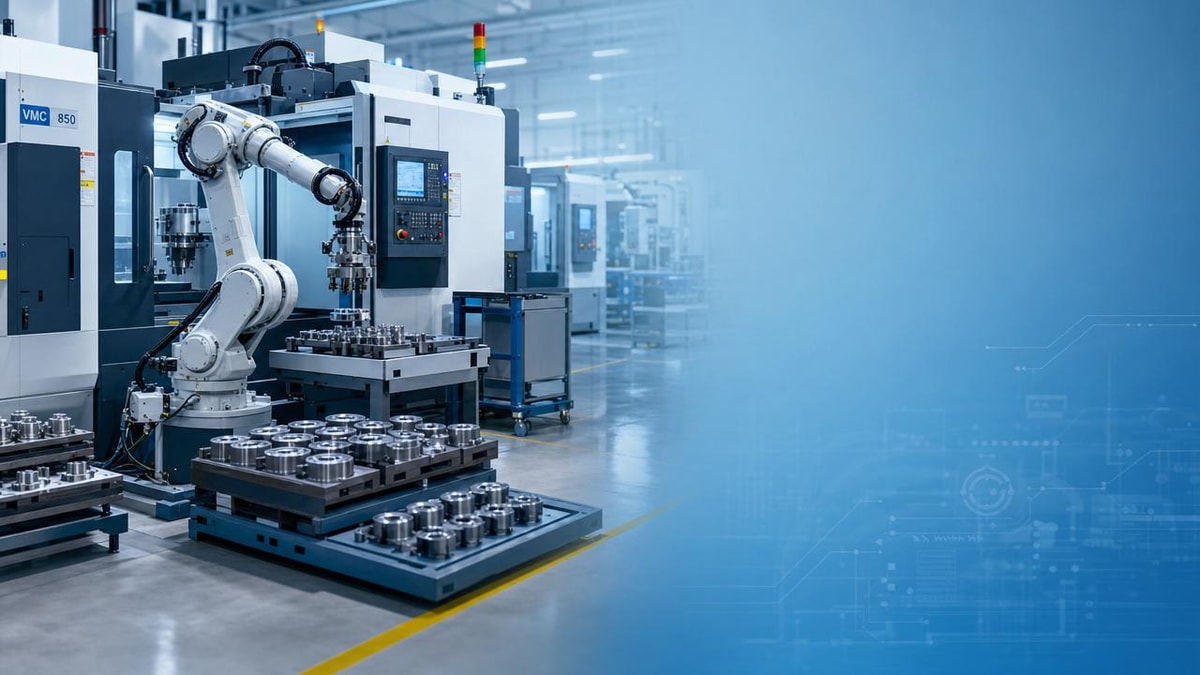
 Industrial Automation Projects Often Miss This Integration StepCNC Machining Technology Center
 CNC Metal Cutting Tool Wear Is Costing More Than You ThinkCNC Machining Technology Center

Aris Katos
Future of Carbide Coatings
15+ years in precision manufacturing systems. Specialized in high-speed milling and aerospace grade alloy processing.
▶
Why Some Automated Production Lines Stall After InstallationMachine Tool Industry Editorial Team▶
Space-Saving CNC Manufacturing Without Sacrificing WorkflowMachine Tool Industry Editorial Team▶
What Slows Automated Production More Than Machine SpeedMachine Tool Industry Editorial Team▶
2026 Roller Conveyor Trends: Flexibility & Digital Twin Drive Overseas ProcurementMachine Tool Industry Editorial Team▶
Automated Production Line faults that disrupt output for hoursMachine Tool Industry Editorial Team
Mastering 5-Axis Workholding Strategies
Join our technical panel on Nov 15th to learn about reducing vibrations in thin-wall components.

Providing you with integrated sanding solutions
Before-sales and after-sales services
Comprehensive technical support