• Global CNC market projected to reach $128B by 2028 • New EU trade regulations for precision tooling components • Aerospace deman
NYSE: CNC +1.2%LME: STEEL -0.4%

When does an automated lathe start saving real labor time?
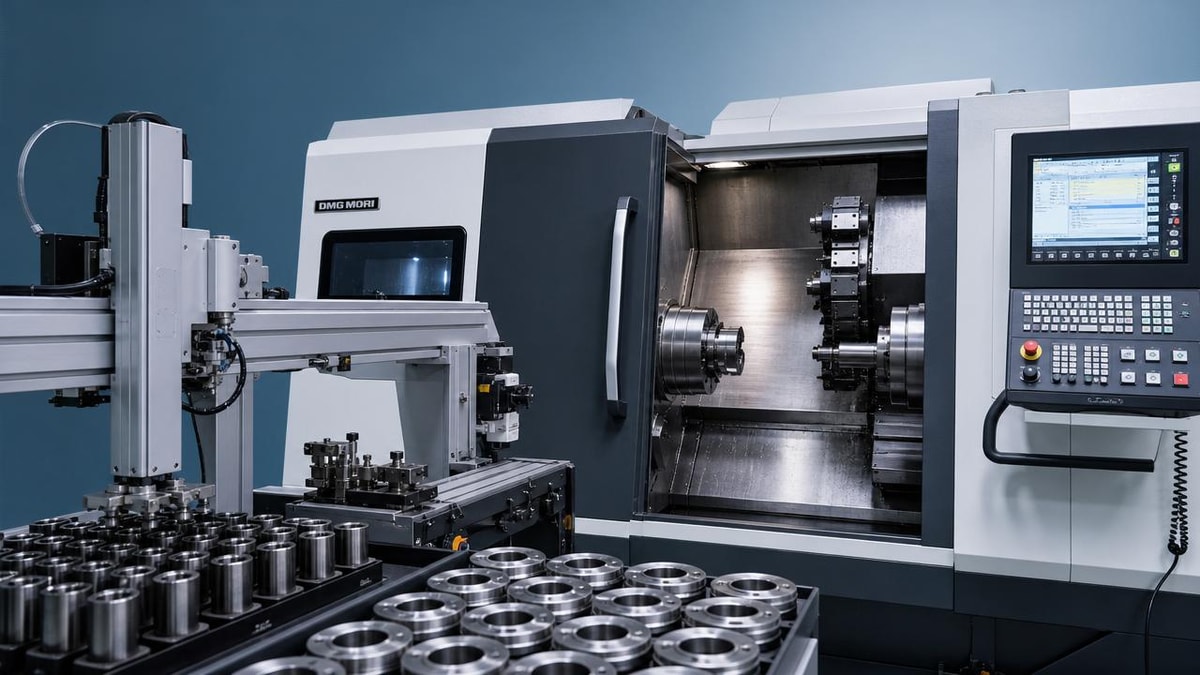
For business evaluators, the real question is not whether an automated lathe improves productivity, but when it starts delivering measurable labor savings. The answer depends on part complexity, batch size, setup stability, and operator involvement. Understanding these factors helps companies judge payback more accurately and decide where automation creates the strongest return in modern machining operations.
In CNC machining and precision manufacturing, labor saving is rarely a simple before-and-after calculation. An automated lathe may reduce direct operator touch time by 20% in one workshop and by more than 60% in another, even when the machine configuration looks similar on paper. For commercial evaluation teams, the key is to identify the point at which automation shifts from technical capability to financial impact.
That turning point usually appears when manual loading, repeated part handling, in-process checks, and idle spindle time start costing more than the automation package itself over a 12- to 36-month horizon. In industries such as automotive components, electronics hardware, energy equipment, and aerospace support machining, that threshold can be reached quickly if production is stable and the parts fit an automated workflow.
What “real labor savings” means in automated lathe operations
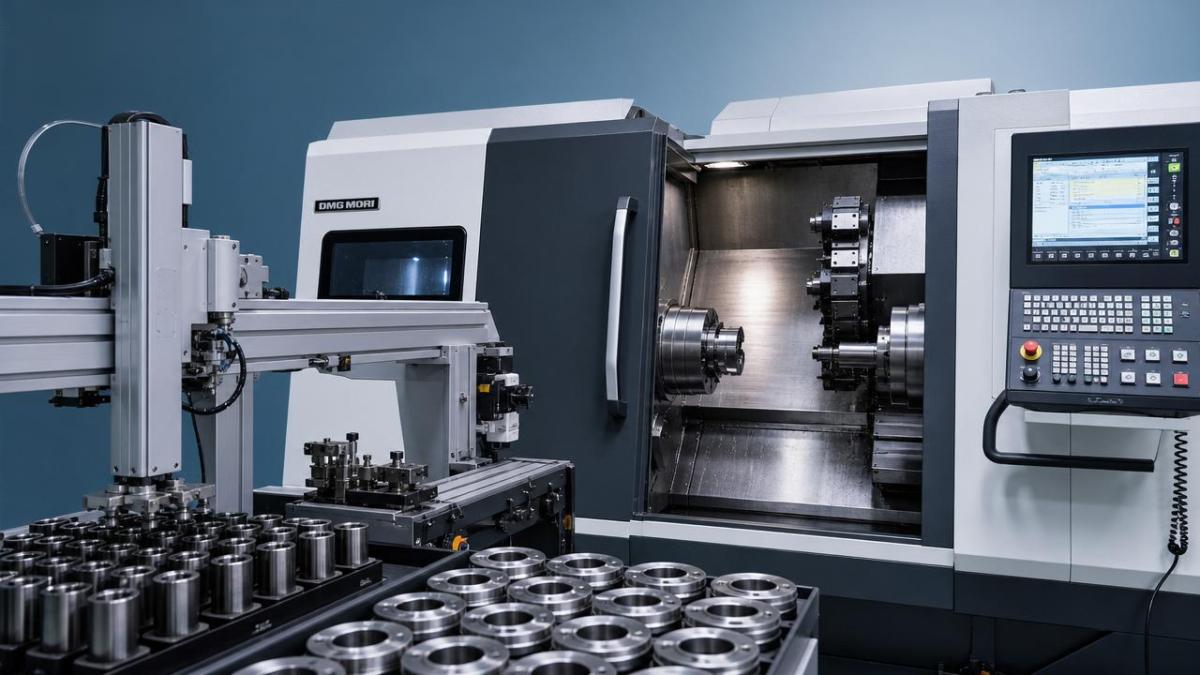
For a business evaluator, labor savings should not be limited to headcount reduction. In many modern plants, an automated lathe creates value by reallocating 1 operator from repetitive tending to 2 or 3 machines, reducing overtime, stabilizing night-shift output, and lowering the number of manual interventions per batch. That is a broader and more useful metric than asking whether one machine directly eliminates one person.
A practical assessment starts with three time categories: spindle-cutting time, handling time, and interruption time. If a part has a cycle time of 90 seconds but requires 25 to 35 seconds of manual load-unload activity, the operator is consuming a large share of the total process window. If automation can reduce that handling window to 8 to 12 seconds while also keeping the spindle active more consistently, labor savings become measurable within a few quarters.
The difference between theoretical and measurable savings
Theoretical savings often assume perfect utilization, no setup delays, and no unplanned stoppages. Measurable savings are based on actual shift conditions: how many parts are produced in 8 hours, how often an operator stops to clear chips, how frequently offsets are adjusted, and whether the machine can run lights-out for 30 to 90 minutes without intervention. The gap between those two views explains why some automation projects underperform despite strong machine specifications.
Four signals that labor time is becoming expensive
- Manual loading consumes more than 15% of total cycle time.
- One operator can supervise only 1 machine instead of 2 or more.
- Batch repetition exceeds 3 to 4 runs per month with similar tooling and fixtures.
- Night or weekend capacity is limited by staffing rather than machine availability.
When 2 or more of these conditions are present, an automated lathe often moves from optional upgrade to financially relevant investment. In high-volume turning, even a 12-second reduction in non-cutting time across 10,000 parts can recover more than 33 labor hours before considering overtime, supervision, or quality rework.
Where the savings usually show up first
The first gains are rarely hidden. They typically appear in machine attendance, shift extension, and work allocation. Shops that rely on manual chucking, repetitive shaft parts, or small discs with predictable geometry are often the fastest to benefit. If a cell currently needs 2 operators across 2 shifts and automation makes it possible to run the same output with 3 operators instead of 4, the annual labor effect becomes visible even without expanding floor space.
Additional value may come from lower scrap during handoff, fewer missed cycles during operator breaks, and more consistent part orientation. For evaluators, these secondary effects matter because they improve contribution margin, not just labor allocation.
When an automated lathe reaches the payback threshold
The payback point depends on a mix of volume, process stability, and operator dependency. In many general CNC production environments, an automated lathe starts generating credible labor savings when three conditions align: repeatable part families, batch sizes large enough to spread setup cost, and cycle times that leave room for machine tending automation to matter. If one of those factors is weak, labor savings may still exist, but they will take longer to prove.
A useful evaluation model is to compare the cost of direct labor hours saved per month against the total automation premium, including integration, guarding, grippers, workholding adjustments, and commissioning. For many shops, the target payback window is 18 to 30 months. Projects approaching 12 months are usually strong candidates, while projects beyond 36 months require more scrutiny unless they also solve staffing shortages or quality constraints.
Typical thresholds by production pattern
The table below outlines common production scenarios and the point at which an automated lathe often starts to create real labor value. These are general operating ranges rather than fixed rules, but they provide a solid starting framework for commercial reviews.
The strongest labor case is usually found in repeatable jobs with moderate to high volume. In these conditions, the automated lathe reduces attendance time consistently enough that savings can be tracked monthly. In low-volume, high-changeover work, the machine may still improve output discipline, but the labor argument depends more on shift coverage than on direct cycle reduction.
Cycle time matters, but setup stability matters more
A common mistake is to focus only on short cycle times. In reality, a 4-minute cycle on a stable part family can justify automation more easily than a 60-second cycle on a job that changes tooling every few hours. The automated lathe starts saving real labor time when the setup can remain valid long enough to spread automation overhead across meaningful output.
As a rule of thumb, if the same fixture, gripper logic, and tool package can remain effective for 1 shift or longer, the labor case improves sharply. If each new part requires 45 to 90 minutes of robot or feeder adjustment, the expected savings must be discounted accordingly.
Key variables business evaluators should measure before approval
A disciplined review should examine more than machine price and projected throughput. In the CNC machine tool industry, automation performance is highly sensitive to the operating environment. Chip behavior, raw material variation, bar feed stability, inspection frequency, and part orientation all influence whether an automated lathe reduces labor smoothly or adds new intervention points.
Five evaluation metrics that reveal the true labor case
- Operator touch time per part: measure loading, unloading, gauging, and reset tasks separately.
- Planned batch repetition: review the last 6 to 12 months of order history.
- Setup retention rate: estimate how often tooling and offsets remain unchanged between runs.
- Intervention frequency: count alarms, chip removal events, and manual recovery events per shift.
- Utilization gain potential: compare current spindle utilization with a realistic automated target, such as 55% rising to 70% or 75%.
These metrics help evaluators separate attractive presentations from durable business outcomes. If labor time is already low and intervention frequency is high, the automated lathe may become an expensive complexity layer. If touch time is high and interruptions are manageable, the business case is usually much stronger.
Decision factors that affect return speed
The following table summarizes the most common factors reviewed in purchase evaluations for turning automation. Each one influences how quickly labor savings become visible after commissioning.
The fastest returns come from stable material input, limited changeovers, and inspection plans that do not require constant attendance. If any of these three areas are weak, labor savings may still appear, but the ramp-up period often stretches from a few months to a full year.
Common evaluation blind spots
- Ignoring downtime caused by chip evacuation on gummy materials.
- Assuming one gripper design will handle 6 or 7 part geometries without compromise.
- Counting nominal machine hours instead of saleable parts shipped.
- Overlooking training time for operators and maintenance technicians during the first 4 to 8 weeks.
Which applications justify automation fastest
Not every turning job should be automated first. In precision manufacturing, the best early candidates are usually jobs with repetitive geometry, moderate takt pressure, and low orientation risk. These applications give the automated lathe a clear chance to reduce attendance while maintaining predictable quality.
Best-fit part families
Typical examples include bushings, sleeves, couplings, short shafts, threaded connectors, hydraulic fittings, and disc-like turned parts with repeatable clamping surfaces. Batch sizes often range from 300 to 3,000 pieces, and the process windows are usually stable enough for bar feeders, gantry loading, or robotic tending.
In these cases, an automated lathe often shortens direct operator involvement from nearly every cycle to periodic inspection, material replenishment, and tool-life checks. The result is not just fewer manual motions but better use of skilled labor in programming, setup optimization, and quality verification.
Applications that need caution
Parts with unstable chip formation, delicate surfaces, irregular forgings, or highly variable stock allowance may require more human supervision than expected. Likewise, jobs with critical dimensions that drift quickly due to thermal change or tool wear can reduce the labor benefit if the machine needs frequent manual compensation every 10 to 20 parts.
For these categories, evaluators should request a staged implementation plan rather than a full labor-saving assumption from day one. In many cases, the smarter path is a semi-automated lathe cell first, followed by higher autonomy after the process is stabilized.
How to implement an automated lathe without overstating the labor benefit
A good investment case depends not only on machine selection but also on rollout discipline. In global CNC and smart manufacturing projects, the most successful automation programs usually follow a 3-stage path: baseline measurement, pilot validation, and scaled deployment. This approach helps business teams confirm labor savings under real conditions before expanding capital commitment.
A practical 3-stage rollout model
- Baseline for 2 to 4 weeks: capture touch time, utilization, quality losses, and operator intervention by shift.
- Pilot for 4 to 8 weeks: automate 1 part family with stable workholding and repeat orders.
- Scale after validation: extend to adjacent parts only after confirming cycle consistency, training readiness, and maintenance support.
This model prevents a common commercial error: approving an automated lathe based on optimistic averages rather than part-level evidence. By validating 1 cell first, companies can confirm whether the expected 25%, 40%, or 50% reduction in attendance time is sustainable over multiple shifts.
Support requirements that protect the investment
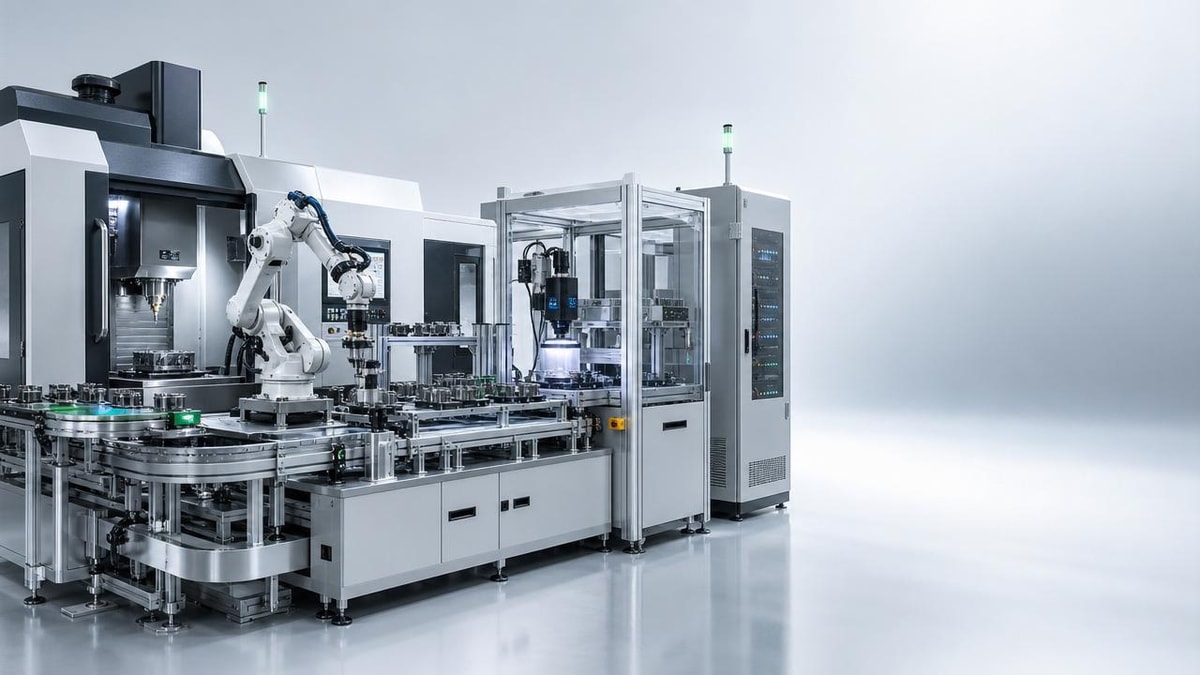
Even a well-selected automated lathe will struggle without proper support. Spare grippers, standard work instructions, preventive maintenance intervals, and clear alarm recovery steps should be prepared before full release. Many plants review the cell weekly during the first 8 to 12 weeks to track intervention patterns and identify whether labor savings are improving or flattening.
For international buyers and multi-site manufacturers, it is also important to confirm local service response times, spare part lead windows, and integration support for robots, bar feeders, and gauging devices. A strong equipment concept can lose value quickly if recovery time after a stoppage stretches from 2 hours to 2 days.
Final guidance for commercial decision-makers
An automated lathe starts saving real labor time when it operates on repeatable parts, with stable setups, manageable inspection intervals, and enough batch continuity to reduce manual attendance across a full shift. The most convincing labor case appears when non-cutting handling time is significant, operator dependency is high, and the process can be automated without creating frequent recovery events.
For business evaluators in CNC machining, the right question is not whether automation is advanced, but whether the workflow is mature enough to convert that technology into measurable labor savings within an acceptable 12- to 30-month window. If your team is reviewing turning automation, comparing equipment options, or building a plant-level ROI model, now is the time to assess part families, cycle patterns, and intervention rates in detail.
To explore a practical automated lathe strategy for your production mix, contact us for a tailored evaluation, discuss your machining scenarios, and get a solution plan aligned with your output targets, labor structure, and investment priorities.
PREVIOUS ARTICLE
Recommended for You
 Industrial Robotics payback depends on more than labor savingsManufacturing Market Research Center
 Shaft Parts machining problems that show up after final inspectionCNC Machining Technology Center
 Which Production Process changes bring the fastest output gains?CNC Machining Technology Center
 Industrial Automation projects fail when integration is underestimatedCNC Machining Technology Center
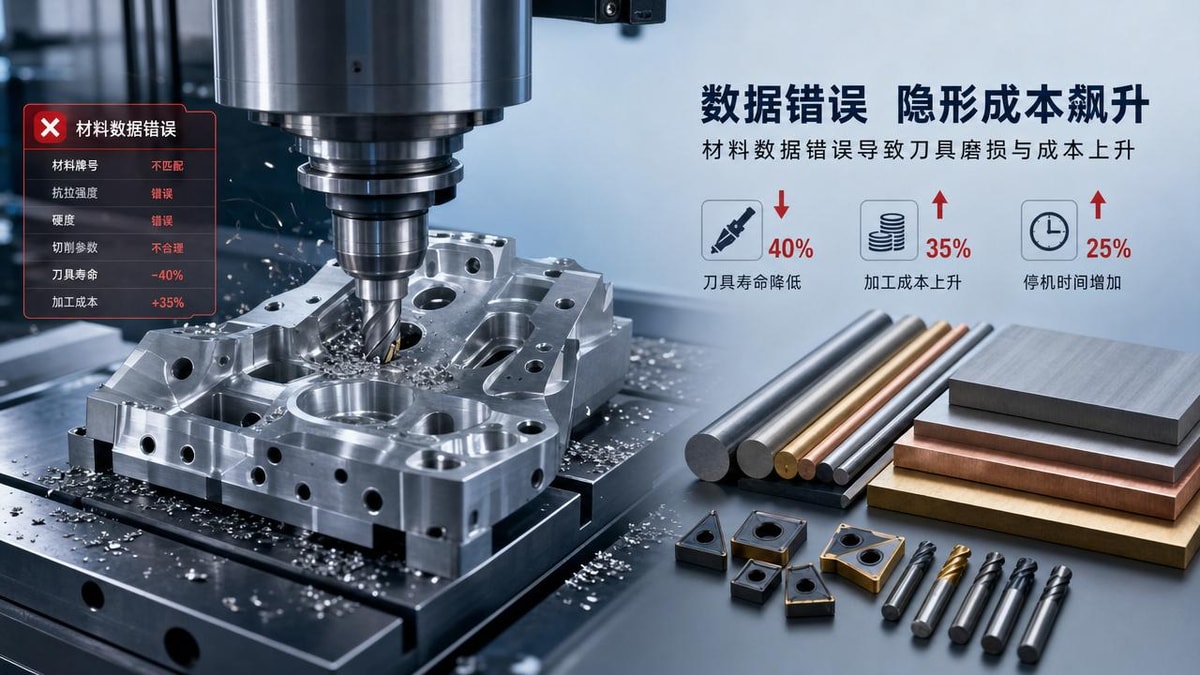
 CNC metal cutting costs rise fast when material data is wrongCNC Machining Technology Center
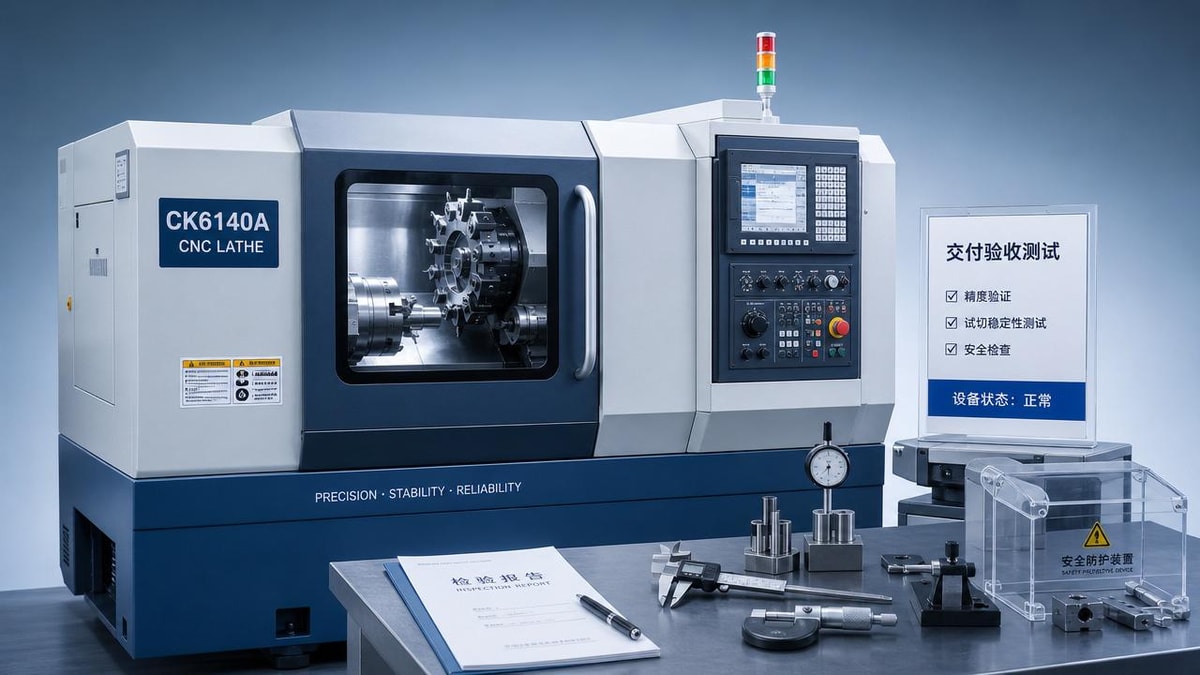
 High precision lathe claims to verify before accepting deliveryMachine Tool Industry Editorial Team


Aris Katos
Future of Carbide Coatings
15+ years in precision manufacturing systems. Specialized in high-speed milling and aerospace grade alloy processing.
▶
How much rigidity does a CNC metal lathe really need?Machine Tool Industry Editorial Team▶
When does an automated lathe start saving real labor time?Machine Tool Industry Editorial Team▶
CNC Metal Lathe Selection Mistakes That Increase Rework RatesMachine Tool Industry Editorial Team▶
Vertical Lathe Limits to Check Before Taking Larger WorkpiecesMachine Tool Industry Editorial Team▶
Choosing a Metal Lathe for Mixed Materials Without OverspendingMachine Tool Industry Editorial Team
Mastering 5-Axis Workholding Strategies
Join our technical panel on Nov 15th to learn about reducing vibrations in thin-wall components.

Providing you with integrated sanding solutions
Before-sales and after-sales services
Comprehensive technical support