• Global CNC market projected to reach $128B by 2028 • New EU trade regulations for precision tooling components • Aerospace deman
NYSE: CNC +1.2%LME: STEEL -0.4%

Industrial CNC Upgrades That Actually Improve Throughput
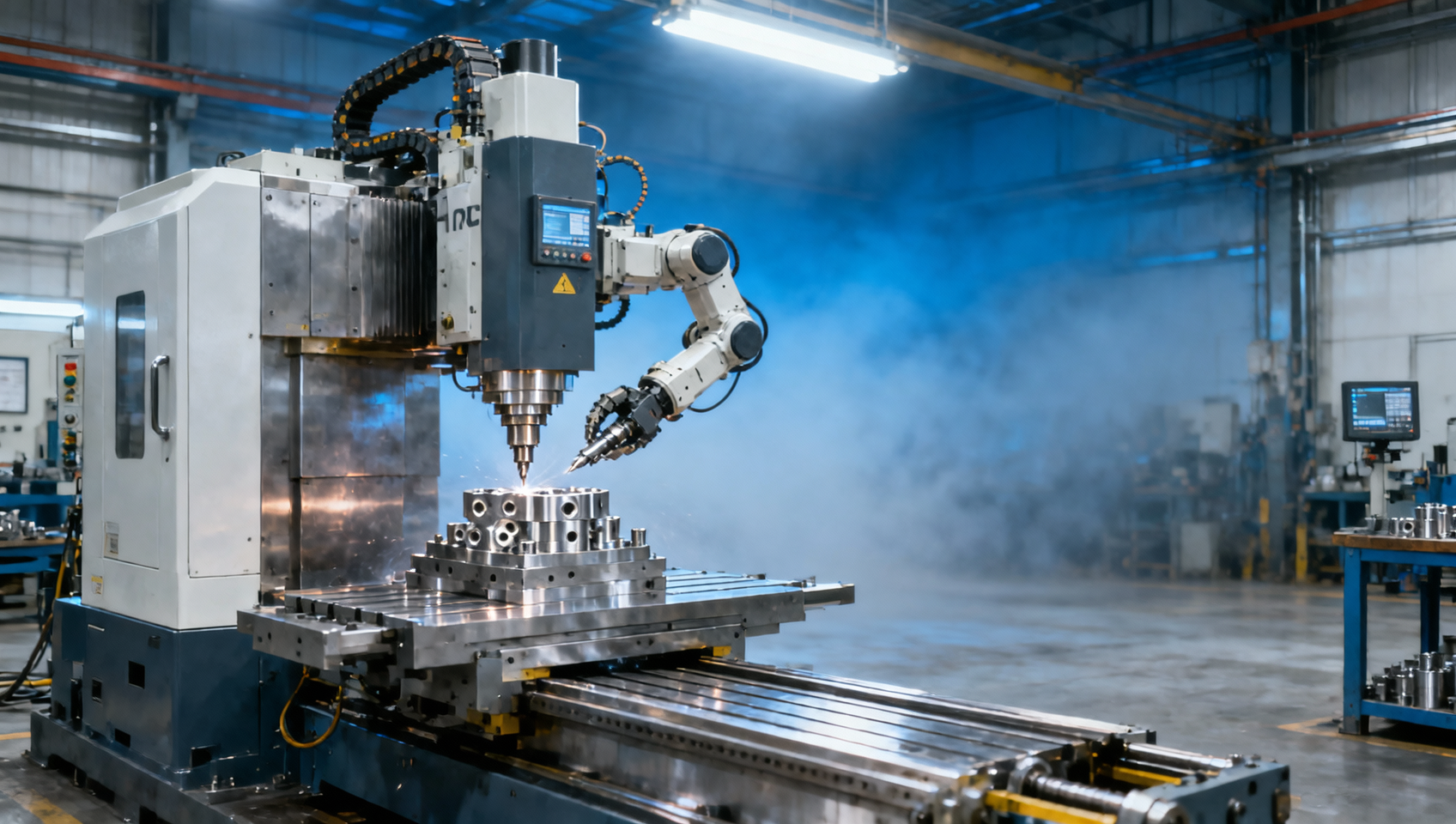
From industrial CNC retrofits to smarter CNC programming, the right upgrades can dramatically improve throughput across metal machining and CNC production. This article explores practical ways to optimize automated production, CNC milling, CNC cutting, and industrial automation—helping operators, buyers, and decision-makers identify which machine tool investments deliver measurable gains in the manufacturing industry.
Why some CNC upgrades improve throughput while others only add cost
In industrial CNC operations, throughput is not just spindle speed or feed rate. It is the combined result of cycle time, setup time, tool change efficiency, uptime, part quality, and operator intervention. A machine can look productive on paper and still lose output if changeovers take 45–90 minutes, if alarms interrupt every shift, or if scrap rises during long unattended runs.
That is why the most effective CNC machine tool upgrades are usually targeted upgrades, not blanket replacements. In many factories, a 3-step review works better than a full capital purchase: first identify the real bottleneck, then match the retrofit to that bottleneck, and finally verify performance over a 2–4 week production window. This approach is especially relevant in automotive parts, aerospace machining, energy equipment, and electronics manufacturing, where throughput losses often hide inside process variation.
For operators, the pain point is often unstable machining, difficult setups, or programming delays. For procurement teams, the challenge is comparing retrofit options with different payback periods. For plant managers and executives, the question is broader: which upgrade improves output without creating long downtime, retraining burdens, or integration risk across the wider automated production line?
In practice, throughput gains usually come from five areas: control modernization, automation interfaces, tooling and fixturing optimization, process monitoring, and smarter CNC programming. The right mix depends on whether the factory runs small-batch precision parts, medium-volume component families, or large-batch repetitive production. A high-mix shop and a dedicated line should not buy upgrades using the same logic.
Throughput bottlenecks that are frequently misdiagnosed
Many teams assume old machines are the main problem, but in real CNC production, the limiting factor may be elsewhere. A mechanically sound machining center with an outdated control can still be profitable after a retrofit, while a newer machine with poor process discipline may continue underperforming. The first task is to separate machine limitations from workflow limitations.
- Long setup windows: repeated jaw adjustment, manual tool offset entry, and fixture re-alignment can consume 15%–30% of available shift time.
- Programming inefficiency: conservative toolpaths, unnecessary retract moves, and inconsistent post-processing often inflate cycle time by several seconds per part, which becomes significant over hundreds or thousands of pieces.
- Unplanned downtime: spindle alarms, lubrication issues, encoder faults, and unstable electrical cabinets can stop production several times per week.
- Quality instability: thermal drift, tool wear variation, and poor chip evacuation create rework and force slower feeds than the machine could otherwise sustain.
When factories quantify these losses before buying, procurement decisions become much clearer. The upgrade should be linked to measurable outcomes such as setup reduction, cycle time reduction, mean time between failures, or unattended run duration, rather than general promises of higher automation.
Which industrial CNC upgrades usually deliver the fastest operational return?
Not every retrofit has the same impact horizon. Some upgrades affect throughput within days, while others improve long-term digital integration and maintenance visibility. For most manufacturers, the best-performing investments are the ones that reduce recurring friction in daily production, especially across 2-shift or 3-shift operation.
The table below compares common industrial CNC upgrades by their main throughput effect, typical implementation complexity, and the kind of production environment where they make the most sense. These are general industry ranges rather than universal outcomes, but they provide a practical starting point for evaluation.
The highest-value upgrades are often those that remove repeated losses from every shift. For example, a plant that changes setups 4–8 times per day may gain more from presetting, standardized fixtures, and program management than from a more expensive spindle upgrade. By contrast, a line running similar parts for 20–22 hours per day may benefit more from robotic loading and condition monitoring.
Another practical lesson is that upgrades should be stacked in a logical order. If programming quality is inconsistent, automation may only load bad parts faster. If fixtures are unstable, in-process probing may confirm a problem without removing it. Throughput improves fastest when machine tool hardware, tooling, and process logic are upgraded as one production system.
Control retrofit versus full machine replacement
For procurement and executive teams, one of the most common questions is whether to retrofit or replace. The answer depends on machine structure, spare parts risk, target tolerance, and required integration level. If the cast base, guideways, ballscrews, and spindle remain mechanically acceptable, a retrofit can preserve useful asset life while solving electronic obsolescence.
A simple decision framework
- Choose retrofit when geometry is stable, repeatability remains acceptable, and the main issues are CNC control age, servo reliability, communication limits, or HMI inefficiency.
- Choose replacement when structural wear is severe, accuracy recovery is costly, spindle condition is uncertain, or the machine cannot support required speeds, travels, or automation interfaces.
- Request a phased review when the machine has mixed conditions, such as sound mechanics but aging electrical systems plus inconsistent maintenance records.
A retrofit also shortens disruption in many cases. While replacement may involve foundation work, operator retraining, tooling adaptation, and line rebalance, a retrofit can sometimes be executed in a narrower maintenance window. The exact timeline varies, but 1–3 weeks is a common planning range for moderate electrical and control upgrades, followed by part qualification and operator signoff.
How to evaluate CNC upgrades before procurement approval
A strong procurement decision does more than compare quotations. It examines production impact, compatibility, implementation risk, and service support over time. In the CNC machine tool industry, this matters because a lower purchase price can be offset by integration delays, poor documentation, missing spare parts, or weak post-installation support.
The most useful method is to assess upgrades across 5 key dimensions: throughput effect, fit with current machines, installation downtime, operator learning curve, and long-term maintainability. These dimensions help information researchers move from broad market scanning to practical shortlisting, and they help decision-makers justify investments in language tied to factory output.
The table below can be used as a procurement checklist for CNC retrofits, machine tool modernization, and automated production upgrades. It is especially helpful when comparing multiple suppliers or deciding between an immediate retrofit and a staged upgrade path.
A useful internal rule is to ask every vendor the same 6 questions: what problem is being fixed, what downtime is required, what operator training is needed, what interfaces are included, what acceptance criteria will be used, and what service support is available after handover. This makes comparisons more objective and reduces the chance of buying based on presentation quality alone.
Procurement red flags that slow ROI
Some upgrade proposals look attractive but create hidden cost later. Buyers should be cautious when quotations omit commissioning detail, software version clarity, or acceptance criteria for trial parts. Another warning sign is when throughput claims are discussed without reference to the current process baseline. If nobody measures setup loss, cycle loss, or stoppage frequency before the project, the post-upgrade result will be difficult to verify.
- No defined FAT or SAT criteria for CNC retrofit acceptance.
- No statement of training duration, even though operators may need 1–3 shifts to adapt to new controls or probing routines.
- No explanation of spare parts support or remote troubleshooting process.
- No compatibility review with existing robots, pallet systems, MES links, or tool management software.
A better buying process uses a pilot mindset. Even for larger projects, decision-makers can start with one representative machine, validate performance for a defined part family, and then scale to similar assets. This reduces risk and creates real operating data for the next budget cycle.
What implementation steps actually protect output during a CNC retrofit?
The technical quality of the upgrade matters, but the implementation sequence matters just as much. Throughput projects fail when factories underestimate documentation gaps, fixture readiness, software tuning, and part validation. A well-run retrofit or automation upgrade is less about one installation event and more about controlled transition from old production state to new stable output.
In many machine tool environments, a 4-phase process works reliably: audit, engineering preparation, installation and commissioning, then production stabilization. The stabilization phase is often overlooked, yet it is where feed optimization, alarm reduction, and operator confidence are built. Without it, a technically completed project may still underperform for several weeks.
Recommended 4-phase upgrade workflow
- Audit and baseline capture: document current cycle time, setup duration, alarm history, scrap causes, and operator pain points over at least 5–10 production days.
- Engineering preparation: confirm electrical interfaces, software needs, fixture standards, tooling packages, safety requirements, and trial part selection before shutdown begins.
- Installation and commissioning: execute hardware work, parameter tuning, dry runs, and initial test cutting in a planned downtime window, often 3–10 days depending on scope.
- Stabilization and acceptance: run actual production parts for 1–2 weeks, train operators by shift, and close remaining issues with documented settings and maintenance guidance.
This workflow reduces the most common post-upgrade problem: a machine that works technically but is not fully absorbed into production. The more automated the line becomes, the more important standard work becomes as well. Tool offset rules, fixture loading instructions, alarm escalation paths, and backup procedures should all be clarified before unattended or lights-out production is attempted.
Another practical safeguard is to define 6 acceptance items before installation starts: geometric verification, functional I/O checks, safety circuit confirmation, test cut accuracy, cycle time review, and operator handover. This makes the project measurable for both technical teams and purchasing teams, and it prevents disputes about whether the machine is truly production ready.
Standards, documentation, and integration points worth checking
While specific compliance obligations vary by region and machine configuration, industrial CNC upgrades should respect common machine safety and electrical documentation practices. Buyers should request updated drawings, parameter backups, alarm lists, maintenance schedules, and any relevant safety documentation after the retrofit is complete. In automated production environments, interface clarity is as important as mechanical performance.
Where machines connect to robots, pallet systems, mist collection, coolant systems, or factory software, the integration checklist should include signal mapping, interlocks, fault states, and restart logic. These are not minor details. A missed handshake signal can stop a line as effectively as a broken spindle. In multi-machine cells, small interface gaps often become the real source of lost throughput.
Common misconceptions, practical FAQs, and next-step decisions
Factories often delay CNC upgrades because they assume the only meaningful path is to buy new machines. In reality, the better question is whether the current production asset can be made more reliable, easier to run, and better integrated with modern CNC programming and industrial automation. For many operations, the answer is yes—if the bottleneck is correctly identified and the retrofit scope is disciplined.
The following FAQs address the issues most often raised by researchers, operators, procurement teams, and decision-makers when comparing industrial CNC upgrades, automated production improvements, and machine tool modernization projects.
How do I know whether throughput problems come from the machine or the process?
Track 4 items for at least one week: cycle time by part, setup time by job, alarm frequency, and quality losses. If cycle time variation is low but output is still weak, the issue may be setup or scheduling. If alarms and manual interventions appear every shift, machine reliability or control quality may be the limiting factor. If scrap rises during longer runs, probing, tooling, coolant, or fixturing may need attention before automation is expanded.
What upgrades are most suitable for high-mix, low-volume machining?
High-mix environments usually benefit first from setup reduction and programming consistency. Tool presetting, modular fixtures, improved control interfaces, offline programming support, and in-process probing often deliver more value than heavy automation. If parts change several times per day, reducing each setup by 10–20 minutes can create more real throughput than increasing cutting speed alone.
What should buyers ask about delivery and implementation timing?
Ask for three separate timelines: engineering preparation, shutdown work, and stabilization support. A quoted lead time without these distinctions can be misleading. In many practical cases, hardware preparation may take several weeks, installation may require 3–10 days, and stable production may need another 1–2 weeks depending on complexity, operator familiarity, and part qualification requirements.
Can CNC programming changes alone improve throughput?
Yes, often significantly. Better toolpaths, improved entry and exit moves, smarter roughing strategies, reduced air cutting, and stable post-processing can lower cycle time without touching machine hardware. However, software improvements should be validated against tool life, surface finish, and spindle load. Fast code that increases chatter, heat, or rework does not improve true throughput.
Why choose a specialized industry platform or technical partner for CNC upgrade planning?
Because throughput decisions sit at the intersection of machine tools, tooling, automation, production planning, and global sourcing. A specialized platform with visibility into CNC machining, precision manufacturing, international supply trends, and practical retrofit pathways can help narrow choices faster. That means more useful support on parameter confirmation, machine tool selection, upgrade scope comparison, delivery timing, standards expectations, and supplier communication.
Why work with us when planning industrial CNC upgrades
We focus on the global CNC machining and precision manufacturing industry, with close attention to machine tools, automated production, smart factory direction, and international supply dynamics. That perspective helps buyers and factory teams compare upgrade options in a way that reflects real manufacturing conditions rather than isolated product claims.
If you are evaluating CNC retrofits, machine tool modernization, CNC milling optimization, CNC cutting efficiency, or automation upgrades, you can contact us for practical support on several decision points. These include parameter confirmation, upgrade scope review, application matching, delivery cycle discussion, standards and documentation expectations, sample part evaluation, and quotation communication across suppliers or regions.
We can also help structure the comparison process when you are deciding between retrofit and replacement, between manual loading and robotic loading, or between short-term output gains and long-term digital integration. For procurement teams, this means a clearer evaluation path. For operators, it means upgrades that are easier to use. For management, it means investments tied more directly to throughput, reliability, and production flexibility.
If you are preparing a project, send the current machine type, part category, production volume, tolerance expectations, and target timeline. With that information, the next discussion can focus on actionable topics: which CNC upgrades fit your process, what implementation window is realistic, which risks need to be controlled first, and where the fastest throughput gains are most likely to come from.
PREVIOUS ARTICLE
Recommended for You
 Heavy-duty Machining Center for mold making: Why coolant filtration standards evolve faster than OEM manualsMachine Tool Industry Editorial Team
 Quick-change Fixture Design for CNC turning: Why clamping force consistency drops after 200 cyclesCNC Machining Technology Center
 5 Axis Machining for impeller manufacturing: Why toolpath smoothing affects surface fatigue lifeCNC Machining Technology Center
 Lean Production Process implementation: Where value stream mapping fails to expose hidden machine downtimeManufacturing Market Research Center
 Modular Tooling System for flexible manufacturing: Why interface repeatability degrades faster than expectedMachine Tool Industry Editorial Team
 Industrial Automation control system for CNC machines: When cybersecurity updates disrupt scheduled maintenanceMachine Tool Industry Editorial Team

Aris Katos
Future of Carbide Coatings
15+ years in precision manufacturing systems. Specialized in high-speed milling and aerospace grade alloy processing.
▶
Heavy-duty Machining Center for mold making: Why coolant filtration standards evolve faster than OEM manualsMachine Tool Industry Editorial Team▶
High precision machine tool: Why air-bearing spindles demand more than just clean airMachine Tool Industry Editorial Team▶
Machine tool for automotive industry: Why dynamic rigidity matters more than static specsMachine Tool Industry Editorial Team▶
Machine tool for aerospace: Why thermal expansion compensation requires real-time sensor fusionMachine Tool Industry Editorial Team▶
Machine tool for electronics manufacturing: Why EMI shielding affects more than just signal integrityMachine Tool Industry Editorial Team
Mastering 5-Axis Workholding Strategies
Join our technical panel on Nov 15th to learn about reducing vibrations in thin-wall components.

Providing you with integrated sanding solutions
Before-sales and after-sales services
Comprehensive technical support