• Global CNC market projected to reach $128B by 2028 • New EU trade regulations for precision tooling components • Aerospace deman
NYSE: CNC +1.2%LME: STEEL -0.4%

Vertical lathe or horizontal setup for large diameter parts?
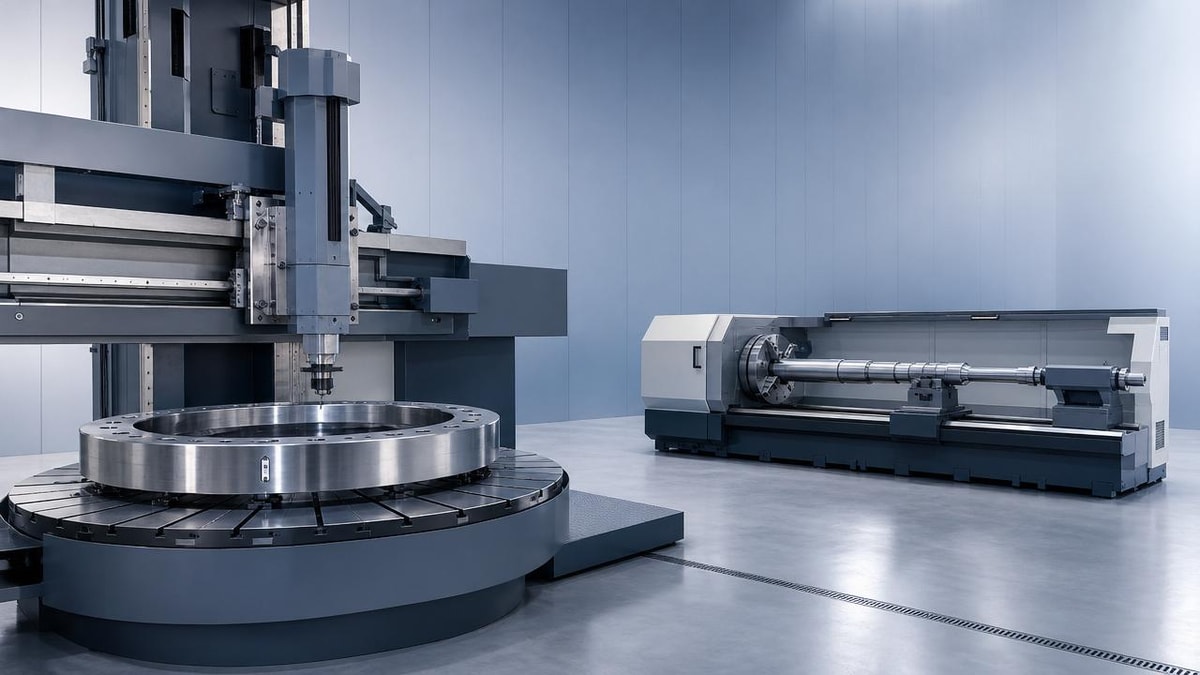
When machining large diameter parts, choosing between a vertical lathe and a horizontal setup can directly affect stability, accuracy, floor space, and production efficiency. For technical evaluators, understanding where each solution performs best is essential for reducing risk and matching machine capability to workpiece demands. This article examines the key differences, application scenarios, and decision factors behind selecting the right vertical lathe strategy.
Why scenario-based evaluation matters for large diameter machining
In the CNC machine tool industry, the choice between a vertical lathe and a horizontal turning setup is rarely a simple preference. It is a scenario decision shaped by part geometry, loading method, required tolerance, production rhythm, available floor space, and downstream process flow. A machine that performs well in one workshop may create avoidable risk in another if the workpiece behavior or handling conditions are different.
For technical assessment teams, large diameter parts bring a specific challenge: the bigger the component, the more gravity, clamping, balance, and chip evacuation influence machining results. This is why the vertical lathe is often considered first for heavy discs, rings, flanges, wheels, valve bodies, and energy-sector components. However, that does not mean every large part belongs on a vertical platform. Some long or mixed-dimension parts still fit a horizontal setup better, especially when shaft features, multiple support points, or existing line integration matter more than pure diameter.
A practical evaluation should therefore focus on where each configuration creates an advantage in real production. Instead of asking which machine is universally better, the better question is: in which application scenario does a vertical lathe reduce process risk, and in which scenario does a horizontal machine remain the more efficient choice?
Typical application scenarios where a vertical lathe stands out
A vertical lathe becomes especially attractive when the part has a large face diameter, high mass, and relatively short height compared with its width. In such conditions, gravity helps seat the workpiece on the table instead of pulling it away from the spindle axis. That basic mechanical advantage often translates into safer loading, stronger stability, and more predictable cutting behavior.
Heavy disc-shaped components
Brake discs for industrial systems, bearing rings, turbine casings, large flanges, and rotary tables are common examples. These parts often need face turning, boring, grooving, and accurate concentricity control across broad surfaces. A vertical lathe is well matched because the workpiece can rest naturally on the machine table, reducing the bending effect that may occur in horizontal clamping for heavy, wide components.
Energy and process industry parts
In energy equipment manufacturing, technical evaluators often review pump housings, valve bodies, sealing rings, and wind power components. These parts are not only large in diameter but also expensive and difficult to rework. In such a scenario, a vertical lathe offers an advantage because it can improve setup confidence, especially when handling castings with irregular mass distribution.
Low-to-medium volume, high-value machining
When production volume is moderate but every part has high material value, process stability is more important than simply maximizing spindle utilization. A vertical lathe is often selected in job shops and precision manufacturing environments where setup security, repeatable datum control, and inspection access outweigh the benefits of a more familiar horizontal platform.
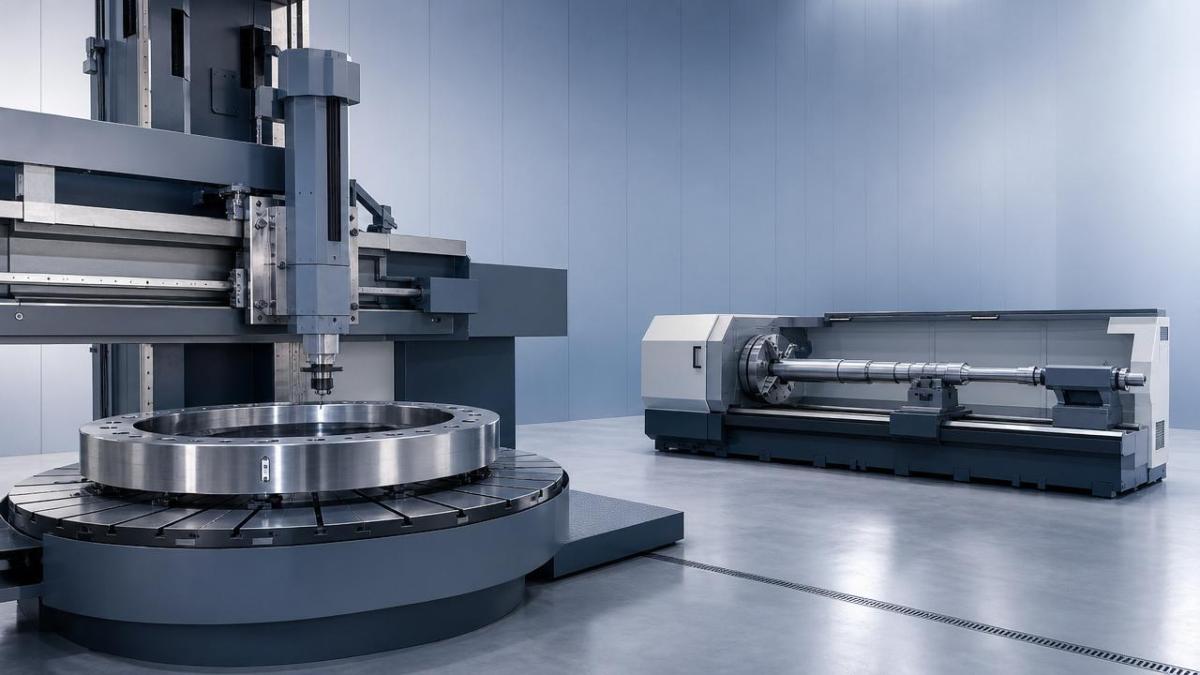
When a horizontal setup may still be the better option
Although large diameter often points toward a vertical lathe, there are many cases where a horizontal setup remains more suitable. This is common when part length becomes significant, when turning is only one step in a longer process chain, or when the manufacturer already operates standardized horizontal cells with proven fixturing.
Large parts with shaft-like features
If the workpiece combines a large flange with a long shaft section, horizontal machines may provide better support using tailstocks, steady rests, or between-centers setups. In this case, diameter alone should not drive the decision. The real issue is whether the machine can control deflection across the entire part while maintaining access to all required features.
High-throughput standard production lines
Some automotive, industrial equipment, and general manufacturing operations are optimized around horizontal turning centers, automated loading systems, and common tooling packages. If the part family is already well suited to that environment, changing to a vertical lathe may increase complexity without enough return. This is especially true when diameter is large but weight is still manageable and cycle time is the dominant KPI.
Facilities with crane or layout constraints
A vertical lathe can save floor footprint in some cases, but total installation suitability depends on ceiling height, overhead lifting approach, foundation conditions, and material flow. In a workshop where parts move on long transfer routes or where vertical loading is awkward, a horizontal machine may fit better into the real operating pattern.
Scenario comparison: what technical evaluators should check first
The most effective evaluation approach is to compare the part and process requirements side by side. The table below summarizes the typical differences between a vertical lathe and a horizontal setup for large diameter applications.
How needs change across industries and business models
Different industries evaluate a vertical lathe from different angles. In aerospace and energy equipment, technical teams focus more on process reliability, traceability, and part integrity because a single failure carries high cost. In general subcontract machining, the focus may shift toward setup versatility and whether one machine can handle several workpiece categories without excessive changeover.
A large OEM may also assess the decision differently from a smaller precision machining supplier. OEM environments often care about long-term platform compatibility, automation integration, and predictable takt planning. Smaller manufacturers may place greater emphasis on machine flexibility, operator skill requirements, and how quickly the vertical lathe can start generating value across mixed orders.
This means the same large diameter part can lead to different machine recommendations depending on who is buying, how the parts are scheduled, and whether the process must support one flagship component or a broad product mix.
Scenario-based selection criteria for a vertical lathe project
For technical evaluators, a reliable decision usually comes from a structured screening checklist. The goal is not just to compare machine size, but to confirm whether the vertical lathe supports the actual process scenario better than the alternative.
1. Check the diameter-to-height ratio
If the part is wide, heavy, and relatively shallow, a vertical lathe is often favored. If it is long, stepped, or needs support over distance, horizontal turning may be more natural.
2. Review loading and fixture risk
A machine can look ideal on paper but become inefficient if loading is awkward. Evaluate crane approach, chuck access, fixture repeatability, and whether the workpiece seats consistently. For large castings and forgings, this step often becomes decisive.
3. Match tolerance zones to machine behavior
A vertical lathe may improve confidence in face-related features, large bores, and concentric surfaces. A horizontal setup may better control long axial relationships. The required critical dimensions should guide the choice.
4. Include process chain integration
If the part goes from turning to drilling, milling, probing, or automated inspection, the best solution may be a multifunction vertical lathe or a horizontal cell already linked to other stations. Evaluators should not isolate turning from the wider production route.
Common misjudgments in large diameter machine selection
One common mistake is choosing a vertical lathe only because the part diameter is large. Diameter matters, but weight distribution, feature location, and support method matter just as much. Another frequent issue is underestimating handling time. A technically stable setup can still lose business value if part loading and alignment consume too much non-cutting time.
Technical teams also sometimes focus too heavily on machine capacity numbers while ignoring real production variation. If future parts may include different heights, eccentric castings, or extra machining faces, flexibility should be part of the evaluation. Finally, some projects overlook operator experience. A vertical lathe can simplify some heavy-part operations, but the full benefit depends on workholding discipline, measurement practice, and maintenance support.
Practical recommendation for technical evaluators
If your application centers on large, heavy, round components with demanding face accuracy and difficult handling, a vertical lathe deserves serious priority in the shortlist. If your parts combine large diameter with long axial features, repeat-flow automation, or existing horizontal line compatibility, a horizontal setup may still offer the better total solution.
The most dependable path is to evaluate real parts, not abstract machine categories. Build the decision around sample workpieces, fixture concepts, loading sequence, tolerance-critical features, and expected batch pattern. In the CNC and precision manufacturing sector, the best vertical lathe decision is rarely the most obvious one at first glance; it is the one that aligns machine physics, process stability, and business workflow in the same scenario.
For teams comparing options, the next step should be a structured technical review with part drawings, weight data, tolerance maps, and handling constraints. That approach will show whether a vertical lathe is the right strategic fit, or whether a horizontal solution remains the smarter choice for your large diameter production environment.
PREVIOUS ARTICLE
NEXT ARTICLE
Recommended for You
 Industrial Robotics payback depends on more than labor savingsManufacturing Market Research Center
 Shaft Parts machining problems that show up after final inspectionCNC Machining Technology Center
 Which Production Process changes bring the fastest output gains?CNC Machining Technology Center
 Industrial Automation projects fail when integration is underestimatedCNC Machining Technology Center
 CNC metal cutting costs rise fast when material data is wrongCNC Machining Technology Center
 High precision lathe claims to verify before accepting deliveryMachine Tool Industry Editorial Team

Aris Katos
Future of Carbide Coatings
15+ years in precision manufacturing systems. Specialized in high-speed milling and aerospace grade alloy processing.
▶
Vertical lathe or horizontal setup for large diameter parts?CNC Machining Technology Center▶
Metal lathe size mistakes that create setup headaches laterCNC Machining Technology Center▶
Industrial Turning Jobs That Need Process Review Before QuotingCNC Machining Technology Center▶
Industrial Lathe Accuracy Problems That Look Like Tool WearCNC Machining Technology Center▶
Automated Lathe or Manual Setup: Where Downtime Really HidesCNC Machining Technology Center
Mastering 5-Axis Workholding Strategies
Join our technical panel on Nov 15th to learn about reducing vibrations in thin-wall components.

Providing you with integrated sanding solutions
Before-sales and after-sales services
Comprehensive technical support