• Global CNC market projected to reach $128B by 2028 • New EU trade regulations for precision tooling components • Aerospace deman
NYSE: CNC +1.2%LME: STEEL -0.4%

CNC Milling Surface Finish Problems Linked to Tool Path
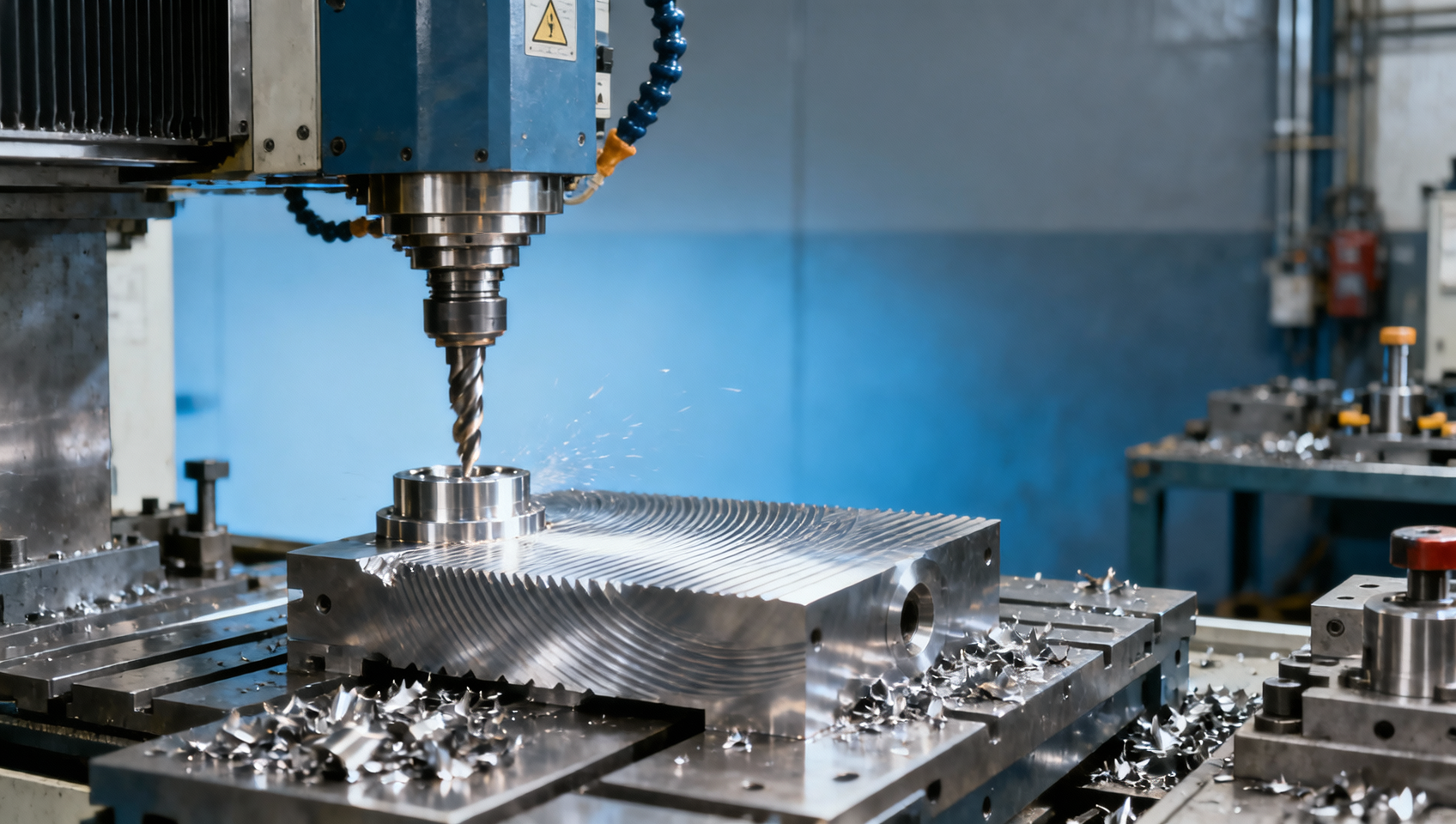
Surface finish issues in CNC milling are often traced back to tool path strategy, cutter engagement, and machine dynamics. For professionals in metal machining and industrial CNC, understanding how CNC programming affects CNC cutting quality is critical to improving the production process, reducing rework, and supporting more reliable automated production in today’s Manufacturing Industry.
Why tool path strategy has such a direct impact on CNC milling surface finish
In CNC milling, surface finish is not determined by spindle speed and feed rate alone. Tool path planning controls how the cutter enters material, how much radial engagement changes from one segment to the next, and how the machine reacts during acceleration and deceleration. When a programmed path creates unstable cutter load, even a capable machining center can leave visible marks, waviness, burrs, or inconsistent texture.
This matters across the broader manufacturing sector because automotive parts, aerospace brackets, energy components, and electronics housings often need both dimensional accuracy and predictable appearance. In many shops, the acceptable Ra target for a milled functional surface may fall within a typical finishing range such as Ra 0.8–3.2 μm, while semi-finish operations may allow rougher values. If the tool path is wrong, the process can miss the target even when the cutting tool is new.
For operators, the problem often appears as chatter marks, step-over lines, or edge pull at corners. For procurement teams, the hidden issue is that poor surface finish increases inspection time, polishing labor, and scrap risk. For decision-makers, the bigger concern is unstable output across 2-shift or 3-shift production, especially in automated production lines where repeatability matters more than one-time success.
A practical way to view the issue is simple: tool path defines cutting behavior over time. It influences tool engagement every second, affects machine load every few milliseconds, and determines whether the cutter follows a smooth, controlled route or a path full of sudden directional changes. In high-precision CNC machining, those small changes are often the difference between first-pass acceptance and rework.
Common surface finish symptoms linked to programming rather than hardware failure
Many production teams first suspect spindle wear, poor tool quality, or weak fixturing. Those can be real causes, but programming errors are frequently overlooked. A poor tool path may create abrupt entry marks, visible seams between passes, directional gloss variation, or fine ripple patterns that repeat at regular intervals. When the same defect appears on multiple machines using the same NC strategy, the root cause is often in CAM output, not in the machine alone.
Typical risk areas include 90-degree corners, deep pocket walls, thin-wall sections, and large planar surfaces. In these areas, a change from 10% step-over to 40% engagement within one path segment can destabilize the cut. On high-speed machines, acceleration behavior may amplify that instability. On older equipment, backlash or servo lag can make the resulting finish even more visible.
- Straight parallel passes may leave directional lines on large cosmetic surfaces.
- Sharp retract and re-entry moves can cause witness marks near boundaries.
- Poor lead-in and lead-out strategy often damages edges or leaves dwell marks.
- Uneven cusp height from inconsistent stepover makes polished parts harder to finish downstream.
Which tool path problems cause rough surfaces, chatter marks, or visible pass lines?
Not all tool paths fail in the same way. Some create excessive tool load, while others create motion instability. In practical shop-floor terms, surface finish problems usually come from four areas: inconsistent cutter engagement, poor corner control, wrong step-over for the target finish, and path transitions that force the machine to slow down too sharply. Each one can degrade CNC cutting quality even before tool wear becomes severe.
A common example is conventional raster finishing on a sculpted surface with frequent slope changes. If the path crosses steep and shallow areas in the same pass, chip thickness and machine response vary continuously. Another example is pocket milling with full-width engagement at corners. Even if the average feed looks acceptable, corner load spikes can leave chatter bands or tonal changes on the finished wall.
The table below helps teams connect visible surface finish defects with likely tool path causes and first-level corrective action. This is useful for process engineers, operators, and buyers comparing CAM capability or machine process suitability.
The pattern is clear: many finish defects are predictable once the relationship between engagement and machine motion is understood. That is why advanced CNC machining environments increasingly review tool path simulation, stock model behavior, and machine kinematics before releasing programs into production.
High-risk tool path choices that deserve extra review
When deadlines are tight, teams often reuse old programs or default CAM templates. That saves time in the short term, but it can create finish variation during serial production. Shops handling mixed materials such as aluminum, stainless steel, and alloy steel should be especially careful, because one path style rarely performs equally well across all materials.
Four programming decisions to verify before release
- Confirm whether the step-over matches the target surface class and post-process allowance.
- Check whether corner engagement exceeds the planned radial load by more than 1.5x–2x.
- Review lead-in, lead-out, and retract height to avoid non-cutting witness marks.
- Simulate machine motion to identify abrupt feed reduction or excessive axis reversal.
These checks are relevant not only for programmers. They also help sourcing teams assess whether a supplier has process discipline, especially for critical parts with appearance requirements or sealing surfaces where finish consistency affects assembly quality.
How to choose a better tool path for different workpieces and production goals
There is no single best tool path for every part. The right choice depends on material, geometry, tolerance, finish target, batch size, and machine capability. For example, a path that works well for aluminum housings on a 3-axis machining center may not deliver the same CNC milling surface finish on hardened steel inserts or thin-wall stainless parts. The goal is to match path strategy to both part behavior and business requirement.
For information researchers and process planners, it helps to divide tool path selection into three layers: roughing stability, semi-finishing stock control, and final finishing texture. If any one of these stages is weak, the final surface can suffer. Shops that try to fix a roughing problem only in the final pass usually spend more cycle time without solving the underlying instability.
The comparison below shows how common tool path styles align with different surfaces, production conditions, and finish priorities. It is intended as a practical guide for machining teams and procurement managers evaluating process capability.
From a decision standpoint, the most efficient process is not always the one with the shortest cycle time on screen. If a constant cusp strategy adds 8%–15% machining time but reduces hand finishing by 30–50 minutes per part, it may still be the better production choice. This is especially relevant in export manufacturing, where consistency across batches matters more than isolated speed claims.
Selection logic for operators, buyers, and managers
A strong selection process should connect technical choice to business impact. Operators focus on stability, programmers focus on path quality, purchasers focus on tooling and software cost, and executives focus on throughput and risk. The most useful CNC process discussions bring these views together instead of treating surface finish as a purely technical issue.
- If the part is cosmetic, prioritize path consistency and low witness marking over the shortest cycle.
- If the part is functional, verify the finish range needed for sealing, bonding, or bearing contact.
- If the batch is large, choose a path with repeatable machine load across 100, 500, or 1,000 parts.
- If multiple suppliers are involved, compare their CAM strategy and inspection method, not just unit price.
This cross-functional view is increasingly important as smart manufacturing and digital process control become standard in modern CNC machine tool operations. A well-selected tool path supports both product quality and supply chain reliability.
What should buyers and decision-makers evaluate before approving a CNC milling process?
In many B2B projects, purchasing teams are asked to compare suppliers or internal process options without a clear finish-control checklist. That creates risk. A supplier may quote aggressive lead times and low cost, but if the tool path strategy is unstable, the actual production process may require additional polishing, fixture changes, or inspection loops. Surface finish then becomes a cost issue, not only a machining issue.
A reliable evaluation framework should cover at least 5 key areas: material-specific path strategy, machine capability, tooling plan, inspection method, and change-control discipline. It should also define whether finish acceptance is based on visual standard, roughness value, functional performance, or a combination of all three. Without that definition, supplier comparisons remain incomplete.
The table below provides a practical procurement and process review framework for CNC milling projects where surface finish matters. It can be used during RFQ review, pilot production approval, or supplier audit discussions.
For many industrial buyers, this framework shortens technical clarification time by 1–2 review cycles. It also helps avoid selecting a process that looks economical in quotation form but performs poorly during launch. In sectors such as aerospace support machining, automotive fixtures, and energy equipment parts, this discipline is often more valuable than marginal price reduction.
A practical approval workflow before mass production
Before releasing a CNC milling process into stable production, companies should set a short but structured validation path. This is especially useful for international sourcing, where communication gaps on finish expectation can create delays of 7–15 days if issues are found only after shipment.
Recommended 4-step process
- Review drawing notes, roughness requirements, cosmetic zones, and functional surfaces.
- Confirm CAM path logic, tool list, stock allowance, and expected cycle time range.
- Run a pilot batch of 3–10 pieces and compare finish consistency, not only one good sample.
- Freeze approved parameters, revision control, and inspection checkpoints before scaling up.
This workflow reduces avoidable variation and gives managers a clearer basis for delivery commitments, tooling budget, and supplier communication.
FAQ: common misunderstandings about CNC milling surface finish and tool path control
Does a better cutting tool automatically solve surface finish problems?
Not always. A premium cutter can improve stability, but it cannot fully compensate for poor path design. If engagement spikes, the machine hesitates in corners, or the step-over is too aggressive, finish issues will still appear. In many cases, changing from a generic path to a constant-engagement or better finishing strategy creates more improvement than changing tool brand alone.
The most effective order is usually this: first stabilize the path, then optimize tooling, then fine-tune feeds and speeds. That sequence prevents unnecessary tooling cost and makes process results easier to repeat across machines or shifts.
Is slower feed rate the safest way to improve CNC cutting quality?
Reducing feed rate can help in specific situations, but it is not a universal fix. If the surface defect comes from path reversal, dwell marks, or uneven stock left for finishing, slower feed may only increase rubbing and heat. A balanced process looks at feed per tooth, path smoothness, and engagement control together rather than treating speed reduction as the only response.
For example, a finishing pass with a stable 5%–8% step-over and smoother arc transitions may outperform a slower but poorly segmented path. This is why experienced CNC teams review both NC code behavior and machine motion response before changing basic cutting data.
How can companies judge whether a supplier truly understands surface finish control?
Ask for process logic, not only sample photos. A capable supplier should be able to explain how roughing, semi-finishing, and finishing are separated; how tool path entry points are managed; how finish is inspected; and how parameter changes are controlled during repeat orders. If the answer focuses only on machine brand or polishing after machining, the process may not be robust enough.
A good discussion also includes lead time and trial plan. For many custom machined parts, pilot verification may take 3–7 days, while full production planning may take 2–4 weeks depending on tooling, material, and batch size. Clear communication at this stage reduces cost and quality surprises later.
What are the most overlooked risks in automated or multi-shift CNC production?
The biggest overlooked risk is assuming a stable first article means stable mass production. In unattended or semi-automated production, minor tool wear, thermal drift, coolant variation, and fixture contamination can gradually change surface appearance. If the path is already close to the limit, these small shifts can push finish quality out of tolerance after several hours of continuous running.
That is why robust CNC milling processes include scheduled tool checks, offset review at fixed intervals, and finish monitoring on critical surfaces. In many plants, reviewing key finish points every 2–4 hours during launch is more effective than waiting for end-of-shift inspection.
Why work with a platform focused on global CNC machining and precision manufacturing
Surface finish problems linked to tool path are rarely isolated issues. They connect programming quality, machine capability, tooling, fixturing, inspection, and delivery planning. A platform that follows the global CNC machine tool industry can help buyers, engineers, and managers evaluate these factors together instead of making decisions from a single quotation sheet or one trial sample.
Because modern manufacturing is moving toward higher precision, greater automation, and digital integration, process decisions now affect more than one workshop. They influence supply chain reliability, launch timing, and downstream assembly quality. This is especially true in sectors such as automotive manufacturing, aerospace support production, energy equipment, and electronics machining, where consistent CNC cutting quality supports broader production efficiency.
If you are comparing suppliers, refining an internal CNC milling process, or planning a new production line, we can help you discuss the right questions early. You can consult on tool path suitability, machining process selection, finish requirements, pilot batch planning, delivery cycle expectations, sample support, and quotation alignment with technical risk. That makes the decision process faster and more reliable for both procurement and engineering teams.
Contact us if you need support with parameter confirmation, CNC process selection, drawing review, finish-related risk assessment, production lead time discussion, or custom machining solution planning. For B2B projects, early clarification on these points often saves 1–2 rounds of rework and helps turn CNC milling surface finish control into a predictable part of the manufacturing process rather than a recurring problem.
PREVIOUS ARTICLE
Recommended for You
 Heavy-duty Machining Center for mold making: Why coolant filtration standards evolve faster than OEM manualsMachine Tool Industry Editorial Team
 Quick-change Fixture Design for CNC turning: Why clamping force consistency drops after 200 cyclesCNC Machining Technology Center
 5 Axis Machining for impeller manufacturing: Why toolpath smoothing affects surface fatigue lifeCNC Machining Technology Center
 Lean Production Process implementation: Where value stream mapping fails to expose hidden machine downtimeManufacturing Market Research Center
 Modular Tooling System for flexible manufacturing: Why interface repeatability degrades faster than expectedMachine Tool Industry Editorial Team
 Industrial Automation control system for CNC machines: When cybersecurity updates disrupt scheduled maintenanceMachine Tool Industry Editorial Team

Aris Katos
Future of Carbide Coatings
15+ years in precision manufacturing systems. Specialized in high-speed milling and aerospace grade alloy processing.
▶
5 Axis Machining for impeller manufacturing: Why toolpath smoothing affects surface fatigue lifeCNC Machining Technology Center▶
Efficient Machining Process for aluminum alloys: Why chip evacuation defines success more than feed rateCNC Machining Technology Center▶
Multi-axis machine tool: When kinematic error mapping exposes hidden geometry driftCNC Machining Technology Center▶
CNC Programming for Multi Axis Parts Where Errors BeginCNC Machining Technology Center▶
CNC Milling Feed Rate Choices That Ruin Corner AccuracyCNC Machining Technology Center
Mastering 5-Axis Workholding Strategies
Join our technical panel on Nov 15th to learn about reducing vibrations in thin-wall components.

Providing you with integrated sanding solutions
Before-sales and after-sales services
Comprehensive technical support