• Global CNC market projected to reach $128B by 2028 • New EU trade regulations for precision tooling components • Aerospace deman
NYSE: CNC +1.2%LME: STEEL -0.4%

CNC Programming Mistakes That Slow First Article Approval
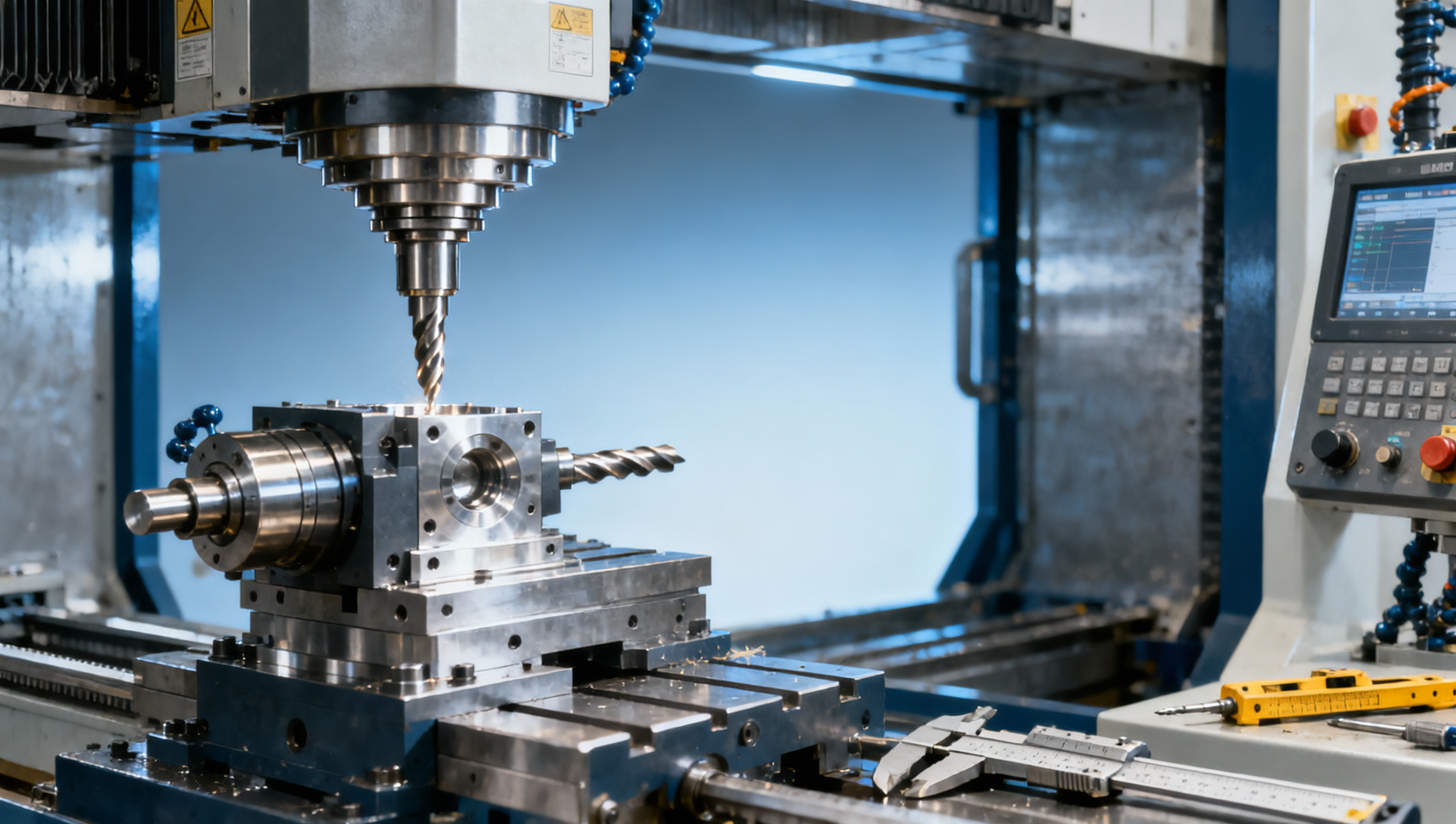
First article approval delays often start with preventable CNC Programming errors that disrupt the Production Process, waste time in CNC production, and increase risk in metal machining. In today’s Global Manufacturing environment, teams using industrial CNC, CNC milling, CNC cutting, and automated production systems need faster, more reliable validation. This article explores the most common mistakes and how to avoid them for smoother approval and stronger shop-floor performance.
Why first article approval gets delayed in CNC production
First article approval is not just a quality checkpoint. In CNC machining, it is the point where programming logic, fixture strategy, tool selection, inspection planning, and machine capability meet real production conditions. If one of these elements is weak, the first approved part may take 2–4 cycles instead of 1, increasing setup time, scrap risk, and delivery pressure.
For operators, the pain is practical: offsets keep changing, dimensions drift, and trial cuts consume machine hours. For procurement teams, repeated first article corrections can delay customer schedules by 1–3 days or more, especially in high-mix environments. For decision-makers, delayed approval means lower spindle utilization and weaker confidence in automated production readiness.
This issue has become more visible as global manufacturing moves toward tighter tolerances, multi-axis machining, and digital process control. Automotive, aerospace, electronics, and energy equipment suppliers often expect stable approval within a short launch window. In many workshops, the difference between a smooth approval and a costly delay comes down to programming discipline rather than machine horsepower alone.
A typical first article process includes 3 stages: program preparation, prove-out cutting, and dimensional validation. If the CNC program does not reflect the real workholding condition, tool reach, cutter compensation, or inspection sequence, approval slows immediately. The earlier the mistake is found, the lower the cost; the later it appears, the more departments become involved.
Common approval pressure points on the shop floor
- Programs are written from CAD geometry alone, without accounting for fixture clamps, jaw positions, soft jaws, or part orientation during real cutting.
- Tool libraries are outdated, so actual tool length, diameter, corner radius, or holder profile does not match the posted program.
- Inspection characteristics are not prioritized, causing teams to check minor features first while the main datum or critical bore still remains unstable.
- Revision control is weak, and operators receive program version B while setup sheets still show version A.
When these problems stack up, first article approval becomes a symptom of broader process disconnect. That is why CNC programming should be evaluated not only for cutting efficiency, but also for approval speed, repeatability, and inspection alignment.
Which CNC programming mistakes slow approval the most?
Not every programming error has the same impact. Some mistakes reduce cycle efficiency but still allow approval. Others directly block first article sign-off because they affect datums, feature position, surface condition, or repeatability. In metal machining, the most damaging programming mistakes usually appear in the first 30–90 minutes of prove-out.
A common example is incorrect work coordinate strategy. If G54, G55, or local offsets are assigned without clear setup logic, operators may compensate manually just to keep the process running. That can save one trial cut, but it creates hidden variation. Once the part moves to another machine, approval often fails again because the process was never truly standardized.
Another frequent issue is poor cutter compensation planning. On parts with critical wall thickness, slots, or sealing surfaces, late activation of wear compensation can create a cycle of small edits and repeated measurement. Shops that define compensation rules before prove-out usually reduce adjustment loops from 5–6 edits to 2–3 edits.
Feed, speed, and engagement assumptions also matter. A CAM program may simulate cleanly, yet chatter, burr formation, or thermal growth can still appear in live cutting. This is especially common in thin-wall aluminum, stainless steel, hardened steel, or long-reach tools. In these cases, the first article delay is caused by process instability, not by geometry alone.
High-impact mistakes and their likely consequences
The table below highlights CNC programming mistakes that most often slow first article approval across industrial CNC, CNC milling, and CNC cutting environments. It focuses on approval risk rather than only machining theory.
These issues are preventable. The key lesson is that first article approval depends on programming for production reality, not only for geometry output. Shops that build approval logic into the program package usually see fewer emergency edits during launch.
Mistakes often missed during offline simulation
- Insufficient clearance around real clamps, sub-spindle transfer positions, or tailstock support points.
- Incorrect lead-in and lead-out paths on precision bores, sealing faces, or cosmetic surfaces.
- Unrealistic assumption that all tools can hold tolerance over the full cycle without thermal drift checks.
- Failure to coordinate in-process probing, manual inspection, and final CMM sequence.
In practice, these missed details are why a part that “looked ready” in software still fails approval on the machine. That gap is where strong process planning creates real value.
How should operators, programmers, and buyers evaluate approval readiness?
Different stakeholders ask different questions. Operators want to know whether the setup is stable within the first 1–2 parts. Programmers want to know whether the process can hold key features with manageable compensation. Buyers and sourcing teams want to know whether the supplier can launch without repeated schedule changes. A useful approval-readiness review should answer all three.
For production teams, the goal is not a perfect first run at any cost. The goal is a controlled path to approval with defined checks, limited edits, and predictable timing. In many CNC production environments, a practical target is approval within one prove-out shift for simple parts and within 2–3 shifts for complex multi-axis parts, assuming material and tooling are ready.
For procurement and decision-makers, approval readiness should be treated as a supplier capability signal. A shop that can explain its offset plan, tool validation method, and inspection flow before cutting is usually more reliable than a shop that only promises fast turnaround. Launch confidence often depends more on process maturity than on machine count.
The checklist below can be used during supplier evaluation, internal pre-production review, or new part introduction. It is especially useful for global manufacturing teams managing remote approvals, mixed machine platforms, or short lead-time projects.
Approval-readiness checklist for CNC machining projects
Before approving a CNC program for first article submission, teams should review the following selection and launch criteria. This table supports procurement decisions as well as operational planning.
A supplier or internal team that can discuss these four dimensions clearly is usually easier to work with during launch. This is valuable when projects involve international trade, remote communication, or approval documents shared across multiple departments.
Five practical checks before the first cut
- Confirm the primary datum, secondary datum, and clamp logic with setup photos or fixture drawings before loading the program.
- Verify at least 5 key tool values: gauge length, diameter, nose radius, holder type, and expected wear allowance.
- Define 3–6 critical dimensions that must be measured immediately after the first controlled cut.
- Check machine-specific outputs such as work offset use, tool change logic, and safe retract positions.
- Decide who approves edits during prove-out so that operators do not wait for unclear authorization.
These checks do not eliminate every issue, but they reduce avoidable confusion. In many cases, they shorten first article approval from a full day to a few focused review cycles.
What process changes improve first article approval speed?
The fastest way to improve first article approval is not to push operators harder. It is to redesign the handoff between programming, setup, machining, and inspection. In CNC production, delays often come from fragmented information rather than from one dramatic technical error. A strong launch process creates fewer surprises in the first 2–3 parts.
One effective method is to standardize the prove-out package. Instead of sending only NC code, send a complete set: setup sheet, tooling list, fixture reference, stock condition, key dimensions, and expected compensation points. This package gives operators and inspectors the same process picture. It also supports smarter communication with buyers who need progress visibility.
Another improvement is to classify parts by launch complexity. A simple 2-axis turning part, a 3-axis milled housing, and a 5-axis structural component should not follow the same approval plan. Shops that group projects into 3 complexity levels can set more realistic timing, resource allocation, and inspection depth before the first cut begins.
In smart manufacturing environments, digital tools such as simulation, probing, presetting, and revision management help, but they are only useful when linked to standard decision points. Technology alone does not prevent approval delays. Clear process ownership does.
A practical 4-step implementation flow
- Step 1: Pre-launch review. Confirm material, blank condition, fixturing, machine suitability, and target tolerances 24–48 hours before setup.
- Step 2: Controlled prove-out. Run the first program with feed reduction, visible checkpoints, and immediate measurement of critical features.
- Step 3: Structured adjustment. Record offset edits, compensation changes, and tool substitutions in one revision log instead of verbal handoff.
- Step 4: Approval release. Lock the approved version, archive setup evidence, and define reuse conditions for the next batch or transfer machine.
This 4-step approach is especially useful for suppliers serving automotive, aerospace, electronics, and energy sectors, where traceability and repeatability matter as much as raw throughput. It also helps multinational teams align expectations across time zones and factories.
Where standards and compliance enter the picture
First article approval is often linked to broader quality frameworks. Depending on the customer and industry, teams may align documents with common quality management systems, dimensional inspection procedures, drawing revision control, and process traceability requirements. The exact standard depends on the project, but the underlying expectation is consistent process evidence.
For procurement teams, this means asking not only whether a supplier can machine the part, but whether it can manage records for setup, tooling, measurement, and revision updates. For decision-makers, that capability lowers risk when scaling from prototype to small batch, then to medium-volume production.
FAQ: common questions about CNC programming and first article approval
How many edits are normal before first article approval?
That depends on part complexity, material, and machine type. For straightforward CNC turning or 3-axis milling, many shops aim to limit approval-related edits to 1–3 controlled adjustments. For complex 5-axis parts or thin-wall features, more edits may be needed. The key is whether those edits follow a defined plan or appear as repeated trial-and-error changes.
Is CAM simulation enough to prevent approval delays?
No. Simulation is valuable for collision checking, path validation, and rough process review, but it cannot fully predict tool wear behavior, clamping distortion, thermal movement, chip evacuation, or measurement sequence problems. A reliable CNC programming process combines simulation with fixture reality, tooling verification, and early in-process inspection.
What should buyers ask suppliers before placing urgent CNC orders?
Ask about 4 items: approval lead time, fixture readiness, tooling availability, and inspection method for critical dimensions. Also ask whether the supplier has a documented prove-out process and how program revisions are controlled. These questions are often more useful than simply asking for the shortest quoted delivery date.
Which parts are most vulnerable to programming-related approval delays?
Parts with deep cavities, thin walls, multiple datums, long-reach tools, complex 4-axis or 5-axis motion, and tight geometric tolerances are usually higher risk. Components in aerospace structures, precision electronics housings, pump bodies, shaft parts, and sealing features often need more careful programming and verification before approval.
Can better approval performance reduce overall manufacturing cost?
Yes, in many cases. Faster first article approval can reduce setup waste, scrap, machine downtime, expedited logistics, and repeated inspection effort. Even when direct cycle time remains unchanged, stable approval improves scheduling accuracy and lowers hidden launch cost across the production process.
Why work with a CNC industry partner that understands approval risk early?
When first article approval runs smoothly, production launches faster, buyers gain confidence, and decision-makers see fewer surprises in cost and timing. That is why it helps to work with a platform focused on the global CNC machining and precision manufacturing industry rather than relying on fragmented information. Better decisions start with clearer technical context.
We support professionals who need practical guidance on CNC programming, machining process planning, supplier evaluation, and manufacturing trends across industrial CNC, machine tools, automated production lines, and precision components. Whether your project involves CNC milling, CNC cutting, turning centers, or multi-axis systems, the goal is the same: reduce launch friction and improve approval reliability.
You can contact us to discuss parameter confirmation, process suitability, supplier comparison, typical lead-time ranges, tooling and fixture considerations, sample support, drawing review priorities, and quotation communication. If your team is facing repeated first article delays, we can help frame the right questions before the next production run starts.
For sourcing teams, operators, engineers, and business leaders, the value is simple: fewer avoidable programming mistakes, faster approval decisions, and stronger alignment between machining reality and commercial deadlines. If you are evaluating a new project, preparing a launch, or comparing manufacturing options across regions, reach out with your part type, tolerance focus, target batch size, and delivery window.
PREVIOUS ARTICLE
Recommended for You
 Heavy-duty Machining Center for mold making: Why coolant filtration standards evolve faster than OEM manualsMachine Tool Industry Editorial Team
 Quick-change Fixture Design for CNC turning: Why clamping force consistency drops after 200 cyclesCNC Machining Technology Center
 5 Axis Machining for impeller manufacturing: Why toolpath smoothing affects surface fatigue lifeCNC Machining Technology Center
 Lean Production Process implementation: Where value stream mapping fails to expose hidden machine downtimeManufacturing Market Research Center
 Modular Tooling System for flexible manufacturing: Why interface repeatability degrades faster than expectedMachine Tool Industry Editorial Team
 Industrial Automation control system for CNC machines: When cybersecurity updates disrupt scheduled maintenanceMachine Tool Industry Editorial Team

Aris Katos
Future of Carbide Coatings
15+ years in precision manufacturing systems. Specialized in high-speed milling and aerospace grade alloy processing.
▶
5 Axis Machining for impeller manufacturing: Why toolpath smoothing affects surface fatigue lifeCNC Machining Technology Center▶
Efficient Machining Process for aluminum alloys: Why chip evacuation defines success more than feed rateCNC Machining Technology Center▶
Multi-axis machine tool: When kinematic error mapping exposes hidden geometry driftCNC Machining Technology Center▶
High-speed CNC manufacturing: Where cycle time gains collide with tool life trade-offsCNC Machining Technology Center▶
Low maintenance CNC manufacturing isn’t just about fewer service calls — here’s what gets overlookedCNC Machining Technology Center
Mastering 5-Axis Workholding Strategies
Join our technical panel on Nov 15th to learn about reducing vibrations in thin-wall components.

Providing you with integrated sanding solutions
Before-sales and after-sales services
Comprehensive technical support