• Global CNC market projected to reach $128B by 2028 • New EU trade regulations for precision tooling components • Aerospace deman
NYSE: CNC +1.2%LME: STEEL -0.4%

CNC milling tool paths that waste cycle time without notice
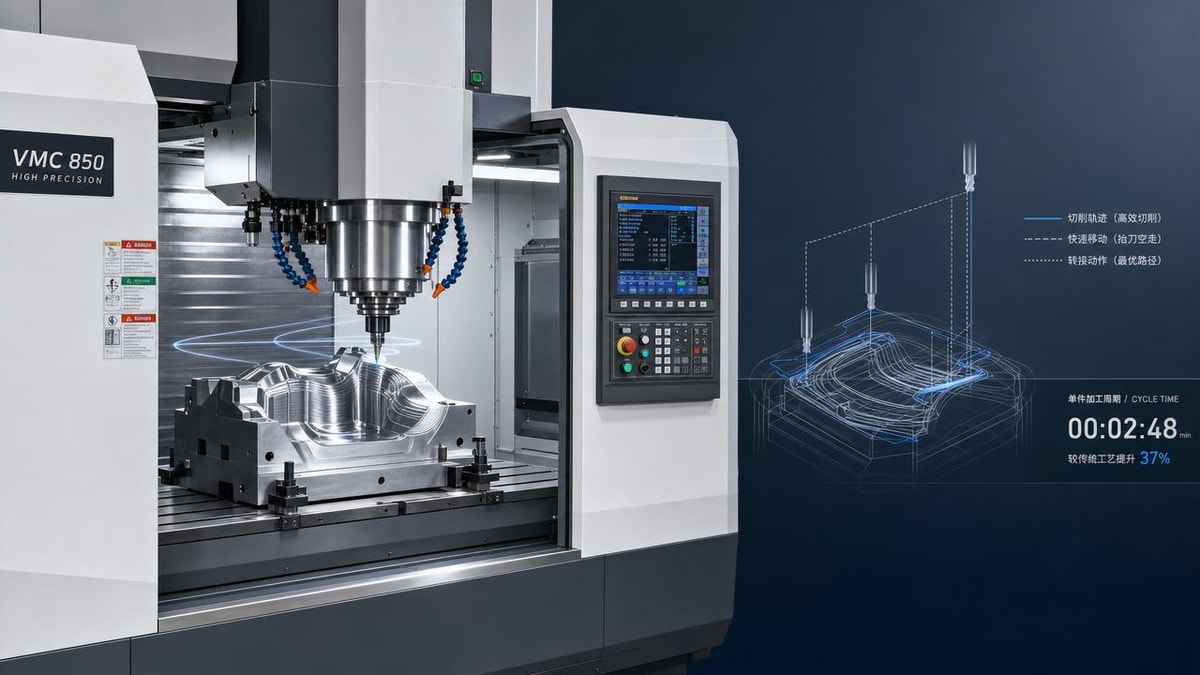
In CNC milling, tool paths can silently add seconds to every move, turning small inefficiencies into major cycle-time losses across a production run. For operators and shop-floor users, spotting these hidden wastes is essential to improving machine utilization, part consistency, and overall throughput without changing the entire process.
Why CNC milling tool paths often waste time without obvious alarms
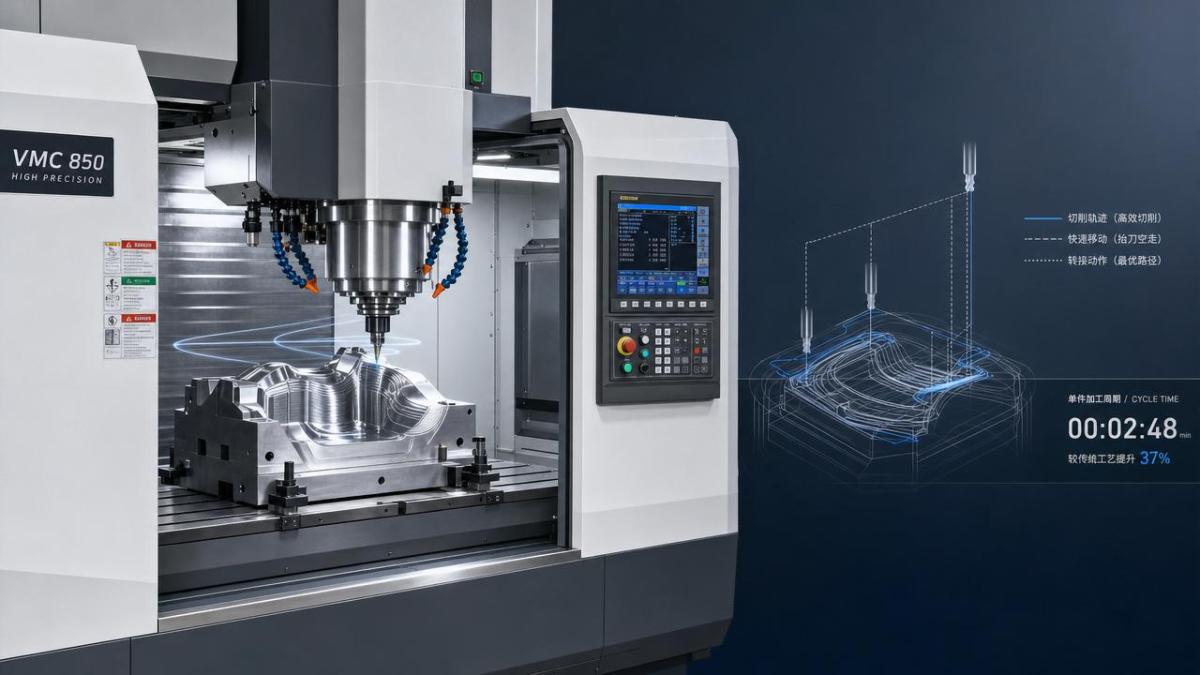
Cycle time losses in CNC milling rarely come from one dramatic mistake. More often, they come from safe but inefficient CAM defaults, conservative machine settings, poor approach and retract logic, and operations that were copied from older jobs without review. The machine keeps cutting, the part still passes inspection, and the delay remains hidden inside every program run.
For operators, this is frustrating because the waste is not always visible on paper. A setup sheet may show the correct tools and tolerances, yet the spindle spends too much time in air cuts, unnecessary positioning moves, overlong lead-ins, repeated Z lifts, and feed reductions that no longer match the real cutting condition. In high-mix and high-volume manufacturing, those extra seconds accumulate quickly.
This matters across automotive, aerospace, energy equipment, electronics, and general precision manufacturing. As shops move toward higher automation, digital integration, and flexible production, the gap between programmed cycle time and practical cycle time becomes a direct cost issue. CNC milling efficiency is no longer only about spindle power or machine rigidity. It is also about how intelligently the path uses that machine.
- Programs are often built around caution, not productivity, especially when first articles are prioritized over repeat-run optimization.
- Post-processors and controller settings may add motion behavior that users do not notice unless they compare actual motion with code intent.
- Operators may focus on tool wear, coolant, and offsets, while hidden non-cutting moves keep draining capacity in the background.
Which CNC milling tool path patterns usually create silent cycle-time loss?
Not every long cycle comes from heavy material removal. In many cases, the tool path strategy itself is the issue. A part can look well programmed but still contain low-value motion that increases cycle time, tool wear, and machine load fluctuations.
Common hidden time wasters on the shop floor
- Excessive clearance moves between nearby features. If the tool retracts too high after every pass, the spindle spends more time traveling vertically than cutting.
- Long approach and exit paths. Safe entries are important, but oversized lead-ins, repeated arcs, or overextended tangential exits can add motion with no cutting benefit.
- Inefficient rest machining sequences. A small tool may revisit regions that a larger tool already cleared adequately, especially when stock models are not updated accurately.
- Over-segmented contour paths. Too many short linear moves can force constant deceleration and acceleration, reducing effective feed even when programmed feed looks acceptable.
- Conservative corner handling. Feedrate drops in internal corners, narrow pockets, and thin-wall zones can be necessary, but blanket reductions often stay in code long after conditions improve.
- Tool changes caused by poor operation planning. Using an extra finishing tool for a surface that could be completed with an existing tool can add non-cutting time and setup complexity.
In CNC milling, the best improvement opportunities are often found not in the cutting passes alone, but in transitions between them. Watching machine motion live, rather than trusting the operation list, often reveals where the true delay sits.
How to recognize waste by motion type instead of only by program length
A long NC program is not automatically inefficient, and a short one is not automatically fast. Operators need to judge CNC milling efficiency by motion behavior. That means separating cutting time, repositioning time, spindle idle time, feed-limited time, and machine-response time.
The table below helps users identify where hidden cycle-time loss usually appears and what to review first at the machine or in the CAM file.
This type of review is practical because it connects visible machine behavior to editable programming choices. For operators who may not own the CAM process, such observations are still valuable feedback for process engineers, programmers, and production managers.
What should operators check first on a real CNC milling job?
On the shop floor, time for deep analysis is limited. A simple inspection routine helps users find avoidable losses quickly without risking part quality. The goal is not to force aggressive cutting. The goal is to remove nonproductive motion first.
- Watch one complete cycle without interruption and note where the tool is not engaged with material. This often exposes long rapids, delays before spindle engagement, and empty revisits.
- Compare programmed feedrate with actual machine behavior. If the machine never reaches the target feed, the path may be too fragmented for the controller and axis acceleration limits.
- Review operation order. A poor sequence can force extra tool changes, repeated probing, or repositioning that is not required by the part itself.
- Check whether finish passes are oversized for the tolerance. Some surfaces only need a light cleanup, but the program may use a slower full-perimeter finish cycle everywhere.
- Confirm whether machine settings, high-speed modes, smoothing functions, or look-ahead parameters are suitable for the specific CNC milling path style.
This checklist works especially well in multi-shift production, where one optimized program can save time across hundreds or thousands of parts. In automated lines and smart manufacturing cells, these gains also improve scheduling accuracy and reduce bottlenecks downstream.
Comparison: safe programming versus efficient CNC milling programming
Many inefficient tool paths started as safe choices. That is understandable, especially in industries dealing with expensive materials, tight deadlines, or difficult geometries. The challenge is knowing when a safe setting has become an unnecessary cost driver.
The comparison below shows how two common programming mindsets differ in practice for CNC milling users.
The key idea is not to push every process harder. It is to make each tool path reflect actual risk, actual geometry, and actual machine capability. That balance is where cycle time is saved without creating instability.
How machine capability and controller behavior affect CNC milling efficiency
A tool path that runs well on one machine may underperform on another. This is common in global manufacturing environments where different machining centers, spindle types, and control systems are used across plants or suppliers. CNC milling efficiency depends not only on path logic, but also on how the controller interprets and executes motion.
Important machine-side factors
- Axis acceleration and jerk limits determine whether the machine can maintain feed in short moves and tight corners.
- Look-ahead capability affects how smoothly the control blends upcoming moves and avoids repeated braking.
- High-speed machining or smoothing functions may shorten cycle time, but only if tolerance requirements allow their use.
- Toolholder balance, spindle condition, and fixture stability influence whether more efficient paths can run safely at intended parameters.
This is why process review should involve both programming and machine execution. In precision manufacturing, especially for export-oriented supply chains, a stable and transferable CNC milling process is often more valuable than a path that is merely fast on one specific machine.
What selection and process decisions reduce wasted time before production starts?
Operators are not always responsible for purchasing tools, machines, or software, but their feedback is critical for selecting practical solutions. When a shop evaluates new CNC milling capability, focusing on cycle-time transparency can prevent long-term inefficiency.
The table below summarizes what to check when evaluating tooling, CAM strategies, and machine suitability for efficient production.
For production teams working across international supply chains, these checks also support better quoting, more realistic lead times, and smoother process transfer between facilities.
Common misconceptions about CNC milling cycle time
Several assumptions keep hidden waste in place. One is that faster spindle speed automatically means faster production. Another is that if the part meets print, the path must be good enough. In reality, quality and efficiency are related but not identical. A part can be correct and still be expensive to make.
- “Air time does not matter much.” It matters when multiplied by batch size, shift count, and machine hourly cost.
- “The CAM default is probably safe for everything.” Defaults are starting points, not final production decisions.
- “Only roughing needs optimization.” Finishing links, entry moves, and tool changes often hide significant non-cutting time.
- “If the machine is running continuously, utilization is high.” Continuous motion is not the same as productive cutting motion.
Correcting these assumptions helps operators communicate more effectively with programmers and supervisors. It also supports data-driven improvement instead of opinion-driven changes.
FAQ: practical questions from CNC milling users
How do I know whether the tool path or the machine is the real bottleneck?
Start by observing whether the machine reaches commanded feed during long, simple cuts. If it does, but slows heavily in transitions and corners, the tool path may be too segmented or poorly linked. If it never approaches expected motion even on simple geometry, machine dynamics, control settings, or maintenance condition may be limiting performance.
Which CNC milling jobs benefit most from path optimization?
Repeat production parts, multi-cavity components, aluminum housings, steel plates with many pockets, and parts with several short operations often benefit quickly. Jobs with moderate tolerances and frequent tool transitions usually show the clearest improvement because non-cutting motion forms a large part of total cycle time.
Should operators change feed overrides to recover lost time?
Feed override can help test machine response, but it is not a substitute for correcting an inefficient tool path. If the path geometry forces constant deceleration, increasing override may change little or create risk. The better approach is to identify why the control cannot maintain programmed feed in the first place.
What standards or compliance topics matter when improving cycle time?
Any optimization should respect drawing tolerances, surface finish requirements, process control plans, and machine safety procedures. In regulated sectors such as aerospace or energy equipment, documented process change approval may also be required before altering CNC milling strategies, feeds, or operation sequences.
Why process visibility matters more as manufacturing becomes smarter
Across modern manufacturing, machine tools are becoming more connected, automated, and data-aware. That trend makes hidden path waste easier to measure, but also more costly to ignore. In flexible production lines and smart factories, one inefficient CNC milling program can reduce the effectiveness of robots, pallet systems, inspection timing, and delivery planning around it.
As global suppliers compete on precision, lead time, and cost control, practical path optimization becomes part of operational discipline. It supports better machine utilization, more stable output, and stronger quoting accuracy without requiring a full equipment replacement.
Why choose us for CNC milling process insight and next-step support
We focus on the global CNC machining and precision manufacturing industry, with attention to the real production issues that affect operators, engineers, buyers, and plant managers. If you are reviewing CNC milling cycle time, we can help you discuss the problem in practical terms instead of generic theory.
You can contact us for support related to parameter confirmation, machining process review, machine and controller matching, tooling selection, fixture considerations, delivery planning, and custom production solutions. If you are comparing options across plants, suppliers, or part families, we can also help structure the evaluation points for quotation and technical communication.
- Need help identifying where CNC milling air time is hiding in your current process? Share the part type, material, and production volume.
- Need support with tooling, machine capability, or operation sequence selection? We can help organize the key technical questions before purchase or process change.
- Need to discuss lead time, sample support, or quotation communication for precision manufacturing projects? Provide your drawing requirements, tolerance focus, and target output.
A shorter cycle is valuable only when it remains stable, safe, and repeatable. If you want to reduce hidden waste in CNC milling without losing process control, this is the right place to start the conversation.
PREVIOUS ARTICLE
Recommended for You
 Industrial Robotics payback depends on more than labor savingsManufacturing Market Research Center
 Shaft Parts machining problems that show up after final inspectionCNC Machining Technology Center
 Which Production Process changes bring the fastest output gains?CNC Machining Technology Center
 Industrial Automation projects fail when integration is underestimatedCNC Machining Technology Center
 CNC metal cutting costs rise fast when material data is wrongCNC Machining Technology Center
 High precision lathe claims to verify before accepting deliveryMachine Tool Industry Editorial Team

Aris Katos
Future of Carbide Coatings
15+ years in precision manufacturing systems. Specialized in high-speed milling and aerospace grade alloy processing.
▶
Can space-saving CNC manufacturing still handle heavy workloads?CNC Machining Technology Center▶
CNC milling tool paths that waste cycle time without noticeCNC Machining Technology Center▶
What affects surface finish most in CNC metalworking?CNC Machining Technology Center▶
CNC industrial systems or manual lines: where costs shiftCNC Machining Technology Center▶
CNC Programming Errors That Waste More Material Than ExpectedCNC Machining Technology Center
Mastering 5-Axis Workholding Strategies
Join our technical panel on Nov 15th to learn about reducing vibrations in thin-wall components.

Providing you with integrated sanding solutions
Before-sales and after-sales services
Comprehensive technical support