• Global CNC market projected to reach $128B by 2028 • New EU trade regulations for precision tooling components • Aerospace deman
NYSE: CNC +1.2%LME: STEEL -0.4%

When Does CNC Industrial Make Sense for Mixed-Part Runs?
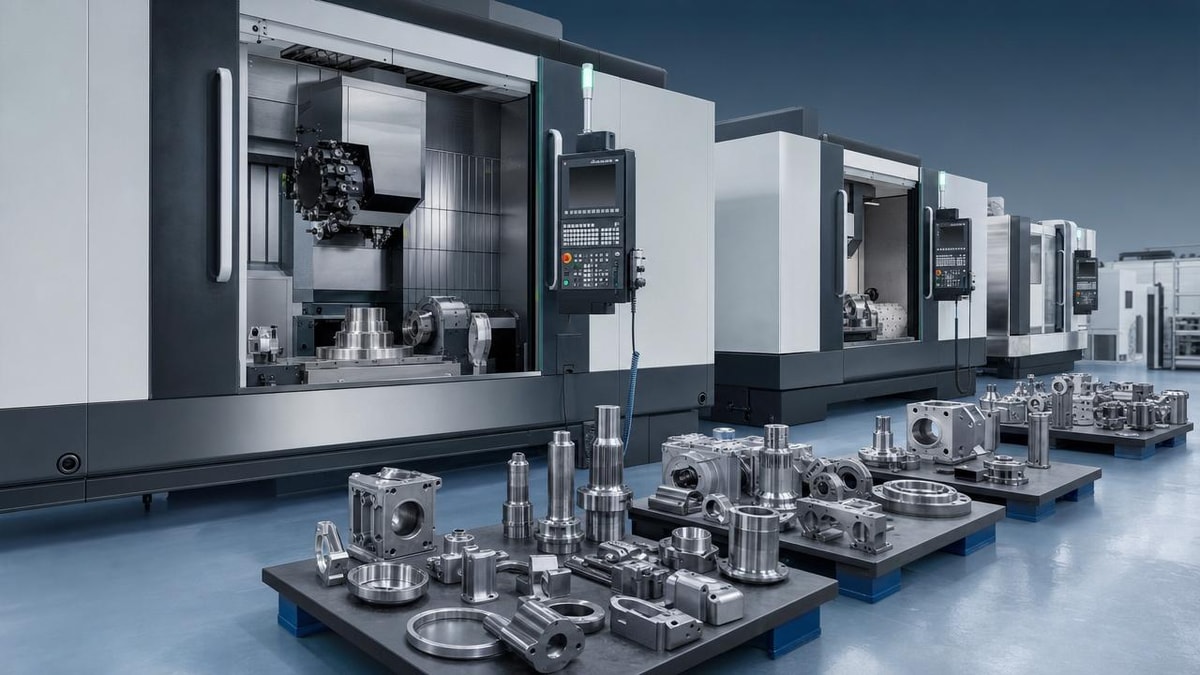
When product mix is high and order volumes fluctuate, deciding whether CNC industrial production is the right fit becomes a critical technical and cost question. For evaluation teams, the answer depends on setup time, tolerance requirements, changeover efficiency, and total throughput. This article examines when CNC industrial makes practical sense for mixed-part runs and how to assess its value in modern manufacturing environments.
Why Mixed-Part Scenarios Need a Different Evaluation Logic
In stable, high-volume production, equipment selection often centers on unit cost and cycle time. Mixed-part runs change that equation. A factory producing shafts in the morning, housings in the afternoon, and prototype brackets the next day faces more than a capacity question. It must judge whether CNC industrial resources can absorb frequent program changes, fixture swaps, tool offsets, quality checks, and scheduling variability without losing margin.
For technical evaluation teams, the key issue is not simply whether CNC machines can make the parts. In most cases, they can. The real question is whether the broader CNC industrial workflow remains efficient when part families differ in geometry, tolerance stack-up, material behavior, and inspection method. A mixed-part environment rewards flexibility, but only if that flexibility is controlled rather than improvised.
This matters across automotive supply, aerospace support work, energy components, industrial equipment, electronics fixtures, and contract manufacturing. In all of these sectors, production planners are increasingly asked to combine shorter lead times with wider product variety. That is why scenario-based assessment is more useful than generic machine capability claims.
When CNC Industrial Makes Sense: The Core Decision Conditions
A CNC industrial approach usually makes sense for mixed-part runs when four conditions are present. First, precision requirements are too tight for low-control manual processing. Second, part designs change often enough that hard automation would be underutilized. Third, order batches are large enough to justify programmed machining but not consistent enough to lock into a single dedicated line. Fourth, the plant has the process discipline to manage setups, tooling, and digital data efficiently.
In practice, the best fit is often medium complexity, medium volume, and high variability. That includes repeat jobs with changing dimensions, customer-specific modifications, spare parts, pilot builds, and engineered-to-order components. In these conditions, CNC industrial equipment can deliver repeatability and responsiveness at the same time, especially when paired with standardized fixturing, offline programming, and in-process measurement.
By contrast, if every order is a one-off with unclear drawings and unstable engineering release, even advanced CNC capacity may struggle to perform economically. Likewise, if demand is extremely high and geometry is fixed for years, dedicated transfer systems or purpose-built automation may outperform a flexible CNC industrial cell on cost per part.
Typical Application Scenarios Where the Fit Is Strong
1. Contract Manufacturing with Frequent Customer Changeovers
Job shops and contract manufacturers are classic users of CNC industrial systems for mixed-part runs. Their business model depends on switching between customer programs, materials, and tolerance levels while still protecting machine utilization. Here, machine flexibility is not optional; it is the revenue model. The strongest setups usually include quick-change workholding, standardized tool libraries, and disciplined CAM version control.
2. Spare Parts and Aftermarket Component Production
Aftermarket work rarely arrives in balanced, predictable volumes. Orders can be urgent, low in quantity, and technically diverse. A CNC industrial environment is well suited when lead time matters more than perfect batch continuity. This is common in energy equipment maintenance, industrial machinery service, and older platform support where part demand is irregular but dimensional reliability remains essential.
3. High-Mix, Medium-Volume OEM Supply
Many OEM suppliers run multiple related parts for different models, customers, or regional variants. This is especially relevant in automotive subcomponents, electronics housings, and equipment assemblies. In such scenarios, CNC industrial production works well when part families share datums, tooling logic, or machine envelopes, allowing setup reduction through process grouping.
4. New Product Introduction and Bridge Production
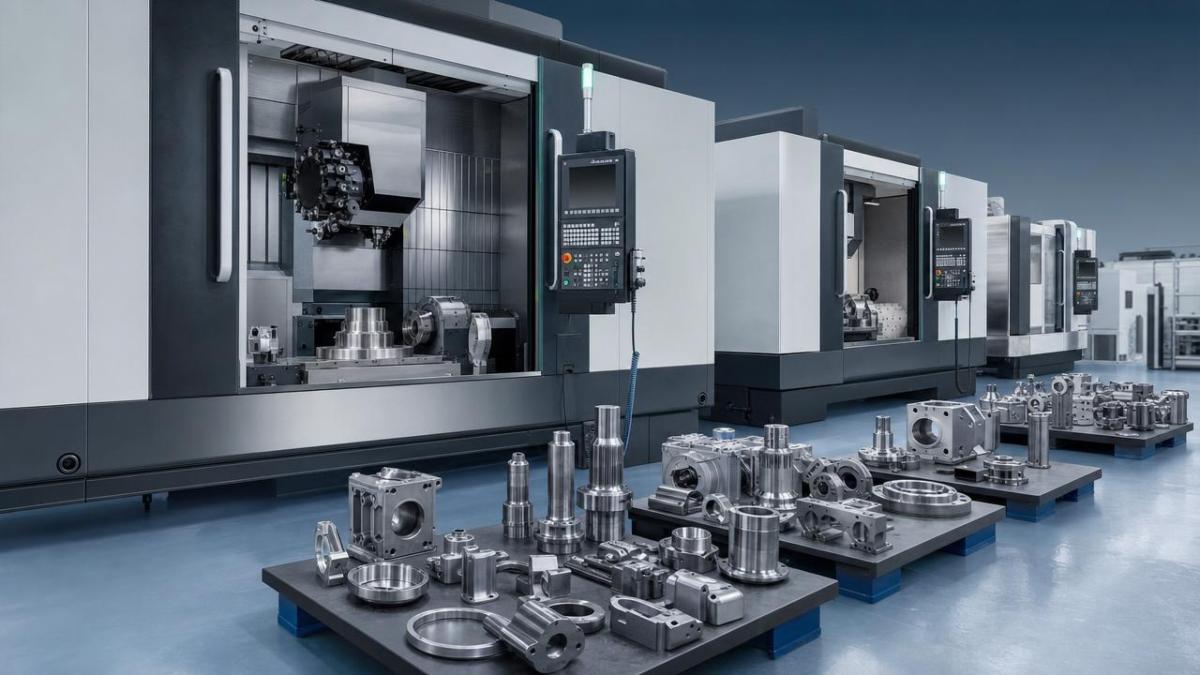
Before demand stabilizes, dedicated tooling and full automation may be premature. During prototype-to-ramp phases, CNC industrial capacity provides a practical bridge. It supports engineering iteration, validation builds, and process refinement while preserving production-grade accuracy. Evaluation teams often underestimate this role, but it can reduce launch risk significantly.
Scenario Comparison: Where the Economics Change
The following comparison helps technical assessors identify where CNC industrial production is favorable and where caution is needed.
What Technical Evaluation Teams Should Check in Each Scenario
A sound CNC industrial decision should be based on more than machine specifications. Evaluation teams should examine the entire process chain. The most important checks include:
- Average setup time by part family, not only by machine type
- Tool change strategy and presetting discipline
- Fixture standardization and repeatable datum selection
- Program management, revision control, and digital traceability
- Inspection burden created by tolerance variation across parts
- Planner ability to sequence jobs for spindle and labor efficiency
If these systems are weak, a technically advanced CNC industrial shop can still perform poorly in high-mix production. Flexibility without process control often becomes expensive chaos. On the other hand, a modest machine base with strong standards can outperform a larger but less disciplined operation.
Different Mixed-Part Needs by Business Type
Not every company evaluates CNC industrial production in the same way. The decision criteria shift depending on business model, engineering maturity, and customer commitments.
Common Misjudgments in CNC Industrial Assessment
One common mistake is treating machine flexibility as the same thing as operational flexibility. A machining center may physically handle many parts, but that does not mean the CNC industrial process is efficient for frequent switching. Real flexibility depends on workholding design, tooling readiness, operator skill, and stable digital instructions.
Another misjudgment is focusing only on cycle time. In mixed-part runs, setup and verification often consume more total hours than cutting time. A slower cycle with faster changeover can produce better daily output than a faster cycle with long setup interruptions. Technical reviewers should therefore calculate throughput at the schedule level, not only at the part level.
A third issue is ignoring quality variation between part types. When one machine alternates between aluminum housings, alloy steel shafts, and thin-wall components, thermal behavior, tool wear, and clamping sensitivity differ. A CNC industrial strategy that works for one family may not transfer directly to another without revised control plans.
Practical Recommendations for Better Scenario Fit
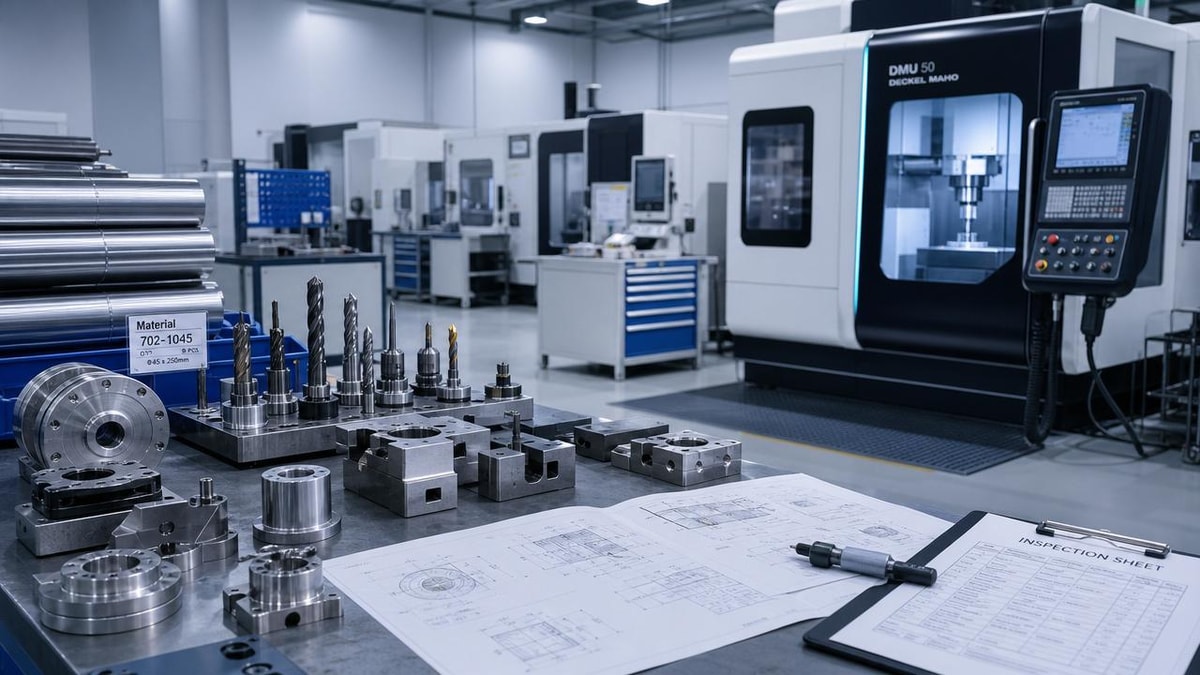
If your operation is considering CNC industrial capacity for mixed-part production, start with part-family mapping. Group components by material, fixturing logic, tolerance band, and machine compatibility. This reveals whether your product mix is truly random or whether hidden standardization opportunities exist.
Next, measure setup in detail. Break it into program load, fixture change, tool preparation, first-article approval, and inspection release. Many plants discover that the economic threshold for CNC industrial success depends less on spindle speed and more on how many non-cutting minutes can be removed per order.
It is also wise to test demand volatility. Review the last six to twelve months of orders and identify how often priorities changed, how many low-volume jobs were expedited, and which parts repeated. This data provides a much stronger basis for evaluating CNC industrial suitability than theoretical machine utilization models.
FAQ: Scenario-Based Questions Evaluators Often Ask
Is CNC industrial suitable for very small batches?
Yes, but only when precision, repeatability, or lead time justify the programming and setup effort. For very small batches, standardized fixtures and reusable code are critical.
What is the clearest sign that CNC industrial is the wrong fit?
If every job requires major engineering effort, unique tooling, and long first-article validation with little chance of repeat business, the process may be technically possible but commercially weak.
Can CNC industrial compete with dedicated automation in mixed-part environments?
Often yes. In high-mix settings, the ability to adapt quickly may outweigh the lower per-part cost of dedicated equipment, especially when demand is uncertain or product variants are increasing.
Final Assessment: Match the Decision to the Real Production Scenario
The value of CNC industrial production in mixed-part runs is not universal. It is strongest where precision matters, batch sizes vary, part families can be partially standardized, and operational discipline supports fast changeovers. It is weaker where jobs are highly irregular, engineering data is unstable, or demand is so large and fixed that dedicated automation becomes more economical.
For technical evaluation teams, the best next step is to assess actual production history by scenario: repeat mixed orders, urgent low-volume jobs, variant-driven OEM work, and launch-phase builds. Compare setup hours, inspection load, routing overlap, and delivery pressure. Once those conditions are visible, the decision about CNC industrial fit becomes much clearer and far more actionable.
Recommended for You
 CNC Milling Capacity Gaps Can Hurt Small Batch ProfitabilityManufacturing Market Research Center
 Industrial Robotics Payback Is Changing in Mid-Size PlantsManufacturing Market Research Center
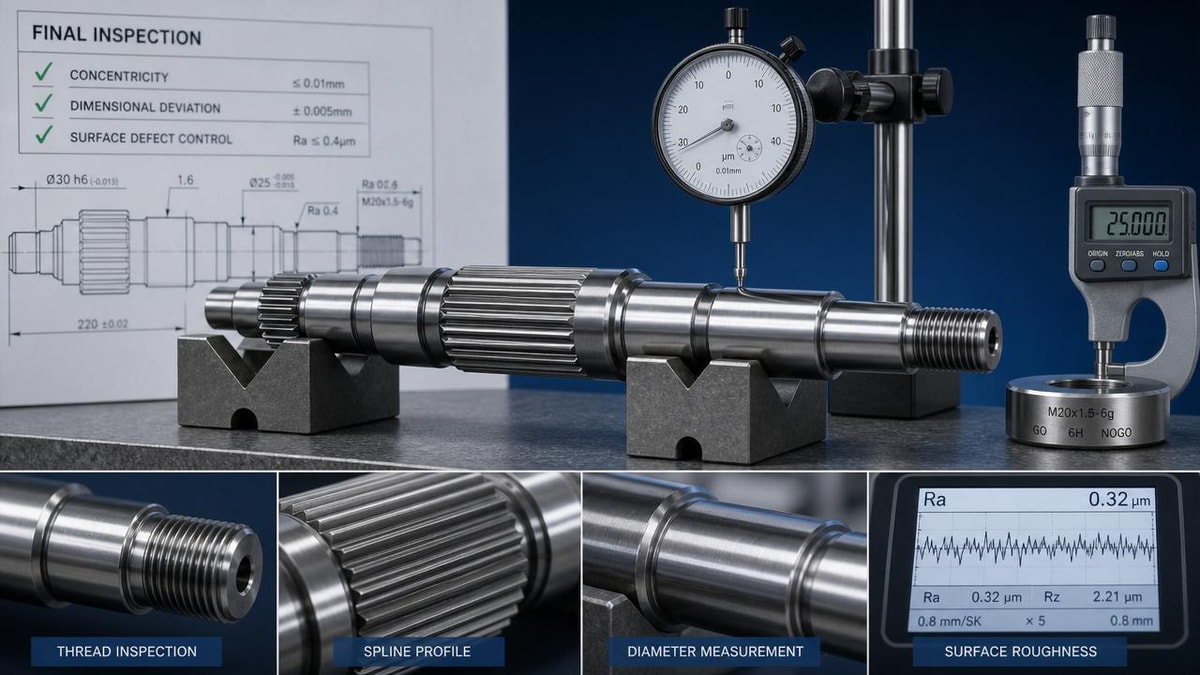
 Shaft Parts Machining Problems That Show Up at Final InspectionCNC Machining Technology Center
 Production Process Delays Usually Start Before Machining BeginsCNC Machining Technology Center
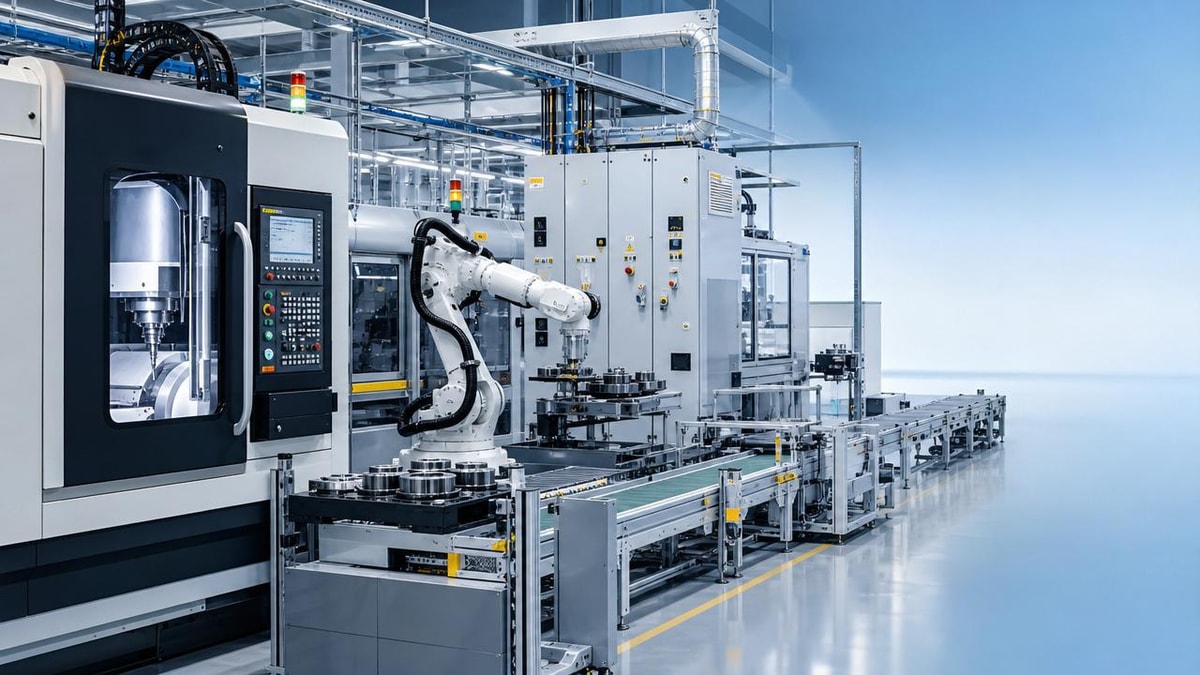
 Industrial Automation Projects Often Miss This Integration StepCNC Machining Technology Center
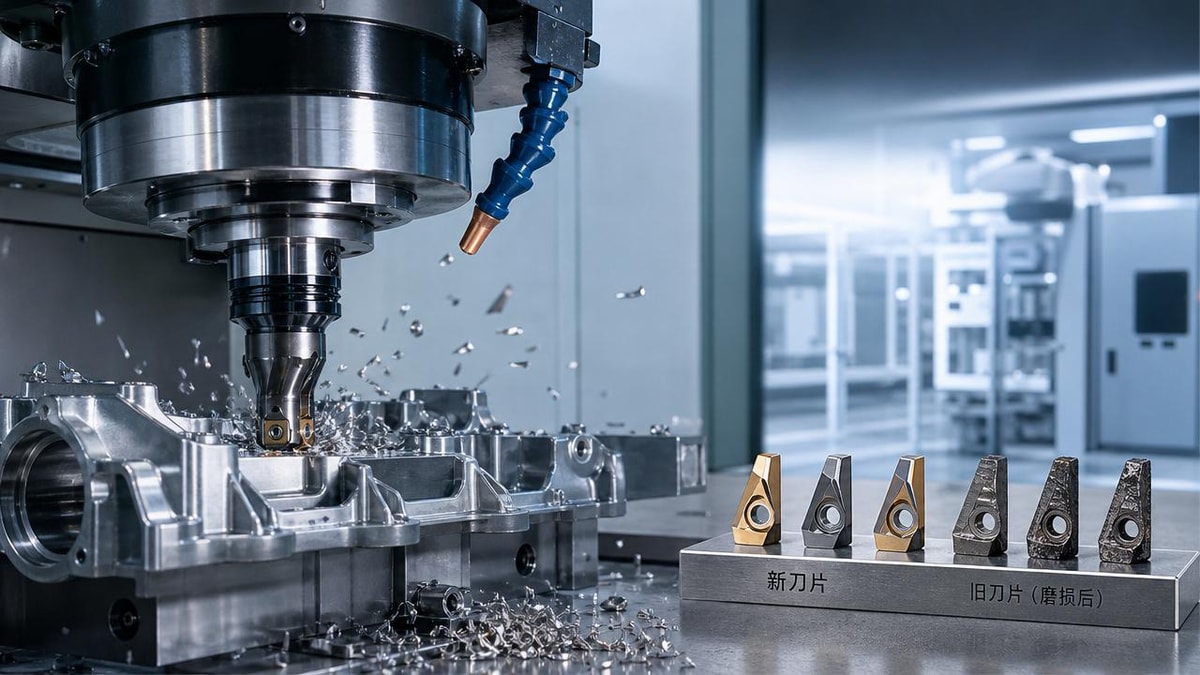
 CNC Metal Cutting Tool Wear Is Costing More Than You ThinkCNC Machining Technology Center

Aris Katos
Future of Carbide Coatings
15+ years in precision manufacturing systems. Specialized in high-speed milling and aerospace grade alloy processing.
▶
CNC Programming Issues That Cause Scrap on Repeat JobsCNC Machining Technology Center▶
CNC Milling Surface Finish Problems and What Usually Causes ThemCNC Machining Technology Center▶
When Does CNC Industrial Make Sense for Mixed-Part Runs?CNC Machining Technology Center▶
Can space-saving CNC manufacturing still handle heavy workloads?CNC Machining Technology Center▶
CNC milling tool paths that waste cycle time without noticeCNC Machining Technology Center
Mastering 5-Axis Workholding Strategies
Join our technical panel on Nov 15th to learn about reducing vibrations in thin-wall components.

Providing you with integrated sanding solutions
Before-sales and after-sales services
Comprehensive technical support