• Global CNC market projected to reach $128B by 2028 • New EU trade regulations for precision tooling components • Aerospace deman
NYSE: CNC +1.2%LME: STEEL -0.4%

Can space-saving CNC manufacturing still handle heavy workloads?
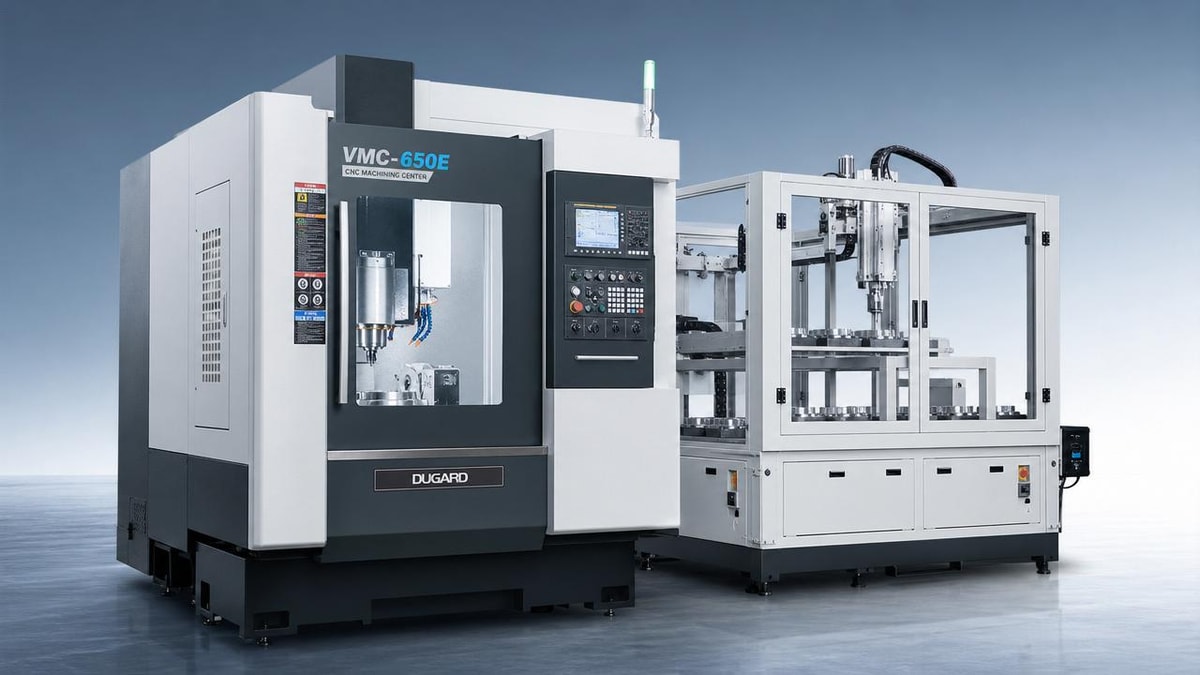
Can space-saving CNC manufacturing really support demanding production without sacrificing precision, rigidity, or throughput? For business decision-makers balancing floor space, investment efficiency, and output targets, this question is becoming increasingly important. As modern factories pursue automation and leaner layouts, compact CNC solutions are proving they can handle heavy workloads when backed by the right machine design, control systems, and production strategy.
In practical terms, the answer is yes—but only under specific conditions. A smaller machine footprint does not automatically mean lower structural capacity, and a compact production cell does not necessarily reduce output. What matters is the total system design: casting stability, spindle power band, thermal control, chip evacuation, automation compatibility, and how the equipment is matched to part geometry, batch size, and cycle-time goals.
For manufacturers in automotive, aerospace, electronics, energy equipment, and precision component supply chains, space-saving CNC manufacturing has become more than a layout choice. It is increasingly a strategic decision tied to factory expansion limits, labor efficiency, energy consumption, and the ability to scale production in 2-shift or 3-shift environments without adding unnecessary floor space.
Why compact CNC systems are gaining ground in high-demand production
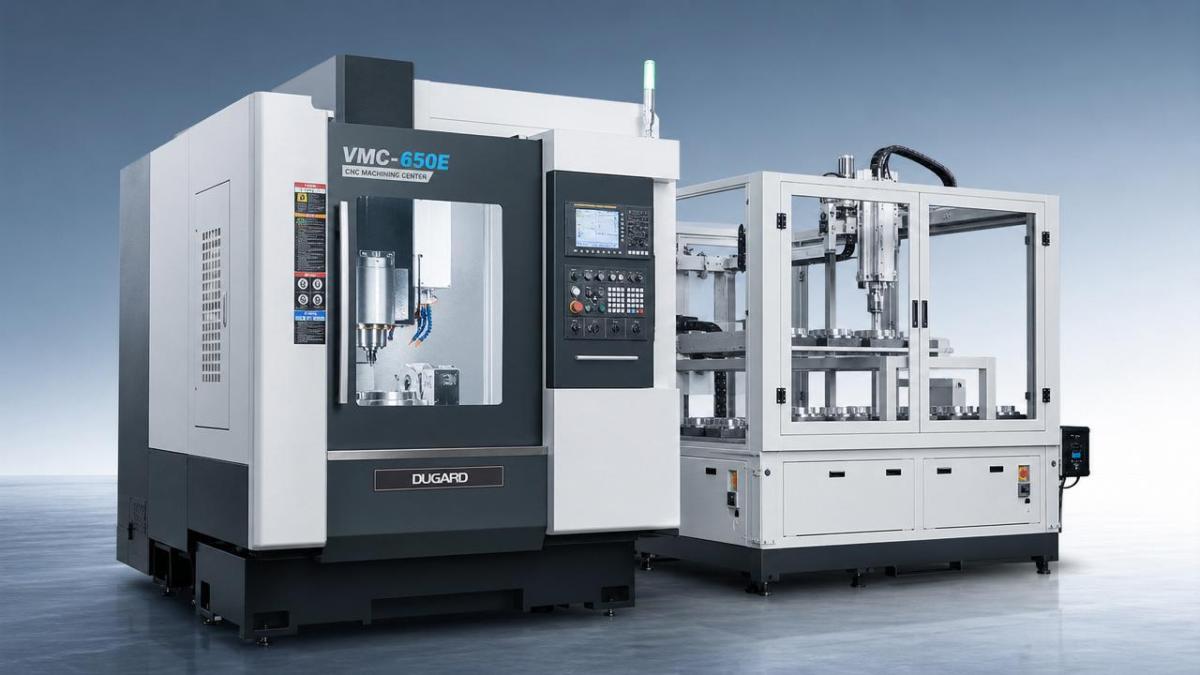
In many industrial facilities, floor area is now one of the most constrained production resources. New buildings, utility upgrades, and line relocation projects often require far more capital than replacing older machine tools with more compact alternatives. In this context, space-saving CNC manufacturing helps decision-makers increase output per square meter rather than simply expanding plant size.
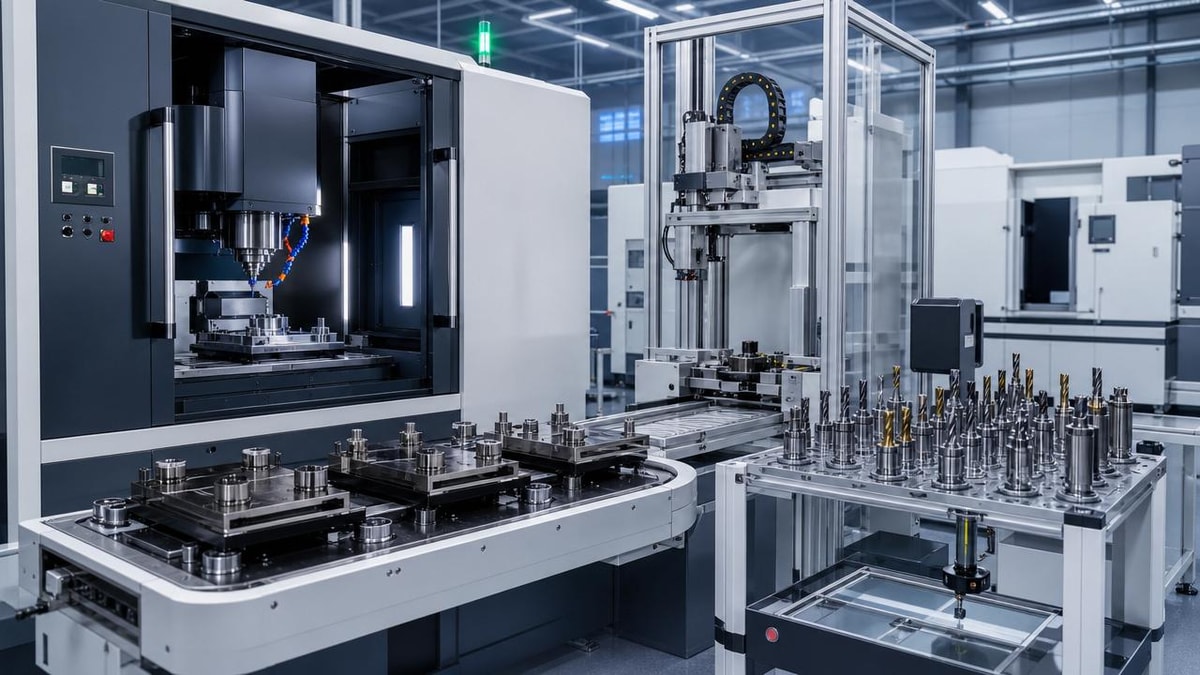
This matters especially in mixed-production factories where machining, inspection, material staging, and robotic handling must fit inside a controlled footprint. A machine that reduces occupied floor space by 15% to 30% can create room for an automated loader, a coordinate measuring station, or an additional tool presetting area. Over a 12- to 24-month horizon, that can improve both capacity planning and return on capital.
The shift from large-frame thinking to productivity density
Traditional buying logic often assumed that larger machines were inherently more capable. That is still true for very large workpieces, deep heavy cuts, and oversized fixtures. However, for many parts under 500 mm, especially precision shafts, discs, housings, and structural components, modern compact machines can deliver excellent rigidity with optimized bed geometry, shorter load paths, and reduced thermal drift.
What buyers increasingly evaluate is productivity density: how much qualified output can be generated within a given footprint, labor allocation, and power envelope. In many cases, two compact cells with robotic tending can outperform one larger machine in takt time flexibility, especially when order volume fluctuates between low-mix and medium-volume production.
Where compact designs work best
- High-repeatability machining of medium-size parts with tolerances in the ±0.005 mm to ±0.02 mm range
- Plants operating 16 to 24 hours per day with limited aisle and staging space
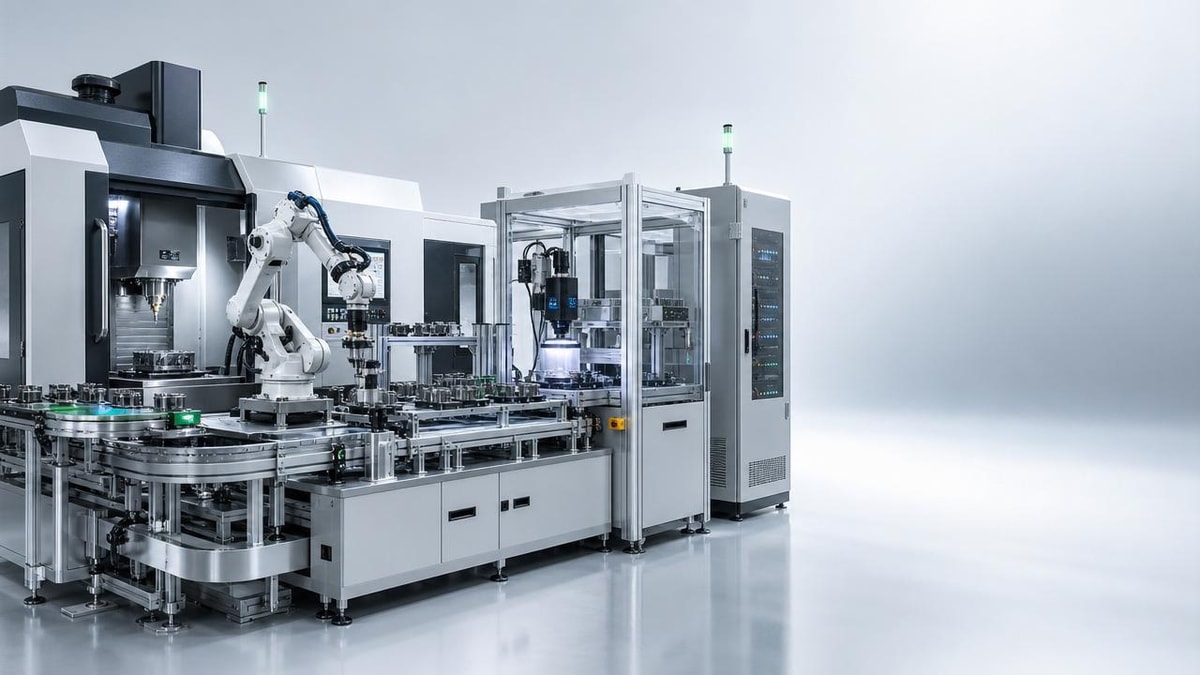
- Production lines requiring integration with bar feeders, pallet changers, robots, or part conveyors
- Facilities targeting lower operator walking distance and shorter material flow paths
These applications are common across global CNC machining environments, particularly where manufacturers must combine precision machining, automation, and flexible scheduling without overbuilding infrastructure.
Can a smaller machine really handle heavy workloads?
The short answer depends on how “heavy workload” is defined. If the requirement is continuous operation, stable tolerance control, and high spindle utilization across long production runs, then space-saving CNC manufacturing can absolutely perform. If the workload involves extreme stock removal on very large parts, heavy interrupted cuts, or oversized fixtures, machine size and mass still matter significantly.
Decision-makers should separate workload into at least 4 dimensions: part size, material hardness, chip volume per cycle, and machine uptime target. A compact machine that runs 85% spindle utilization across 2 shifts may be more productive than a larger machine running at 55% utilization because of setup inefficiency, handling delays, or underused travel range.
The engineering factors that determine real capability
Not all compact machines are built for the same load profile. The following comparison helps clarify what should be checked before assuming a reduced-footprint platform can support high-demand machining.
The key takeaway is that footprint alone tells very little about production strength. A well-designed compact machining center or CNC lathe with proper spindle torque, stable guideways, and effective thermal control may outperform a physically larger but less optimized machine in real production conditions.
Heavy workload does not only mean heavy cutting
In procurement discussions, “heavy workload” is often used too narrowly. For many component manufacturers, the bigger challenge is not 1 extremely deep cut, but 5,000 to 20,000 consistent cycles per month with low scrap, stable tool life, and minimal unplanned downtime. Space-saving CNC manufacturing is highly competitive in this type of workload when process design is disciplined.
This is particularly true for precision production where thermal consistency, automatic tool compensation, and fixture repeatability matter more than oversized machine envelopes. In such cases, compact platforms can become a strong fit for demanding output targets.
What business decision-makers should evaluate before investing
For leadership teams, the main question is not whether compact equipment is fashionable. It is whether the investment supports volume, quality, uptime, staffing, and margin objectives. A structured evaluation process reduces the risk of buying a machine that fits the floor plan but not the production plan.
Five procurement criteria that matter most
- Match the machine to the part family, not to a generic brochure category.
- Review spindle torque and power in the rpm range actually used for your materials.
- Check tool capacity, tool change time, and fixture access for unattended runs lasting 2 to 6 hours.
- Assess automation interfaces for robots, bar feeders, pallet systems, and in-process inspection.
- Estimate total cost across installation, training, maintenance, and expected utilization over 3 to 5 years.
These five areas usually reveal more about fit than headline specs alone. For example, a compact CNC platform with 24 to 40 tools, stable chip evacuation, and standard automation connectivity may produce greater long-term value than a larger machine with more travel but weaker process integration.
Questions worth asking suppliers
- What is the recommended duty cycle for sustained production over 8, 16, or 24 hours?
- How is thermal growth managed during long cycles or seasonal temperature changes?
- What is the standard maintenance interval for spindle, lubrication, and coolant systems?
- How much floor space is needed once safety clearance, chip discharge, and loading automation are included?
These practical questions often reveal whether a vendor understands real factory conditions instead of focusing only on catalog performance.
A practical comparison for investment planning
The table below outlines a realistic decision framework for comparing standard-frame and compact CNC solutions in a B2B purchasing context.
The most important conclusion is that compact equipment should be evaluated as part of a production system, not as an isolated machine purchase. In many factories, the combined benefit of shorter handling distance, better automation fit, and lower space pressure outweighs the perceived advantage of a larger frame.
Implementation risks and how to avoid them
Even strong equipment can underperform if deployment is rushed. Most failures in space-saving CNC manufacturing come from poor application matching, weak process planning, or unrealistic expectations about unattended operation. These issues are avoidable with a disciplined rollout.
Three common mistakes
- Choosing based on footprint first and process capability second
- Ignoring chip load, coolant management, and tool life during long shifts
- Underestimating access space for maintenance, part loading, and fixture changeover
A compact machine may look efficient on a layout drawing, but if chip accumulation causes stoppages every 45 to 60 minutes, or if fixture changes require awkward access, actual productivity will drop quickly. That is why pilot validation matters.
A 4-step rollout approach
1. Validate part family fit
Group parts by size, material, tolerance, and cycle time. A practical first wave usually includes 3 to 8 representative components rather than the full product range.
2. Confirm process load
Review roughing depth, spindle load trend, coolant demand, and chip evacuation over a full test cycle. If possible, simulate 2-shift or 72-hour repeated operation.
3. Integrate automation early
If robotic loading, pallet exchange, or bar feeding is part of the future plan, evaluate interfaces before purchase. Retrofitting later often adds cost and layout complications.
4. Define acceptance standards
Set 3 clear acceptance categories: dimensional consistency, cycle-time target, and uptime threshold. For example, buyers may require repeatability across 100 consecutive parts, cycle-time variance below 5%, and planned uptime above 90% after commissioning.
Where space-saving CNC manufacturing delivers the strongest business value
The best results usually appear where manufacturers need to combine precision, repeatability, and layout efficiency. This includes suppliers facing rising rental costs, mature plants with limited expansion options, and operations building smart factory cells one module at a time.
For decision-makers, the strategic advantage is not simply owning a smaller machine. It is creating a production environment where every square meter supports measurable output, every automation interface has a purpose, and every machine contributes to quality and delivery performance. In that model, space-saving CNC manufacturing becomes a tool for capacity optimization rather than a compromise.
Best-fit scenarios
- Tier suppliers increasing throughput without relocating the workshop
- Precision manufacturers building flexible cells for multi-part production
- Factories targeting lights-out operation for 4 to 8 unattended hours
- Operations replacing aging equipment with higher output per square meter
When these conditions are present, compact machine tools can support demanding workloads with strong commercial logic. The real success factor is disciplined selection, realistic validation, and alignment between machine capability and production strategy.
Space-saving CNC manufacturing can handle heavy workloads when it is supported by the right structure, spindle performance, thermal stability, and automation planning. For business leaders, the decision should focus on productivity density, part-family fit, and lifecycle efficiency rather than footprint alone. If you are evaluating compact CNC solutions for precision manufacturing, automation upgrades, or high-utilization production cells, now is the right time to review your layout, workload profile, and expansion goals.
Contact us today to discuss your production requirements, compare suitable CNC configurations, and get a tailored solution for high-performance manufacturing in a smaller footprint.
PREVIOUS ARTICLE
NEXT ARTICLE
Recommended for You
 Industrial Robotics payback depends on more than labor savingsManufacturing Market Research Center
 Shaft Parts machining problems that show up after final inspectionCNC Machining Technology Center
 Which Production Process changes bring the fastest output gains?CNC Machining Technology Center
 Industrial Automation projects fail when integration is underestimatedCNC Machining Technology Center
 CNC metal cutting costs rise fast when material data is wrongCNC Machining Technology Center
 High precision lathe claims to verify before accepting deliveryMachine Tool Industry Editorial Team

Aris Katos
Future of Carbide Coatings
15+ years in precision manufacturing systems. Specialized in high-speed milling and aerospace grade alloy processing.
▶
Can space-saving CNC manufacturing still handle heavy workloads?CNC Machining Technology Center▶
CNC milling tool paths that waste cycle time without noticeCNC Machining Technology Center▶
What affects surface finish most in CNC metalworking?CNC Machining Technology Center▶
CNC industrial systems or manual lines: where costs shiftCNC Machining Technology Center▶
CNC Programming Errors That Waste More Material Than ExpectedCNC Machining Technology Center
Mastering 5-Axis Workholding Strategies
Join our technical panel on Nov 15th to learn about reducing vibrations in thin-wall components.

Providing you with integrated sanding solutions
Before-sales and after-sales services
Comprehensive technical support