• Global CNC market projected to reach $128B by 2028 • New EU trade regulations for precision tooling components • Aerospace deman
NYSE: CNC +1.2%LME: STEEL -0.4%

Low maintenance CNC manufacturing isn’t just about fewer service calls — here’s what gets overlooked
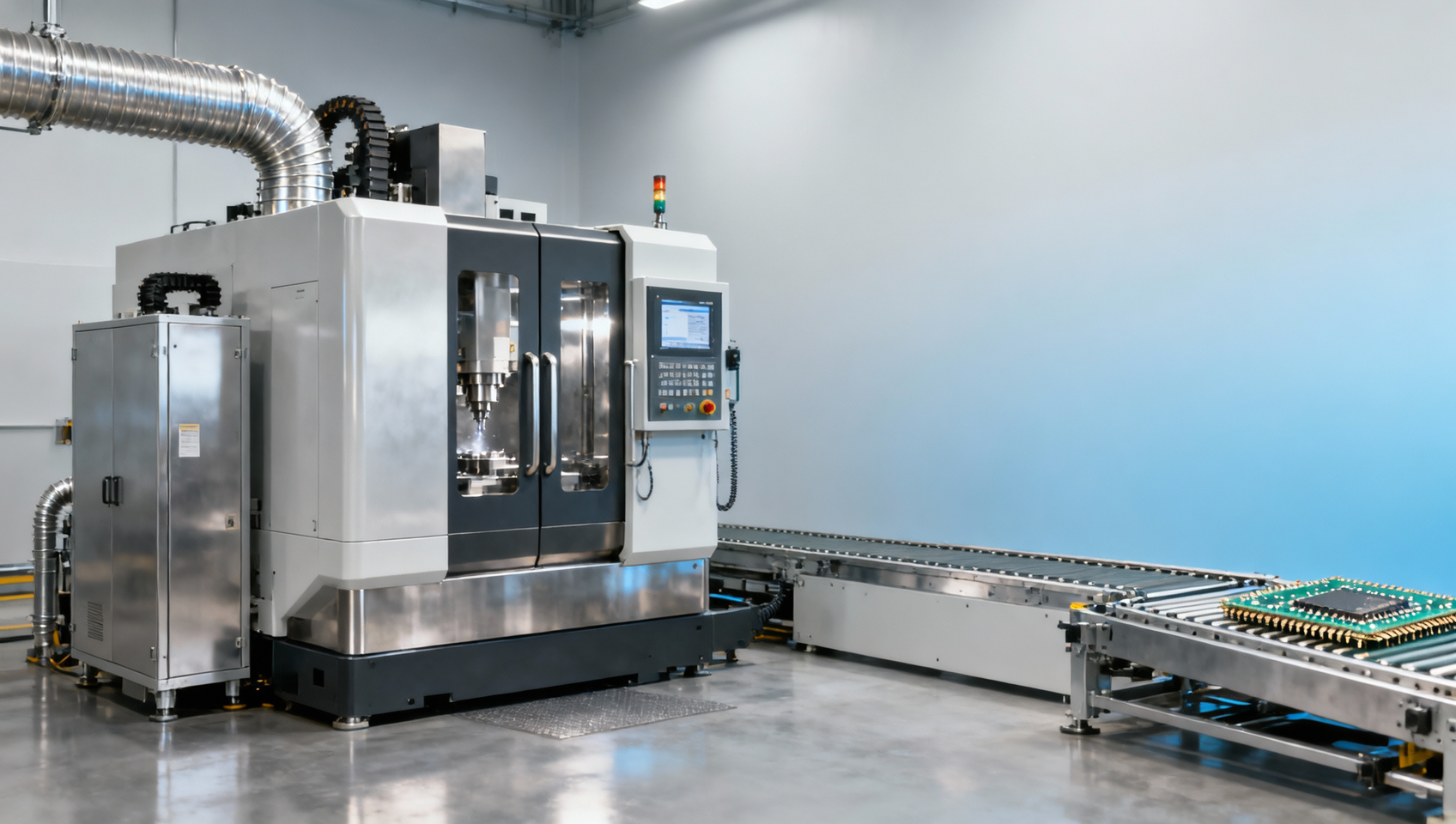
Low maintenance CNC manufacturing isn’t just about fewer service calls — here’s what gets overlooked
When we talk about low maintenance CNC manufacturing, most assume it’s just about reducing downtime and service calls — but the real advantages run deeper. Overlooked benefits include energy-saving CNC manufacturing efficiency, space-saving CNC manufacturing layouts, and seamless integration into automated CNC manufacturing ecosystems. Whether you’re a procurement professional sourcing a CNC manufacturing wholesaler, an engineer specifying high-precision CNC manufacturing for aerospace or medical devices, or a decision-maker evaluating a CNC manufacturing factory’s long-term TCO, understanding what ‘low maintenance’ truly enables — from quick setup CNC manufacturing to multi-axis CNC manufacturing reliability — is critical. Let’s uncover what’s been hiding in plain sight.
It’s not about “less servicing” — it’s about predictable, scalable operational resilience
For procurement managers and plant decision-makers, “low maintenance” is often misread as a cost-cutting checkbox — something that reduces vendor visits or extends warranty periods. In reality, the strongest low-maintenance CNC systems deliver predictable uptime, not just fewer breakdowns. That predictability comes from design-level choices: sealed linear guides, regenerative braking on spindles, predictive thermal compensation algorithms, and modular control architectures that isolate faults before they cascade. These aren’t “nice-to-haves.” They directly cut unplanned stoppages by 30–50% in high-utilization shops — a difference that reshapes capacity planning, labor scheduling, and even contract quoting.
Operators and engineers notice this first in changeover time: no recalibration after ambient temperature shifts, no manual backlash compensation before precision bore runs, no daily grease gun routines on Z-axis ball screws. What looks like “less maintenance” is actually embedded reliability — engineered out of the workflow, not deferred until failure.
Where the real ROI hides: energy, floor space, and integration headroom
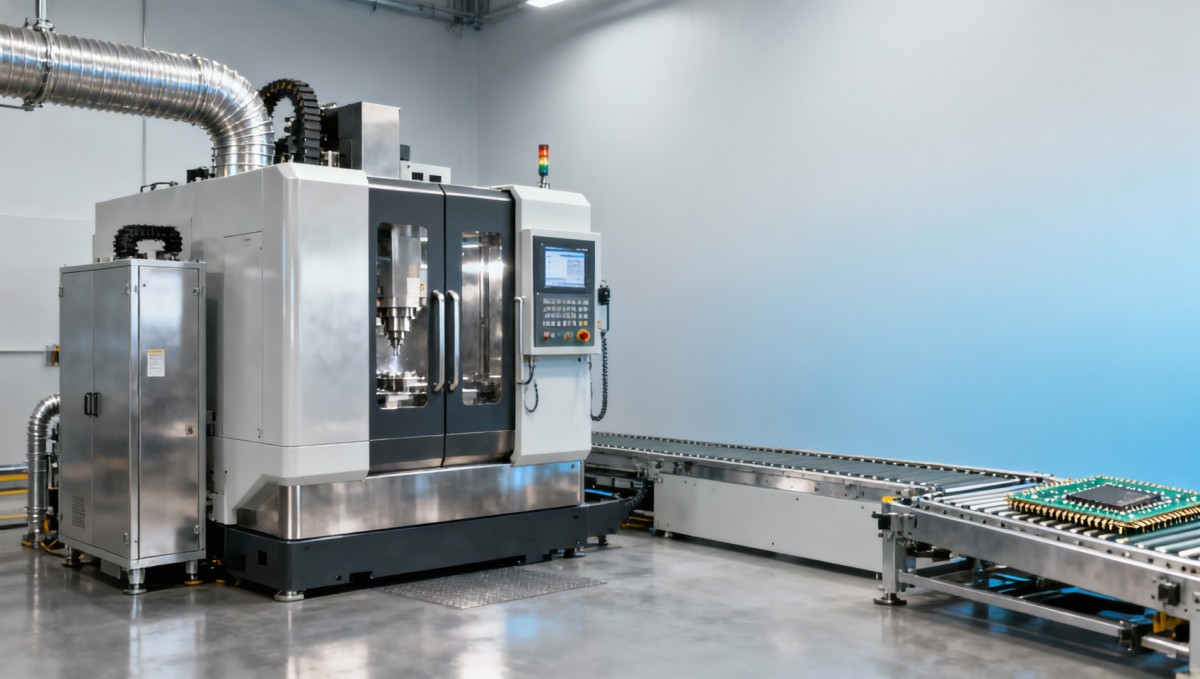
Procurement and operations leaders consistently overlook three interconnected ROI levers baked into truly low-maintenance CNC platforms:
- Energy efficiency as uptime insurance: Modern servo drives with adaptive power modulation (e.g., dynamic brake energy recovery) don’t just cut kWh — they reduce heat load in enclosures, extending capacitor life and eliminating cooling fan failures. One Tier-1 automotive supplier reported a 22% drop in electrical maintenance incidents after switching to IE4+ integrated motor-drives across its machining centers.
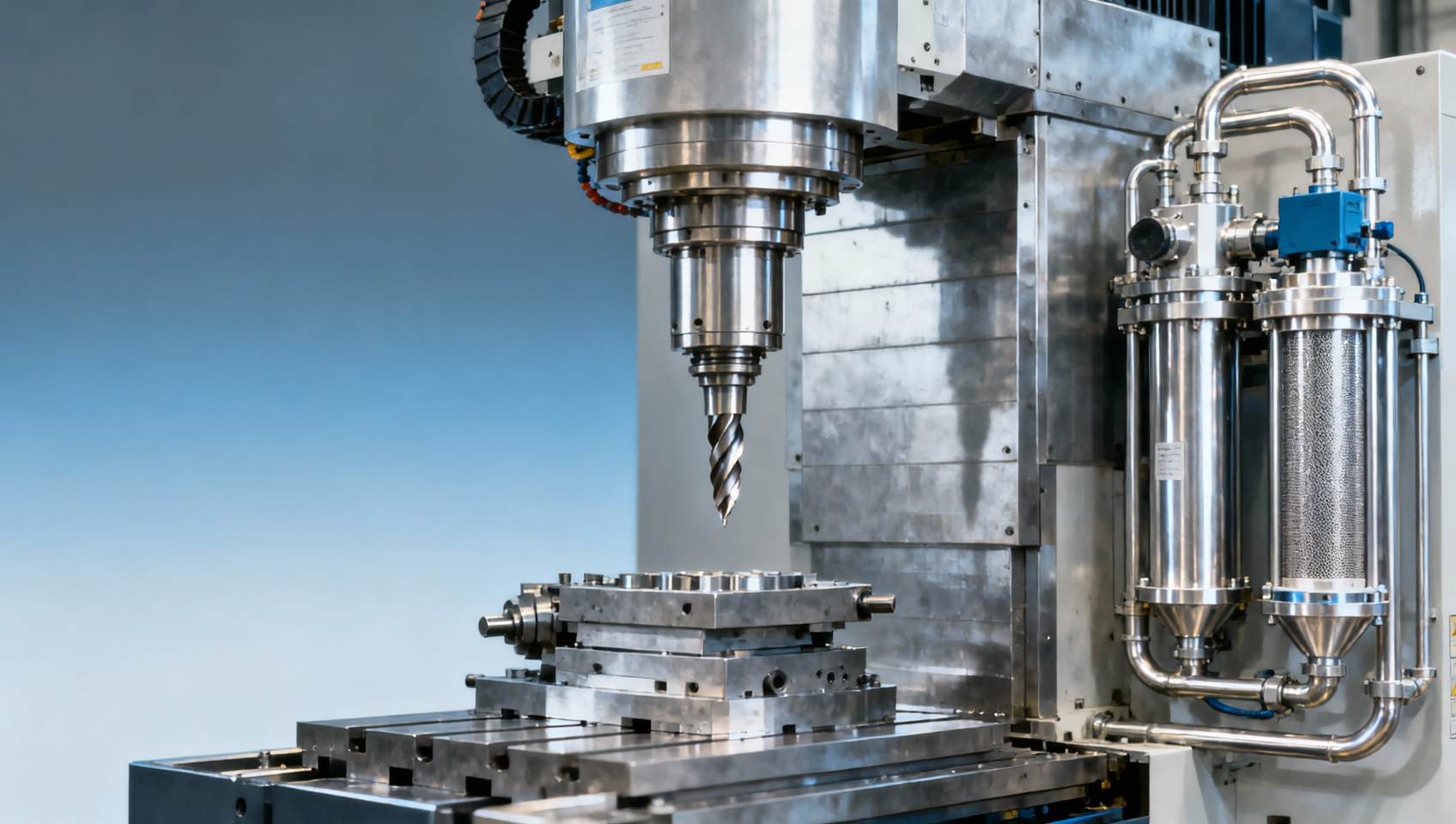
- Floor space agility: Compact, self-contained coolant filtration, oil mist collection, and chip conveyance systems mean less auxiliary footprint — and more flexibility for lean line layouts or future robot cell expansion. A medical device contract manufacturer freed up 18% of shop floor area simply by replacing legacy CNCs with integrated, low-service-interval models — space now used for inline CMM verification stations.
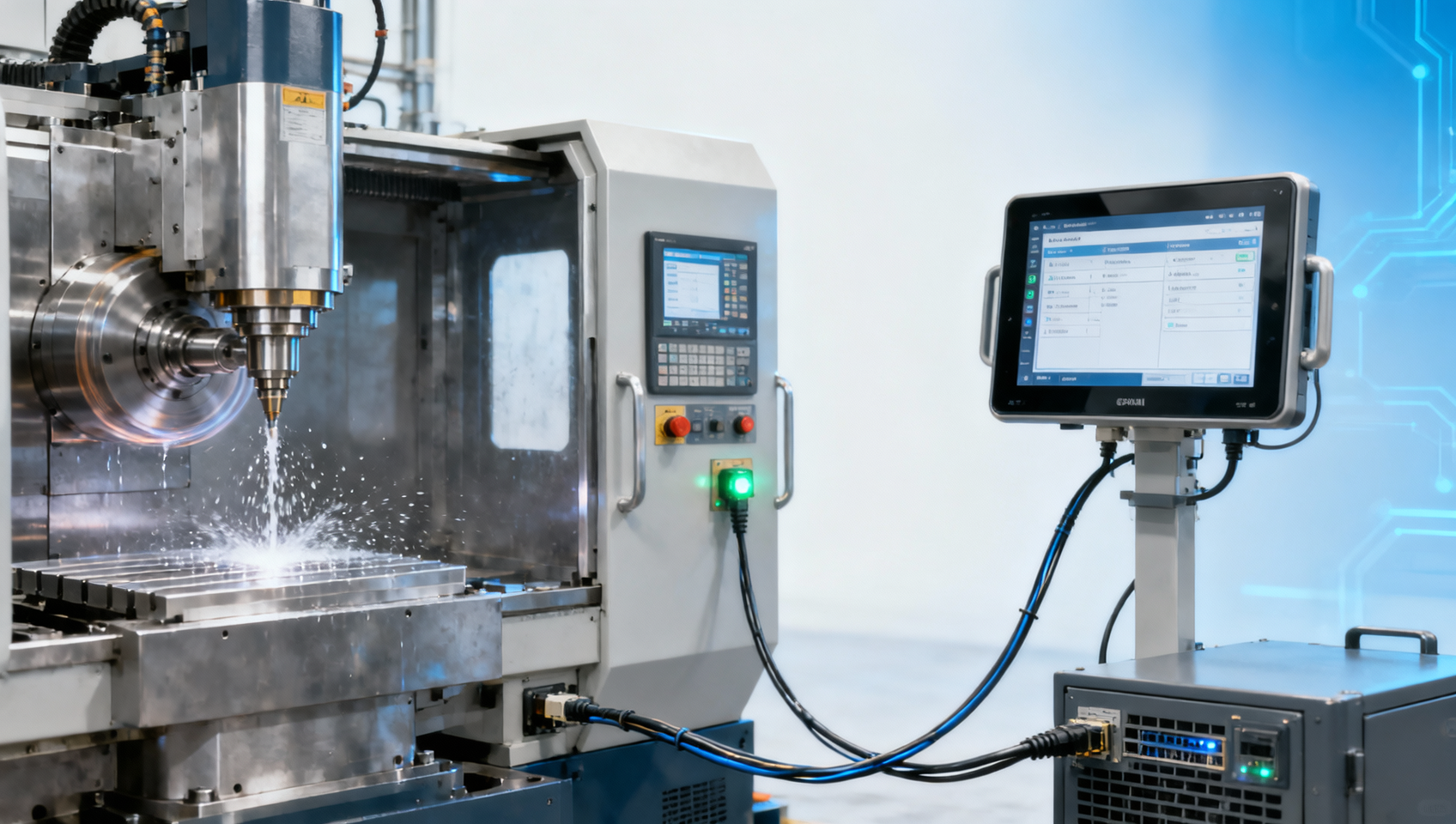
- Integration headroom: Low-maintenance doesn’t mean “isolated.” It means built-in OPC UA servers, native MTConnect support, and deterministic Ethernet/IP timing — so adding IIoT sensors, MES triggers, or digital twin feeds requires zero hardware retrofits. That’s not convenience; it’s future-proofing your automation roadmap without requalification cycles.
What users and engineers actually test — and why spec sheets lie
Spec sheets tout “MTBF > 10,000 hours” — but operators care about what happens at Hour 9,999. Real-world validation focuses on three things:
- Mean Time To Restore (MTTR), not just MTBF: Can a technician replace a failed spindle encoder in under 12 minutes using standard tools — without removing the entire motor assembly? Low-maintenance design prioritizes field-replaceable subassemblies over monolithic units.
- Diagnostic transparency: Does the HMI surface actionable root causes (“X-axis linear scale contamination — clean interval exceeded by 72 hrs”) instead of generic alarms (“Axis Following Error”)? Engineers need traceability, not guesswork.
- Software-driven calibration: Does geometric error compensation auto-update after thermal drift detection — or does it require a $3,500 laser tracker visit every six months? The latter isn’t low maintenance; it’s deferred cost.
For users and maintenance technicians, “low maintenance” means fewer judgment calls, fewer external dependencies, and faster return-to-production — not just longer intervals between interventions.
Choosing wisely: questions procurement and leadership must ask — before signing
Before selecting a CNC partner or platform, align stakeholders around these non-negotiables:
- For procurement: “What percentage of scheduled maintenance requires OEM-certified personnel — and what’s the SLA for remote diagnostics resolution?” Avoid vendors where >40% of PM tasks are locked behind proprietary tooling or firmware access.
- For engineering: “Can I export machine health logs in CSV/JSON format for our internal predictive model — or am I locked into a vendor dashboard?” Interoperability is maintenance scalability.
- For leadership: “What’s the 5-year TCO delta if we factor in energy savings, floor space utilization gains, and avoided integration retrofit costs — not just list price and warranty?” One European aerospace Tier-2 found their “premium” low-maintenance machining center paid back in 2.8 years — not on uptime alone, but on total system agility.
In short: low-maintenance CNC manufacturing isn’t a feature — it’s a system-level philosophy. It trades short-term capex savings for long-term operational sovereignty. When you look past the service call log, you’ll find lower energy bills, tighter production footprints, smoother automation rollouts, and teams empowered to focus on value — not vigilance. That’s not overlooked. That’s the new baseline.
Recommended for You
 Heavy-duty Machining Center for mold making: Why coolant filtration standards evolve faster than OEM manualsMachine Tool Industry Editorial Team
 Quick-change Fixture Design for CNC turning: Why clamping force consistency drops after 200 cyclesCNC Machining Technology Center
 5 Axis Machining for impeller manufacturing: Why toolpath smoothing affects surface fatigue lifeCNC Machining Technology Center
 Lean Production Process implementation: Where value stream mapping fails to expose hidden machine downtimeManufacturing Market Research Center
 Modular Tooling System for flexible manufacturing: Why interface repeatability degrades faster than expectedMachine Tool Industry Editorial Team
 Industrial Automation control system for CNC machines: When cybersecurity updates disrupt scheduled maintenanceMachine Tool Industry Editorial Team

Aris Katos
Future of Carbide Coatings
15+ years in precision manufacturing systems. Specialized in high-speed milling and aerospace grade alloy processing.
▶
5 Axis Machining for impeller manufacturing: Why toolpath smoothing affects surface fatigue lifeCNC Machining Technology Center▶
Efficient Machining Process for aluminum alloys: Why chip evacuation defines success more than feed rateCNC Machining Technology Center▶
Multi-axis machine tool: When kinematic error mapping exposes hidden geometry driftCNC Machining Technology Center▶
Multi-axis CNC manufacturing: When 5-axis capability adds cost without real part benefitCNC Machining Technology Center▶
CNC manufacturing for medical devices: Why surface finish consistency beats peak speedCNC Machining Technology Center
Mastering 5-Axis Workholding Strategies
Join our technical panel on Nov 15th to learn about reducing vibrations in thin-wall components.

Providing you with integrated sanding solutions
Before-sales and after-sales services
Comprehensive technical support