• Global CNC market projected to reach $128B by 2028 • New EU trade regulations for precision tooling components • Aerospace deman
NYSE: CNC +1.2%LME: STEEL -0.4%

CNC metalworking mistakes that lead to scrap parts
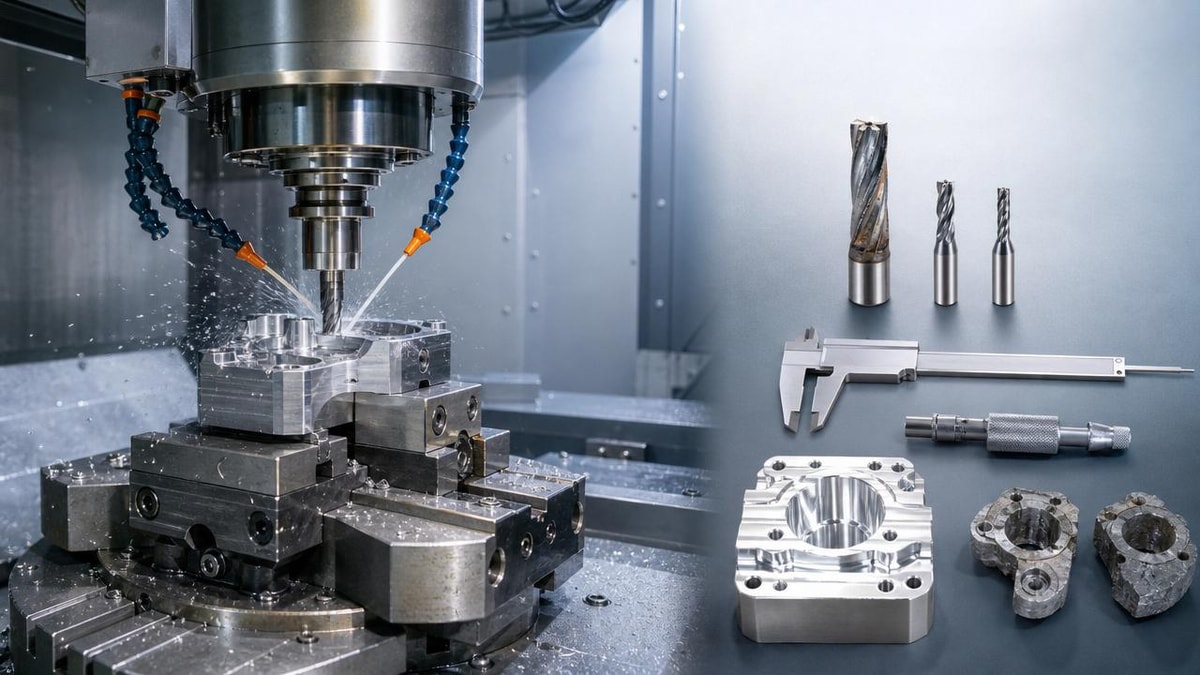
In CNC metalworking, small setup errors, tool wear, or overlooked safety checks can quickly turn precision work into costly scrap parts. For quality control and safety managers, understanding where machining mistakes begin is essential to reducing defects, preventing rework, and maintaining stable production. This article highlights the most common causes of scrap and how to address them before they affect output.
Why do scrap parts happen so often in CNC metalworking even when the process seems controlled?
Scrap rarely comes from one dramatic failure. In most CNC metalworking environments, rejected parts are the result of small deviations stacking up across programming, setup, cutting, inspection, and handling. A machine may be accurate, but if the datum is misread, the wrong offset is loaded, the tool has reached the end of its useful life, or the operator misses a clamp issue, accuracy on paper does not translate into good parts on the floor.
For quality control managers, the key point is that scrap is often a process signal rather than an isolated event. If one batch shows oversize bores, burrs, taper, chatter marks, or inconsistent surface finish, the issue may point to weak process discipline. For safety managers, the same event can also indicate unsafe conditions such as poor chip evacuation, unstable fixturing, coolant misuse, or rushed intervention during tool changes.
This is why CNC metalworking scrap should be reviewed through both quality and safety lenses. A poor setup can damage a part, break a tool, and increase the chance of injury in the same cycle. In high-mix and high-precision manufacturing, reducing scrap is not only about dimensional control. It is also about standardization, machine condition, operator awareness, and reliable inspection feedback.
Which setup mistakes create scrap parts at the very beginning of the job?
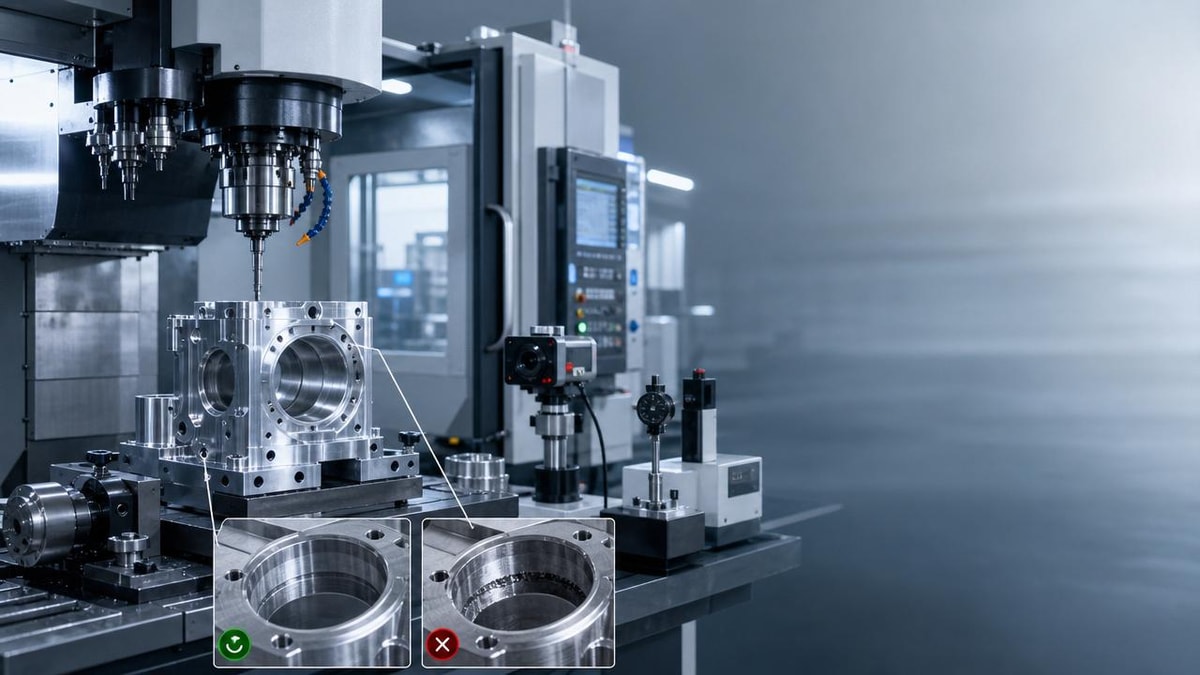
Setup errors are among the most expensive mistakes in CNC metalworking because they can ruin multiple parts before anyone notices the trend. The most common problem is incorrect workholding. If the fixture does not fully support the part, or if clamping force is uneven, the workpiece may shift during cutting. That creates dimensional drift, poor concentricity, distorted walls, and sometimes hidden stress that only appears in later inspection.
Another frequent issue is wrong work offset or reference point selection. A machine can execute the program perfectly and still produce scrap if zero is set from the wrong face or if fixture coordinates are not updated after a setup change. This becomes especially risky in multi-axis machining centers and repeat jobs where teams assume the previous setup data is still valid.
Tool length and diameter offsets also deserve close control. A single input error can result in excess material removal, missed features, broken tools, or collision risk. In CNC metalworking, many scrap events are traced back to basic offset verification that was skipped under production pressure.
To reduce these failures, quality and safety teams should verify that setup approval includes first-piece confirmation, fixture condition checks, clamp torque consistency, and offset sign-off. Strong setup control usually delivers the fastest reduction in scrap rates.
How do tool wear, wrong cutting parameters, and poor tool selection lead to defects?
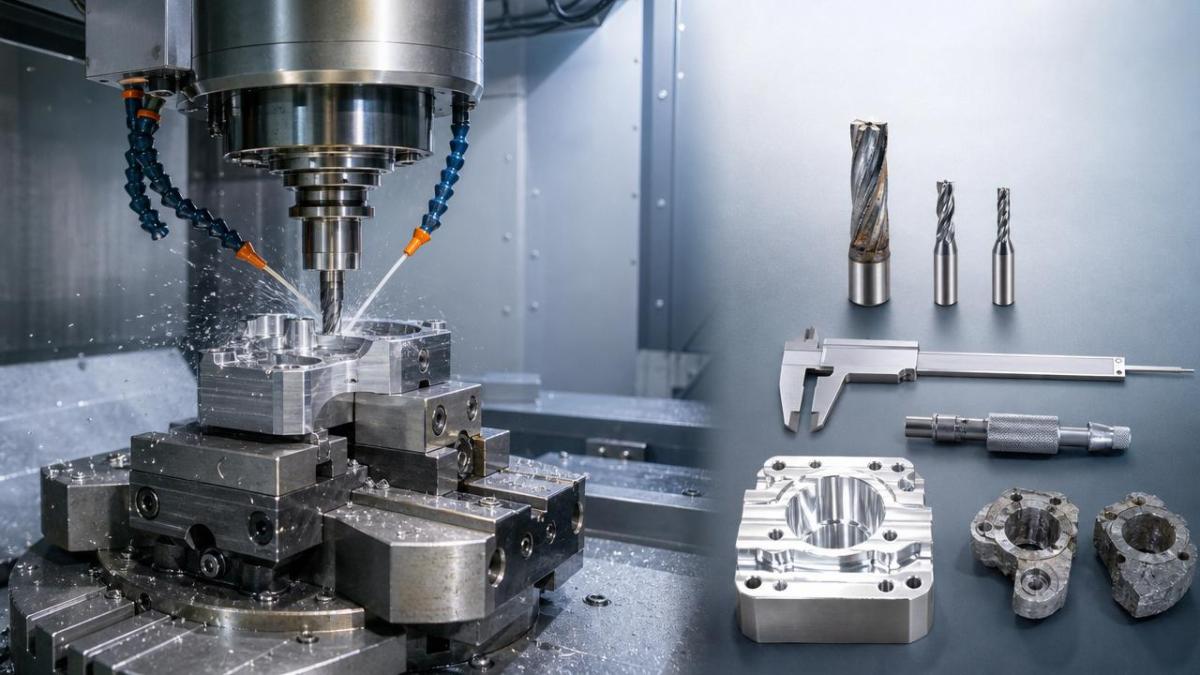
Tool-related problems are a major source of scrap in CNC metalworking because they directly affect size, finish, heat generation, and machine load. A worn insert may still cut, but it no longer cuts predictably. As wear increases, cutting forces rise, temperatures climb, and dimensional variation becomes more likely. Edge chipping, built-up edge, or coating breakdown can leave visible marks on the part and invisible instability in the process.
The wrong feed and speed combination can be just as damaging. Excessive speed may shorten tool life and burn the material surface. Feed rates that are too low can cause rubbing instead of cutting, while feed rates that are too high can overload the tool and create chatter, burrs, or profile error. Materials such as stainless steel, aluminum alloys, hardened steel, and titanium each respond differently, so generic parameter settings often produce inconsistent results.
Incorrect tool geometry is another overlooked issue. If the nose radius, flute design, helix angle, or chipbreaker style does not match the workpiece material and operation, chip control suffers and surface quality drops. Deep cavity work, thin-wall parts, and long-reach machining are especially sensitive. In these cases, using the wrong tool can create vibration that slowly pushes the process out of tolerance.
For quality control teams, tool life monitoring should go beyond visual checks after scrap has already appeared. For safety teams, unstable tooling increases the chance of sudden breakage, flying chips, and unsafe machine intervention. Preventive replacement intervals, tool condition tracking, and standard parameter libraries are practical controls that improve CNC metalworking consistency.
What process control and inspection gaps allow scrap parts to continue unnoticed?
A common misconception in CNC metalworking is that final inspection alone can protect quality. In reality, if in-process control is weak, final inspection only confirms that time and material have already been lost. Scrap expands when shops rely too heavily on end-of-line checks instead of monitoring key dimensions during production.
One major gap is poor first-article approval. If the first part is not measured against the full drawing, including critical tolerances, geometric features, and surface requirements, errors enter production immediately. Another gap is infrequent sampling during long runs. Tool wear, thermal growth, and fixture contamination can slowly change the process, so a part that was acceptable early in the shift may fail several hours later.
Measurement system weakness is also a hidden cause of scrap. If gauges are not calibrated, if operators use inconsistent measuring methods, or if measurement points are poorly defined, process decisions become unreliable. This is especially serious for bores, threads, flatness, roundness, and position tolerances where method variation can hide a real defect.
Process control improves when inspection plans clearly state what to measure, when to measure it, and what action to take when drift appears. Statistical process control, tool wear trend records, and machine capability reviews help quality teams catch issues early. Safety managers should also be involved because emergency troubleshooting during an unstable process often leads to shortcuts around lockout, guarding, or chip removal procedures.
Which safety oversights also increase the risk of scrap in CNC metalworking?
Safety and part quality are closely linked in CNC metalworking. Unsafe conditions often reduce process stability long before they cause an incident. For example, poor housekeeping around chips and coolant can affect fixture seating, contaminate part surfaces, and block proper clamp contact. The result may be misalignment, poor finish, or dimensional error.
Ignoring spindle warm-up, machine maintenance, or abnormal vibration is another risk. A machine that is not thermally stable or mechanically healthy may produce drift, chatter, or poor repeatability. If operators continue cutting under those conditions because schedules are tight, scrap rates rise quickly. The same environment also raises the chance of tool breakage and unsafe corrective action at the machine.
Manual intervention is especially sensitive. Reaching into the work zone to clear chips, inspect features, or adjust a setup without proper stoppage procedures can lead to both injury and process error. It is not unusual for parts to be scratched, datums to be contaminated, or tools to be bumped during rushed intervention. Safety discipline therefore protects both people and product quality.
For safety managers, the lesson is clear: guarding, lockout practices, coolant management, chip control, and machine maintenance are not separate from defect prevention. They are essential parts of a robust CNC metalworking control plan.
What are the most common scrap signals, root causes, and immediate actions?
A practical way to reduce scrap in CNC metalworking is to connect visible symptoms with likely causes and fast responses. The table below can help quality control and safety managers standardize first reaction steps on the shop floor.
How can quality control and safety managers build a prevention system instead of reacting to scrap?
The strongest CNC metalworking operations do not treat scrap as an operator-only problem. They build layered prevention. First, standardize setup approval with documented checks for fixture condition, datums, offsets, tool list, program revision, coolant status, and first-piece measurement. Second, create tool management rules that define life limits, wear indicators, replacement timing, and approved cutting data by material and operation.
Third, strengthen in-process inspection. Critical dimensions should be measured at planned intervals based on risk, not only at the end of the batch. Trend charts, go and no-go conditions, and escalation rules help prevent silent drift. Fourth, make machine maintenance part of defect prevention. Spindle condition, backlash, lubrication, and thermal stability all affect quality in CNC metalworking.
Fifth, connect safety checks to process reliability. A clean machine, protected operator, stable fixture, and well-managed coolant system support repeatable cutting. Safety audits should therefore include quality-impact points such as chip accumulation near locating faces, unsafe manual deburring near the machine, and damage risks during part handling.
Finally, review scrap data in a structured way. Instead of listing only rejected quantities, classify defects by machine, tool, shift, material, feature type, and root cause. This gives quality control teams a clearer path to corrective action and gives safety managers visibility into behaviors and conditions that make failures more likely.
What should be confirmed first before improving a CNC metalworking process or discussing supplier cooperation?
If a company wants to reduce scrap, improve process capability, or evaluate a machining partner, the first discussion should focus on practical control points. Confirm how workholding is validated, how tool life is managed, how first-article inspection is documented, and how process drift is detected during production. Ask whether machine maintenance records are linked to quality performance and whether safety procedures support consistent operation rather than interrupting it only after incidents.
It is also useful to confirm material traceability, revision control for CNC programs, operator training standards, gauge calibration routines, and response time when nonconforming parts are found. In complex CNC metalworking projects, these details matter more than broad claims about precision capability.
For quality control and safety managers, the goal is simple: prevent scrap before it starts, detect variation before it spreads, and remove unsafe conditions that destabilize machining. If you need to confirm a specific process plan, quality checklist, risk assessment, production cycle, or cooperation approach, it is best to begin by discussing part type, tolerance level, material behavior, inspection method, machine configuration, and the exact controls used at setup and in-process stages.
PREVIOUS ARTICLE
Recommended for You
 Industrial Robotics payback depends on one hidden variableManufacturing Market Research Center
 Shaft Parts machining problems linked to concentricity lossCNC Machining Technology Center
 Production Process changes that quietly raise defect ratesCNC Machining Technology Center
 Industrial Automation projects stall without process mappingCNC Machining Technology Center
 CNC metal cutting heat issues behind poor surface finishCNC Machining Technology Center
 High precision lathe claims that deserve a closer lookMachine Tool Industry Editorial Team

Aris Katos
Future of Carbide Coatings
15+ years in precision manufacturing systems. Specialized in high-speed milling and aerospace grade alloy processing.
▶
CNC Programming errors that cause repeat dimension driftCNC Machining Technology Center▶
CNC milling chatter problems that show up in thin wallsCNC Machining Technology Center▶
CNC production delays often start with setup planningCNC Machining Technology Center▶
CNC metalworking mistakes that lead to scrap partsCNC Machining Technology Center▶
CNC Programming Errors That Lead to Scrap on Repeat JobsCNC Machining Technology Center
Mastering 5-Axis Workholding Strategies
Join our technical panel on Nov 15th to learn about reducing vibrations in thin-wall components.

Providing you with integrated sanding solutions
Before-sales and after-sales services
Comprehensive technical support