• Global CNC market projected to reach $128B by 2028 • New EU trade regulations for precision tooling components • Aerospace deman
NYSE: CNC +1.2%LME: STEEL -0.4%

Why are long Shaft Parts harder to keep within tolerance?
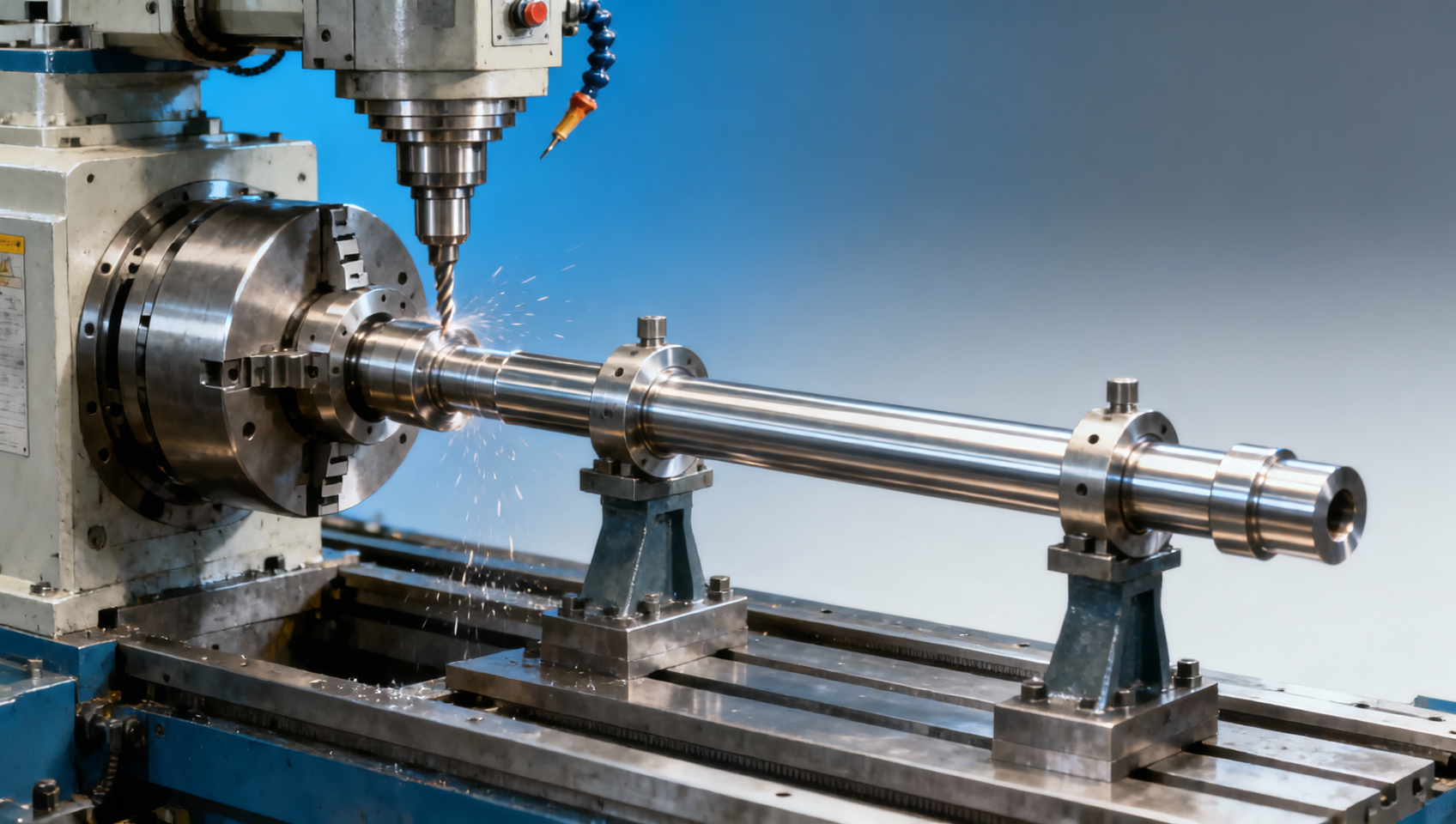
Long Shaft Parts are among the most challenging components in metal machining because even small forces, heat, or vibration can push them out of tolerance. In industrial CNC and automated lathe applications, maintaining straightness, concentricity, and surface quality requires tight control of the CNC cutting and production process. This article explains why these issues occur and how CNC metalworking operations can reduce dimensional instability.
For researchers, machine operators, buyers, and manufacturing decision-makers, long shaft machining is more than a dimensional issue. It affects scrap rate, cycle time, fixture design, tool life, inspection workload, and downstream assembly reliability. In sectors such as automotive, aerospace, energy equipment, and industrial automation, even a deviation of 0.02 mm to 0.10 mm can create vibration, bearing wear, sealing problems, or premature system failure.
The challenge becomes greater as the length-to-diameter ratio increases. A shaft with a ratio above 10:1 behaves very differently from a short rigid part, and at ratios of 20:1 or higher, deflection control becomes a central process issue rather than a secondary setup concern. Understanding the mechanics behind this behavior helps production teams select the right CNC turning strategy, support method, and quality control plan.
Why long shaft parts lose tolerance more easily
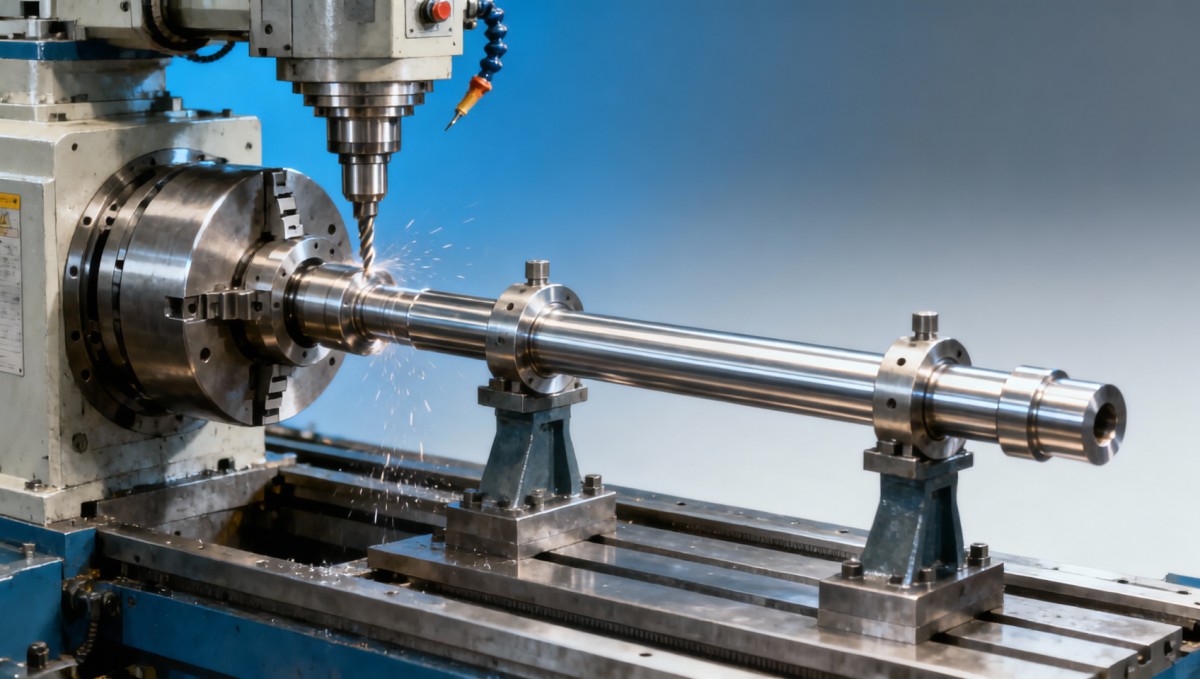
Long shaft parts are less rigid than short components, so they bend more easily under cutting force. During CNC turning, even a moderate radial load can cause temporary deflection. The cutting tool may remove material based on that deflected position, and once the part springs back, the final diameter, straightness, or roundness falls outside tolerance. This is why shafts with slim geometry often show inconsistency from one end to the other.
Thermal expansion also plays a major role. A steel shaft measuring 800 mm to 1500 mm in length can expand noticeably if local cutting temperature rises by 10°C to 25°C. That expansion does not always occur uniformly. One section may heat faster because of heavier material removal, interrupted cutting, or insufficient coolant. The result is taper, waviness, or shifting concentricity during a long production cycle.
Vibration is another major source of instability. On long slender workpieces, chatter can build quickly if spindle speed, feed, insert geometry, and support layout are not matched properly. Once chatter begins, surface roughness may move from Ra 1.6 to Ra 3.2 or worse, and the repeated oscillation can push the shaft out of cylindricity. In automated lathe lines, this often creates variation that is difficult to catch until final inspection.
Machine condition matters as much as part geometry. Small errors in spindle alignment, tailstock center condition, chuck clamping force, or guide support position become amplified on long shaft parts. A machine that holds ±0.01 mm on a 120 mm part may struggle to hold ±0.03 mm on a 1200 mm shaft unless the process is specifically engineered for slender workpieces.
Key physical factors behind dimensional instability
The most common sources of tolerance drift can be grouped into four categories. Operators and process engineers usually need to address more than one at the same time, because a support change alone rarely solves a heat or chatter problem.
- Low rigidity caused by high length-to-diameter ratio, especially above 12:1.
- Uneven heat input from roughing and finishing passes over long cycle times of 5 to 20 minutes.
- Dynamic vibration from poor speed range selection, worn inserts, or unstable support points.
- Setup error from center wear, chuck distortion, or tailstock misalignment over long travel distances.
How the main error sources affect quality
The table below shows how typical machining variables influence tolerance control in long shaft production. It can be used as a quick reference for troubleshooting on CNC lathes, multi-axis turning centers, and automated shaft machining cells.
The main takeaway is that long shaft tolerance problems are cumulative. A slight setup error, mild heat rise, and moderate vibration may each seem acceptable alone, but together they can push a part beyond drawing limits. This is why successful shaft machining depends on a process system, not a single correction.
Process design choices that make or break shaft accuracy
In CNC metalworking, long shaft tolerance control begins long before the first cut. Process planning must consider material condition, stock allowance, clamping method, support scheme, roughing sequence, and finishing strategy. A shaft made from pre-hardened alloy steel, for example, will respond differently than one made from normalized carbon steel or stainless material with higher thermal sensitivity.
One common mistake is treating a long shaft like a scaled-up short shaft. Increasing stock size without changing support method usually leads to deflection. In many applications, the use of a tailstock, steady rest, follow rest, or intermediate support is not optional. For shafts above 600 mm in unsupported length, support planning should be reviewed as carefully as toolpath planning.
Cut parameter selection is equally critical. Heavy roughing passes may improve productivity, but if radial depth and feed force exceed the part's stiffness limit, material removal becomes unstable. In practice, reducing the depth of cut by 15% to 30% and increasing the number of controlled passes can produce better total cost results by lowering scrap, rework, and polishing time.
Sequence design matters too. Many high-precision shops leave a balanced finishing allowance, perform semi-finishing to release stress, then allow a short stabilization period before final finishing. On critical components, especially those used in rotating assemblies, inspection between operations helps identify drift before the full batch is completed.
Typical process controls for slender shafts
- Use center drilling and stable end support before heavy stock removal begins.
- Split roughing into 2 to 4 stages instead of one aggressive pass on shafts with high flexibility.
- Keep finish allowance consistent, often within 0.2 mm to 0.5 mm depending on diameter and material.
- Match insert geometry to the force direction to reduce radial load and chatter risk.
- Check runout after roughing and before finishing, especially on parts requiring concentric bearing seats.
When support devices are necessary
Support hardware should be selected by shaft geometry and quality target, not by habit. Some parts can be machined between centers, while others need moving support during cutting. Automated production lines often benefit from programmable steady rests because they reduce manual intervention and improve consistency across 50, 100, or 500-piece runs.
Comparing common support and setup methods
The table below compares several common approaches used in CNC shaft machining. Buyers and production managers can use it to evaluate machine capability and fixture requirements before approving equipment or outsourcing decisions.
The comparison shows that fixture investment often pays for itself on high-value shaft programs. A more stable support method can reduce dimensional variation, lower inspection rejection, and shorten adjustment time during batch production. For procurement teams, this means machine capability should be assessed together with tooling and support accessories, not as separate budget items.
How CNC shops reduce straightness, concentricity, and surface quality problems
The most effective way to control long shaft tolerance is to combine machine capability, tooling strategy, and in-process monitoring. Straightness depends on support and cutting force control. Concentricity depends on consistent datum handling across operations. Surface quality depends on vibration suppression, insert condition, and thermal stability. These three quality targets are connected, so a shop that optimizes only one often struggles with the others.
For straightness control, many shops use staged machining with intermediate checks. On shafts longer than 1000 mm, checking at 3 to 5 positions along the length is common rather than measuring only the ends. This helps identify center bowing or progressive taper early. If deviation exceeds the internal process threshold, finishing can be adjusted before the batch continues.
Concentricity problems often come from multiple re-clamping steps. If bearing seats, splines, shoulders, and sealing diameters are machined in separate operations without tight datum control, cumulative runout increases. A practical approach is to reduce the number of setups, keep key features in one clamping when possible, and define a clear datum hierarchy in the manufacturing plan.
Surface quality requires stable cutting mechanics. Operators usually look at spindle speed first, but insert nose radius, tool overhang, coolant delivery, and stock consistency are just as important. In some shaft programs, moving from a general-purpose insert to a low-force finishing geometry improves roughness by 20% to 40% while reducing the chance of chatter marks at the same time.
Practical control measures used in production
- Limit tool overhang and use rigid holder systems to reduce vibration transfer.
- Schedule insert replacement by cutting time, such as every 25 to 40 minutes, rather than waiting for visible failure.
- Use coolant or cutting oil consistently to prevent localized heat buildup during long passes.
- Adopt first-piece inspection plus interval checks every 10 to 20 parts for stable batches.
- Record machine, tool, and result data so drift patterns can be traced instead of corrected by trial and error.
Inspection points that matter most
Not every feature needs the same inspection frequency. For rotating shafts, the highest-risk points are usually bearing journals, seal lands, threaded ends, and long functional diameters. Measuring only overall length and nominal diameter may miss the real causes of assembly complaints. Effective inspection plans focus on the features that influence runout, fit, sealing, and balance.
What buyers and decision-makers should evaluate before sourcing long shaft machining
From a purchasing perspective, long shaft parts should never be evaluated only by unit price. The true cost includes tolerance stability, process capability, batch consistency, inspection method, delivery reliability, and communication speed when issues arise. A low quote may become expensive if the supplier cannot control straightness or if corrective actions add 2 to 3 weeks to the lead time.
Buyers should ask how the supplier machines slender shafts, what support systems are available, and how in-process inspection is handled. It is also useful to confirm the practical tolerance range the supplier can maintain over the full shaft length, not just on a short sample section. For many industrial applications, knowing whether the supplier can hold ±0.02 mm, ±0.05 mm, or only ±0.10 mm is essential to risk assessment.
Decision-makers in automotive, energy, and automation projects should also review production scalability. A supplier may produce five prototype shafts successfully, but batch stability at 100 or 1000 pieces depends on tool management, fixture repeatability, operator discipline, and machine maintenance. For ongoing programs, process documentation and change control are just as important as initial sample approval.
Lead time should be discussed in stages. Material preparation, rough machining, stress relief if required, finishing, inspection, and packaging all affect delivery. A realistic schedule for medium-complexity shafts may be 2 to 4 weeks, while high-precision or longer parts may require additional time for process validation and measurement reporting.
Procurement checklist for CNC long shaft projects
The table below summarizes the main factors procurement teams should review when comparing CNC machining suppliers for long shaft parts. It helps align technical requirements with commercial decisions.
A disciplined supplier evaluation process reduces both technical and commercial risk. For strategic buyers, the best partner is usually the one that can explain its machining method clearly, define realistic tolerance capability, and show how quality is maintained from prototype to volume production.
FAQ on long shaft tolerance control in CNC machining
The questions below reflect common concerns from engineers, operators, sourcing teams, and production managers. They are especially relevant when shafts are used in rotating equipment, transmission systems, automation modules, or precision assemblies.
How long does a shaft need to be before tolerance control becomes difficult?
There is no single length threshold, because difficulty depends on both length and diameter. In practice, once the length-to-diameter ratio reaches about 10:1, deflection risk increases clearly. Above 15:1 or 20:1, support method, cutting force, and thermal control become major process variables rather than secondary considerations.
Which tolerance features are most difficult on long shaft parts?
Straightness, total runout, concentricity between multiple journals, and fine surface finish are usually the hardest to maintain together. Diameter tolerance alone may appear acceptable, but if straightness drifts or runout increases, the shaft can still fail in bearings, seals, or high-speed rotation applications.
Can CNC automation improve consistency for long shafts?
Yes, but only if the automated process includes stable support, tool life management, and inspection control. Automation improves repeatability and labor efficiency, especially in runs above 50 to 100 pieces. However, if the base process is unstable, automation can simply repeat the same defect faster.
What should operators monitor first when problems appear?
Start with support condition, tool wear, spindle speed range, and thermal behavior. These four points cause a large share of long shaft issues. A practical first response is to verify runout, inspect support contact, review insert age, and compare measured diameters at several positions along the shaft instead of checking only one point.
Long shaft parts are harder to keep within tolerance because they amplify every weakness in the machining system, from cutting force and heat to setup error and vibration. The most reliable results come from matching machine capability, support design, cutting parameters, and inspection planning to the specific shaft geometry and production volume.
If your project involves precision shaft components for CNC turning, automated lathe production, or high-stability manufacturing lines, a process-focused evaluation can prevent costly quality problems before production begins. Contact us to discuss your part drawings, tolerance targets, and batch requirements, and get a tailored machining solution or sourcing recommendation for your application.
PREVIOUS ARTICLE
Recommended for You
 Heavy-duty Machining Center for mold making: Why coolant filtration standards evolve faster than OEM manualsMachine Tool Industry Editorial Team
 Quick-change Fixture Design for CNC turning: Why clamping force consistency drops after 200 cyclesCNC Machining Technology Center
 5 Axis Machining for impeller manufacturing: Why toolpath smoothing affects surface fatigue lifeCNC Machining Technology Center
 Lean Production Process implementation: Where value stream mapping fails to expose hidden machine downtimeManufacturing Market Research Center
 Modular Tooling System for flexible manufacturing: Why interface repeatability degrades faster than expectedMachine Tool Industry Editorial Team
 Industrial Automation control system for CNC machines: When cybersecurity updates disrupt scheduled maintenanceMachine Tool Industry Editorial Team

Aris Katos
Future of Carbide Coatings
15+ years in precision manufacturing systems. Specialized in high-speed milling and aerospace grade alloy processing.
▶
High-tolerance Disc Parts for aerospace applications: Why runout control begins at blank handlingCNC Machining Technology Center▶
CNC Metalworking Tolerances That Raise Hidden CostsCNC Machining Technology Center▶
What slows metal machining even when machines look busy?CNC Machining Technology Center▶
CNC metalworking jobs fail tolerance checks for hidden reasonsCNC Machining Technology Center▶
Why CNC milling cycle time stays high after process changesCNC Machining Technology Center
Mastering 5-Axis Workholding Strategies
Join our technical panel on Nov 15th to learn about reducing vibrations in thin-wall components.

Providing you with integrated sanding solutions
Before-sales and after-sales services
Comprehensive technical support