• Global CNC market projected to reach $128B by 2028 • New EU trade regulations for precision tooling components • Aerospace deman
NYSE: CNC +1.2%LME: STEEL -0.4%

How to Plan Industrial Automation Integration for a Production Line
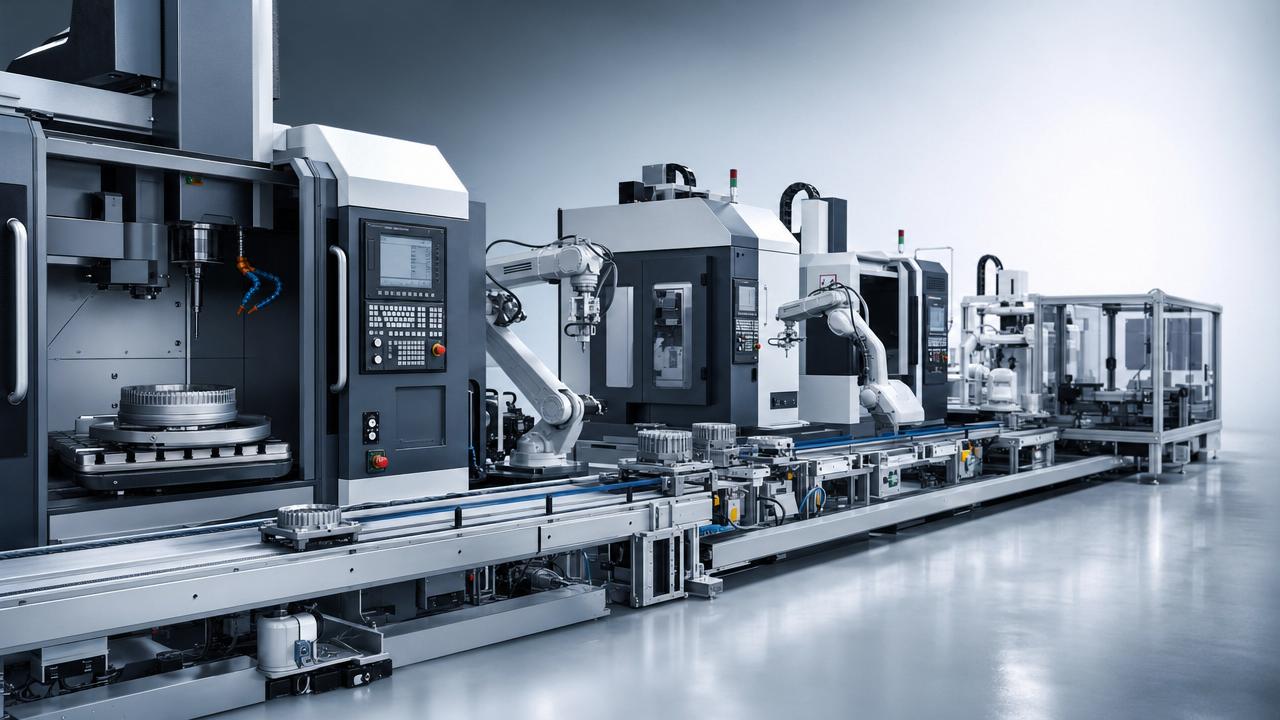
Why production line planning changes from one factory floor to another
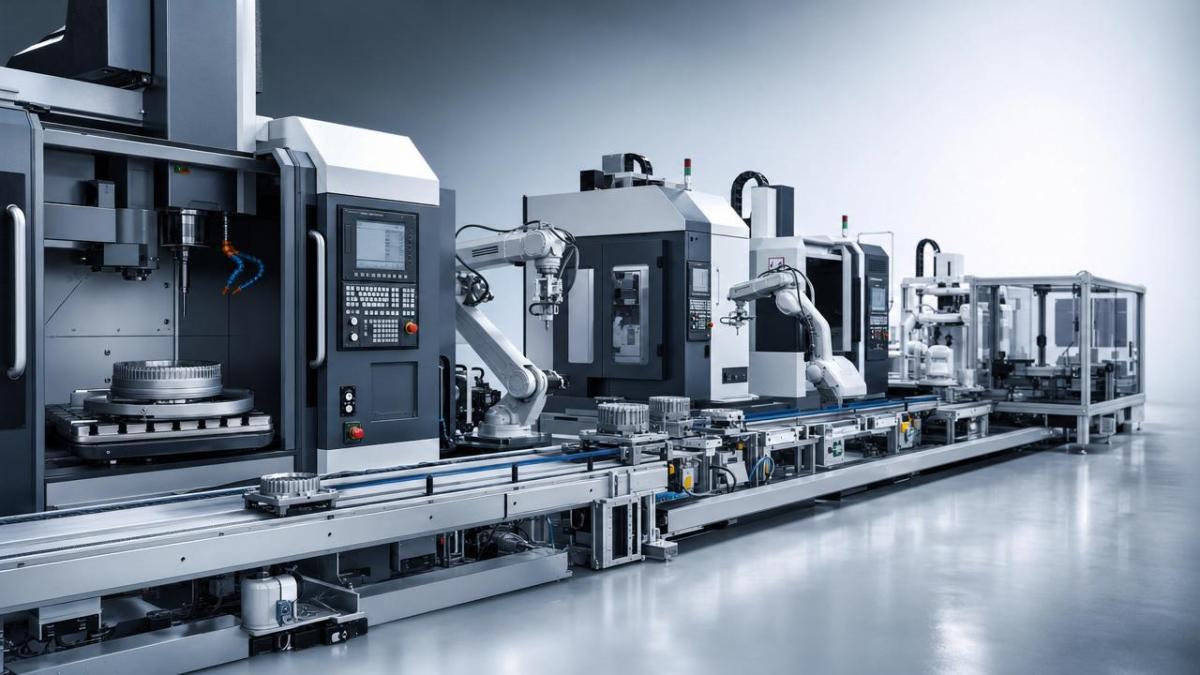
Industrial Automation integration for production line planning now shapes how precision manufacturing scales without losing control of quality, uptime, or traceability.
That is especially true in CNC machining, where machine tools, robots, fixtures, inspection devices, and software must act as one coordinated system.
The same integration logic does not fit every line.
A high-mix aerospace cell, an automotive transfer line, and an electronics precision machining workshop each define success differently.
In practical terms, Industrial Automation integration for production line decisions depend on part variety, takt stability, tolerance demands, data visibility, and maintenance readiness.
When those factors are misread, automation may still run, but the production line becomes harder to balance, debug, and expand.
A better planning approach starts with operating context rather than equipment catalogs.
This matters across the broader machine tool industry, where global suppliers are pushing higher precision, digital integration, and flexible automation at the same time.
When high-volume machining sets the pace
In automotive parts production, the usual pressure comes from stable takt time, repeatability, and low manual interruption.
Here, Industrial Automation integration for production line planning often centers on synchronized loading, automatic tool monitoring, and fast fault isolation.
The key question is not whether to automate, but how tightly each station should be linked.
If machines are fully coupled, one fault can stop the entire line.
If they are too independent, buffers grow, traceability weakens, and cycle balance becomes difficult.
A common planning choice is modular integration.
That means linking CNC cells, conveyors, robot handlers, gauging stations, and MES signals through defined handoff points rather than one oversized control layer.
This structure usually shortens recovery time when one machine drifts out of tolerance or one robot gripper needs adjustment.
What planners usually check first in this setting
- Cycle time variation between roughing, finishing, cleaning, and inspection stations
- Tool life data quality and whether replacement can happen without disrupting line rhythm
- Part flow logic during rework, scrap detection, and batch traceability events
- Availability of maintenance access around robots, guarding, and transfer equipment
Where flexible production needs a different integration logic
Aerospace, energy equipment, and specialized industrial components rarely behave like high-volume lines.
Batch sizes change, parts are heavier, setups take longer, and inspection rules are stricter.
In these cases, Industrial Automation integration for production line planning should prioritize flexibility over maximum line speed.
That often means choosing cell-based layouts, recipe-driven machine programs, and digital work instructions that support frequent changeovers.
The integration layer must also handle more than machine status.
It should connect fixture identity, NC program version, probing feedback, and quality records for each part family.
Without that structure, advanced multi-axis machining can still produce parts, but repeatability across shifts becomes fragile.
A frequent mistake is copying an automotive automation model into a high-mix workshop.
The result is usually expensive hardware with poor changeover performance.
Precision electronics and small-part machining bring another set of constraints
Small-part environments look simpler from a distance, yet their Industrial Automation integration for production line requirements can be more delicate.
Tiny dimensional shifts, burr control, vibration sensitivity, and contamination risks quickly affect yield.
In actual use, the planning focus moves toward environmental stability, in-process inspection, and consistent part handling.
Robots and conveyors must protect orientation and surface condition, not only move material faster.
Data integration also becomes more granular.
Alarm histories, spindle load patterns, and offset adjustments may need to feed quality decisions within the same shift.
For this reason, Industrial Automation integration for production line planning in electronics machining often combines automation with stricter process feedback loops rather than only larger machine counts.
Different scenarios change what must be confirmed before integration starts
The differences become clearer when key planning conditions are compared side by side.
This is why Industrial Automation integration for production line planning should begin with process behavior, not with a fixed automation package.
What usually gets underestimated before equipment is connected
Many integration problems start long before commissioning day.
One common error is judging compatibility only by communication protocol.
A CNC machine, robot, and MES may all exchange data, yet still disagree on timing, status meaning, or part identity rules.
Another overlooked issue is maintenance logic.
If access doors, grippers, sensors, and cable routing are hard to service, downtime grows even when the design looks efficient on paper.
Industrial Automation integration for production line planning also fails when expansion is ignored.
A line built for one product family may need extra inspection, another robot, or new software links within two years.
If I/O capacity, network architecture, or floor space is fixed too tightly, every upgrade becomes disruptive.
Misjudgments that appear often
- Treating similar part families as identical from a fixture and handling perspective
- Calculating return only from labor savings, while ignoring debug time and spare parts support
- Adding robots before stabilizing machining capability and process repeatability
- Assuming data collection alone creates a smart production line
A practical way to match integration depth with line reality
In most facilities, the most effective path is phased integration.
Start by mapping process dependencies across CNC machines, loading systems, gauging stations, tooling, and software interfaces.
Then define where full automation is necessary and where controlled manual intervention still makes sense.
For example, repetitive shaft machining may justify robotic loading early.
Complex structural parts may benefit first from digital traceability and setup verification rather than from fully automated transfer.
A grounded Industrial Automation integration for production line roadmap usually includes three layers of confirmation.
- Process layer: part flow, tolerance control, tool strategy, fixture stability, inspection points
- Control layer: machine communication, alarm structure, interlocks, recipe management, restart logic
- Operational layer: staffing rhythm, maintenance access, spare parts, training, future expansion paths
When these layers are reviewed together, integration choices become easier to defend and easier to scale.
Next-step decisions should come from line conditions, not assumptions
Industrial Automation integration for production line planning works best when every decision is tied to a real operating condition.
That means clarifying part mix, takt targets, quality checkpoints, software interfaces, and maintenance limits before final architecture is chosen.
In the CNC machine tool sector, where precision, automation, and digital manufacturing continue to converge, this discipline matters even more.
A useful next step is to document the current production line by scenario, compare changeover demands against uptime goals, and identify where data or handling failures actually occur.
From there, it becomes possible to set practical integration standards, estimate implementation risk, and build an automation plan that fits both current output and future expansion.
Recommended for You
![]() Zhongshan Xiaolan Machinery Exhibition Opens With Global Product DebutsMachine Tool Industry Editorial Team
Zhongshan Xiaolan Machinery Exhibition Opens With Global Product DebutsMachine Tool Industry Editorial Team Automated Production Machining: Which Parts and Batch Sizes Are a Good Fit?Machine Tool Industry Editorial Team
![]() FANUC Links FIELD System Data with Copilot to Advance Shop-Floor Data UseCNC Machining Technology Center
FANUC Links FIELD System Data with Copilot to Advance Shop-Floor Data UseCNC Machining Technology Center Smart Manufacturing for Aerospace: Building Traceability Across CNC OperationsCNC Machining Technology Center
![]() Mitsubishi Electric Announces Physical AI System Linking Humanoid Robots and CNC MachinesMachine Tool Industry Editorial Team
Mitsubishi Electric Announces Physical AI System Linking Humanoid Robots and CNC MachinesMachine Tool Industry Editorial Team Precision Machining for Defense: Supplier Quality and Traceability ChecksManufacturing Market Research Center


Aris Katos
Future of Carbide Coatings
15+ years in precision manufacturing systems. Specialized in high-speed milling and aerospace grade alloy processing.
▶
Automated Production Machining: Which Parts and Batch Sizes Are a Good Fit?Machine Tool Industry Editorial Team▶
Choosing Automated Machine Tools for High-Mix, Low-Volume ProductionMachine Tool Industry Editorial Team▶
Choosing Industrial Robots for Warehouse Picking and PalletizingMachine Tool Industry Editorial Team▶
Digital Manufacturing for Smart Factories: Connecting Legacy Machines to MESMachine Tool Industry Editorial Team▶
Selecting Machine Tools for Automotive Parts: Accuracy, Throughput, and AutomationMachine Tool Industry Editorial Team
▶
Mastering 5-Axis Workholding Strategies
Join our technical panel on Nov 15th to learn about reducing vibrations in thin-wall components.

Providing you with integrated sanding solutions
Before-sales and after-sales services
Comprehensive technical support