• Global CNC market projected to reach $128B by 2028 • New EU trade regulations for precision tooling components • Aerospace deman
NYSE: CNC +1.2%LME: STEEL -0.4%

Industrial Robotics for Palletizing: How to Choose Payload, Reach, and End-of-Arm Tools
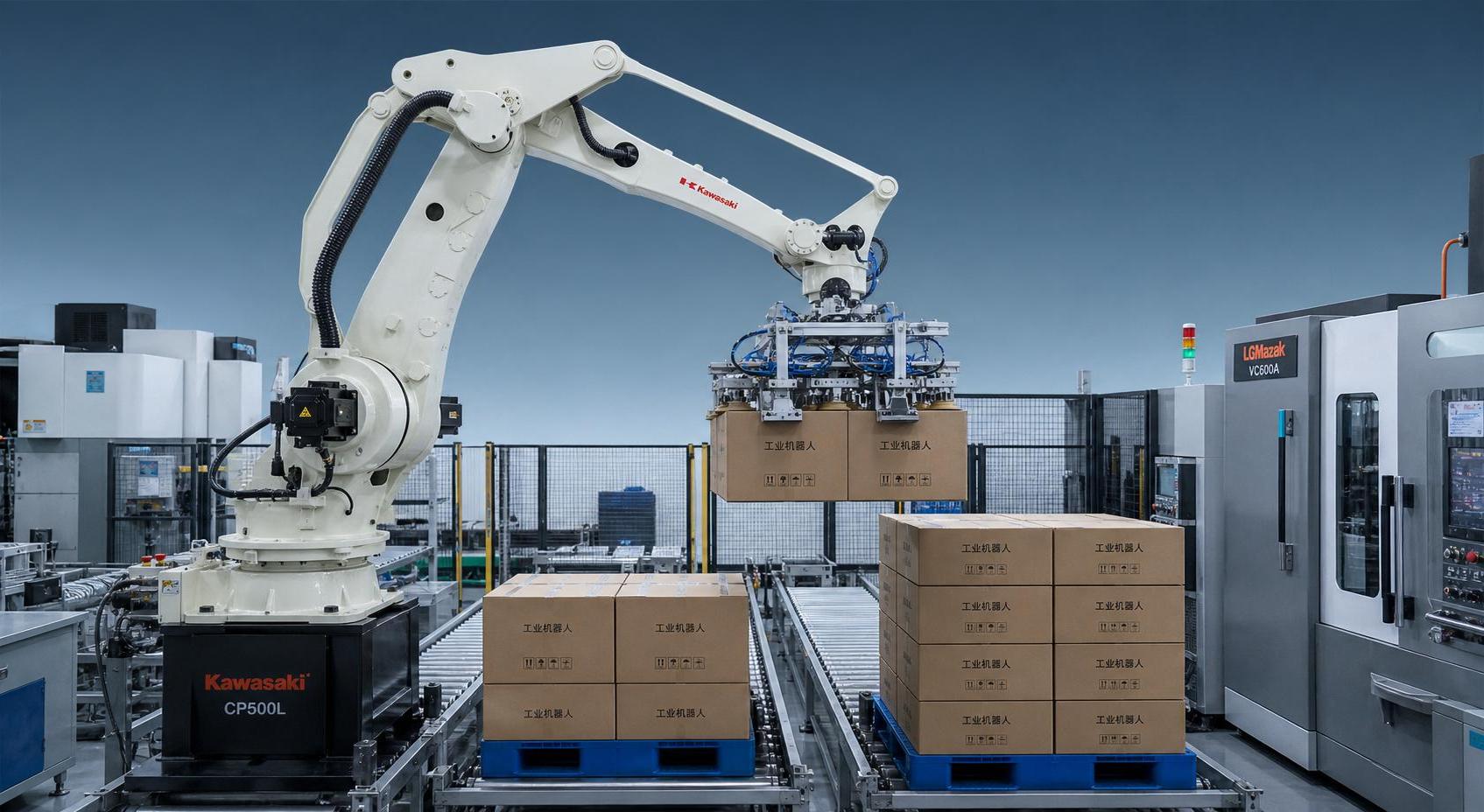
Industrial Robotics for Palletizing has moved from a specialized automation topic to a practical decision in high-output manufacturing. In CNC machining, precision assembly, and mixed production environments, palletizing often sits at the end of a process that already demands accuracy, uptime, and predictable flow. Choosing payload, reach, and end-of-arm tools well determines whether a robot cell supports throughput goals or becomes a constraint.
Why palletizing matters more in automated production
Across machine tool and precision manufacturing operations, automation is no longer limited to cutting, loading, or inspection. Material movement between finished output, buffers, and shipping areas is under the same pressure for consistency.
That shift is especially visible in facilities serving automotive, aerospace, electronics, and energy equipment. These sectors depend on stable cycle times, repeatable handling, and careful use of labor in environments where production scheduling changes quickly.
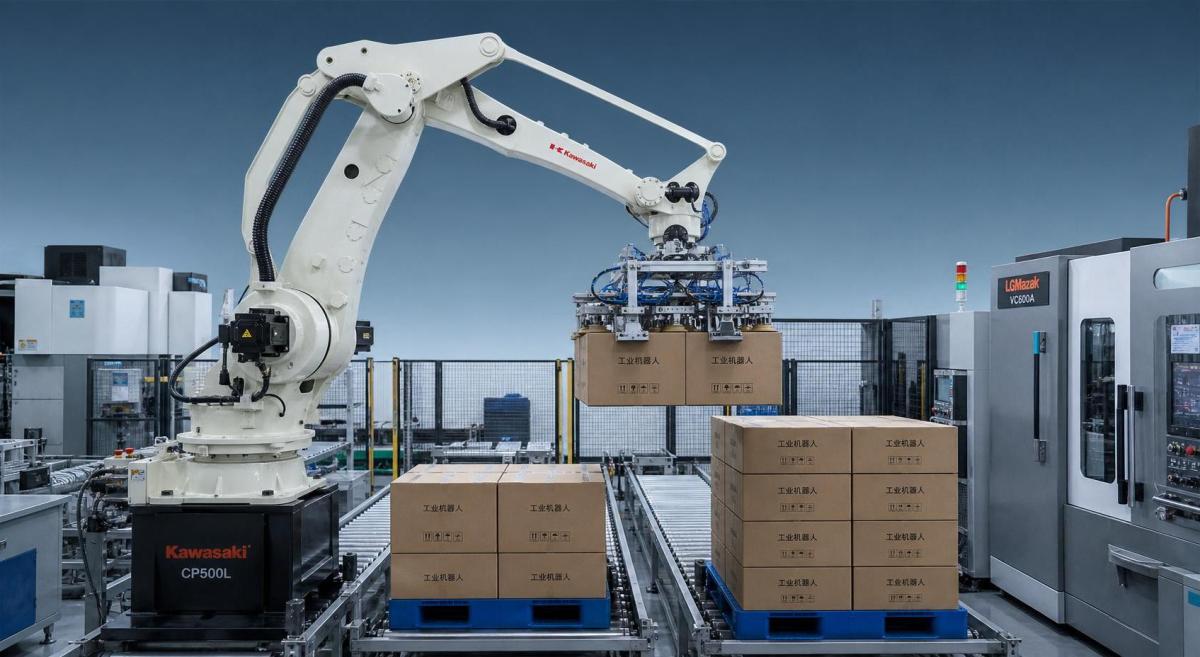
Industrial Robotics for Palletizing helps close the gap between automated machining and outbound logistics. A palletizing robot can stack cartons, trays, bags, machined parts, or returnable containers with higher repeatability than manual handling.
The business case is usually broader than labor reduction. It includes safety, reduced product damage, better space use, and easier scaling when output increases or package formats change.
The three choices that shape system performance
When evaluating Industrial Robotics for Palletizing, three parameters drive most of the technical and commercial outcome: payload, reach, and end-of-arm tooling. They are closely linked, so selecting one in isolation often creates problems later.
Payload defines how much mass the robot can safely move. Reach determines whether the robot can access infeed positions, pallet corners, slip sheets, and multiple pallet stations. The end-of-arm tool decides how securely the product is gripped and released.
In real projects, these choices must fit the full cell layout. That includes conveyors, fences, pallet height, layer patterns, line speed, and maintenance access.
Payload is more than product weight
A common mistake is to size payload only around the heaviest package. The robot must also carry the gripper, mounting hardware, hoses, sensors, and sometimes a slip sheet or separator.
Dynamic forces also matter. Fast acceleration, abrupt deceleration, and offset loads can push the effective demand beyond the nominal product mass.
For that reason, a useful payload calculation includes:
- Maximum product weight, including packaging variation
- Gripper and bracket weight
- Center-of-gravity offset from the robot flange
- Required cycle speed and motion profile
- Future product additions with higher mass
Leaving a realistic safety margin usually supports longer service life and more stable performance. Oversizing too aggressively, however, may increase cost, footprint, and energy use without adding practical value.
Reach affects layout, not just coverage
Reach looks simple on a datasheet, yet it is often where palletizing cells become inefficient. A robot may technically reach the far corner of a pallet but still move through awkward paths that slow the cycle.
This issue becomes more visible when one cell serves two pallet positions, multiple infeed lanes, or different pallet heights. As stacks grow, vertical reach and wrist orientation become just as important as horizontal distance.
In CNC-linked production lines, floor space is usually tight. The palletizer may sit beside machining centers, wash stations, or packing equipment, so reach should be assessed with the actual surrounding geometry, not an idealized open area.
How end-of-arm tooling changes the result
The end-of-arm tool is where Industrial Robotics for Palletizing becomes application-specific. Two robots with similar payload and reach can perform very differently if the gripper is poorly matched to the load.
Vacuum tools are common for sealed cartons, trays, and flat packages. Clamp grippers work well for rigid containers or products with reliable side surfaces. Fork-style tools may suit sacks, bins, or layer handling.
Selection should reflect more than the package shape. Surface porosity, dust, humidity, label placement, film wrap, and dimensional variation all affect gripping stability.
What to test before freezing the gripper design
A short physical trial with real packaging often reveals more than a long specification sheet. It also helps confirm whether the gripper tolerates slight product misalignment at the infeed.
Typical scenarios across manufacturing environments
Industrial Robotics for Palletizing is not limited to consumer goods warehouses. In precision manufacturing, the use cases are broader and sometimes more demanding.
- Carton palletizing after packaging of machined parts or spare components
- Handling returnable totes in flexible production cells
- Stacking metal or plastic trays between machining and secondary assembly
- Dual-line palletizing where one robot serves parallel outputs
- Mixed-SKU pallet formation for export or regional distribution
These scenarios are common in facilities that have already automated cutting, loading, or inspection. Once upstream precision improves, manual palletizing often becomes the least predictable part of the flow.
That is why the topic matters in machine tool ecosystems across China, Germany, Japan, South Korea, and other industrial centers. Global suppliers are expanding palletizing solutions as part of broader smart factory integration.
Where projects usually succeed or fail
Most palletizing projects do not fail because the robot is inaccurate. They struggle because the surrounding assumptions were incomplete.
Common pressure points include inconsistent product presentation, poor pallet quality, unclear layer recipes, and unrealistic cycle targets. In some cases, the robot is selected early while packaging details are still changing.
A better approach is to review the full handling chain before final specification:
- Confirm actual product dimensions, tolerances, and weight ranges
- Map infeed orientation and spacing consistency
- Define pallet patterns, stack heights, and stability rules
- Reserve access for maintenance, safety, and operator intervention
- Check how the cell connects with MES, conveyors, scanners, or labeling
This matters even more in automated CNC environments, where upstream output is tightly timed. A palletizing bottleneck can reduce the value of expensive machining capacity.
A practical way to compare options
When comparing Industrial Robotics for Palletizing solutions, it helps to score each option against the operating reality rather than only headline specifications.
This comparison method usually gives a clearer investment picture than focusing on robot brand or top speed alone.
What to clarify before moving forward
A reliable palletizing plan starts with a small set of confirmed facts. The most useful next step is often to turn broad interest in Industrial Robotics for Palletizing into a structured requirement list.
That list should cover real product data, pallet patterns, speed targets, utilities, integration points, and likely format changes over the next few years. Once those inputs are clear, payload, reach, and end-of-arm tooling become easier to judge on practical terms.
In high-precision manufacturing, palletizing works best when it is treated as part of the production system, not as a stand-alone add-on. A cell designed around actual flow conditions is more likely to protect throughput, fit available space, and deliver durable returns.
Recommended for You
 How to Select a Machine Tool for Aerospace Parts with Tight Tolerances?Machine Tool Industry Editorial Team
 How to Select CNC Equipment for High-Mix, Low-Volume ProductionCNC Machining Technology Center
 Can CNC Machining Inconel Control Tool Wear in High-Temperature Aerospace Parts?CNC Machining Technology Center
 Machine Tool Market Outlook: Demand Drivers, Capacity Shifts, and Investment RisksManufacturing Market Research Center
 Zero-Point Clamping or Modular Fixtures? Choosing a Faster CNC Changeover SystemCNC Machining Technology Center
 How to Cut CNC Fixture Changeover Time Without Sacrificing Part AccuracyCNC Machining Technology Center

Aris Katos
Future of Carbide Coatings
15+ years in precision manufacturing systems. Specialized in high-speed milling and aerospace grade alloy processing.
▶
Smart Manufacturing for Small Businesses: Where Automation Delivers the Fastest ROIMachine Tool Industry Editorial Team▶
How Smart Manufacturing Technology Improves OEE Across Industry 4.0 Production LinesMachine Tool Industry Editorial Team▶
How to Evaluate an Automation Line for Electronics Production Before InvestmentMachine Tool Industry Editorial Team▶
How to Evaluate an Automated Production Line for Output, Flexibility, and ROIMachine Tool Industry Editorial Team▶
How Smart Manufacturing Improves Traceability and Quality Control in Aerospace?Machine Tool Industry Editorial Team
Mastering 5-Axis Workholding Strategies
Join our technical panel on Nov 15th to learn about reducing vibrations in thin-wall components.

Providing you with integrated sanding solutions
Before-sales and after-sales services
Comprehensive technical support