• Global CNC market projected to reach $128B by 2028 • New EU trade regulations for precision tooling components • Aerospace deman
NYSE: CNC +1.2%LME: STEEL -0.4%

Smart Manufacturing for Small Businesses: Where to Start and Which Processes to Automate First
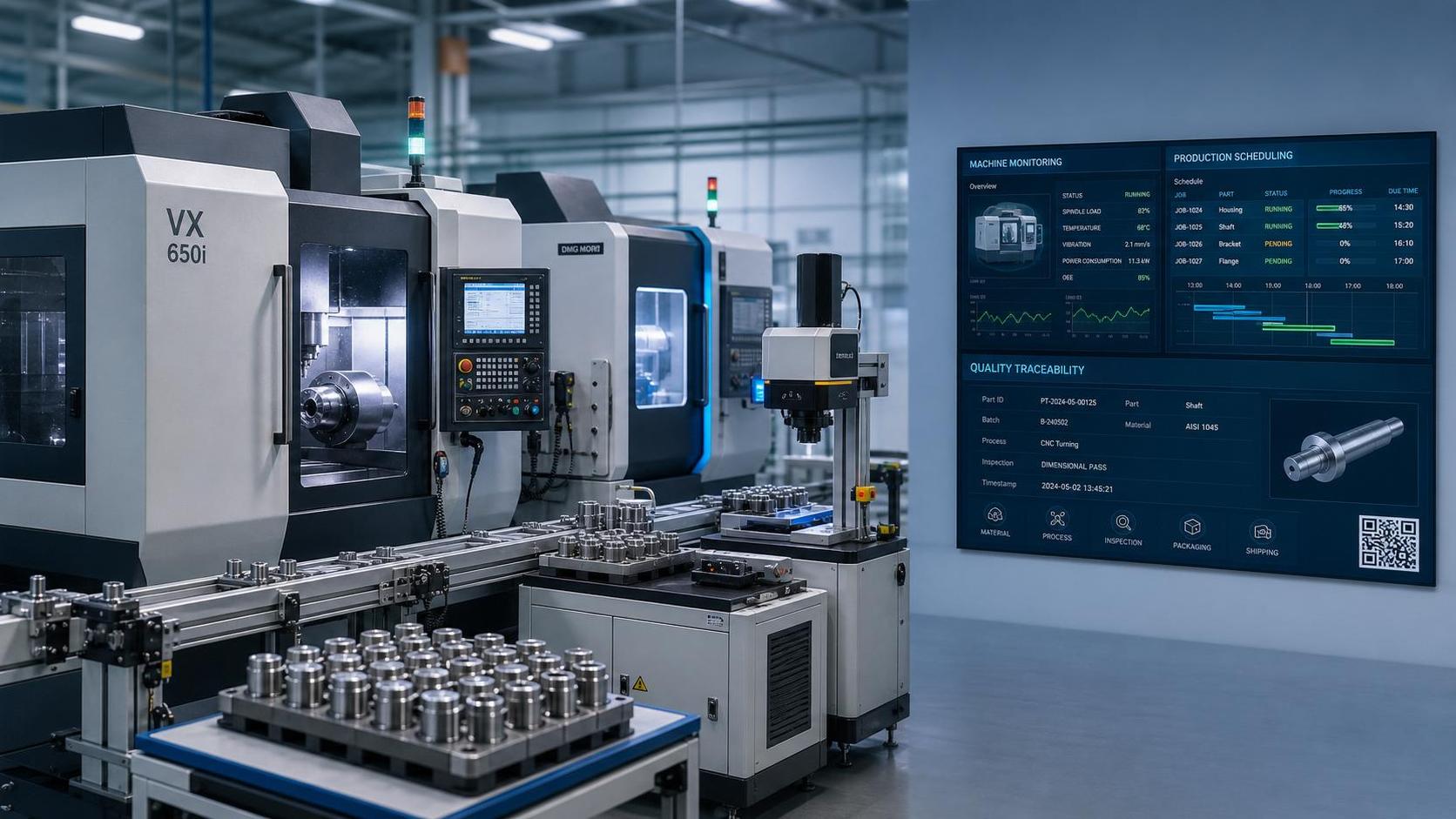
Why is Smart Manufacturing for Small Businesses becoming a practical priority?
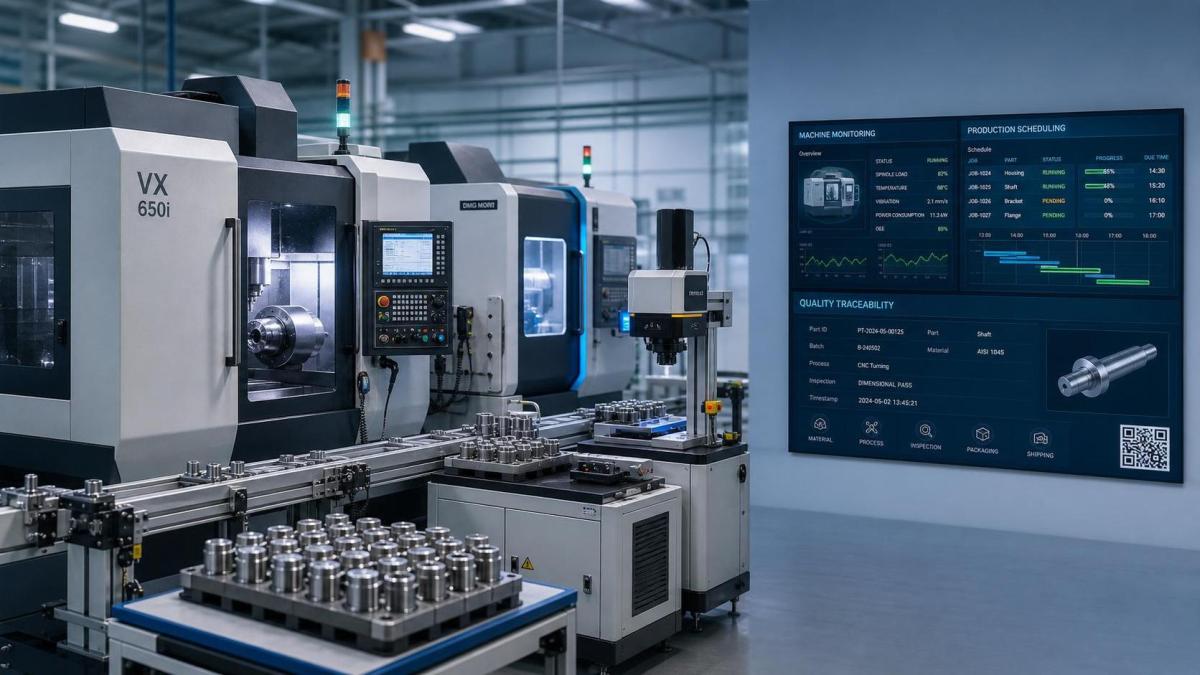
Smart Manufacturing for Small Businesses has moved from industry talk to daily operating reality.
The reason is simple. Smaller manufacturers now face tighter margins, shorter lead times, and higher quality expectations at the same time.
In sectors linked to CNC machining, precision parts, and automated production, that pressure is even more visible.
A shop may supply automotive brackets, energy equipment parts, or electronics fixtures. Each order demands consistency, traceability, and faster response.
That is why Smart Manufacturing for Small Businesses matters. It is not about building a fully autonomous factory in one step.
More often, it starts with targeted automation in areas where delays, rework, or manual handoffs already create measurable losses.
In practical terms, smart manufacturing combines machines, data, software, and process discipline. The goal is better decisions, not technology for its own sake.
For operations built around CNC lathes, machining centers, tooling, fixtures, and inspection routines, the first gains usually come from visibility and repeatability.
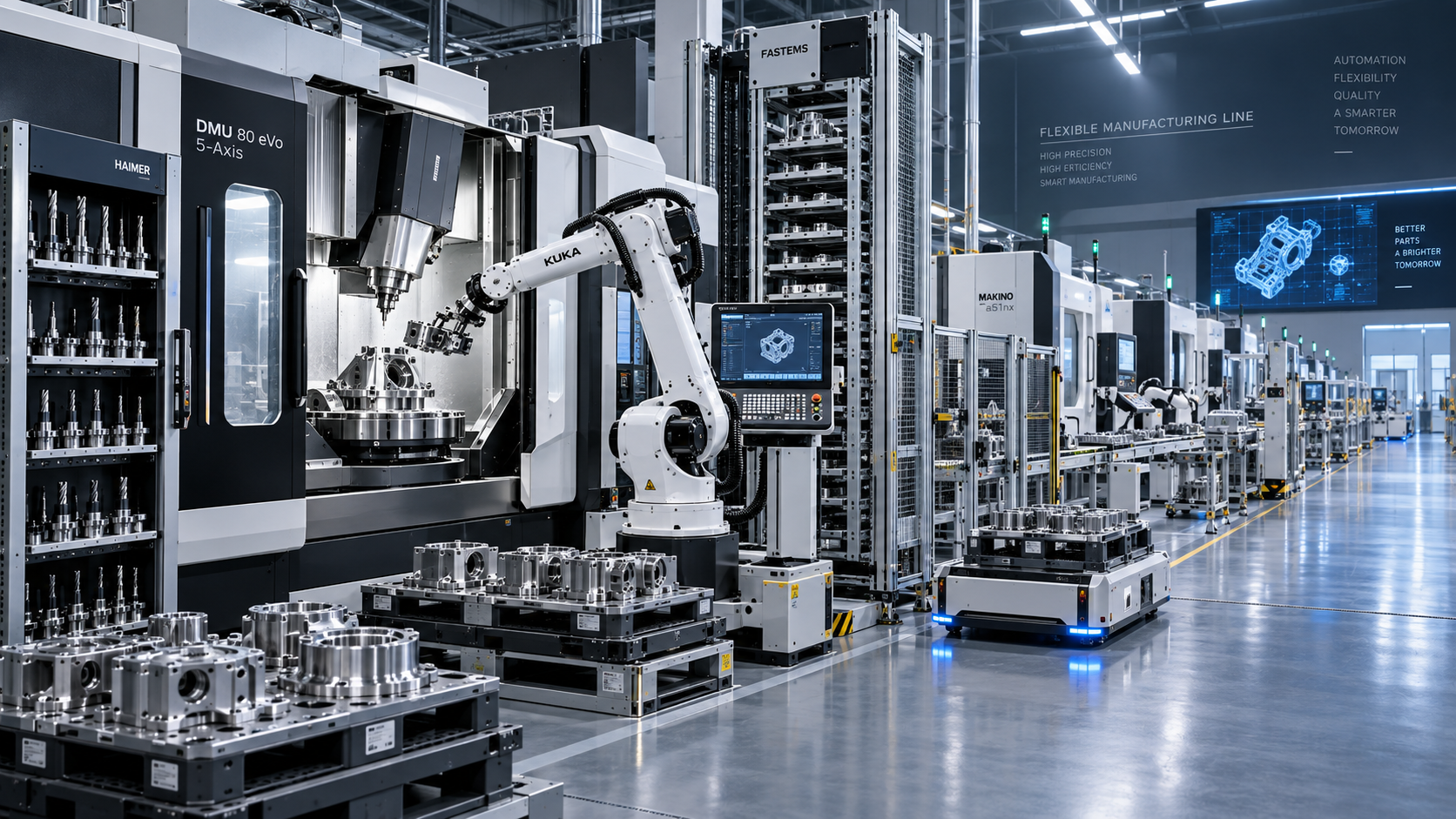
That is also why many global machine tool leaders are investing in digital integration, flexible lines, and connected equipment.
Small companies do not need to copy those systems in full. They need a smarter starting point.
Where should the first step happen when budgets and people are limited?
The best starting point is usually not the most advanced process. It is the process with repeatable work and clear pain.
In many facilities, that means one of three areas: machine utilization, production planning, or quality control.
A useful test is to ask four questions before investing:
- Is the task repeated every day or every shift?
- Do delays or mistakes create visible cost?
- Can the process be measured with simple data?
- Will improvement affect delivery, scrap, or labor efficiency within months?
If the answer is yes to most of these, the process is a strong candidate for early automation.
In actual deployment, Smart Manufacturing for Small Businesses works best when the first project solves one stubborn bottleneck.
That could be manual machine status tracking, disconnected job scheduling, or inspection records stored on paper.
The point is to improve one flow completely enough that the result can be seen in cost, output, or lead-time stability.
A quick judgment table for choosing the first automation target
The table below helps compare common starting points without treating every workshop the same way.
Which processes are usually the smartest to automate first?
For most smaller operations, the first automation layer should support existing machines before replacing them.
That matters in CNC environments, where a single machining center or lathe may already carry high production value.
Three process groups usually deliver the clearest early return.
1. Machine status and utilization tracking
Many shops believe they know where downtime happens. Measured data often tells a different story.
Simple monitoring can show whether stoppages come from setups, tool changes, waiting for material, or programming gaps.
This is one of the strongest entry points for Smart Manufacturing for Small Businesses because the data is direct and operational.
2. Planning and job dispatching
When production plans live in spreadsheets, whiteboards, and phone calls, delays multiply quietly.
Digital scheduling improves visibility across machines, people, and due dates. It also reduces expediting work that adds no value.
This matters even more in mixed production, where low-volume, high-precision orders compete for the same resources.
3. Quality checks and traceability
Precision manufacturing depends on repeatability. If inspection results are delayed or incomplete, defects travel too far downstream.
Digital quality capture helps connect parts, machines, operators, and measurement results. That shortens root-cause analysis.
For suppliers serving automotive, aerospace, or energy equipment, traceability is often as important as throughput.
How do you know whether automation is worth it, or just another software expense?
This is usually the real question behind Smart Manufacturing for Small Businesses.
The value case should be built around operational evidence, not broad promises about digital transformation.
A sensible evaluation uses a short list of metrics that already matter to the business.
- Machine uptime by shift or by product family
- Setup duration and changeover frequency
- Scrap rate and rework hours
- On-time delivery performance
- Time spent on manual reporting and coordination
If a proposed system cannot improve at least one of these within a realistic period, the project may be premature.
A common mistake is starting with a complex platform before process data is clean enough to support it.
In actual operations, smaller teams benefit more from simple visibility tools than from oversized enterprise systems.
It is also useful to compare direct and indirect return. Direct return comes from less downtime or fewer defects.
Indirect return comes from stronger quoting accuracy, better customer confidence, and easier expansion into more demanding markets.
What mistakes slow down Smart Manufacturing for Small Businesses?
The biggest failure is not choosing the wrong technology. It is automating a weak process without fixing the basics.
For example, poor routing data will weaken scheduling software. Inconsistent inspection methods will weaken digital quality systems.
Another common issue is trying to automate too many areas at once.
In a CNC or precision manufacturing setting, complexity grows quickly when machines, tooling, fixtures, operators, and quality records all change together.
The more reliable path is narrower and more disciplined.
- Choose one process family, not the whole factory.
- Set one baseline period before changes begin.
- Define who acts on the new data each day.
- Keep naming, routing, and inspection rules consistent.
- Review results after 30, 60, and 90 days.
Needless complexity also appears when equipment integration is underestimated.
Older machine tools can still support smart manufacturing, but interface limits, sensor additions, and data standards should be checked early.
That matters especially in mixed fleets common across growing workshops and regional suppliers.
What does a realistic starting roadmap look like?
A realistic roadmap for Smart Manufacturing for Small Businesses usually begins with a pilot, not a full rollout.
A pilot should focus on one production cell, one machine group, or one quality workflow with measurable impact.
That is enough to test data quality, adoption, and payback without creating unnecessary disruption.
A practical sequence often looks like this:
- Map one process from order release to finished inspection.
- Mark where waiting, re-entry, or manual recording happens.
- Choose one automation point with visible cost impact.
- Track baseline metrics before implementation.
- Run the pilot long enough to compare stable results.
- Expand only after the first process is under control.
This approach fits the broader direction of the machine tool industry, where precision, automation, and digital integration increasingly move together.
It also fits smaller operations that must balance investment discipline with competitive pressure from global supply chains.
In the end, Smart Manufacturing for Small Businesses is not defined by the number of connected devices.
It is defined by whether the operation becomes more predictable, more traceable, and easier to improve.
The next sensible move is to review one current bottleneck, measure its cost, and compare which automation option can change that result fastest.
That kind of focused evaluation usually leads to better decisions than chasing a complete smart factory vision too early.
Recommended for You
 Is Learning CNC Programming Worth It for Shop Owners Seeking Higher Margins?CNC Machining Technology Center
 CNC Machine Arrival Inspection: Check Shipping Damage, Accuracy, Safety, and DocumentsCNC Machining Technology Center
 How to Select a Machine Tool for Aerospace Parts with Tight Tolerances?Machine Tool Industry Editorial Team
 How to Select CNC Equipment for High-Mix, Low-Volume ProductionCNC Machining Technology Center
 Can CNC Machining Inconel Control Tool Wear in High-Temperature Aerospace Parts?CNC Machining Technology Center
 Machine Tool Market Outlook: Demand Drivers, Capacity Shifts, and Investment RisksManufacturing Market Research Center

Aris Katos
Future of Carbide Coatings
15+ years in precision manufacturing systems. Specialized in high-speed milling and aerospace grade alloy processing.
▶
Smart Manufacturing for Small Businesses: Where Automation Delivers the Fastest ROIMachine Tool Industry Editorial Team▶
How Smart Manufacturing Technology Improves OEE Across Industry 4.0 Production LinesMachine Tool Industry Editorial Team▶
How to Evaluate an Automation Line for Electronics Production Before InvestmentMachine Tool Industry Editorial Team▶
How to Evaluate an Automated Production Line for Output, Flexibility, and ROIMachine Tool Industry Editorial Team▶
How Smart Manufacturing Improves Traceability and Quality Control in Aerospace?Machine Tool Industry Editorial Team
Mastering 5-Axis Workholding Strategies
Join our technical panel on Nov 15th to learn about reducing vibrations in thin-wall components.

Providing you with integrated sanding solutions
Before-sales and after-sales services
Comprehensive technical support